

Is one bout of vomiting harmless or a code red?
Most dogs vomit now and then and usually bounce back, but repeated vomiting, blood in the vomit, severe weakness, a swollen or painful belly, or an inability to keep water down are signs to contact your vet right away.
Puppies and senior dogs can go from okay to dangerously dehydrated much faster, so act sooner with them.
This post will lay out the clear warning signs, what to watch for today, and when you need emergency care.
Key Warning Signs That Indicate Dog Vomiting Requires Concern
Most dogs throw up at some point. A lot of the time it clears up on its own within a day or so. But certain patterns mean you need to call the vet right now. If your dog vomits several times in one day or keeps vomiting past 24 hours, you need a vet evaluation. A single vomit after scarfing down trash might not be an emergency, but repeated vomiting drains fluids fast and can point to something worse than just an upset stomach.
Pay attention to what else is going on. Vomiting plus severe lethargy, refusing to drink, belly pain, or collapse? That’s not “wait and see” anymore. That’s urgent. Blood in the vomit, pale or white gums, can’t keep down even water, and retching over and over without bringing anything up can all mean life-threatening problems like internal bleeding, bloat, or poisoning.
Puppies and senior dogs? You need to act faster. Puppies lose fluids quickly and are vulnerable to parvovirus, which combines vomiting with bloody diarrhea and sudden weakness. Older dogs often have kidney or liver issues lurking in the background that vomiting can reveal or make worse. If a puppy or senior dog vomits even once and seems off, contact your vet that same day.
Emergency red flags that require immediate veterinary care:
- Blood in vomit (bright red or dark, coffee-ground look) or in stool
- Pale, white, or bluish gums
- Swollen, hard, or painful belly, especially with retching but nothing coming up
- Collapse, severe weakness, or can’t stand
- You think they ate something toxic (chocolate, grapes, xylitol, cleaning products, medications)
- Neurological signs (staggering, confusion, seizures)
Understanding Dog Vomiting and What Common Causes Mean
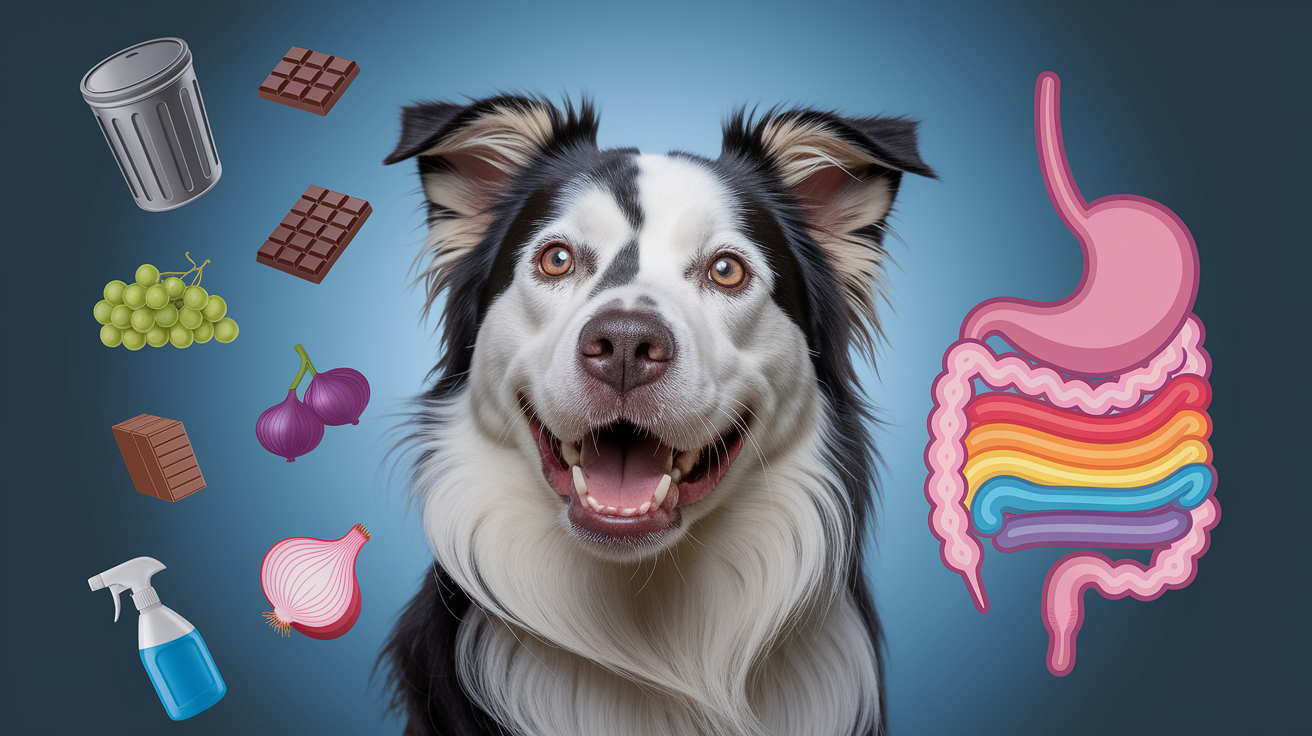
Dogs vomit for all kinds of reasons. Many aren’t serious. Eating garbage, wolfing down food too fast, motion sickness, or switching food suddenly can all cause a one-off upset that goes away within a day. If your dog raided the trash, ate rich table scraps, or gulped their dinner in three seconds, vomiting might just be the body hitting reset. These episodes usually look like undigested food or yellow bile, and the dog bounces back pretty quick.
More serious causes? Toxins, infections, obstructions. Chocolate, grapes, raisins, xylitol (you’ll find it in sugar-free gum and some peanut butter), onions, garlic, household chemicals. All of these can trigger vomiting and escalate to organ damage or collapse. Infectious diseases like parvovirus hit hard in unvaccinated puppies. We’re talking severe vomiting, bloody diarrhea, and dehydration within hours. Foreign objects (sticks, toys, socks, bones) can get stuck in the intestines and cause repeated vomiting because nothing can move through.
Sudden diet changes are a common preventable cause. Switching kibble brands overnight can irritate your dog’s gut and lead to vomiting or diarrhea. Always introduce new food slowly over several days. Mix small amounts of the new food with the old so your dog’s digestive system can adjust without getting shocked.
Recognizing Emergency Vomiting Symptoms in Dogs
Some vomiting situations go downhill fast. Knowing the difference between “watch closely” and “go now” can save your dog’s life. When vomiting shows up with other severe symptoms (bleeding, abdominal swelling, shock signs, toxin exposure), time matters. We’re talking about organs shutting down, pressure building in the belly, or poisons spreading through the bloodstream.
Vomiting With Blood or Severe Diarrhea
Blood in vomit can look bright red (fresh bleeding) or dark and grainy like coffee grounds (partially digested blood from the stomach). Both mean internal bleeding from ulcers, trauma, clotting problems, or poisoning. When vomiting pairs up with severe diarrhea, especially if the stool is bloody or watery, fluid loss speeds up. Dogs can go from alert to dangerously dehydrated in hours. Puppies are especially vulnerable. Their small bodies can’t afford to lose much fluid before organs start struggling.
Abdominal Distention, Retching, and Suspected Obstruction
A swollen, tight, or painful belly paired with repeated retching that brings up little or nothing? That’s a classic sign of bloat (gastric dilatation-volvulus), a life-threatening emergency common in deep-chested breeds. The stomach twists, trapping gas and cutting off blood flow. Without surgery within hours, tissue dies and the dog goes into shock. Foreign-body obstruction (toys, bones, fabric) causes similar repeated vomiting because food and water can’t move past the blockage. If your dog vomits every time they drink or can’t keep anything down for more than a few hours, suspect an obstruction.
Toxin Exposure or Heat Stroke Signs
Poisoning from chocolate, grapes, xylitol, rat bait, antifreeze, or human medications often starts with vomiting and quickly moves to tremors, seizures, kidney failure, or collapse. If you know or even suspect your dog ate something toxic, get emergency care immediately. Even if vomiting is the only symptom so far. Heat stroke also triggers vomiting along with heavy panting, bright red gums, drooling, hot skin, dry nose and eyes, elevated heart rate, and staggering. The body overheats faster than it can cool, and organs start failing. Both toxins and heat stroke are time-sensitive. The faster treatment starts, the better the chance of recovery.
How to Assess Your Dog at Home When Vomiting Occurs
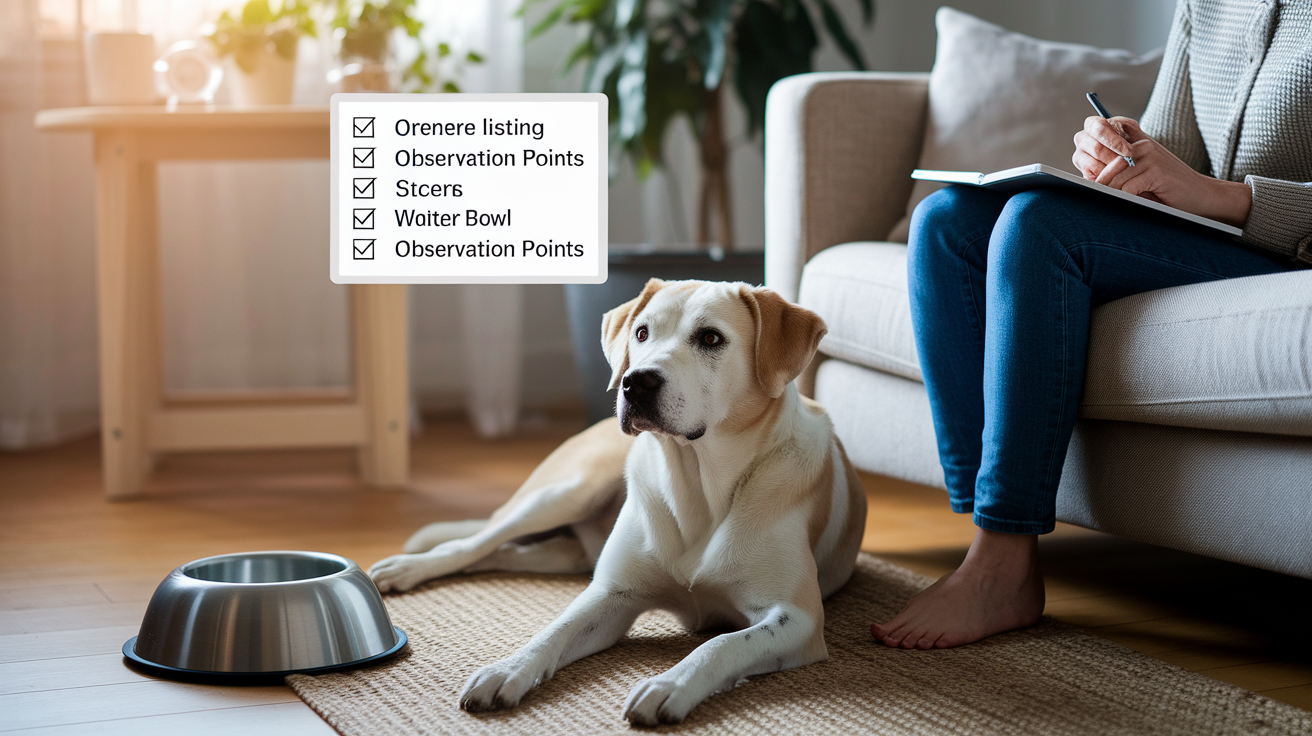
When your dog vomits, take a few minutes to observe and write down what you see. This helps your vet decide how urgent things are and what tests to run. Start by noting how many times your dog has vomited and over what time period. One vomit after eating grass is different from three episodes in two hours.
Look closely at the vomit itself. Is it mostly undigested food, yellow bile, white foam, or does it have blood, foreign material like fabric or plastic, or a foul smell? Check your dog’s behavior. Are they acting normal, playing, and asking for food? Or are they lethargic, hiding, whining, or can’t get comfortable? Watch appetite and thirst. Can your dog keep water down, or do they vomit again after drinking? Note any changes in stool (diarrhea, blood, mucus, straining) and whether your dog is urinating normally or less than usual.
What to observe and record at home:
- Number of vomiting episodes and time span (like three times in four hours)
- Appearance of vomit (food, yellow bile, white foam, blood, foreign objects)
- Behavior and energy level (normal, lethargic, restless, painful)
- Ability to keep down water and willingness to drink
- Appetite (does your dog want food or refuse it completely)
- Stool consistency and frequency (any diarrhea or blood)
- Signs of dehydration: dry or sticky gums, skin that tents when gently pulled, sunken eyes
- Recent diet changes, new treats, access to trash, medications, or possible toxin exposure
When Vomiting in Puppies or Senior Dogs Becomes High Risk
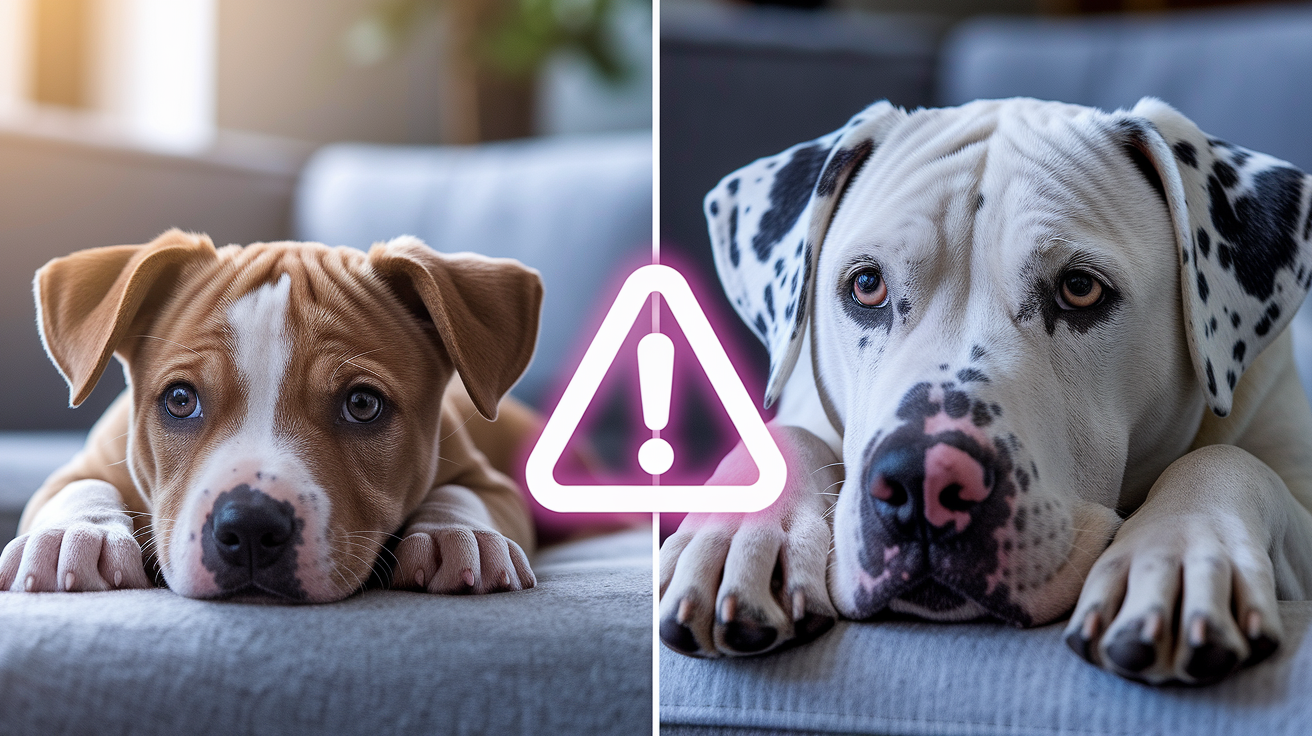
Puppies and senior dogs can’t tolerate vomiting as long as healthy adults. Puppies have smaller fluid reserves, and even mild vomiting can lead to dangerous dehydration within hours. Unvaccinated or partially vaccinated puppies are at high risk for parvovirus, a deadly infection that causes severe vomiting, explosive bloody diarrhea, fever, and collapse. Most puppies finish their parvovirus vaccination series around 16 weeks, but until then they’re vulnerable.
Senior dogs often have underlying conditions that vomiting can worsen or reveal. Kidney disease, liver disease, diabetes, and Addison’s disease are more common in older dogs and can all show up with vomiting as an early sign. Chronic conditions mean less reserve, so a senior dog who vomits and refuses food for even 24 hours might develop complications faster than a young, healthy dog.
| Age Group | Why Vomiting Is Risky |
|---|---|
| Puppies (under 6 months) | Rapid dehydration, smaller body reserves, high energy needs, vulnerable to intestinal parasites and infections |
| Unvaccinated or partially vaccinated puppies | High risk for parvovirus, which causes life-threatening vomiting, bloody diarrhea, and shock within hours |
| Adult dogs with chronic conditions | Vomiting can destabilize diabetes, pancreatitis, or inflammatory bowel disease; less reserve to tolerate fluid loss |
| Senior dogs (over 7 to 10 years depending on breed) | Higher likelihood of kidney disease, liver disease, or metabolic disorders; vomiting may be first sign of serious illness |
Serious Medical Conditions Where Vomiting Is a Key Symptom
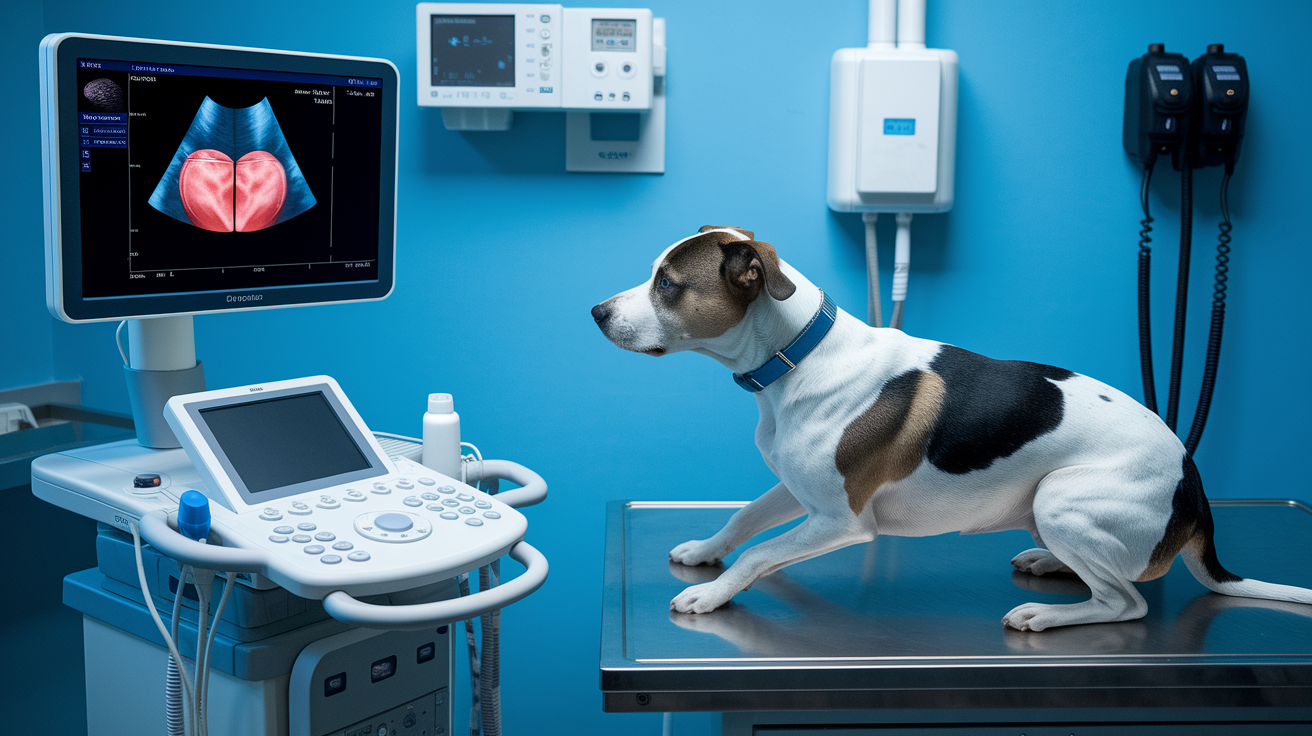
Vomiting isn’t always about the stomach. It can be the body’s response to kidney failure, liver disease, pancreatitis, or hormonal imbalances like Addison’s disease. When organs struggle, toxins build up in the bloodstream and trigger nausea and vomiting. Pancreatitis (inflammation of the pancreas) often causes repeated vomiting, abdominal pain, hunched posture, and loss of appetite. It’s more common in overweight dogs and those who eat high-fat meals or table scraps.
Chronic vomiting (episodes that happen on and off over weeks or months) often points to inflammatory bowel disease, food allergies, or slow-growing masses in the digestive tract. Intestinal parasites like roundworms and hookworms are common in puppies and can cause vomiting along with a pot-bellied appearance, diarrhea, and weight loss. Bacterial gastroenteritis from spoiled food or contaminated water can also trigger vomiting and diarrhea that might resolve on its own or need antibiotics and supportive care.
Early diagnosis matters because many of these conditions get worse without treatment. Kidney disease and liver disease are progressive, and catching them early allows for diet changes, medications, and monitoring that can slow damage. Parvovirus is often fatal without aggressive hospitalization, IV fluids, and anti-nausea medications. If vomiting lasts beyond 48 hours, happens frequently, or pairs up with weight loss, lethargy, or behavior changes, schedule a veterinary exam to identify what’s going on.
Distinguishing Vomiting from Regurgitation, Retching, and Gagging
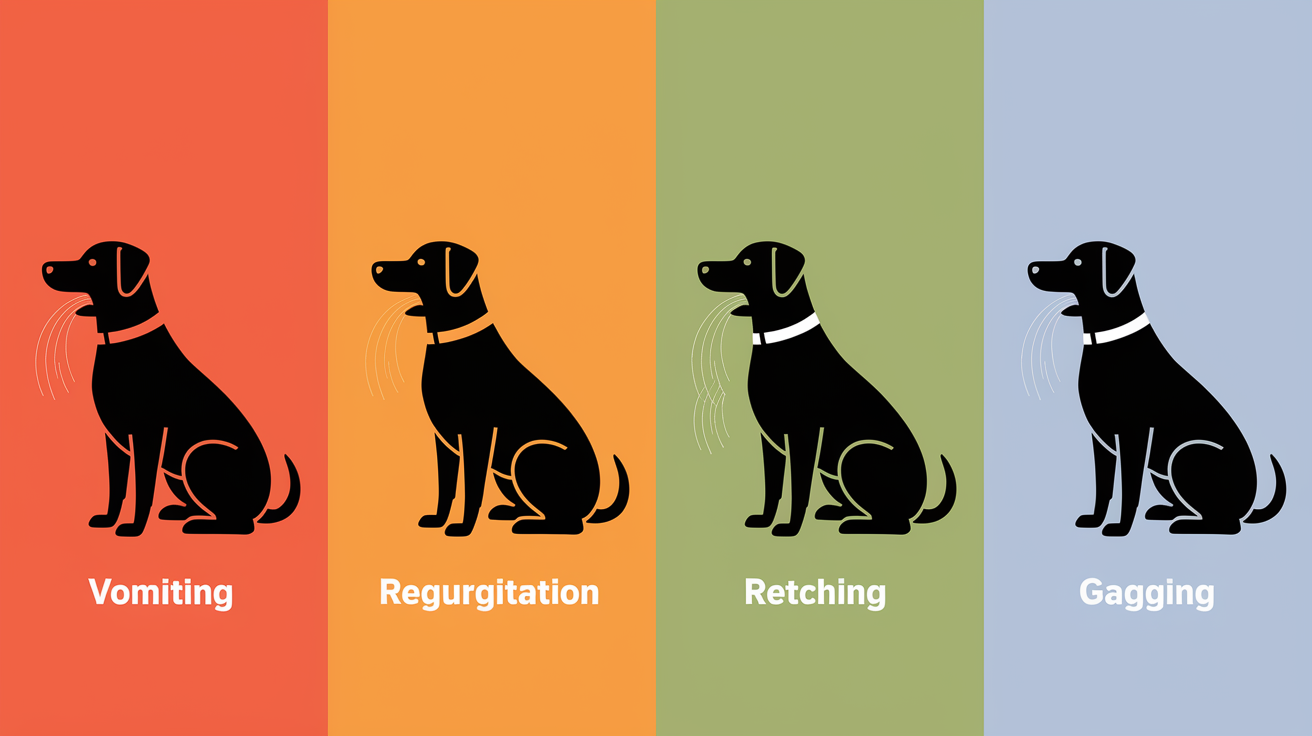
Not all stomach upset looks the same. Understanding the difference helps you describe what’s happening to your vet. Vomiting involves active abdominal effort. The dog heaves, contracts their belly, and forcefully expels stomach contents that might include partially digested food, bile, or liquid. Regurgitation is passive. Food comes back up without effort, often in a tubular shape because it never reached the stomach. Regurgitation usually signals an esophageal problem, not a stomach issue, and requires different diagnostics and treatments.
Retching is the action of trying to vomit (heaving and gagging) but producing little or nothing. When paired with a distended abdomen, retching is a red flag for bloat. Gagging often relates to throat irritation, something stuck in the mouth or throat, kennel cough, or tracheal issues, and might not involve the stomach at all.
Key differences to watch for:
- Vomiting: abdominal contraction, expelled stomach contents (food, bile, liquid), often preceded by drooling or lip licking
- Regurgitation: passive, no effort, tubular undigested food, happens shortly after eating
- Retching: effort to vomit but little or nothing comes up; urgent if abdomen is swollen or painful
How Veterinarians Diagnose Vomiting When You Seek Care
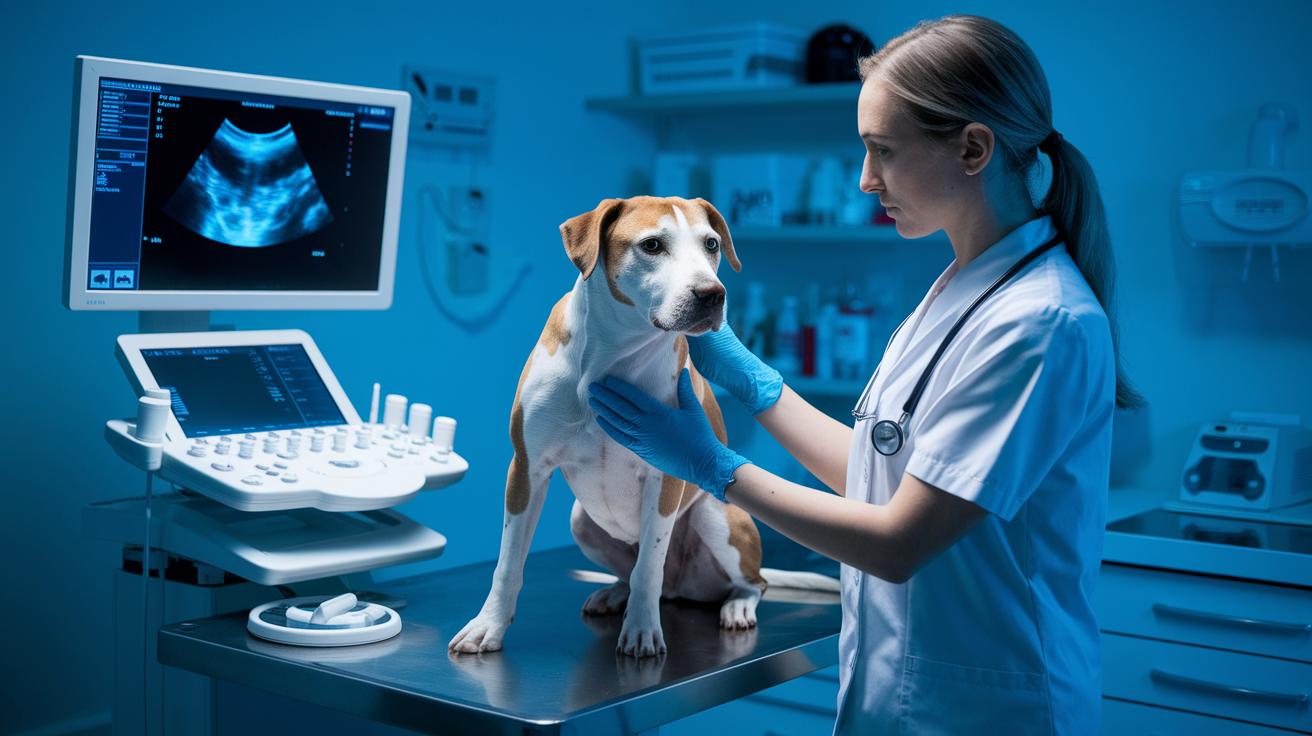
When you bring your dog to the vet for vomiting, expect a thorough history and physical exam. Your vet will ask about frequency, duration, appearance of vomit, diet, possible toxin exposure, recent travel, and any other symptoms. They’ll check your dog’s hydration, gum color, heart rate, abdominal pain, and overall condition. From there, diagnostics move forward based on severity and the list of possible causes.
Basic diagnostics usually start with blood work. A complete blood count (CBC) checks for infection, anemia, or dehydration, and a chemistry panel evaluates kidney and liver function, electrolytes, and blood sugar. Fecal analysis looks for parasites. Abdominal x-rays can reveal foreign objects, obstructions, or signs of bloat. If initial tests don’t explain the vomiting or if the dog isn’t improving, intermediate diagnostics like abdominal ultrasound provide detailed images of organs, intestines, and masses.
Advanced testing is reserved for complex or chronic cases. Blood tests for pancreatitis (cPLI or SNAP test) measure pancreatic enzymes. Testing for Addison’s disease involves an ACTH stimulation test to check adrenal gland function. Endoscopy allows the vet to look directly inside the esophagus, stomach, and upper intestines with a camera and take biopsies if needed. In some cases, exploratory surgery is necessary to diagnose and remove foreign bodies or take tissue samples from the intestines.
Typical diagnostic progression:
- Physical exam, history, and observation of hydration and gum color
- Blood work (CBC and chemistry panel) and fecal analysis
- Abdominal x-rays to check for foreign bodies, blockages, or gas patterns
- Abdominal ultrasound for detailed organ and intestinal imaging
- Specialized tests (pancreatitis panel, Addison’s test) or endoscopy for chronic or unexplained cases
Safe Home Care Steps for Mild, Single Episodes of Vomiting
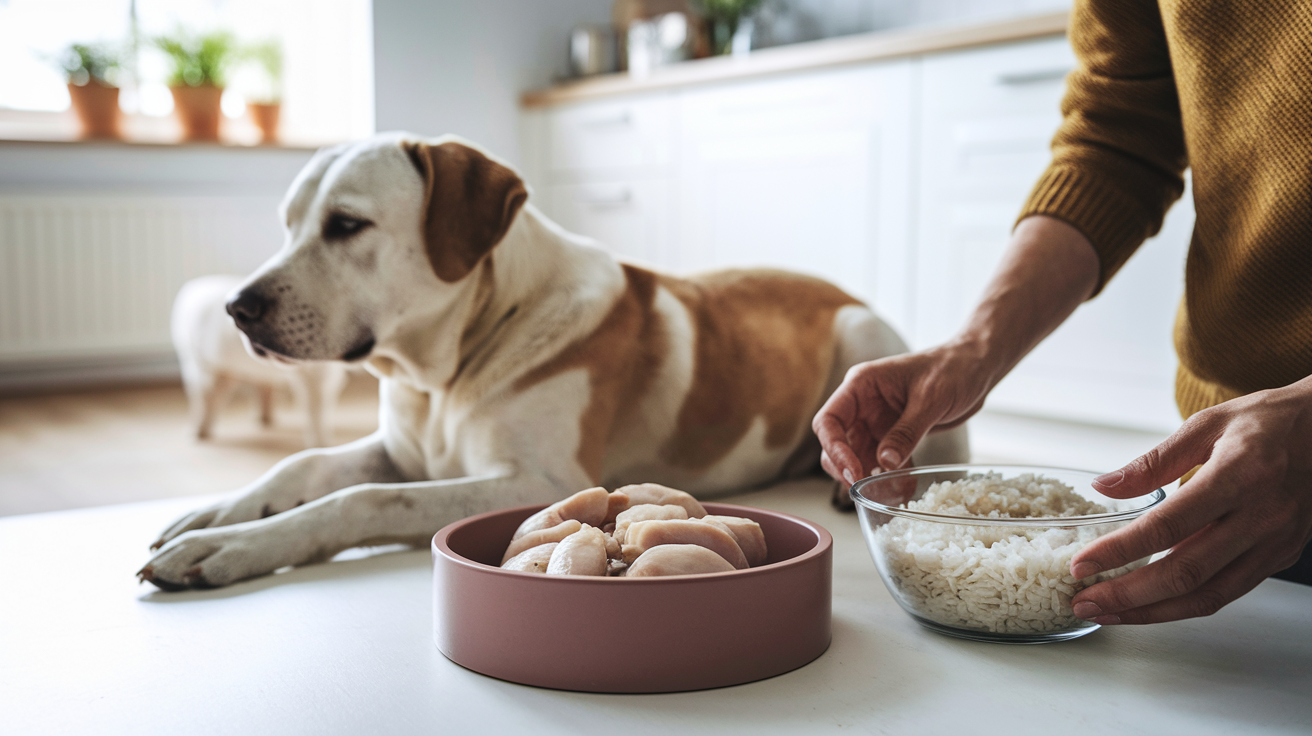
If your dog vomits once, acts normal afterward, and has no red-flag symptoms, you can often manage things at home with close monitoring. Skip one meal only. Don’t withhold food for longer, and never restrict water. Dehydration is a bigger immediate risk than an empty stomach. Offer small amounts of water frequently (a few sips every 15 to 30 minutes) rather than a full bowl at once.
After 12 to 24 hours, if your dog hasn’t vomited again and seems hungry, start a bland diet. Plain boiled chicken (no skin or seasoning) mixed with white rice is gentle on the stomach and easy to digest. Feed small portions, about a quarter of a normal meal, three to four times a day for 24 to 48 hours. If your dog tolerates the bland diet well, gradually reintroduce regular food by mixing a small amount with the bland diet and slowly increasing the ratio over several days.
Step-by-step home care for mild vomiting:
- Skip one meal, but don’t withhold water
- Offer water in small, frequent sips rather than large amounts at once
- Monitor for repeated vomiting, lethargy, or worsening symptoms over the next 12 to 24 hours
- Feed a bland diet (boiled chicken and white rice) in small portions if no further vomiting occurs
- Continue bland diet for 24 to 48 hours, then gradually mix in regular food over several days
- Prevent access to trash, table scraps, and foreign objects during recovery
When to Call Your Regular Veterinarian for Ongoing Vomiting

Not every vomiting episode is an immediate emergency, but plenty of situations need veterinary guidance within a day or two. If your dog vomits for more than 48 hours, even if they seem okay otherwise, it’s time to call your vet. Vomiting that continues for 24 hours paired with signs of dehydration (dry or sticky gums, skin tenting, reduced urination) also warrants a same-day call. Dehydration compounds quickly and can lead to kidney damage and electrolyte imbalances.
Watch for worsening or new symptoms. If your dog starts vomiting and then develops lethargy, refuses food or water, loses weight, or shows behavior changes like hiding or restlessness, schedule an appointment. Vomiting after starting a new medication can indicate a side effect and should be reported to your vet. Chronic or intermittent vomiting (episodes that happen on and off over weeks) often signals an underlying condition like inflammatory bowel disease, food sensitivities, or organ disease that needs diagnostic workup and long-term management.
Life-Threatening Vomiting Situations Requiring Emergency Transport
Some vomiting scenarios deteriorate so quickly that waiting even a few hours can mean the difference between recovery and critical illness. Shock, bloat, severe poisoning, and complete obstructions all fall into this category. Shock happens when the body can’t maintain blood flow and oxygen delivery to organs, often due to blood loss, dehydration, or toxins. Pale or white gums, rapid or weak pulse, cold extremities, collapse, and extreme lethargy are hallmark signs.
Bloat (or gastric dilatation-volvulus) is an emergency unique to dogs, especially large, deep-chested breeds. The stomach fills with gas and twists, cutting off blood supply. The abdomen becomes visibly distended, hard, and painful. The dog retches repeatedly but produces little or no vomit. Without emergency surgery, bloat is fatal within hours. Toxin ingestion, even if your dog seems stable immediately after, can progress rapidly as the poison is absorbed and affects the heart, liver, kidneys, or nervous system.
Scenarios requiring immediate emergency transport:
- Collapse, inability to stand, or signs of shock (pale gums, weak pulse, cold limbs)
- Distended, hard abdomen with repeated unproductive retching (possible bloat)
- Known or suspected ingestion of toxins (chocolate, xylitol, grapes, antifreeze, medications, rat poison)
- Continuous vomiting with inability to keep down any water for more than a few hours
- Vomiting combined with seizures, disorientation, or other neurological signs
Preventing Future Vomiting Episodes in Dogs
Many vomiting episodes are preventable with a few daily habits. Always introduce new food gradually. Mix a small amount of the new food with the old over five to seven days. This gives your dog’s digestive system time to adjust without triggering inflammation or diarrhea. Secure trash cans with lids and keep human food (especially fatty or toxic items) out of reach. Store household chemicals, medications, and garden products in locked cabinets.
Keep your dog’s vaccinations up to date, especially parvovirus, which most puppies complete around 16 weeks. Routine deworming and fecal checks help catch intestinal parasites before they cause symptoms. If your dog has a history of vomiting, consider feeding smaller, more frequent meals to prevent gulping and reduce stomach acid buildup. Avoid sudden changes in routine, travel, or environment when possible, as stress and anxiety can trigger vomiting in sensitive dogs.
Daily habits to reduce vomiting risk:
- Introduce new food slowly over five to seven days by mixing small amounts with current food
- Secure trash, table scraps, and toxic foods (chocolate, grapes, onions, xylitol) out of reach
- Keep vaccinations current, especially parvovirus protection for puppies
- Feed smaller, more frequent meals if your dog tends to vomit bile on an empty stomach
Final Words
If your dog vomits more than once or can’t hold water, act now. This post covered exact timelines, worrisome symptoms, how to check at home, and what counts as an emergency.
Track how often your dog vomits, what it looks like, energy level, and water intake. Use gentle home care for a single mild episode, but call the vet for blood, collapse, severe lethargy, or vomiting beyond 24 to 48 hours.
Keep these rules for when to worry about dog vomiting in mind—early action often helps, and you’re better prepared now.
FAQ
Q: How many times should a dog throw up before going to vet?
A: The number of times a dog should throw up before going to the vet is more than twice in 24 hours, or any vomiting that lasts beyond 24 hours, or sooner with blood, collapse, or not keeping water.
Q: How do I know if my dog throwing up is serious?
A: You know vomiting is serious when it comes with blood, pale gums, collapse, severe lethargy, repeated retching, inability to keep water, signs of dehydration, worsening behavior, or suspected toxin exposure.
Q: How do I know if my dog is ok after vomiting?
A: You can tell your dog is ok after vomiting if they’re bright, drinking, keeping food down, have normal stools, and no further vomiting for 24 hours; keep watching for 48 hours and call if anything changes.
Q: What kind of vomit is concerning for dogs?
A: The kind of vomit that is concerning includes frank blood, coffee-ground dark blood, persistent bile (yellow or green), repeated undigested food, a foul smell, or material suggesting a foreign object or toxin.