

Is allergy testing for dogs worth the money—or just an expensive guessing game?
Short answer: sometimes, but only if your dog is really suffering and you’re ready for the costs and follow-up.
Tests vary: intradermal skin testing is the most accurate but costs hundreds and usually needs sedation; blood tests are cheaper but give false positives; at-home kits are often unreliable.
Before you spend, start with your vet to rule out fleas, infections, and try a strict elimination diet if food might be to blame.
Testing can pay off when symptoms are severe, year-round, and other causes are cleared.
Deciding if Canine Allergy Testing Is Worth the Cost and Effort

Whether you should test your dog for allergies depends on how bad the symptoms are, what kind of allergy you’re dealing with, and if you’re ready to stick with treatment for the long haul. Food allergies? Skip the lab tests. They’re not reliable and you’ll waste money. An elimination diet works better and costs way less. Environmental allergies, stuff like pollen or dust mites, that’s different. Testing can help, but only after your vet rules out other problems first.
Intradermal skin testing is the most accurate option. It’ll run you $400 to $800, sedation included, and then you’re looking at immunotherapy that costs $80 to $200 every month for… well, months. Sometimes years. Blood serum tests are cheaper, $200 to $700, and your dog doesn’t need sedation. But they throw false positives, and you’re still stuck with the same long treatment plan.
At-home kits, the saliva or hair ones, start at $40 and go up to $380. Don’t bother. Studies show they flag foods that aren’t even causing problems and miss the real triggers. For environmental allergies, about half the dogs see mild improvement with immunotherapy. A quarter don’t respond at all. So you’re paying a lot without any guarantee it’ll work.
If your dog’s itching is mild or only flares up during certain seasons, you might get more bang for your buck with symptom management. Medicated shampoos, topical sprays, cleaning up their environment, that runs $40 to $160 a month. No test required.
Testing makes sense when symptoms are severe, happening all year, and messing with your dog’s quality of life. And when you’re prepared for the upfront cost, the follow-up visits, the ongoing treatment.
Before you pay for testing, ask yourself if you’ve tried strict flea control. Ruled out skin infections. Given an elimination diet a full 8 to 12 weeks if you think food might be involved. If you’ve done all that and your dog’s still scratching constantly, testing for environmental allergens might be your next smart move.
Testing is usually worth it when:
- Your dog itches year-round, not just seasonally, and basic flea control or short-term medication doesn’t help.
- You’ve done a full elimination diet and confirmed food isn’t the problem, so environmental allergens are probably to blame.
- Symptoms include ear infections that keep coming back, chronic skin infections, or severe inflammation that’s affecting your dog’s sleep and daily comfort.
- You can commit to long-term immunotherapy, monthly costs of $80 to $200, and regular vet follow-ups.
- You’ve got access to a vet dermatologist or a general vet who knows how to read allergy tests and build a treatment plan. And your budget can handle both the initial test ($200 to $800) and what comes after.
Understanding Types of Canine Allergy Tests and Their Value
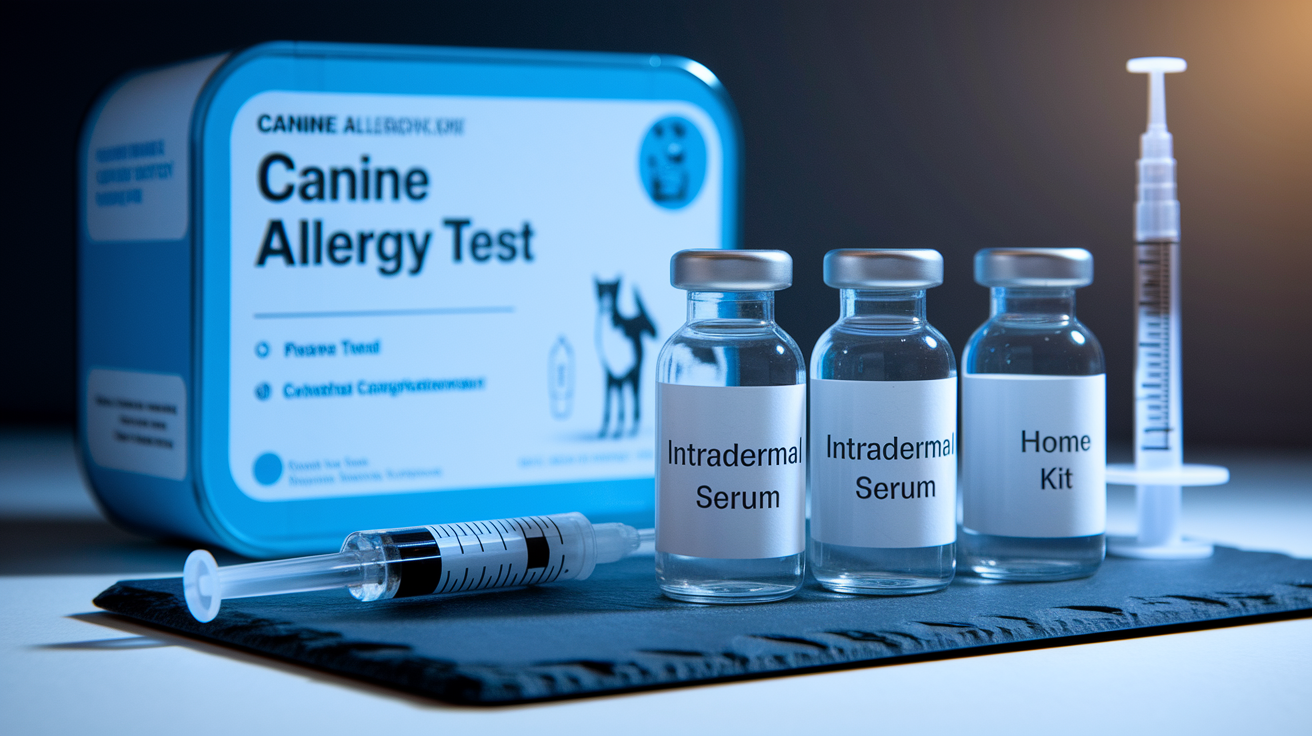
Intradermal skin testing is the gold standard for diagnosing environmental allergies. A vet dermatologist shaves a patch on your dog’s chest and injects tiny amounts of common allergens just under the skin. Pollen, dust mites, mold spores, grasses. Your dog’s usually sedated so they stay still and comfortable. After about 20 minutes, the vet checks each injection site for swelling or redness, comparing them to a histamine control and a saline control. The test shows which specific environmental allergens your dog’s immune system reacts to, and that list gets used to make a custom immunotherapy serum.
It’s the most accurate option for environmental allergies. But it requires a specialist, costs $400 to $800 with sedation, and isn’t available everywhere. If you’re in a rural area, you might not have access.
Serum blood testing is the next option. Your vet draws blood and sends it to a lab that checks for antibodies against a panel of allergens. Costs $240 to $400 on average, covering the blood draw, lab work, and interpretation. Any general vet can do it, and your dog doesn’t need sedation. That makes it practical if your dog gets anxious or you can’t get to a dermatologist. The downside? Serum tests can throw false positives. They’ll flag allergens that aren’t actually causing symptoms, and the connection between test results and real-world reactions isn’t always solid. Lab quality varies too, so results depend partly on which company your vet uses.
At-home saliva and hair test kits are the cheapest and most convenient. They start around $40 and go up to $380. You collect a sample at home, mail it to a lab, and they send back a report listing sensitivities to hundreds, even over a thousand items. Marketing claims results in 3 to 5 days, though some take weeks. Problem is, these tests detect “sensitivities,” not true allergic immune reactions. Studies have shown they’re inconsistent and don’t repeat well. Hair samples can’t carry antibodies. Labs have produced ridiculous false positives when tested with synthetic hair or samples from healthy dogs. Saliva tests look for antibodies before they reach the bloodstream, but research shows they can’t reliably tell allergic dogs from non-allergic ones. They’re not validated for diagnosing food or environmental allergies in vet medicine.
| Test Type | Typical Cost | Reliability Notes |
|---|---|---|
| Intradermal skin testing | $400–$800 | Gold standard for environmental allergies; requires sedation and specialist; highly accurate |
| Serum blood testing | $200–$700 | Moderate accuracy; can yield false positives; widely accessible; no sedation needed |
| At-home saliva/hair kits | $40–$380 | Unreliable; detects sensitivities, not true allergies; inconsistent and unvalidated results |
When Allergy Testing Makes Sense for Dogs with Persistent Symptoms

Allergy testing helps most when your dog shows constant, year-round symptoms that don’t follow seasonal patterns. If the itching, licking, or ear infections happen every single month no matter the pollen count or weather, that points toward food allergies or indoor environmental triggers like dust mites and mold. Dogs with environmental allergies usually flare up during specific seasons when pollen or grasses peak, then calm down the rest of the year. But if symptoms are relentless and you’ve already ruled out fleas with strict monthly prevention, and confirmed your dog isn’t reacting to shampoos, detergents, or carpet cleaners, testing can narrow down the specific culprits.
Breeds like Golden Retrievers, Bulldogs, West Highland White Terriers, German Shepherds, Labrador Retrievers, and Cocker Spaniels are genetically more prone to allergies. Chronic skin and ear issues in these breeds often warrant a deeper look.
Testing makes the most sense after you’ve worked through the basics with your vet. Ruling out skin infections with cytology or skin scrapings. Confirming flea control is truly consistent. Completing an elimination diet trial if food is suspected. Environmental allergy diagnosis, called atopy, is a process of elimination. Once other causes are off the table, testing identifies which environmental allergens to target with immunotherapy. Without that groundwork, test results can mislead because inflamed skin reacts to many things at once. Treating the wrong trigger wastes time and money.
Common allergens that trigger persistent symptoms include:
- Pollen from grasses, trees, and weeds. Causes seasonal or year-round itching depending on climate.
- Dust mites found in bedding, carpets, and upholstered furniture. Leads to constant indoor symptoms.
- Mold spores that thrive in damp environments like basements, bathrooms, and humid climates.
- Storage mites in dry kibble and grain-based foods. Sometimes mistaken for food allergies.
- Flea saliva, where even a single bite can trigger intense itching in allergic dogs.
- Contact allergens like certain fabrics, cleaning products, lawn treatments, or grooming products that touch the skin directly.
Food Allergy Testing Versus Elimination Diets: Which Actually Works?

When it comes to food allergies, elimination diets are the only reliable diagnostic tool. Blood tests, saliva tests, and hair tests marketed for food allergies don’t work. Studies show even healthy dogs with no food sensitivities test positive on these panels, and the results don’t match what happens when you actually feed or remove those ingredients. Labs often flag common proteins like chicken, beef, or wheat simply because the dog’s eaten them before and developed normal antibodies, not allergic ones. The tests can’t tell the difference between a dog who safely eats chicken every day and a dog who breaks out in hives from it.
Saliva and hair tests are even less validated. Hair doesn’t contain the antibodies needed to detect an immune reaction. Saliva test results have been shown to be non-repeatable. Sometimes the same dog gets different results from the same lab on different days.
Elimination diets work because they remove all potential triggers and let you watch what happens to your dog’s symptoms in real time. You feed a strict, limited-ingredient diet for 8 to 12 weeks. Either hydrolyzed proteins broken down into particles too small to trigger an immune reaction, or novel proteins your dog’s never eaten before. Kangaroo, venison, rabbit. During that window, you cut out every treat, supplement, flavored medication, table scrap. Even the piece of cheese you use to give pills. The rule is absolute. Even tiny exposures can re-trigger symptoms and invalidate the entire trial, forcing you to start over.
If your dog’s itching, ear infections, or digestive upset improve during the elimination phase, food’s likely the cause. If symptoms don’t budge after 12 weeks, you’re probably looking at environmental allergies or another skin condition.
The reintroduction phase is where you confirm the diagnosis. After symptoms improve, you bring back the original diet or individual ingredients one at a time, waiting about two weeks between each new addition. If the itching, redness, or gastrointestinal signs return within 14 days of reintroducing an ingredient, you’ve identified the allergen. That timeline matters because food allergy reactions usually show up quickly once the trigger’s back in the system. Some dogs react within 48 hours, others take up to two weeks. But if nothing happens after 14 days, that ingredient’s likely safe.
This step-by-step rechallenge process is the only way to pinpoint exactly which proteins, grains, or additives are causing the problem. And it costs far less than repeated lab testing.
The catch is elimination diets require serious commitment from everyone in your household. No sneaking snacks, no letting your dog lick plates, no grabbing sticks or eating grass outside. If you have kids, other pets sharing food, or a dog who scavenges, the trial becomes much harder to control. But if you can hold the line for 8 to 12 weeks, you get a definitive answer without spending hundreds on unreliable lab tests.
Step-by-Step Elimination Diet Timeline
Start with a strict 8 to 12 week feeding period using a prescription hydrolyzed diet or a novel-protein diet your vet recommends. Cats can show improvement in as little as 6 weeks, but most dogs need at least 8 weeks. Some take up to 13 weeks before you see real change. During this time, track your dog’s itching in a journal or take weekly photos of problem areas like ears, paws, belly, and face so you can compare progress objectively. Gastrointestinal symptoms like diarrhea or vomiting often improve within the first two weeks, but skin reactions take longer because inflamed skin needs time to heal even after the allergen’s removed.
The only exceptions for treats are plain vegetables or single-source items that match the protein in your elimination diet. If you’re feeding a kangaroo-based food, you can give freeze-dried kangaroo treats. Nothing else. If you need to give medication, use a small amount of canned pumpkin, sweet potato, banana, or almond butter to hide pills. Check with your vet to make sure any flavored medications are switched to unflavored versions.
Every two to four weeks, check in with your vet to assess progress and adjust the plan if needed. If symptoms improve significantly by week 8 to 12, move to the rechallenge phase. Reintroduce your dog’s original food and wait up to 14 days. If symptoms flare again, you’ve confirmed food allergy. Then you can test individual ingredients one at a time, waiting two weeks between each, to build a safe list of foods your dog can tolerate long-term.
Costs Owners Should Expect Before, During, and After Allergy Testing

Allergy testing’s just the starting line. The upfront test cost is only part of the total expense. Intradermal skin testing runs $400 to $800. That includes sedation, the test itself, and interpretation by a vet dermatologist. Serum blood testing costs $200 to $700, covering the blood draw, lab analysis, and your vet’s time to review results with you. At-home saliva or hair kits start around $40 but can climb to $380 depending on how many items the lab claims to test.
But once you have results, the real spending begins.
If testing leads to immunotherapy, also called allergy shots or oral drops, expect to pay $80 to $200 every month for custom-formulated serum. That’s a recurring cost that can last for years, sometimes for the rest of your dog’s life. Immunotherapy works by gradually desensitizing the immune system. Stopping too soon often means symptoms return. You’ll also need follow-up vet visits every few months to monitor progress, adjust doses, and manage any flare-ups. Those appointments add another $50 to $150 each depending on your location and whether your dog needs medications like antibiotics or anti-itch drugs during flare-ups.
Symptomatic treatments, medicated shampoos, topical sprays, omega-3 supplements, prescription anti-itch medications, run $40 to $160 per month on top of immunotherapy.
Elimination diets are cheaper up front but come with hidden costs too. Prescription hydrolyzed or novel-protein diets can cost $60 to $120 per bag. Large dogs go through food quickly. You’ll need check-in appointments every two to four weeks during the trial, which adds $50 to $100 per visit. And if your dog gets into something they shouldn’t eat, you may have to restart the entire 8 to 12 week process. That doubles the food and appointment costs.
If intradermal testing’s recommended, some vets require you to stop anti-itch medications for at least two weeks beforehand so they don’t interfere with skin reactions. During that window your dog may be miserable. Sometimes that means additional symptomatic treatments or pain management just to get through the prep period.
| Expense Type | Typical Cost Range |
|---|---|
| Intradermal skin test (including sedation and specialist interpretation) | $400–$800 |
| Serum blood test (including blood draw, lab analysis, vet review) | $200–$700 |
| At-home saliva or hair test kit | $40–$380 |
| Monthly immunotherapy (allergy shots or oral drops) | $80–$200 |
| Monthly symptomatic treatment (shampoos, topicals, medications, diet changes) | $40–$160 |
Interpreting Allergy Test Results and Avoiding Common Pitfalls

Allergy test results aren’t a simple yes or no answer. They show which allergens produced a reaction in the lab or on the skin, but that doesn’t always match what’s actually making your dog itch at home. Serum blood tests measure antibodies called IgE in the bloodstream. High levels can indicate sensitivity to an allergen. But dogs can have elevated IgE without any clinical symptoms. The test says they’re allergic to ragweed or chicken when those things don’t bother them in real life. That’s a false positive, and it happens often enough that vets caution against treating every positive result as fact.
Labs also vary in quality control. The same sample sent to two different companies can come back with different lists of allergens. Makes it hard to know which result to trust.
Intradermal skin testing’s more reliable because it shows an immediate immune reaction happening in the skin itself. But it’s not perfect either. A small raised bump at an injection site means that allergen triggered local inflammation, but the size of the bump doesn’t always predict how much that allergen bothers your dog in daily life. A mild reaction to dust mites on the test might still be the main driver of year-round itching. A large reaction to a tree pollen might be irrelevant if your dog stays indoors during pollen season.
That’s why dermatologists interpret intradermal results in the context of your dog’s history, symptom patterns, and geographic location. Not just the test grid alone.
One major pitfall is IgG testing, which some labs offer alongside or instead of IgE testing. IgG antibodies are part of the normal immune response to foods your dog’s eaten before, not a sign of allergy. Testing for IgG antibodies to foods will almost always come back positive for proteins your dog eats regularly. But that doesn’t mean those foods are causing symptoms. IgG food panels aren’t validated in veterinary medicine and often lead to unnecessary diet restrictions that don’t improve the itching. Stick with IgE-based tests for environmental allergens after a proper workup. Skip any test that markets IgG food sensitivity panels as diagnostic tools.
Environmental Allergy Testing and the Path to Immunotherapy
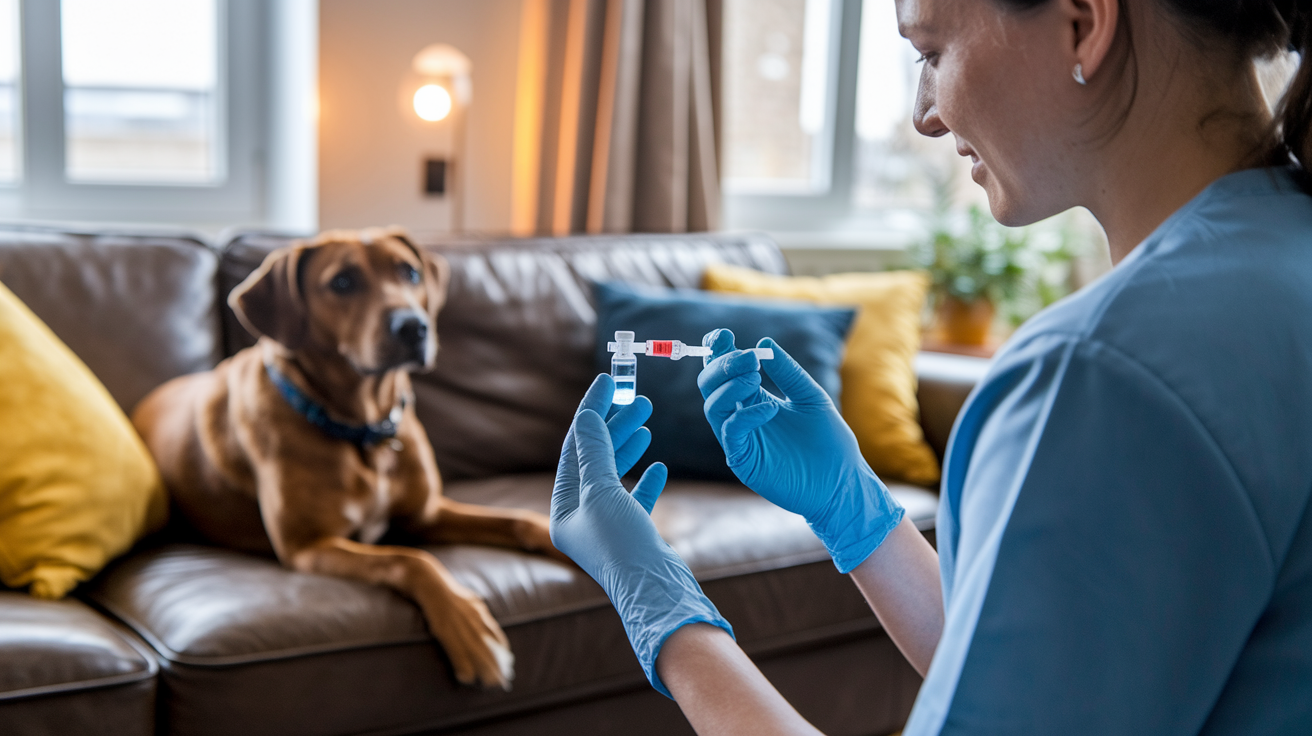
Once your vet’s diagnosed atopic dermatitis by ruling out fleas, infections, and food allergies, testing for environmental allergens tells you which specific triggers to target with immunotherapy. The test results become the recipe for a custom serum that contains tiny, gradually increasing amounts of the allergens your dog reacted to. The goal is to retrain the immune system to tolerate those substances instead of overreacting to them.
Immunotherapy’s the only treatment that can modify the progression of atopic dermatitis rather than just masking symptoms. It has a low side-effect profile compared to long-term steroids or immune-suppressing drugs.
But immunotherapy’s a slow process with mixed results. Studies show roughly 50 percent of dogs have mild to moderate improvement. Their itching decreases and flare-ups become less frequent or less severe, but they don’t become symptom-free. About 25 percent of dogs don’t respond at all. The remaining quarter see significant improvement. You won’t know which group your dog falls into until you’ve committed to several months of treatment.
It can take three to six months, sometimes up to a year, before you see meaningful change. During that time you’ll still need to manage symptoms with medications, shampoos, or topical treatments. The earlier you start immunotherapy in the course of the disease, the better the odds of a strong response. That’s why vets often recommend testing sooner rather than later for dogs with confirmed atopy.
The treatment itself involves either subcutaneous injections you give at home, usually starting with shots every few days and gradually spacing out to once or twice a month, or oral drops you squirt into your dog’s mouth daily. Some dogs tolerate one method better than the other. Injections are quick but require you to be comfortable handling needles. Oral drops are less invasive but need to be given consistently every single day without missing doses.
Either way, you’re looking at a long-term commitment, often lifelong. The monthly cost of $80 to $200 for serum refills adds up. Your vet will want to monitor progress every few months and may adjust the allergen mix or dosage if your dog isn’t responding as hoped.
What to Expect from Allergy Shots
The first few months are a loading phase where you give injections frequently to build up your dog’s tolerance. Your vet will provide a detailed schedule, often starting with shots every two to three days, then weekly, then every two weeks, until you reach a maintenance interval that might be once or twice a month. During this ramp-up period, watch for injection-site reactions like swelling, redness, or soreness. Usually mild but should be reported to your vet. Serious reactions like hives, facial swelling, or trouble breathing are rare but require immediate vet attention. May mean the serum needs to be diluted or reformulated.
Most dogs don’t show improvement until at least three months into treatment. Some take six to twelve months. Keep a log of itching frequency, the condition of ears and skin, and any flare-ups so you and your vet can track whether the immunotherapy’s working. If symptoms haven’t improved at all after a year, your vet may recommend stopping and focusing on symptomatic management instead.
If your dog does respond, you’ll likely continue the injections indefinitely. Stopping usually leads to symptoms creeping back over time. Consistency’s critical. Missing doses or stopping and restarting can reduce effectiveness, so plan for the long haul and build the routine into your monthly schedule from the beginning.
Weighing Cheaper Alternatives Before Committing to Testing

Before spending hundreds on allergy testing, try the cheaper, lower-risk strategies that often reduce symptoms without needing a diagnosis. Strict, year-round flea prevention is the single most cost-effective step because flea allergy dermatitis is extremely common and can look identical to environmental or food allergies. Even one flea bite can trigger weeks of itching in a sensitive dog. Use a vet-recommended product every single month and treat your home and yard if you’ve seen fleas. That alone solves the problem for many dogs and costs $15 to $40 per month depending on the product.
Environmental management helps too. Wash your dog’s bedding weekly in hot water. Vacuum carpets and furniture twice a week to reduce dust mites and pollen. Use a HEPA air filter in rooms where your dog spends the most time. Wipe your dog’s paws and belly with a damp cloth after walks to remove pollen and outdoor allergens before they spread around the house.
Bathing with a gentle, medicated shampoo once or twice a week can soothe irritated skin and rinse away surface allergens. Omega-3 fatty acid supplements support skin barrier health and reduce inflammation for $10 to $30 per month. These steps won’t cure allergies, but they often dial down the severity enough that your dog’s comfortable without testing or long-term medication.
Actionable alternatives to allergy testing include:
- Year-round flea prevention using vet products. Treat all pets in the household and the indoor/outdoor environment.
- Weekly bathing with medicated or hypoallergenic shampoos to remove allergens from the coat and soothe inflamed skin.
- Daily paw and belly wipes after outdoor time to reduce pollen, grasses, and environmental allergen transfer indoors.
- High-quality omega-3 fatty acid supplements to support skin health and reduce inflammatory responses.
- HEPA air purifiers and frequent washing of bedding, blankets, and soft furniture to minimize dust mites and indoor allergens.
- Trial of a limited-ingredient or hydrolyzed diet for 8 to 12 weeks to rule out food allergies before pursuing environmental testing.
Veterinary Guidance and Specialist Referrals for Allergy Testing
Your general vet’s the first stop. They’ll walk you through the diagnostic process before any testing happens. That means checking for fleas with a fine-tooth comb, doing skin scrapings to rule out mites, and running cytology on ear discharge or skin to check for bacterial or yeast infections. If those come back clear and symptoms persist, your vet may recommend an elimination diet trial before considering environmental allergy testing.
This step-by-step approach saves money and time because treating an undiagnosed ear infection or missing a flea infestation won’t be fixed by expensive allergy testing. Results will be misleading if other conditions are still active.
If the workup points toward atopic dermatitis, your vet may refer you to a vet dermatologist. Dermatologists have specialized training in diagnosing and managing allergies. They’re the ones who perform intradermal skin testing. They also help design and monitor immunotherapy protocols, troubleshoot when treatments aren’t working, and distinguish between allergies that look similar on the surface but need different approaches.
Not every dog needs a dermatologist. But if symptoms are severe, your dog’s been on steroids or antibiotics repeatedly without lasting improvement, or your general vet’s hit a wall with diagnosis, a specialist referral’s often worth the investment.
Before any allergy test, ask your vet about pre-test requirements. Intradermal testing usually requires stopping anti-itch medications, including antihistamines, steroids, and some immunosuppressants, for at least two weeks beforehand. These drugs can blunt skin reactions and produce false-negative results. That waiting period can be rough for an itchy dog, so discuss short-term symptom management options like medicated baths or topical sprays that won’t interfere with testing.
If sedation’s needed for intradermal testing, make sure you understand the sedation protocol, any risks for your dog’s age or health status, and what monitoring will happen during and after the procedure.
Questions to ask your vet before allergy testing:
- Have we ruled out fleas, mites, infections, and food allergies with a proper workup, or are we testing too soon?
- Which test do you recommend for my dog’s symptoms, intradermal or serum, and why’s that the better choice in our situation?
- What medications does my dog need to stop before testing, how long before the test, and how will we manage symptoms during that waiting period?
- What will the test results actually tell us, and how will those results change the treatment plan or improve my dog’s quality of life?
- What are the total expected costs, including the test itself, follow-up appointments, immunotherapy or other treatments, and ongoing management over the next year?
Final Words
You’ve weighed costs, test methods, and realistic follow-ups to make a clear choice about testing today.
Quick recap: at-home kits cost least but are least reliable; serum tests sit in the middle; intradermal testing is best for environmental allergies but costs more and may need sedation. Elimination diets still outperform lab tests for food reactions, and immunotherapy can add ongoing monthly costs.
Use what you learned to talk with your vet so you can answer the question, allergy testing for dogs worth it, for your dog—and move forward with calm confidence.
FAQ
Q: Is it worth getting your dog tested for allergies?
A: Getting your dog tested for allergies is worth it when itch, recurrent ear infections, or meds and diet haven’t helped—especially if you’ll consider long-term immunotherapy; discuss test type, costs, and urgent signs with your vet.
Q: What is the 3 day rule for allergies?
A: The 3 day rule for allergies means stopping short-acting antihistamines about 72 hours before allergy testing so medicines don’t mask reactions; confirm exact washout times and other drug stops with your vet.
Q: Can I take hydroxyzine before allergy testing?
A: Taking hydroxyzine before allergy testing is not recommended because it can blunt skin or blood test reactions; tell your vet all medications so they can recommend the correct washout period.
Q: Can an allergist help with autoimmune disease?
A: An allergist can help diagnose and manage some immune-related problems, but autoimmune diseases often need a specialist; for pets, ask your vet about referral to a veterinary internist or dermatologist.