

What if your dog’s persistent paw licking or your cat’s sore chin isn’t fleas but something in your house they’re touching?
Contact allergies often show up within 72 hours in areas with less fur, like paws, belly, or where a collar sits, and they can look like redness, crusts, or focused chewing.
This post walks you through clear signs, safe first-aid you can try at home, and easy steps to prevent repeat flares, plus when it really is time to call the vet.
You’ll get a calm, practical plan so you know exactly what to do next.
Practical Steps to Identify and Manage Contact Allergies in Pets
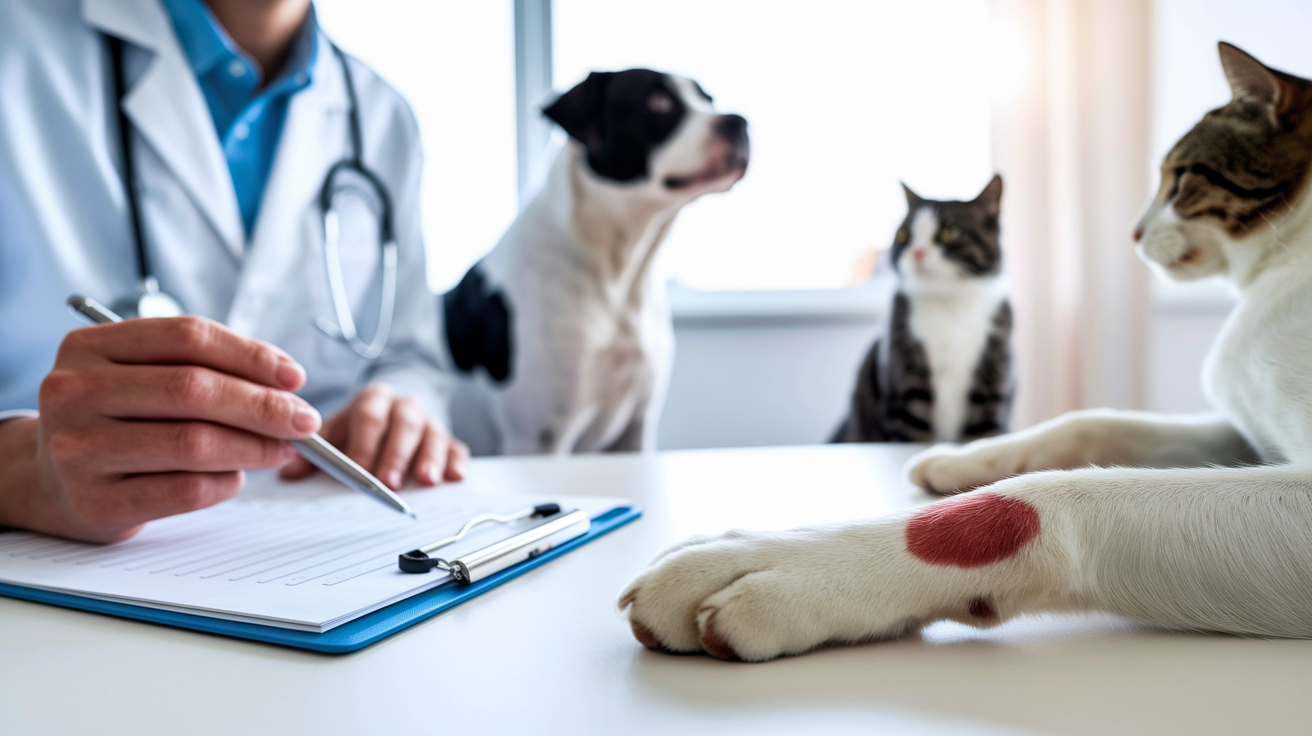
Contact allergy symptoms usually show up within 72 hours after your pet touches something new or bumps into a known trigger again. You’ll spot redness in areas where there’s less fur: the belly, groin, paws, the spot where the collar sits, or around the face and chin. Early on, you might see small raised bumps, thin crusts, or patches where the fur looks a bit thinner. Your pet will start licking, chewing, or scratching that spot more than usual.
Dogs and cats react differently. Dogs focus on their paws, licking between the toes or chewing at one specific foot, and they can develop hot spots fast. Those are moist, red, oozing patches that appear out of nowhere. Cats tend to get small, hard crusts scattered across the skin (miliary dermatitis) or raised, wet lesions (eosinophilic plaques), and they’ll overgroom until the fur’s thin or completely gone. Both will show thickened, darkened skin if the irritation keeps going for weeks without treatment.
When you remove the suspected trigger and stop your pet from licking the area, itching should ease within 24 to 72 hours, assuming there’s no bacterial or yeast infection developing underneath. If the itching stays intense or the skin looks worse after three days of careful care at home, it’s time to see the vet.
At-home observation checklist to figure out if the reaction is contact-related:
- Check the timing. Did symptoms start within three days of a new product, walk route, bedding, collar, or cleaning session?
- Look at the location. Are the red or crusty areas only where skin directly touches an object, like under a collar, on the belly where bedding sits, or between toes after a walk?
- Notice the pattern. Is the irritation on one side of the body (suggesting contact with one surface) or symmetrical on both paws or both sides of the abdomen?
- Watch your pet’s behavior. Are they licking, chewing, or rubbing one specific spot over and over, rather than scratching all over?
- Test removal. Does the itching calm down noticeably within 48 hours after you wash the area and take away the suspected item?
- Rule out fleas. Have you checked for flea dirt, seen live fleas, or noticed your pet scratching at the tail base or lower back (classic flea zones)?
Common Environmental Triggers That Cause Contact Allergies in Pets

Household cleaners and laundry products are some of the most frequent culprits. Floor cleaners, disinfectants, bleach, fabric softeners, scented detergents leave residues on surfaces your pet walks or lies on. Pesticides, fertilizers, lawn treatments can irritate paws and bellies during or after outdoor time. Fabrics and materials cause problems too: wool blankets, rubber-backed mats, synthetic bedding, latex toys.
Grooming products and accessories add another layer of risk. Flea collars, certain medicated shampoos, conditioners with fragrances, topical flea or tick treatments can cause redness right where they’re applied. Nickel-containing metal buckles, ID tags, snaps on collars irritate the neck and chin. Essential oils (tea tree, eucalyptus, citrus especially) are common irritants, and they’re particularly dangerous for cats. Outdoor plant exposures like poison ivy, poison oak, some ornamental ground-covering succulents can cause intense, localized reactions after a walk or playtime in the yard.
Grouped list of common contact allergens:
- Plants and outdoor substances: poison ivy, poison oak, ornamental succulents, grass treatments, herbicides, fertilizers, mulch treatments
- Household chemicals: floor cleaners, disinfectants, bleach, all-purpose sprays, air fresheners, scented candles, deodorizers
- Laundry and fabric care: scented detergents, fabric softeners, dryer sheets, stain removers
- Fabrics and materials: wool, rubber, latex, nylon, synthetic fibers in bedding or clothing
- Grooming and topical products: flea collars, medicated shampoos, conditioners, essential oils, topical flea/tick treatments
- Metals and fasteners: nickel in collar buckles, ID tags, snaps, metal bowls, jewelry
- Toys and household items: rubber toys, scented plastic, leather finishes, certain dyes in fabrics
- Other: wet-dog odor sprays, carpet deodorizers, paw balms with irritating ingredients
How Contact Allergy Symptoms Progress Over Time
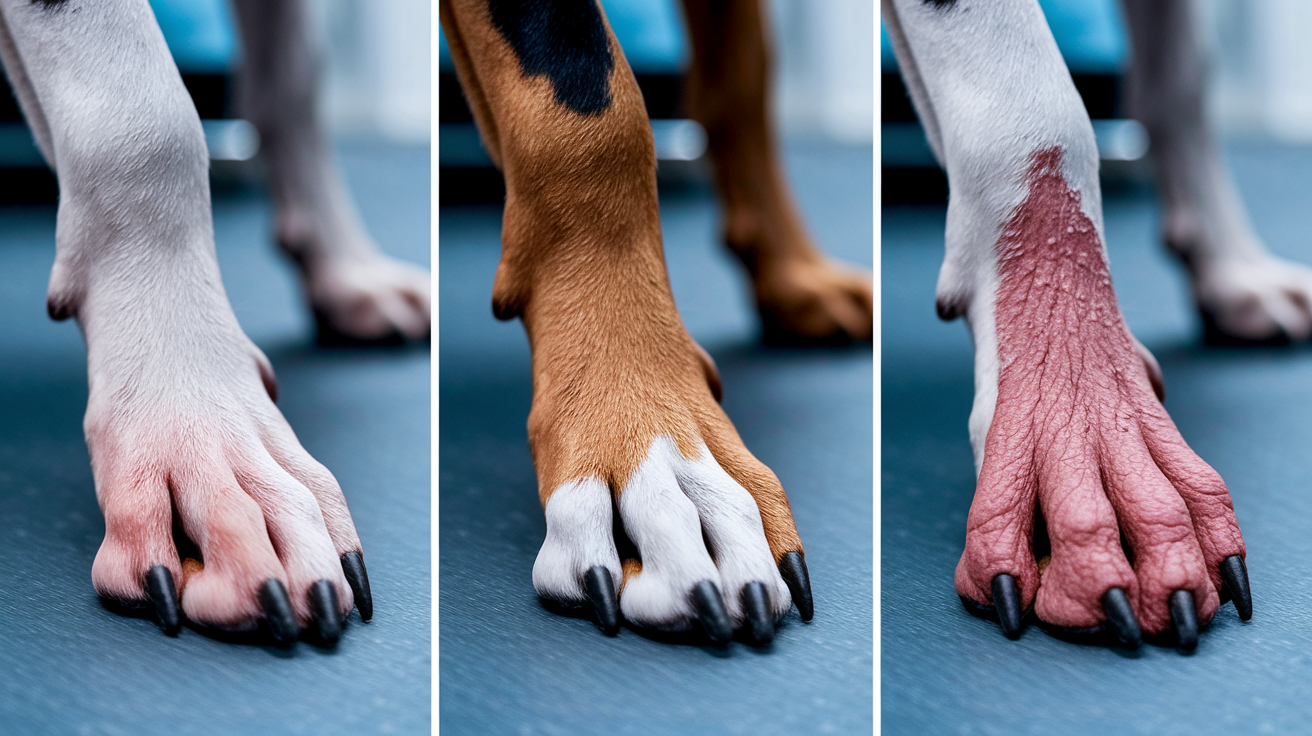
In the early stage, you’ll see mild redness and maybe a few small bumps where the skin touched the allergen. The area might feel slightly warm. Your pet will start paying more attention to it: sniffing, licking, gently scratching. Within a day or two, if the exposure continues or if your pet keeps licking, those small bumps can turn into papules (raised red dots) or develop into thin crusts. The skin may start to look shiny or moist if your pet’s saliva is constantly wetting it.
As the reaction moves into the mid-stage, you’ll notice crusting, oozing, small scabs forming. The fur in that area may look matted or start to thin out. Dogs often develop acute moist dermatitis (hot spots), which appear suddenly as round, red, weeping patches that spread fast if not managed. Cats form thicker crusts or plaques, and the skin underneath may look raw when the crust’s removed. The itching becomes more intense, and your pet’s licking or chewing becomes more frequent and focused.
In advanced cases where the allergen isn’t removed or the pet’s been reacting for weeks, the skin begins to thicken and darken. That’s called lichenification. The texture changes from smooth to leathery, and pigmentation increases, leaving gray or black patches. Hair may not grow back in those areas until the inflammation fully resolves. Behavioral signs escalate too. What started as occasional licking turns into constant chewing, sometimes to the point of creating deep sores or self-trauma that needs medical intervention.
Immediate At-Home Care for Suspected Contact Allergy Flares
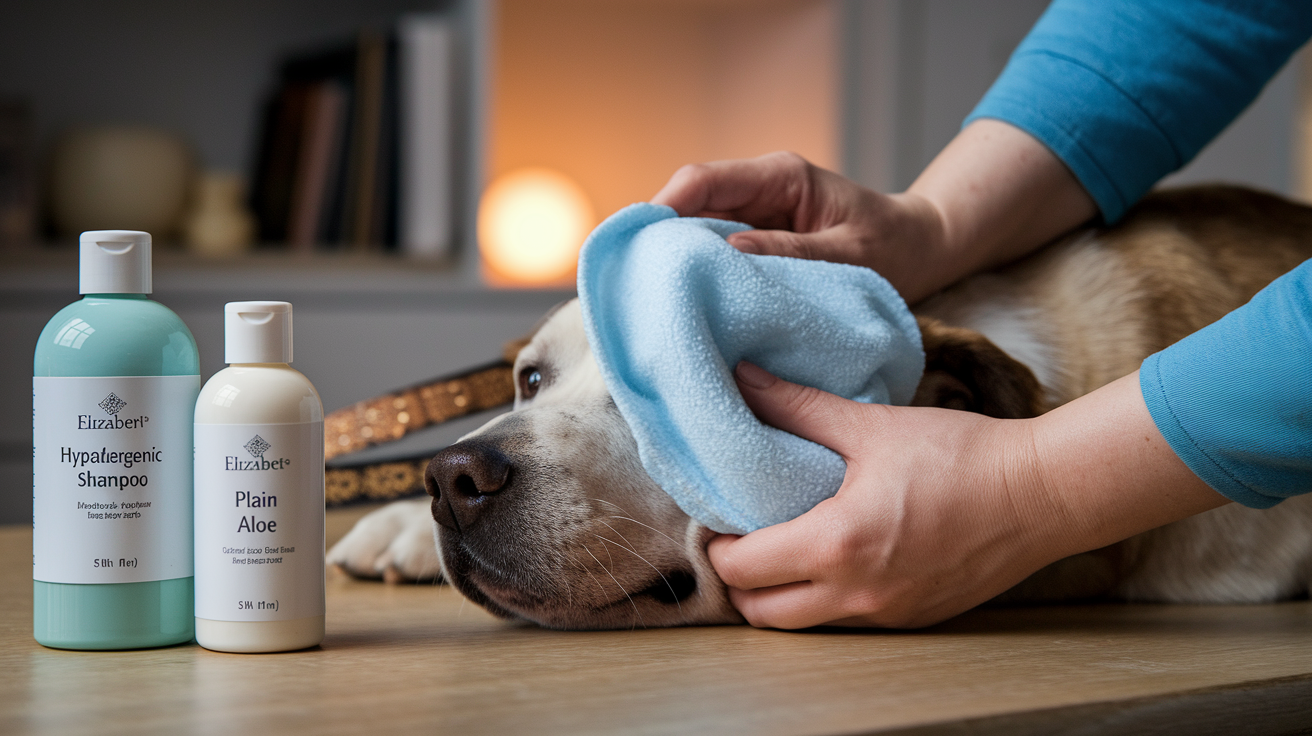
First thing: remove or isolate the suspected trigger. If you think it’s a new blanket, collar, or cleaning product, take it away right now and keep your pet off treated floors or freshly cleaned surfaces until they’re fully dry and aired out. Next, wash the affected area gently with room-temperature water to rinse off any residue. Use a mild, hypoallergenic or oatmeal-based shampoo if the irritation’s widespread. Lather gently, let it sit for five minutes, rinse thoroughly, dry your pet completely with a clean towel.
Cool compresses help reduce heat and itching quickly. Soak a clean cloth in cool (not ice-cold) water, wring it out, hold it gently against the irritated skin for 10 to 15 minutes. Repeat every four to six hours during the first day. A thin layer of plain aloe vera gel (with no added alcohol or fragrance) can soothe mild redness, but don’t apply anything else like human steroid creams or essential oils without checking with your vet first. An Elizabethan collar (cone) is essential to stop your pet from licking and making things worse while the skin starts to heal.
Step-by-step immediate care protocol for the first 72 hours:
- Remove the suspected allergen from your pet’s environment immediately. Take off the collar, blanket, or toy, and keep your pet away from treated surfaces.
- Rinse or bathe the affected area with lukewarm water and a fragrance-free hypoallergenic shampoo. Dry thoroughly with a clean towel.
- Apply cool compresses (cloth soaked in cool water) to the irritated skin for 10 to 15 minutes, repeating every 4 to 6 hours.
- Use a thin layer of plain aloe vera gel on mild redness if your vet approves. Avoid human creams or oils.
- Put an Elizabethan collar on your pet to prevent further licking, chewing, or scratching during the healing window.
- Wash all bedding, blankets, any fabric your pet contacted in hot water (60°C / 140°F) to remove allergen residue.
- Monitor the area closely. If itching doesn’t improve within 48 hours, or if you see swelling, pus, or a foul smell, contact your veterinarian.
Veterinary Diagnosis: How Professionals Confirm Contact Allergies

Your vet will start with a detailed history and physical exam, asking when symptoms began, what changed in your home or routine, which parts of your pet’s body are affected. They’ll look closely at the distribution of lesions. Contact allergies usually show up in areas with less hair and where direct contact happens, like the belly, paws, or neck. The vet will also check for signs of secondary infection, because bacteria and yeast often move into irritated, broken skin.
Patch testing is the gold standard for diagnosing true contact allergies. Small amounts of suspected allergens are applied to shaved skin, usually on the side of your pet’s chest, and covered with a bandage for 48 to 72 hours. The vet then checks for localized redness or swelling at each test site. This test requires patience and often a referral to a veterinary dermatologist, because it’s not available at every general practice. If patch testing isn’t an option, your vet may recommend a controlled avoidance trial: removing all suspected triggers for two to eight weeks and watching for improvement.
Skin cytology and scraping are quick, same-visit tests. The vet collects cells or debris from the irritated area with a slide or tape strip and examines them under a microscope to check for bacteria, yeast, or mites. If infection’s present, a bacterial or fungal culture may be sent to a lab, with results coming back in 3 to 10 days. For unusual or persistent lesions, a skin biopsy might be necessary. A small sample is sent for histopathology, and you’ll usually get results within 7 to 14 days. Some clinics recommend a short stay in a hypoallergenic environment (using only stainless steel bowls, unscented bedding, minimal products) for 10 to 14 days to see if symptoms improve when all potential triggers are removed.
| Test | Purpose | Timeline |
|---|---|---|
| Patch testing | Identify specific contact allergens by applying substances to skin and observing reactions | 48–72 hours |
| Skin cytology & scraping | Detect bacteria, yeast, or mites under a microscope | Same visit (immediate) |
| Bacterial/fungal culture | Identify specific infection and guide antibiotic or antifungal choice | 3–10 days |
| Skin biopsy | Examine tissue for unusual inflammation, rule out immune conditions or cancer | 7–14 days |
| Avoidance trial | Remove suspected allergen and monitor for symptom improvement | 2–8 weeks |
Short-Term Medical Treatment Options Used by Veterinarians
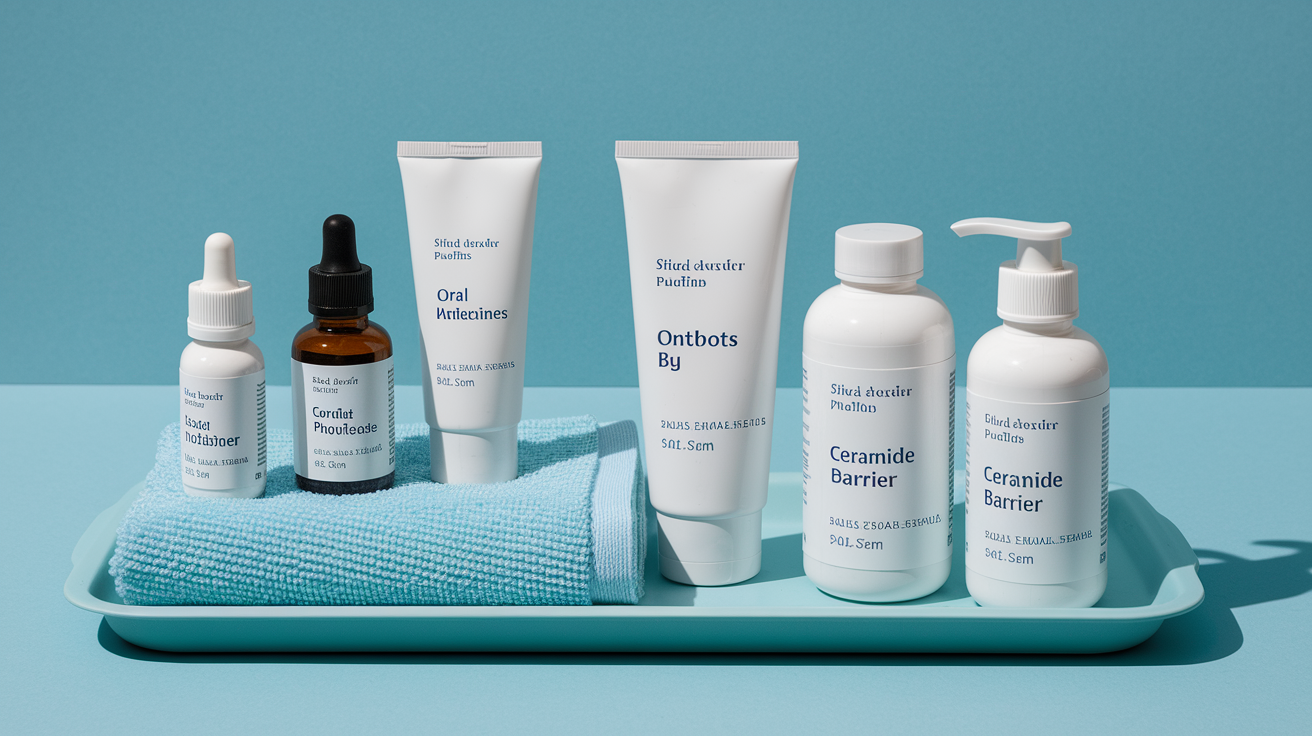
Topical corticosteroids are often prescribed to quickly reduce inflammation and itching. These are usually applied once or twice daily to the affected area, and many pets show noticeable relief within 24 to 48 hours. Your vet will choose a strength and formulation that’s safe for the location. Some areas, like the face or groin, require gentler products. Oral antihistamines can help manage itching, though response varies between individual pets. When they work, you’ll typically see improvement within one to three days.
If your vet finds a secondary bacterial or yeast infection during cytology, they’ll prescribe antimicrobials. Oral antibiotics for bacteria or antifungal medications for yeast. These are usually given for 7 to 14 days, and the skin often starts to look and smell better within the first few days of treatment. For more severe or widespread inflammation, your vet might recommend a short course of oral corticosteroids or newer itch-relief medications like oclacitinib, which can calm the immune response quickly. Topical ceramide creams or veterinary barrier balms (typically priced around $15 to $40) help repair the skin’s protective layer and are applied once or twice daily as part of ongoing care. Hypoallergenic shampoos (usually $8 to $25 per bottle) are recommended for bathing every three to seven days during a flare, then weekly for maintenance.
Common short-term treatments and their expected timelines:
- Topical corticosteroid ointments or sprays: reduce redness and itching within 24 to 48 hours. Applied 1 to 2 times daily as directed.
- Oral antihistamines: may relieve itching within 1 to 3 days. Effectiveness varies by individual pet.
- Oral antibiotics: treat secondary bacterial infections. Typical course is 7 to 14 days with visible improvement in the first few days.
- Antifungal medications (oral or topical): for yeast overgrowth. Courses run 7 to 21 days depending on severity.
- Ceramide or barrier creams: applied 1 to 2 times daily to support skin healing and protection. Expect gradual improvement over 1 to 2 weeks.
- Hypoallergenic medicated shampoos: used every 3 to 7 days during flares. Help remove allergens and soothe inflamed skin.
Long-Term Management Strategies to Prevent Recurring Contact Reactions

Long-term success comes from identifying and removing the trigger, then maintaining a low-irritant environment. Start by replacing or modifying items that contact your pet’s skin regularly. Swap out collars with metal buckles or snaps for plain nylon or leather versions, or choose stainless steel hardware if metal’s necessary. Use stainless steel or ceramic food and water bowls instead of plastic or nickel-plated ones. If your pet’s symptoms improve after these changes, you’ve likely found at least part of the problem.
Wash all bedding, blankets, soft toys weekly in hot water (at least 60°C / 140°F) using a fragrance-free, dye-free laundry detergent. Skip fabric softeners and dryer sheets entirely, because the residues they leave behind are common irritants. Switch to unscented, pet-safe household cleaners for floors and surfaces, and make sure treated areas are completely dry before your pet walks on them. If your pet goes outdoors, rinse their paws, legs, belly with plain water after walks, especially if they’ve been on treated grass or near ornamental plants. Applying a vet-recommended barrier cream to paws and other contact-prone areas once or twice daily can create a protective layer that reduces direct allergen contact.
Strict year-round flea control is essential, because even a few flea bites can make existing skin inflammation much worse. Use only veterinary-approved flea prevention products, and make sure every pet in your home is treated. When you introduce any new product (whether it’s a shampoo, toy, bedding item, or cleaning spray), monitor your pet closely for 7 to 14 days. If you see redness or increased licking, remove the new item and return to your previous routine. Patience and careful observation are the most effective tools for long-term management.
Routine-based prevention steps to reduce recurring contact reactions:
- Replace collars with metal buckles or snaps with plain nylon, leather, or stainless steel hardware. Inspect regularly for wear or rough edges.
- Wash all bedding and soft toys weekly in hot water (60°C / 140°F) with fragrance-free, dye-free detergent. Avoid fabric softeners.
- Use only unscented, pet-safe household cleaners. Ensure floors and surfaces are fully dry before your pet accesses them.
- Rinse your pet’s paws, legs, belly with plain water after outdoor time, especially after walks on treated lawns or through vegetation.
- Apply a vet-approved barrier cream to paws and other high-contact areas 1 to 2 times daily to create a protective layer.
- Maintain strict year-round flea control on all household pets using veterinary-approved products. Even a few bites worsen skin inflammation.
- Patch-test any new grooming product, toy, bedding item, or cleaning product on a small area for 48 to 72 hours before full use.
- Monitor closely for 7 to 14 days after introducing new items. Remove immediately if you see redness, licking, or scratching.
Safe Grooming Practices and Product Choices for Sensitive Pets

Choose grooming products labeled “hypoallergenic,” “fragrance-free,” and “soap-free.” Oatmeal-based or ceramide-enriched shampoos (typically $8 to $25 per bottle) are gentle options that soothe irritated skin without adding more irritation. Always rinse thoroughly, because leftover shampoo residue can itself become an irritant. After bathing, dry your pet completely with a clean towel, paying extra attention to skin folds, between toes, under the collar area where moisture can linger and invite yeast overgrowth.
For quick cleanups between baths, use hypoallergenic pet wipes (around $6 to $15 per pack) that are free of alcohol, fragrance, harsh preservatives. Read ingredient lists carefully. Avoid products containing essential oils, especially if you have a cat, because many oils are toxic to felines even in small amounts. When buying bowls, beds, or collars, look for simple materials: stainless steel bowls (around $10 to $40), plain cotton or fleece bedding that can be washed at high temperatures, collars made from single-material construction without decorative elements that might contain nickel or latex.
Short checklist for selecting safe products for sensitive pets:
- Choose fragrance-free, dye-free, soap-free grooming products. Check labels for “hypoallergenic” claims.
- Avoid essential oils entirely in cat products. Use caution with dogs and patch-test first.
- Select stainless steel or ceramic food and water bowls. Avoid plastic or nickel-plated metal.
- Buy plain, washable bedding made from cotton or fleece. Skip synthetic blends, rubber backing, wool.
- Patch-test new grooming products on a small area (inner thigh or flank) for 48 to 72 hours before applying to the whole body.
Species Differences in Managing Contact Allergies in Cats vs Dogs
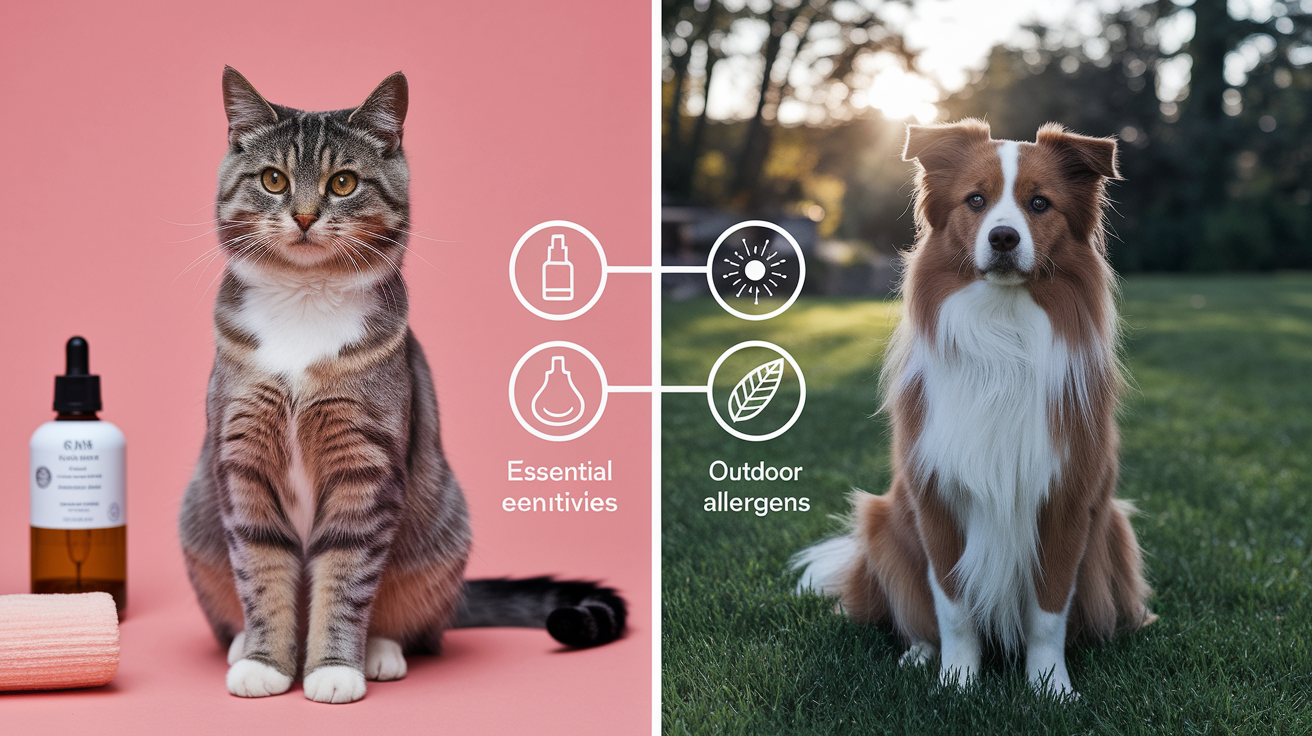
Cats are far more sensitive to essential oils and certain chemicals than dogs. Tea tree oil, eucalyptus, citrus oils, permethrin (a common ingredient in dog flea treatments) can be toxic to cats, causing tremors, drooling, even liver failure. Never use a dog-specific flea collar or spot-on treatment on a cat, and avoid grooming sprays or shampoos that list essential oils in the ingredients. When treating a cat’s contact allergy, always confirm that every product, including barrier creams and medicated ointments, is explicitly labeled as cat-safe.
Dogs tolerate a wider range of topical treatments and oral medications, but they’re more likely to encounter outdoor allergens: grass treatments, mulch, fertilizers, plant exposures, because they spend more time on lawns and trails. Dogs also tend to show their discomfort through repetitive behaviors like paw licking and chewing, which can quickly create hot spots. Cats often overgroom in private, so you might not catch the behavior until you see bald patches or crusty skin. Both species benefit from weekly bedding washes and fragrance-free products, but the product selection process requires extra caution with cats.
For cats, hypoallergenic wipes and shampoos should be alcohol-free and oil-free. Bathing frequency is usually lower than for dogs because most cats groom themselves effectively. For dogs, more frequent bathing (weekly during flares, then every two weeks for maintenance) helps rinse off outdoor allergens and prevent buildup. Both species should have stainless steel bowls and plain bedding, but dogs may need additional paw rinses after every outdoor trip if lawn chemicals or plants are suspected triggers. Always consult your vet before starting any new topical or oral treatment, especially in cats, where safe dosing and product selection are more restricted.
When to Seek Veterinary or Emergency Care for Contact Allergy Symptoms

If you see facial swelling (especially around the eyes, lips, or muzzle), treat it as an emergency. Swelling of the tongue, difficulty breathing, sudden collapse are signs of anaphylaxis, a life-threatening allergic reaction that requires immediate veterinary care. These symptoms can appear within minutes of exposure to a severe allergen and need urgent intervention with injectable medications. Don’t wait or try home care. Get your pet to a vet or emergency clinic right away.
For non-emergency situations, schedule a veterinary visit if your pet’s symptoms don’t improve within 48 to 72 hours after you’ve removed the suspected allergen and started gentle home care. Also contact your vet if you notice any discharge (yellow, green, or white pus), a foul smell coming from the irritated area, rapidly spreading lesions, or if your pet seems more lethargic or stops eating. These signs suggest a secondary infection or a more serious underlying condition that won’t resolve with at-home management alone.
Red flags that require prompt veterinary attention:
- Facial, lip, or tongue swelling, or any difficulty breathing. Seek emergency care immediately.
- No improvement in itching or redness after 48 to 72 hours of removing the allergen and providing home care.
- Presence of pus, thick discharge, or a foul odor from the affected skin.
- Rapidly spreading or worsening lesions despite your efforts to stop licking and clean the area.
- Behavioral changes like lethargy, loss of appetite, or hiding, which may indicate pain or systemic illness.
- New swelling, heat, or severe pain when you gently touch the irritated area.
Monitoring Progress: Symptom Tracking, Timelines, and Home Documentation
Keep a simple symptom diary or use your phone’s notes app to track what you see each day. Write down the date, which body areas are affected, how intense the itching seems (mild, moderate, severe), any changes you made like removing a blanket, switching detergents, or starting a new shampoo. This record helps you and your vet spot patterns and figure out which changes actually made a difference. It’s especially useful during avoidance trials, when you’re testing whether removing a specific item improves symptoms over several weeks.
Take clear, well-lit photos of the affected skin every two to three days. Use the same lighting and angle each time so you can compare images side by side. If you’re not sure whether the redness is fading or the hair is starting to grow back, photos make the progress (or lack of it) much clearer. Bring these images to your vet appointment. They provide a visual timeline that’s more reliable than memory alone, especially if symptoms come and go or improve slowly.
Quick checklist for effective symptom tracking and documentation:
- Record the date and time you first noticed symptoms, and note any new products, activities, or environmental changes in the 72 hours before symptoms appeared.
- Take daily or every-other-day photos of the affected areas using consistent lighting and angles. Label photos with the date.
- Track your pet’s behavior. Write down how often they lick, chew, or scratch, and whether the intensity increases or decreases over time.
- Note any treatments you start at home (baths, compresses, new bedding) and when you applied them, so you can match improvements to specific actions.
- Monitor expected timelines: itching should ease within 24 to 72 hours if the allergen is removed. Visible healing of lesions typically takes 7 to 14 days. If no improvement occurs within this window, schedule a vet visit.
Final Words
You’ve got practical steps to spot contact reactions fast — what they look like, how quickly they can appear, and the differences you might see in dogs versus cats.
You also learned common triggers, safe at‑home first aid for the first 72 hours, and what to track so a vet can help if needed.
If you put these tips into practice, managing contact allergies in pets becomes more doable. Be patient, watch for red flags, and know that small changes often lead to clearer answers and relief.
FAQ
Q: What are common signs of a skin contact reaction in dogs and cats?
A: The signs of a skin contact reaction in dogs and cats include redness, papules, crusts, hair loss, thickened skin, intense localized itching; dogs lick or chew paws and get hot spots, cats overgroom or show miliary dermatitis.
Q: How quickly do contact allergy signs appear and how fast do they improve?
A: Contact allergy signs often appear within minutes to 72 hours, and removing the suspected trigger usually leads to improvement within 24–72 hours if there’s no secondary infection.
Q: What common environmental triggers cause contact allergies in pets?
A: Common environmental triggers include household chemicals and detergents, pesticides and fertilizers, plants like poison ivy, fabrics and collars (wool, rubber, nickel), shampoos, essential oils, and flea-control products.
Q: What should I do at home during the first 72 hours of a suspected contact allergy flare?
A: For the first 72 hours bathe with a hypoallergenic or oatmeal shampoo, rinse well, use cool compresses 10–15 minutes every 4–6 hours, apply plain aloe or barrier cream, use an E-collar, and wash bedding hot.
Q: How can I tell if a reaction is likely contact-related?
A: A reaction is likely contact-related if it appears on exposed areas (belly, groin, neck, paws), starts within 72 hours of exposure, and improves within 24–72 hours after the suspected trigger is removed.
Q: When should I call the vet or seek emergency care for contact allergy symptoms?
A: Call your vet or seek emergency care for facial or tongue swelling, trouble breathing, collapse, severe spreading sores, pus or foul odor, or no improvement after 48–72 hours of avoidance and home care.
Q: How do veterinarians confirm contact allergies and how long do tests take?
A: Veterinarians confirm contact allergies with history and exam, patch testing (48–72 hours), skin cytology, cultures (3–10 days), biopsy (7–14 days) and 2–8 week avoidance trials to spot improvement.
Q: What short-term medical treatments might a vet use for contact dermatitis?
A: Short-term veterinary treatments include topical corticosteroids (often help in 24–48 hours), oral antihistamines (1–3 days), antibiotics or antifungals for infections (7–14 days), and prescription anti-itch medications as needed.
Q: How can I prevent recurring contact reactions at home long-term?
A: Prevent recurrences by washing bedding weekly at 60°C, replacing suspect collars, using fragrance-free cleaners and hypoallergenic fabrics, applying barrier cream 1–2 times daily, maintaining flea control, and rinsing paws after outdoors.
Q: What grooming practices and products are safest for sensitive pets?
A: Safe grooming choices are fragrance-free, hypoallergenic shampoos and wipes; avoid essential oils in cats. Patch-test new products on a small area for 48–72 hours to check for a reaction before full use.
Q: How does managing contact allergies differ between cats and dogs?
A: Management differs because cats are highly sensitive to essential oils and permethrin, so use cat-safe products; dogs commonly get paw-chewing, hot spots, and plant exposures, so focus on rinsing paws and collar choices.
Q: How should I track symptoms and prepare documentation for a vet visit?
A: Track symptoms with a daily diary and photos, note when signs started, locations, water intake, and treatments; expect itching to improve in 24–72 hours and bring records and clear photos to the vet appointment.