

Is your dog quietly dropping up a mouthful after dinner, or is he gagging and retching like he’s trying to empty his stomach?
They can seem the same, but one is passive regurgitation (undigested food coming back from the esophagus) and the other is active vomiting with belly contractions and sour bile.
Knowing which one you’re seeing changes what the vet will look for and how fast you need care.
In this post I’ll show clear signs, timing tips, and what to do next.
Understanding the Key Differences Between Regurgitation and Vomiting in Dogs
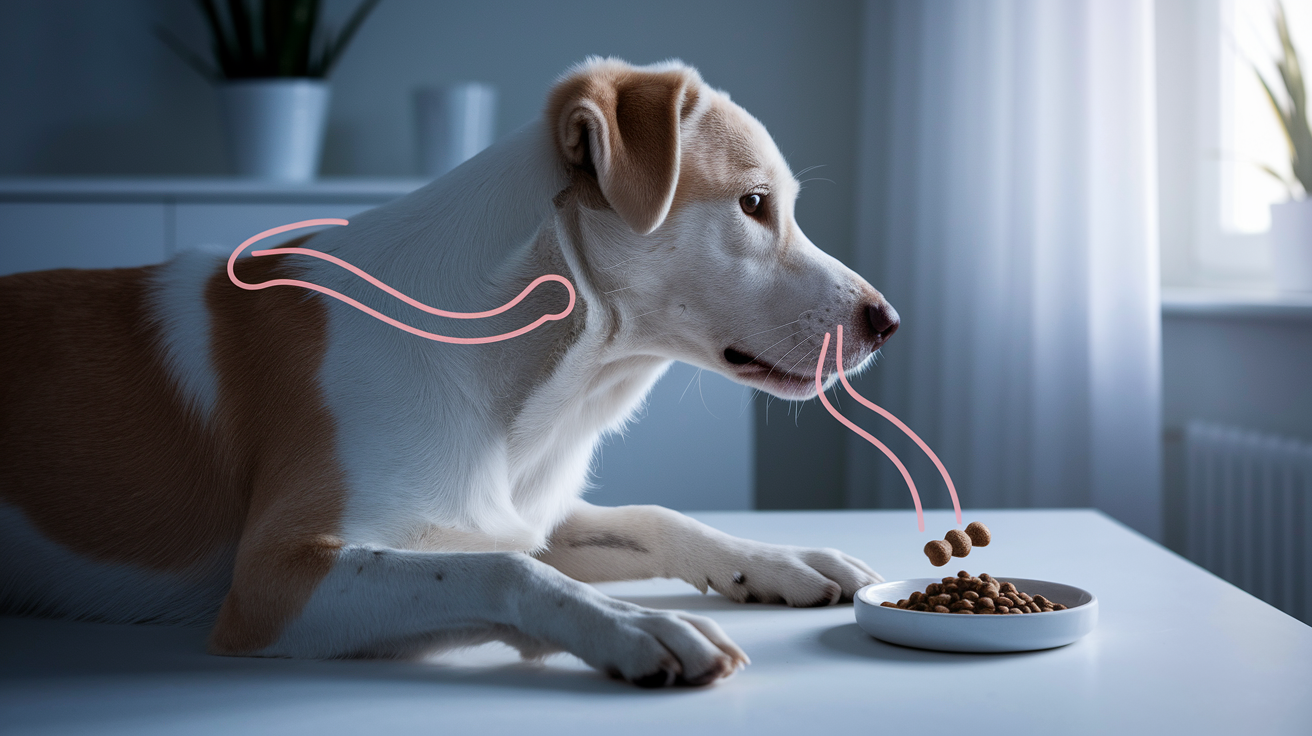
Regurgitation is passive. Your dog brings up undigested food or liquid from the esophagus without any real effort. It’s not forceful. There’s no belly strain, no warning signs. Just a quiet lowering of the head and out it comes.
Vomiting is the opposite. It’s active and deliberate. You’ll see your dog’s stomach muscles tighten hard, sometimes multiple times before anything comes out. There’s retching. There’s effort.
With regurgitation, the food looks exactly like it did when your dog ate it. Still whole, maybe shaped like a tube because it sat in the esophagus. It usually happens right after eating or drinking. Vomit can show up hours later and often has bile in it, that yellow or greenish fluid. The food’s partially digested and mushy.
The timing tells you a lot. Regurgitation happens fast, within minutes or maybe a couple hours after a meal. Vomiting doesn’t follow that pattern. It can happen anytime, even when your dog’s stomach is empty.
Why does this matter? Because they point to completely different problems. Regurgitation means something’s wrong with the esophagus. Could be a blockage, megaesophagus, or something stuck in the throat. Vomiting points to the stomach, intestines, or even organs outside the digestive system. Pancreatitis. Kidney disease. Poisoning. Intestinal blockage.
When you can tell your vet exactly what happened, whether your dog heaved and strained or just calmly dropped food without effort, you’re giving them a head start.
Visual and Behavioral Indicators Owners Can Look For
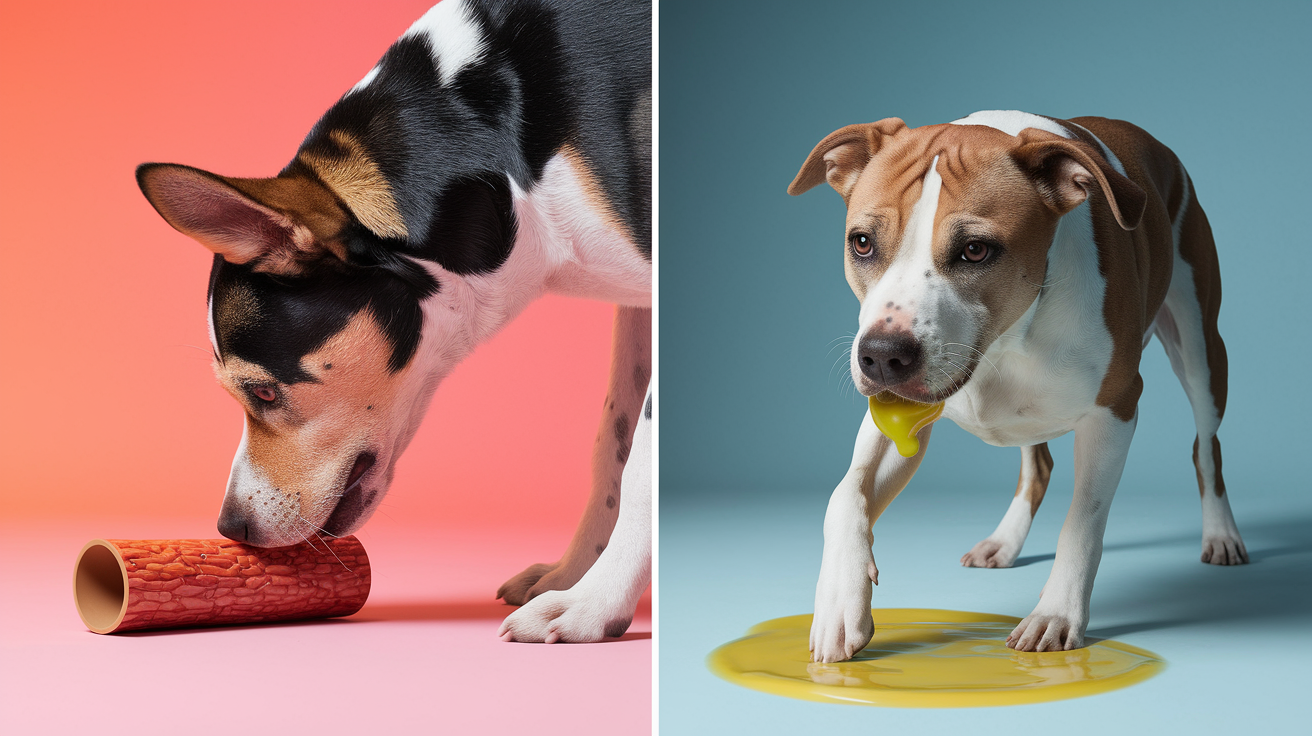
Regurgitated material looks fresh. It’s slick with saliva, sometimes tube-shaped, and smells like regular food. Not sour. Not foul. Your dog might lower their head, open their mouth, and the food just falls out. Some dogs will turn around and eat it again because it still seems like food to them.
There’s usually no warning. No pacing. No drooling beforehand. And afterward? Your dog acts totally normal.
Vomit is different. It’s mushy, partially broken down, often mixed with bile. Smells acidic. Before it happens, you’ll see nausea signs. Excessive drooling, repeated swallowing, pacing, whining. Your dog’s abdomen will contract hard. You’ll hear retching or gagging. Afterward, many dogs look tired or uncomfortable.
Here’s what to watch for:
Abdominal effort — Vomiting involves obvious belly contractions. Regurgitation doesn’t.
Sound — Vomiting comes with retching. Regurgitation is silent.
Appearance — Regurgitated food is undigested and tube-shaped. Vomit is mushy and often has bile.
Smell — Regurgitated food smells normal. Vomit smells sour.
Timing — Regurgitation happens right after eating. Vomiting can happen anytime.
Behavior before — Vomiting is preceded by nausea signs like drooling or pacing. Regurgitation happens without warning.
Timing Patterns and What They Reveal About Your Dog’s Health
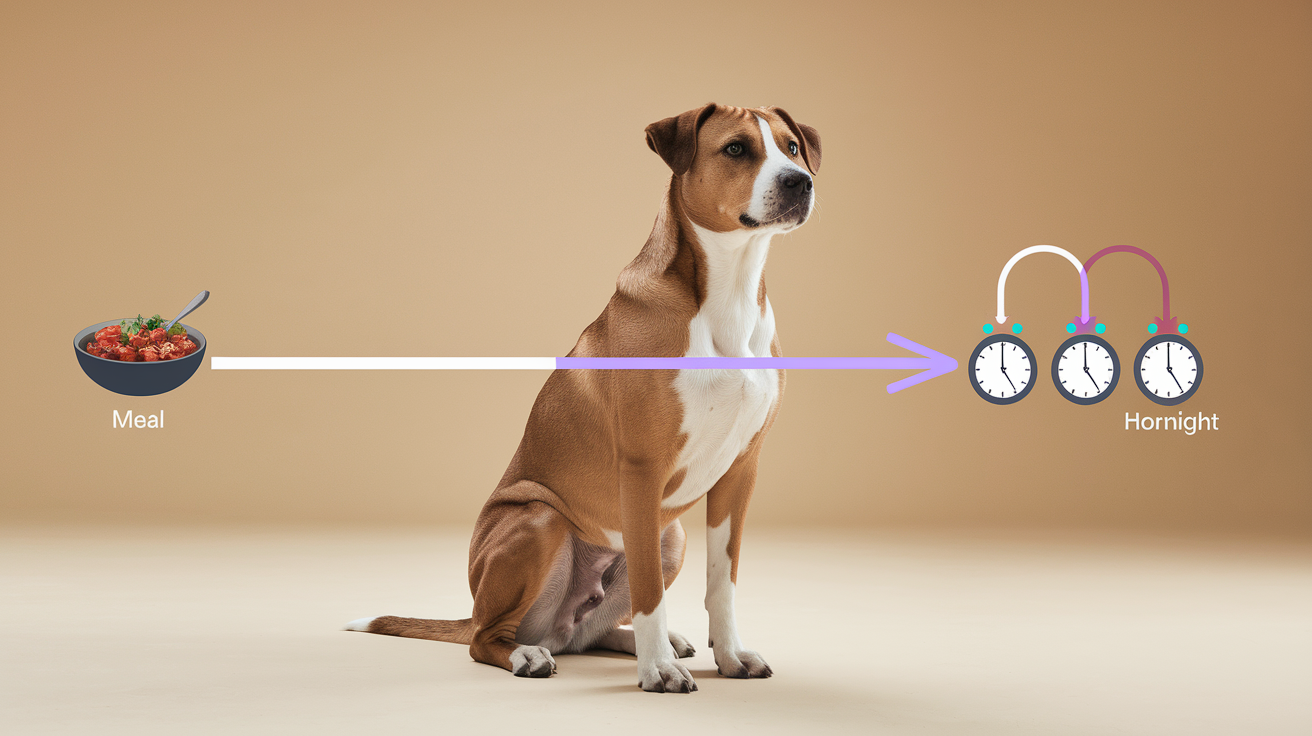
Regurgitation almost always happens within minutes to maybe a couple hours after your dog eats or drinks. The food never made it to the stomach, so it comes back up fast and still looks whole. If your dog regurgitates every time they eat, or only after eating too fast or drinking a big gulp of water, that pattern points straight to the esophagus.
Vomiting doesn’t follow a schedule. Your dog might vomit an hour after breakfast. Or they might vomit bile in the middle of the night when their stomach is empty. If your dog vomits food six to eight hours after eating, when the stomach should be empty, that’s a red flag. Could be a blockage or a problem with how the stomach empties.
Vomiting that happens repeatedly over several hours, or vomiting that won’t stop even when your dog hasn’t eaten, means something more serious than a simple upset stomach.
Common Causes and Risk Factors for Each Condition
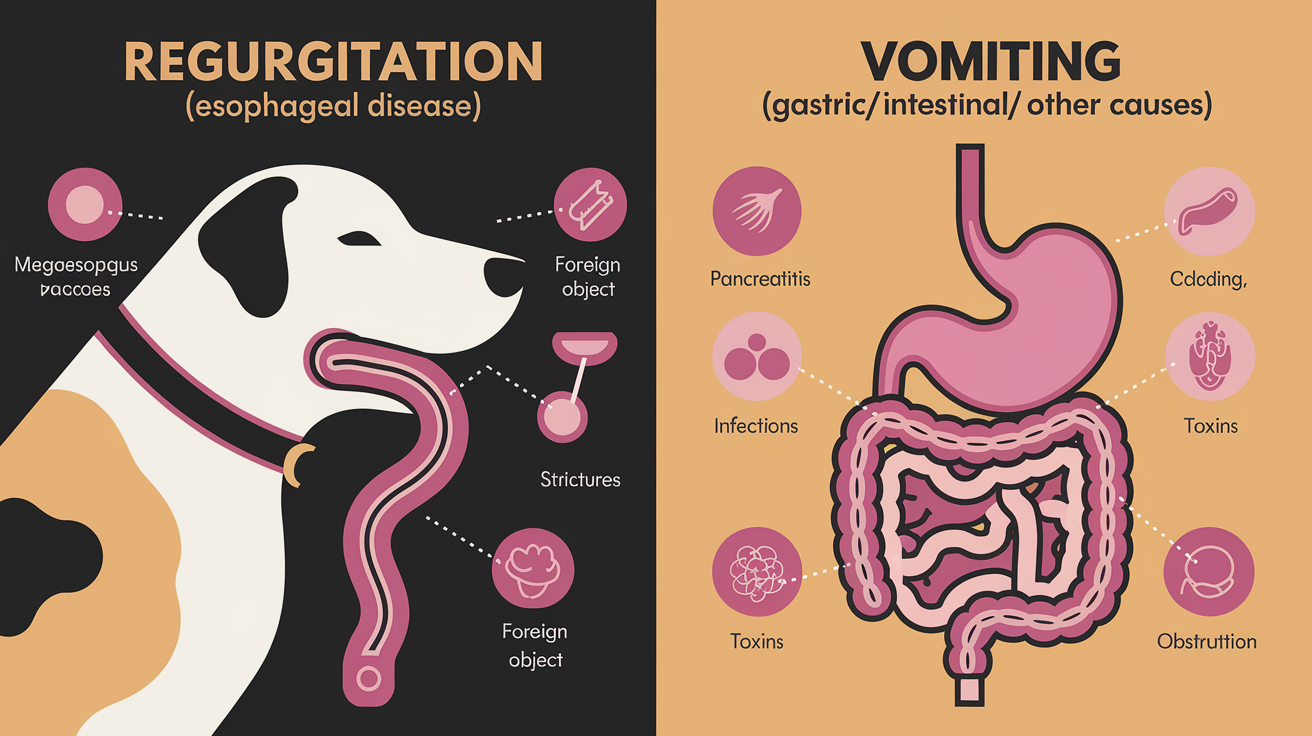
Regurgitation is almost always linked to esophageal disease. The most common cause is megaesophagus, where the esophagus becomes floppy and dilated. It can’t push food down into the stomach. Food pools in the esophagus and eventually comes back up.
Other esophageal causes include strictures (scarring that narrows the tube), foreign objects stuck in the throat or esophagus, masses or tumors, inflammation, or congenital problems like a vascular ring that pinches the esophagus.
Certain breeds carry higher risk. German Shepherds, Great Danes, Irish Setters, and Labrador Retrievers are predisposed to megaesophagus. Flat-faced breeds like French Bulldogs, English Bulldogs, Boston Terriers, Lhasa Apsos, and Shih Tzus are prone to esophageal problems in general.
Vomiting has a much wider range of causes. It can involve the stomach, intestines, and sometimes organs far from the digestive tract. Common culprits include eating something they shouldn’t, food that’s too rich or spoiled, parasites, bacterial or viral infections (like parvovirus), inflammatory conditions (gastroenteritis, pancreatitis, inflammatory bowel disease), foreign bodies or obstructions, ulcers, liver disease, kidney disease, toxins (antifreeze, certain plants, chemicals), medications, hormonal disorders (Addison’s disease, diabetic ketoacidosis), and even pain or increased pressure in the brain from trauma or tumors.
Eating too fast can also trigger vomiting, though it’s less common than with regurgitation.
When you bring your dog to the vet, they’ll ask detailed questions about timing, what the expelled material looked like, whether you saw retching, and how your dog is acting otherwise. They’ll do a physical exam and may recommend bloodwork, x-rays, or other imaging to look at the esophagus, stomach, and surrounding organs. For chronic regurgitation, x-rays or a contrast study (special dye that shows up on x-rays) can reveal megaesophagus, strictures, or foreign bodies.
When You Should Seek Veterinary Care

If your dog vomits or regurgitates more than once in a week, call your vet. One isolated episode in an otherwise healthy, active dog may not be an emergency, especially if they ate something unusual or ate too fast. But repeated episodes mean something is wrong.
Watch for other signs that tell you to move faster. Lethargy. Refusal to eat or drink. Diarrhea. Blood in the vomit (bright red or dark, coffee-ground texture). Abdominal pain (hunched posture, whining when you touch the belly). Difficulty breathing. Collapse. Continuous retching with nothing coming up (a sign of bloat, which is life-threatening).
Regurgitation that happens consistently after every meal, or regurgitation paired with weight loss, coughing, or difficulty swallowing, needs a vet workup. If you suspect your dog swallowed a foreign object (a toy, bone fragment, or piece of fabric), don’t wait. Objects can lodge in the esophagus or stomach and cause obstruction, infection, or perforation.
Before your appointment, try to capture a short video of an episode so your vet can see exactly what happened. If possible, collect a sample of the expelled material in a covered plastic container. Those two pieces of evidence help your vet diagnose faster and more accurately.
Final Words
You can now tell regurgitation (a quick, passive expel of undigested food) from vomiting (forceful, with retching and partly digested material). The post walked through visual clues, timing, common causes, and clear vet triggers.
Today, jot down what you saw, when it happened, and any other symptoms. If it’s repeated, there’s blood, your dog won’t keep water, or they seem very unwell — call your vet right away.
Use “dog regurgitation vs vomiting” when describing the episode to your vet. You’re better prepared to act and help your dog feel better.
FAQ
Q: Is regurgitation worse than vomiting in dogs?
A: Regurgitation is not necessarily worse than vomiting in dogs. It reflects different problems—often esophagus issues—while vomiting signals stomach or intestinal disease. Both need veterinary check if repeated, bloody, or causing weakness.
Q: What are signs your dog is going to pass away?
A: Signs your dog is going to pass away include severe trouble breathing, inability to stand, not eating or drinking, extreme lethargy, unresponsiveness, or ongoing, uncontrolled pain. Contact your vet or emergency clinic right away.
Q: What is the most common cause of regurgitation in dogs?
A: The most common cause of regurgitation in dogs is esophageal disorder, especially megaesophagus or a blockage that prevents normal swallowing. See your vet if regurgitation happens often, with weight loss, or in young/old pets.
Q: What are the first signs of internal bleeding in dogs?
A: The first signs of internal bleeding in dogs are pale or white gums, rapid heartbeat or breathing, weakness, fainting, abdominal swelling, or blood in vomit or stool. Get emergency veterinary care immediately.