

What if your dog keeps throwing up non-stop, and you don’t know if it’s a simple upset stomach or an emergency?
This short, calm guide lists the quick signs to watch for, safe steps you can try at home, and the exact red flags that mean call your vet right away.
If you see blood, repeated retching, inability to keep water down, a hard swollen belly, collapse, or known toxin exposure, get urgent care.
If you can only do one thing now, stop food, offer tiny sips of water, and note the timeline before calling.
What to Do Immediately When Your Dog Is Vomiting Repeatedly

When your dog throws up multiple times in a row, stay calm and work through a quick checklist. It’s the fastest way to keep them safe.
First, look at what came up. Check for bright red blood, which can mean gastritis, ulcers, or something stuck. Brown, coffee-ground looking material? That’s partially digested blood and it signals internal bleeding. Scan for toy pieces, fabric, packaging. If you see any of that, snap a photo and call your vet.
Next, check hydration. Lift the skin on the back of their neck and let go. If it snaps back instantly, they’re okay. If it tents up or falls slowly, that’s dehydration. Press your finger gently on their gums. They should feel slippery and wet. Sticky, dry gums mean your dog’s losing fluids fast.
Here’s what to do in the first 30 minutes:
- Pull all food and treats. The stomach needs time to settle. No snacks, no kibble, no chews.
- Offer a tiny bit of water. Start with a few tablespoons every 10 to 15 minutes. Too much at once can trigger more vomiting.
- Write down the timeline. When did it start? How many times has it happened? What did the vomit look like?
- Check for toxin exposure. Look around for torn packages, missing chocolate, open cleaning bottles, chewed plants.
- Watch for other symptoms. Lethargy, panting, pacing, drooling, abdominal swelling, collapse. All red flags.
- Contact your vet or an emergency clinic if vomiting continues or if anything else shows up. Don’t wait until tomorrow if your dog can’t keep water down or seems off.
If your dog’s vomiting repeatedly and showing signs of bloat (foamy white vomit, unproductive retching, swollen belly), collapse, or exposure to something toxic like xylitol, grapes, or rodent poison, that’s an immediate emergency. Skip monitoring. Go straight to a 24/7 emergency hospital. Dehydration, electrolyte imbalance, and shock can develop in hours. Some conditions like bloat can be fatal without surgery.
Common Reasons Dogs Vomit Repeatedly
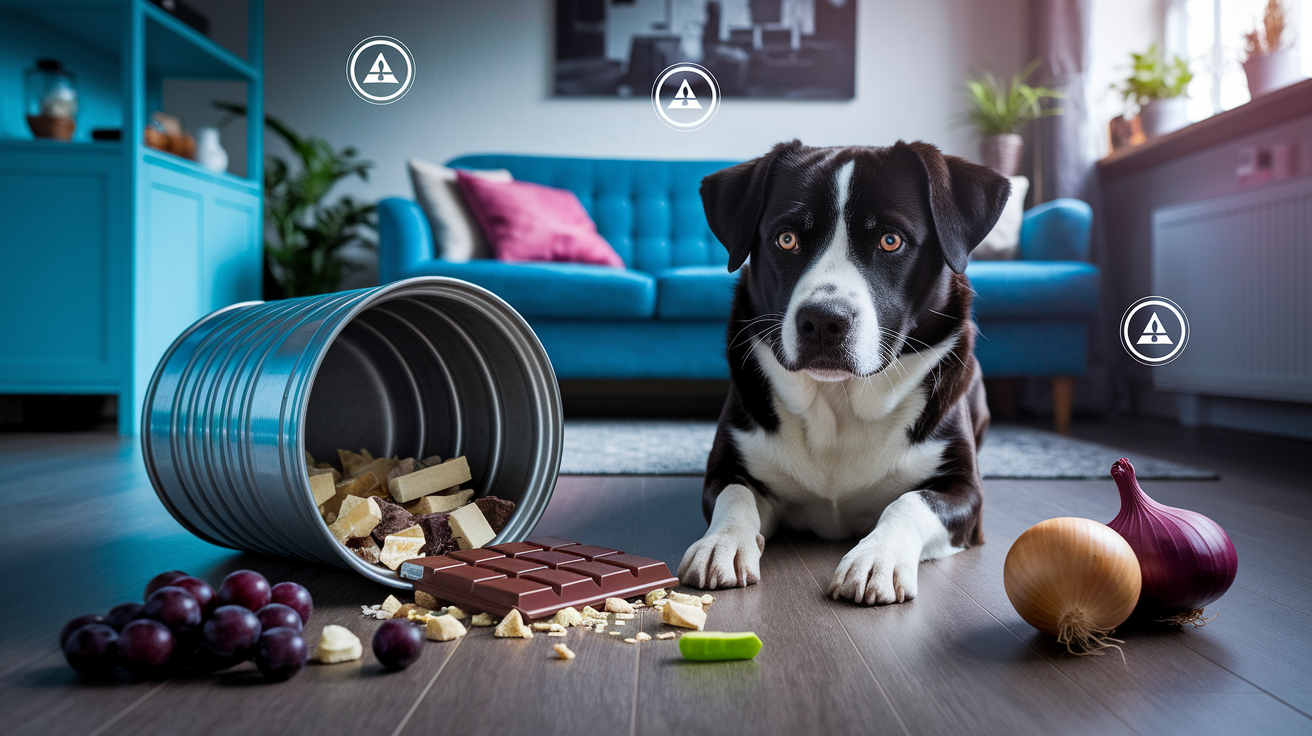
The most common reason? Dietary indiscretion. Dogs eat things they shouldn’t. Trash, spoiled food, fatty table scraps, non-food items like socks or toys or sticks. When the stomach tries to expel it, vomiting happens in waves. Dogs who raid the garbage or scavenge on walks are at especially high risk.
Toxins and poisonous foods are another frequent cause. Chocolate, xylitol (in sugar-free gum, peanut butter, some baked goods), grapes, raisins, onions, garlic, certain cleaning chemicals. All can trigger repeated vomiting. Rodent poison, which may look bright green or teal in the vomit, is life-threatening. Toxin-related vomiting often comes with drooling, shaking, weakness, or seizures.
Infections like parvovirus, bacterial gastroenteritis, and intestinal parasites cause severe, persistent vomiting. Parvovirus is especially dangerous in puppies and unvaccinated dogs. It usually includes bloody diarrhea, fever, and rapid decline. Bacterial infections from contaminated food or water can affect dogs of any age. Parasites like roundworms, hookworms, or giardia irritate the GI lining and may cause intermittent vomiting along with weight loss and diarrhea.
Gastrointestinal obstructions happen when a foreign object gets stuck. A toy, bone fragment, fabric. Dogs with an obstruction often vomit repeatedly, sometimes with nothing coming up, and show signs of abdominal pain, bloating, and loss of appetite. This is a surgical emergency if the blockage is complete. Partial obstructions can cause intermittent vomiting over days or weeks.
Common triggers include eating spoiled food, trash, or fatty human meals. Ingesting toxic foods like chocolate, xylitol, grapes, or onions. Swallowing foreign objects such as toys, bones, socks, or string. Viral or bacterial infections, parvovirus, gastroenteritis. Intestinal parasites like roundworms, hookworms, or giardia.
When Vomiting Is an Emergency

Some vomiting situations need immediate professional care, not at-home monitoring. If your dog’s vomiting blood, that includes bright red streaks or dark, coffee-ground material, contact a veterinarian right away. Blood in vomit can signal ulcers, severe gastritis, clotting disorders, or trauma.
If your dog can’t keep water down after two or three attempts, dehydration will set in quickly. Puppies, seniors, and small dogs are especially vulnerable. Persistent vomiting over 24 hours, even without blood, is also a red flag. It can mean obstruction, pancreatitis, kidney disease, or liver failure.
Contact an emergency vet immediately if you see vomiting blood or material that looks like coffee grounds. Repeated vomiting for more than 24 hours. Unproductive retching or gagging with nothing coming up. A bloated, hard, or visibly swollen abdomen. Known or suspected ingestion of toxins like xylitol, grapes, chocolate, rodent poison, or cleaning chemicals. Collapse, extreme lethargy, or inability to stand. Seizures, tremors, or disorientation. Rapid breathing, pale gums, or signs of shock.
Conditions like bloat (gastric dilatation-volvulus) and toxin poisoning can turn fatal within hours. Bloat causes the stomach to fill with gas and twist, cutting off blood flow. Dogs with bloat often gag repeatedly but produce only foam or nothing at all. Their abdomen swells visibly. They may pace, drool heavily, or collapse. This requires emergency surgery. Dehydration from repeated vomiting can also lead to shock and organ damage if fluids and electrolytes aren’t replaced quickly.
Safe Home Treatments for Mild Vomiting
If your dog’s vomited once or twice but is still alert, drinking water, and showing no red-flag symptoms, you can try safe at-home care for the next 12 to 24 hours.
Withhold food for 6 to 12 hours to give the stomach a rest. Don’t withhold water unless your dog vomits immediately after drinking. Offer small amounts of fresh water every 15 to 30 minutes. About 1 to 2 tablespoons for small dogs and up to half a cup for larger dogs. If vomiting continues after sipping water, stop offering fluids and call your vet.
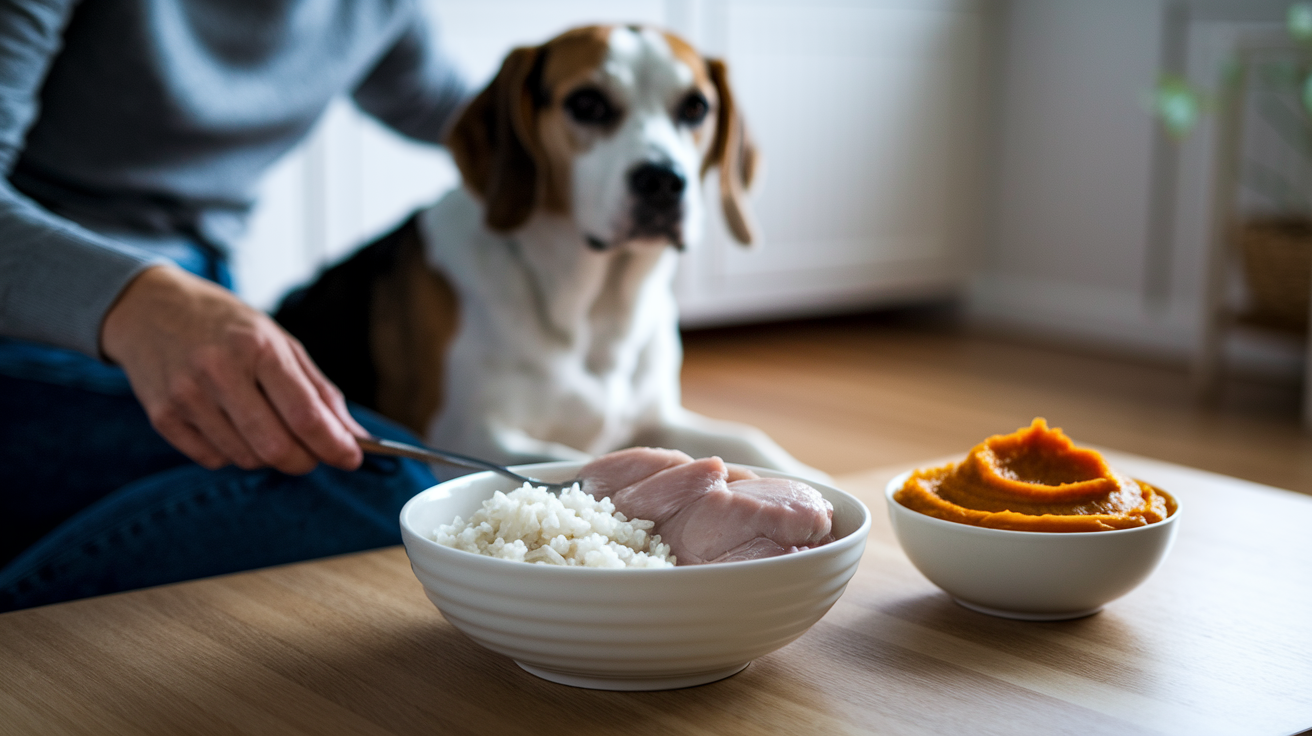
After the fasting period, if no further vomiting has occurred, reintroduce food slowly with a bland diet. Boiled white rice mixed with plain, skinless boiled chicken or turkey is gentle on the stomach. You can also use plain unsweetened pumpkin puree (not pie filling), which may help soothe mild GI upset. Feed small portions every 2 to 3 hours rather than one large meal. If your dog keeps the bland food down for 24 hours, gradually mix in their regular food over the next 1 to 2 days.
For mild vomiting, fast for 6 to 12 hours (no food, but continue offering small sips of water). Reintroduce food with a bland diet like boiled chicken and plain white rice. Offer plain unsweetened pumpkin puree in small amounts (1 to 2 tablespoons). Feed small portions every few hours instead of one big meal. Keep your dog calm and rested. Avoid vigorous play or exercise around mealtimes.
Home care is only appropriate for dogs who remain alert, hydrated, and otherwise normal. If vomiting resumes, if your dog refuses water, or if you see lethargy, diarrhea, or abdominal pain, stop home treatment and arrange a veterinary exam. Don’t give human medications like Pepto-Bismol, Imodium, or antacids unless your veterinarian explicitly instructs you to do so. They can be toxic or interfere with diagnosis.
Monitoring vs. Seeking Veterinary Care
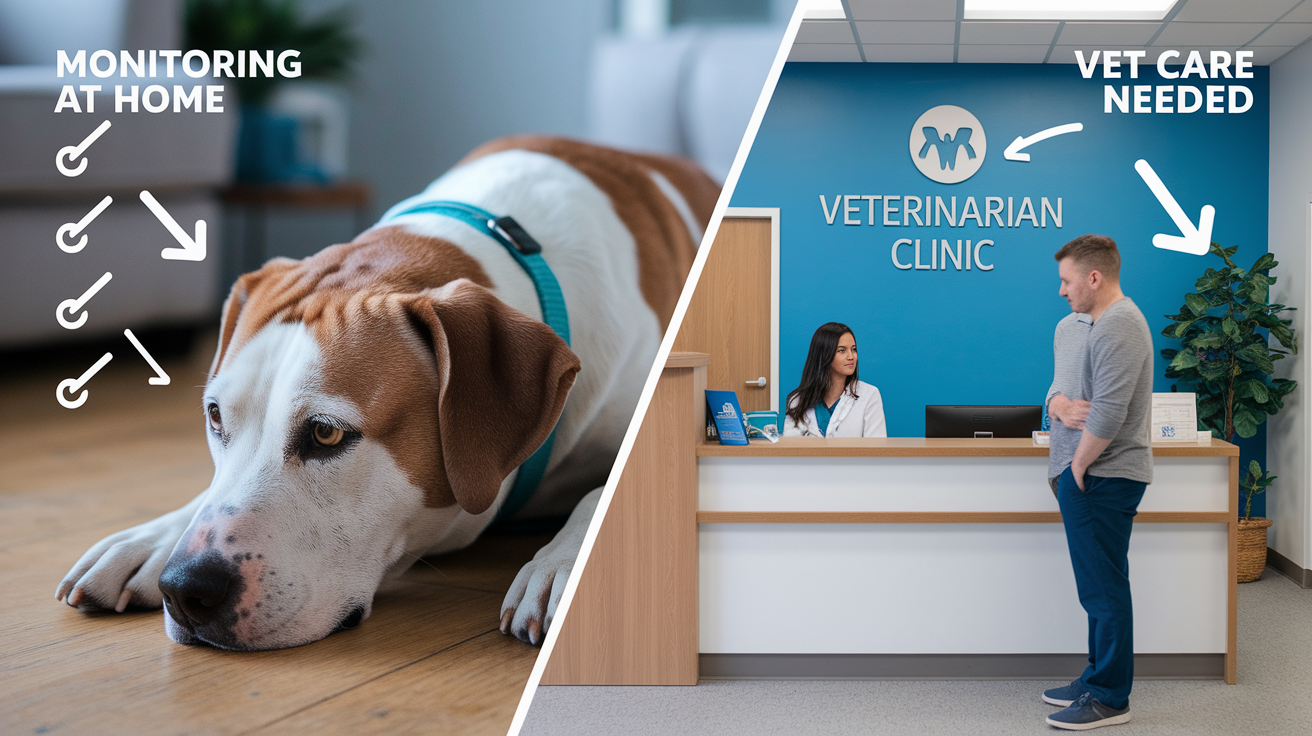
Deciding whether to monitor at home or call the vet depends on your dog’s overall condition, the frequency of vomiting, and any accompanying symptoms.
Monitoring at home is safe when your dog’s vomited once or twice but is still drinking water, acting normally, and showing no signs of pain, lethargy, or dehydration. If the vomiting stops after withholding food and your dog keeps down small sips of water and bland food over the next 24 hours, you can continue gentle monitoring. Keep a close eye on energy level, appetite, and stool quality. If everything stays stable, your dog’s likely recovering from a minor stomach upset.
Veterinary care is needed if vomiting persists beyond 24 hours, happens multiple times in a single day, or is accompanied by other worrying signs. Don’t wait if your dog refuses water, shows signs of dehydration, or becomes weak and unresponsive. Chronic or recurrent vomiting over several days or weeks, even without acute distress, also requires a veterinary exam to rule out kidney disease, liver problems, inflammatory bowel disease, or other underlying conditions.
| Condition | Monitoring OK? | Vet Visit Needed |
|---|---|---|
| Single episode, dog acting normal | Yes, monitor for 24 hours | No, unless symptoms develop |
| Two episodes within 24 hours, dog alert | Yes, withhold food and offer water | Call vet if a third episode occurs |
| Vomiting continues after 24 hours | No | Yes, arrange exam |
| Vomiting blood or coffee-ground material | No | Yes, immediate care |
| Unable to keep water down | No | Yes, urgent care for dehydration |
| Lethargy, bloating, or known toxin exposure | No | Yes, emergency care |
Preventing Future Vomiting Episodes
Many cases of repeated vomiting can be avoided with simple changes to your dog’s routine and environment.
Avoid sudden diet changes. If you need to switch foods, do it gradually over 7 to 10 days, mixing increasing amounts of the new food with the old. Rapid changes overwhelm the digestive system and can trigger vomiting and diarrhea. Choose a high-quality, easily digestible diet with whole ingredients and appropriate protein and fiber for your dog’s age and health status.
Limit access to trash, compost, and spoiled food. Use secure trash cans with lids. Keep compost bins out of reach. On walks, watch for discarded food, bones, or other scavenging opportunities. Training a solid “leave it” command can prevent your dog from eating dangerous items outdoors.
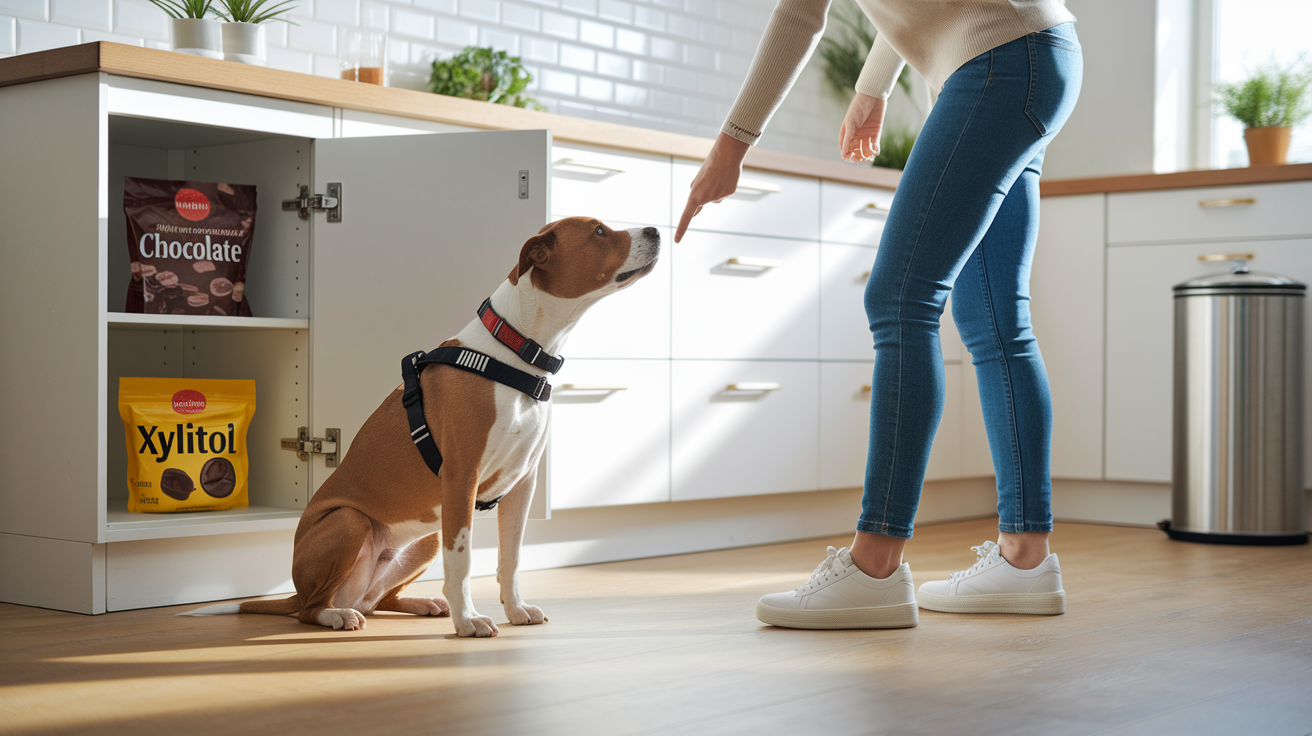
Store toxic foods and chemicals safely. Keep chocolate, xylitol-containing products, grapes, raisins, onions, garlic, and cleaning supplies in cabinets your dog can’t open. Be especially cautious with sugar-free gum, peanut butter, and baked goods, which often contain xylitol. If you use rodent bait, place it where your dog can’t reach it. Consider safer pest-control alternatives.
Practical steps: transition to new foods slowly over 7 to 10 days. Use secure trash cans and keep compost bins out of reach. Store toxic foods (chocolate, xylitol, grapes, onions) in locked cabinets. Supervise chewing and remove access to toys that can be torn apart and swallowed. Avoid feeding fatty table scraps or rich human foods. Schedule regular veterinary checkups to catch chronic GI issues early.
Final Words
Start by checking hydration, looking for blood or any foreign material, and holding food while offering small sips of water. Those are the immediate steps we covered.
We also reviewed common causes, such as dietary upsets, toxins, infections, and blockages, and the warning signs that need fast care, like bloating or vomiting with weakness.
If your dog keeps throwing up but is bright and keeping water down, you can monitor for up to 24 hours and call your vet sooner for any red flags. With quick steps and simple prevention, many dogs recover well.
FAQ
Q: What can I give my dog to stop vomiting?
A: To stop a dog from vomiting, withhold food for 12 hours, offer small sips of water, then try bland boiled chicken and rice; call your vet if vomiting repeats, shows blood, or your dog seems weak.
Q: How many times should a dog throw up before going to vet?
A: A dog should see a vet if it throws up more than twice in a day, can’t keep water down, shows weakness or blood in vomit, or if vomiting lasts over 24 hours.
Q: What would cause a dog to vomit repeatedly?
A: Repeated vomiting in dogs is often caused by dietary indiscretion (trash or sudden diet change), toxins (xylitol, grapes, cleaners), GI blockages from bones or toys, or infections like parvovirus.
Q: What color is parvo vomit?
A: Parvo vomit is often dark brown or bloody, sometimes like coffee grounds, which suggests severe intestinal bleeding; contact a vet right away if you see this.