

One pound might not sound like much, but for many cats it can signal a serious problem.
If your cat is losing weight and you didn’t change food or portions, this checklist helps you sort urgent issues from things you can safely watch.
Answer yes/no questions about eating, vomiting, thirst, energy, grooming, breathing, and lumps.
You’ll learn what to do today, what to track over the next 24 to 72 hours, and exactly when to call the vet so you go in ready and calm.
Comprehensive Symptom Checklist for Cat Weight Loss Evaluation

When your cat starts dropping weight and you didn’t change the food or portion size, a checklist helps you figure out whether you’re looking at an emergency, something that needs a vet visit this week, or a situation you can watch for another day. The list below asks yes or no questions tied to different body systems. Answer honestly and count up your “yes” responses. One or two concerning signs might point to a specific problem, while several “yes” answers usually mean something urgent is happening and your cat needs professional help today.
Think of this as prep work for the vet call, not a replacement for an actual exam. Print it, screenshot it, or just write your answers in your phone’s notes app so you don’t blank on important details when you’re trying to explain what’s going on.
The checklist runs through appetite, stomach and intestines, thirst and bathroom habits, energy and behavior, coat and grooming, mouth health, pain or trouble moving, breathing, and any lumps or bleeding. If you answer “yes” to any red flag item, call your vet today or get to an emergency clinic if it’s nighttime.
Has your cat stopped eating entirely for more than 24 hours? Yes / No
Is your cat eating less than half their usual amount for several days straight? Yes / No
Does your cat walk up to the food bowl but leave without eating, or take one or two bites and quit? Yes / No
Is your cat vomiting more than once or twice in one day, or throwing up repeatedly over several days? Yes / No
Is diarrhea happening, especially watery or bloody? Yes / No
Is your cat drinking way more water than normal, emptying the bowl faster, or hanging out at the water dish constantly? Yes / No
Is your cat peeing much more often, making huge clumps in the litter box, or peeing outside the box? Yes / No
Does your cat seem really tired, hiding more than usual, or not interested in jumping or playing? Yes / No
Can you feel sharp backbone ridges, obvious hip bones, or ribs that weren’t sticking out before? Yes / No
Has your cat’s coat turned dull, greasy, or matted, or is your cat grooming way less or not at all? Yes / No
Is your cat drooling, pawing at their mouth, dropping food, or acting like their mouth hurts? Yes / No
Are there any new lumps, bumps, swelling, or hard spots when you gently touch your cat’s body? Yes / No
Is your cat breathing faster or harder than normal, coughing, or breathing with their mouth open while resting? Yes / No
Have you seen blood in throw up, poop, pee, or anywhere else? Yes / No
Is your cat confused, wobbly, having seizures, or collapsing? Yes / No
Understanding Normal vs Concerning Cat Weight Loss Patterns
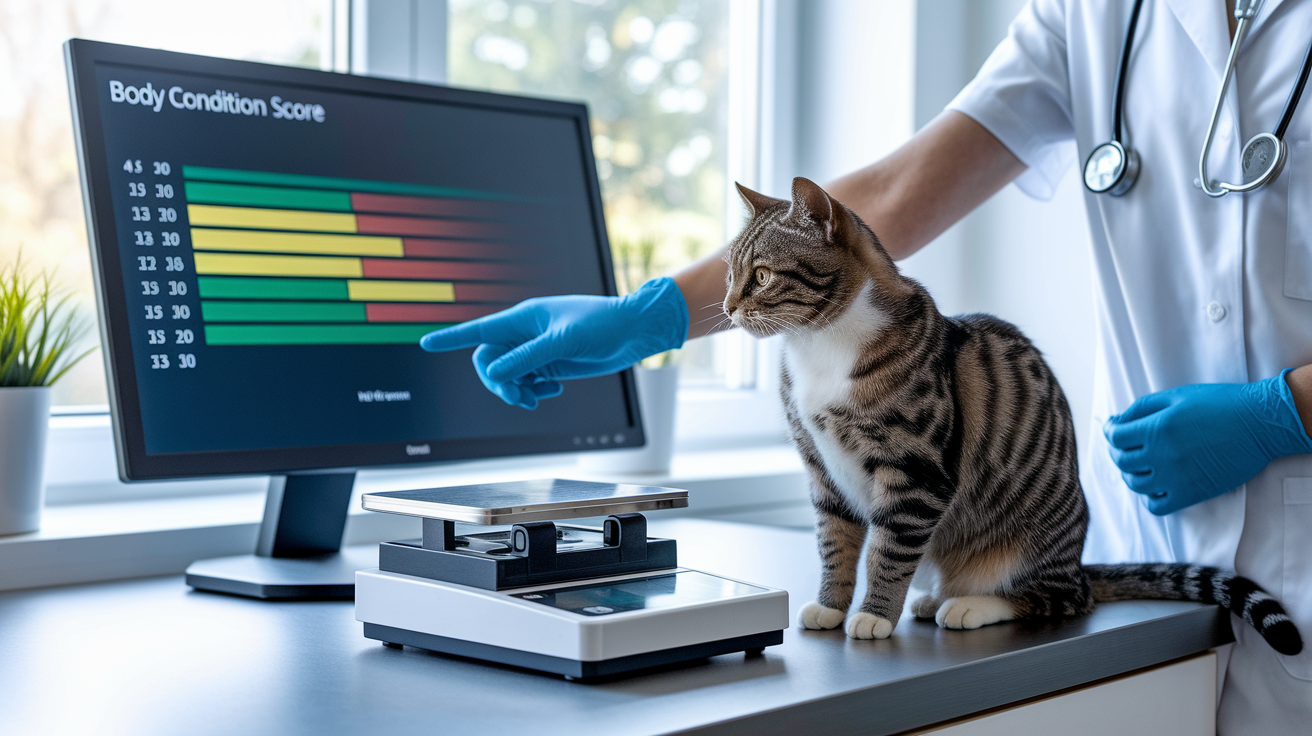
Not all weight loss is the same. A planned calorie cut under your vet’s watch, with your cat staying energetic and shiny, is totally different from a cat who drops two pounds in a week and won’t touch breakfast. Healthy adult cats usually weigh somewhere between 8 and 12 pounds, but frame size varies a lot. A small Siamese might be perfectly healthy at 7 pounds, while a big domestic shorthair could comfortably carry 14. That’s why vets rely on body condition scoring instead of just the scale number. They check for visible ribs, a defined waist, and decent muscle cover over hips and spine.
Gradual weight loss over months, especially in cats over 16, can reflect normal aging stuff like muscle loss and the body absorbing nutrients less efficiently. But even older cats need screening every six months to rule out kidney disease, hyperthyroidism, and other conditions that speed up weight loss. Sudden drops, refusing food for more than a day, or weight loss paired with throwing up, diarrhea, or chugging water all mean something medical is going on and you should call your vet right away.
Acceptable variation: slow, planned reduction under vet guidance. Cat eats well, stays active, coat stays shiny, weight drops about 1 to 2% of body weight per week max.
Concerning gradual loss: unplanned decline over weeks to months. Appetite might be normal or reduced, but other signs show up like a dull coat, more thirst, or low energy.
Urgent rapid loss: noticeable drop within days to two weeks. Often paired with poor appetite, vomiting, diarrhea, or behavior changes.
Emergency: won’t eat for 24 to 48 hours, collapses, severe vomiting or diarrhea, trouble breathing, or you can feel a lump in the belly.
Common Medical Causes Connected to Cat Weight Loss Symptoms
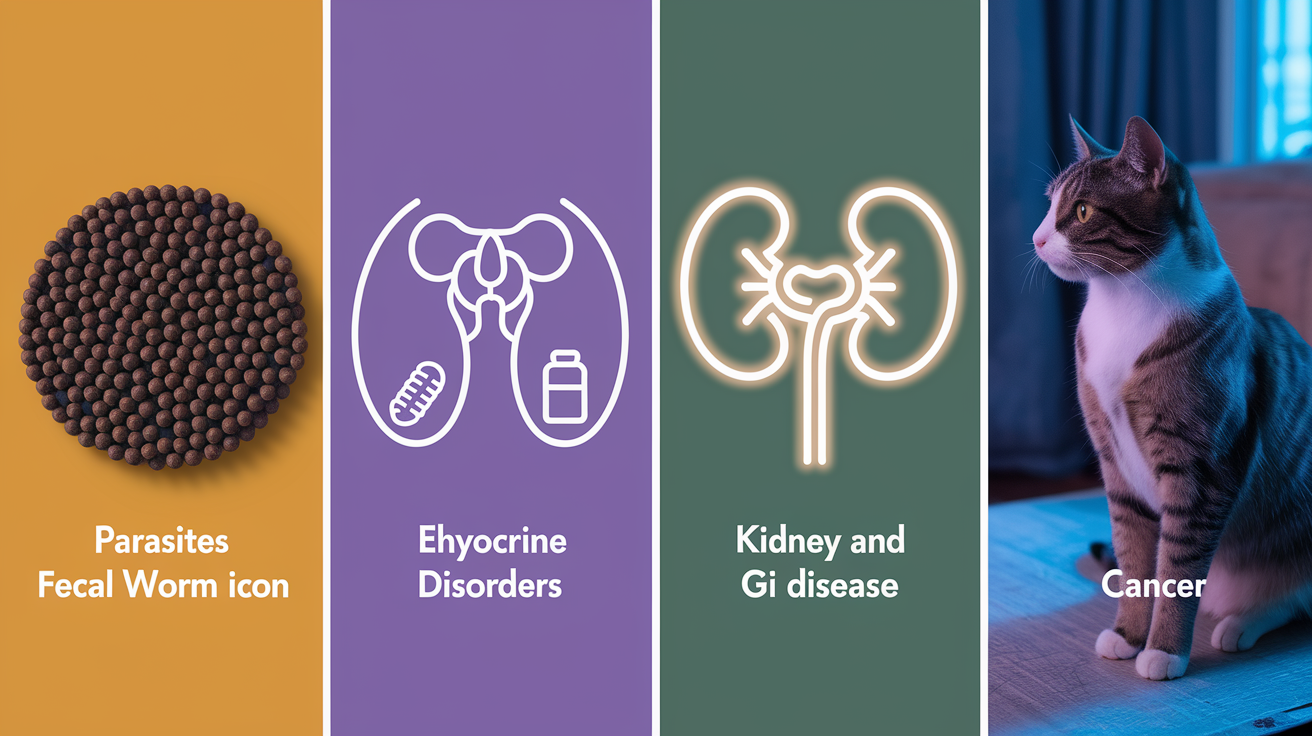
More than a hundred diseases can trigger weight loss in cats, but a handful of conditions account for most cases. Knowing which signs cluster together helps narrow the list and steers your vet toward the right tests. The usual suspects fall into four groups: parasites, endocrine disorders, kidney and gut disease, and cancer or other serious illness. Each group has signature symptoms that show up on the checklist, and spotting these patterns speeds up diagnosis and treatment.
Parasites
Intestinal parasites are still surprisingly common, even in indoor cats. About 95% of kittens carry worms passed from their mother, and adult cats pick up parasites from hunting, grooming dirty paws, or swallowing fleas that carry tapeworm larvae. Roundworms, hookworms, and tapeworms steal calories and nutrients, causing gradual weight loss even when appetite stays normal or goes up. You might see segments that look like rice grains in the stool or around the tail, or you might see nothing. A fecal exam runs about $65 and deworming costs $40 to $60 depending on the medication and your cat’s size. Lots of vets recommend deworming anyway even if the stool test is negative, because some larval stages don’t shed eggs consistently and outdoor or hunting cats get re-exposed constantly.
Endocrine Disorders
Diabetes and hyperthyroidism are the two big hormonal reasons for unplanned weight loss, and both create clear patterns. Cats with diabetes typically lose weight while drinking and peeing excessively. Blood glucose spikes and urine tests confirm it. Treatment means insulin shots and a high protein, low carb diet. Hyperthyroidism usually hits middle aged and senior cats, cranking up metabolism so high that cats eat like crazy yet still drop pounds. You’ll often notice a racing heart, restlessness, more thirst and peeing, and loud yowling at night. A simple blood test measures thyroid hormone levels. Treatment options include daily meds, a prescription iodine restricted diet, or a one time radioactive iodine procedure.
Renal and GI Disease
Chronic kidney disease develops gradually, often without obvious symptoms until kidney function drops below 70%. Cats lose weight as toxins build up, appetite fades, and nausea sets in. Blood work and urinalysis reveal elevated kidney values and dilute urine. Treatment focuses on prescription renal diets, meds to control nausea and blood pressure, and subcutaneous fluids to support hydration. Gut conditions like inflammatory bowel disease, pancreatitis, or bacterial overgrowth cause weight loss through poor nutrient absorption, vomiting, or diarrhea. A GI panel costing around $250 tests for pancreatitis markers (PLI), pancreatic enzyme production (TLI), and intestinal vitamin absorption (cobalamin and folate). Results take 5 to 10 days. Treatment might include antibiotics, low fat diets, pain meds, B12 injections, or a trial course of prednisolone to calm inflammation.
Cancer and Serious Illness
Cancer takes many forms in cats and at least half a dozen internal tumors can grow silently until weight loss becomes obvious. Lymphoma, mast cell tumors, and other malignancies might show up as a belly mass you can feel, poor appetite, vomiting, or general weakness. Diagnosis often requires imaging like ultrasound or x-rays, blood work to check for abnormal calcium or anemia, and fine needle aspiration or biopsy to identify the tumor type. Viral diseases like feline leukemia (FeLV), feline immunodeficiency virus (FIV), and feline infectious peritonitis (FIP) also cause progressive weight loss, and testing guides what you do next. Anytime you feel a new lump, notice rapid weight loss, or see your cat’s appetite vanish, call your vet the same day.
Distinguishing Intentional Diet Loss from Disease-Driven Cat Weight Loss

Planned weight management looks and feels different from illness driven decline. When you’re working with your vet to slim down an overweight cat, the process is controlled, your cat’s behavior stays stable, and weight drops at a predictable, gradual pace. Usually no more than 1 to 2% of body weight per week. Your cat eats the measured portion, maintains normal energy, grooms regularly, and shows no signs of nausea, excessive thirst, or coat problems. You’re weighing weekly or every two weeks and adjusting portions as needed, and your vet reviews progress at regular checkups.
Disease related weight loss happens without you cutting calories or changing the diet. The cat may eat normally or even more than usual, yet pounds fall off. You’ll often notice other red flags like vomiting, diarrhea, increased water drinking, frequent peeing, low energy, a dull or greasy coat, or mouth pain that makes eating hard. The timeline feels sudden or unexplained, and your gut tells you something is wrong even if you can’t pinpoint exactly what changed.
Intentional diet loss: vet supervised calorie plan, steady controlled decline, normal appetite within the reduced portion, consistent energy and grooming, regular weigh ins every 1 to 2 weeks.
Disease driven loss: no intentional calorie cut by you, unplanned or speeding up weight drop, appetite may be reduced or weirdly increased (hyperthyroidism), other system wide signs present like vomiting or more thirst.
Safe monitoring window: intentional diet plans allow home monitoring if all other signs stay normal and weight loss stays within the target range.
Immediate vet evaluation: any unintentional loss, especially with additional symptoms from the checklist.
Red flag combo: weight loss plus poor appetite or not eating for more than 24 hours requires same day vet attention.
Veterinary Diagnostics for Cat Weight Loss and Symptom Interpretation

Once you bring your cat in, your vet starts with a thorough history and physical exam, comparing current weight to documented past weights and checking body condition by feel. The goal is to build a list of possible causes based on the symptoms you’ve checked off and what they find on exam. From there, testing begins with the most common and least invasive steps, adding layers only if early results don’t explain the weight loss. This staged approach balances cost, speed, and how much useful info you get, giving you answers without unnecessary procedures.
Initial blood work usually includes a complete blood count to check for anemia, infection, or blood cell problems, a chemistry panel to look at kidney and liver function, electrolytes, blood sugar, and proteins, and a thyroid test in cats over seven years old. This panel typically costs around $170 and catches a wide range of conditions including diabetes, kidney disease, hyperthyroidism, and certain cancers that raise blood calcium. Urinalysis adds info about kidney concentration, glucose spilling, protein loss, and infection, and it often pairs with the blood work. A fecal exam screens for parasites and costs about $65, with deworming running $40 to $60 if parasites are found or strongly suspected based on outdoor access or hunting behavior.
| Test | What It Detects | Typical Cost |
|---|---|---|
| CBC (Complete Blood Count) | Anemia, infection, blood cell abnormalities, inflammation markers | Included in ~$170 panel |
| Chemistry Panel | Kidney/liver function, glucose, electrolytes, proteins, calcium | Included in ~$170 panel |
| Urinalysis | Kidney concentration, glucose, protein, infection, crystals | Often bundled or ~$40–$60 |
| Fecal Exam | Intestinal parasites (roundworms, hookworms, tapeworms, Giardia) | ~$65 |
| GI Panel (PLI, TLI, cobalamin, folate) | Pancreatitis, pancreatic function, intestinal absorption | ~$250, results in 5–10 days |
| Imaging (X-rays or Ultrasound) | Kidney stones, tumors, organ size, fluid, masses | X-rays $110–$220; ultrasound $300–$500 |
When Cat Weight Loss Symptoms Need Immediate Veterinary Attention

Some patterns on the checklist mean “call your vet today” while others mean “grab your keys and go now.” Knowing the difference helps you act fast without second guessing yourself at 2 a.m. Cats hide illness really well, so by the time symptoms become obvious, the underlying problem might already be serious. Trust your gut. If something feels urgently wrong, it probably is.
Emergency red flags require same day or immediate after hours care. If your cat refuses all food for 24 to 48 hours, the risk of hepatic lipidosis (fatty liver disease) climbs steeply, especially in overweight cats. Repeated vomiting or severe diarrhea can cause dangerous dehydration within hours. Trouble breathing, open mouth breathing at rest, or rapid shallow breaths suggest heart or lung disease that needs oxygen and diagnostics right away. Collapse, seizures, or sudden severe weakness point to a life threatening crisis like a blood clot, internal bleeding, or metabolic emergency. A firm, painful, or rapidly growing belly mass raises concern for cancer, organ rupture, or obstruction, and blood in vomit, stool, or urine signals internal bleeding or severe gut disease.
Refusal to eat for more than 24 to 48 hours, especially in a cat that was recently overweight.
Severe or repeated vomiting or diarrhea within a 24 hour window.
Difficulty breathing, rapid breathing, or open mouth breathing when your cat is resting.
Collapse, seizures, disorientation, or sudden inability to walk or stand.
Visible or palpable belly mass, swelling, or severe abdominal pain.
Blood in vomit, stool, or urine, or any signs of internal bleeding like pale gums or weakness.
At‑Home Monitoring Tools to Track Cat Weight Loss Symptoms Over Time

Once you’ve seen your vet and have a working diagnosis or a diagnostic plan in progress, consistent at home monitoring becomes your most powerful tool for catching changes early and guiding treatment tweaks. Cats can shift from stable to declining quickly, and small trends spotted at home often prompt faster action than waiting for the next scheduled recheck. Weekly weigh ins, a simple symptom log, and photo documentation give you objective data to share with your vet, removing guesswork and emotion from the conversation.
Get a basic digital pet scale or use a human scale by weighing yourself first, then weighing yourself while holding your cat and subtracting the difference. Weigh at the same time of day, ideally in the morning before breakfast, and record the number in a notebook or phone app. A loss of more than 2% of body weight in a single week, or steady decline over consecutive weeks, signals that your current plan isn’t working and adjustments are needed. Track appetite by noting whether your cat finishes meals, how quickly they eat, and whether they’re begging for food or ignoring it. Monitor water intake by marking the water bowl level each morning and checking how much disappears by evening. Count litter box visits if you can, especially clumps or puddles, and note any changes in stool consistency, color, or frequency.
Photos provide a visual timeline that’s easy to miss when you see your cat every day. Take a picture from the side and from above once a week in good lighting, ideally in the same spot. You’ll be able to see muscle wasting over the spine, ribs becoming more prominent, or a tucked up belly developing over time. Bring these photos to vet appointments so your vet can compare body condition objectively.
Weigh weekly: same time of day, same scale, same method. Record every weight.
Track meals: note portion size, how much is eaten, and any refusals or picky behavior.
Measure water intake: mark the bowl or measure daily refills to spot increases in drinking.
Count litter box output: note frequency of peeing and any diarrhea, constipation, or blood.
Take weekly photos: side and top down views in consistent lighting to document body condition changes over time.
Supportive Care Options That Complement the Cat Weight Loss Symptom Checklist

While diagnostics and targeted treatments address the root cause of weight loss, supportive care keeps your cat stable, comfortable, and nourished during the workup and recovery period. Even the best diagnostic plan takes time, lab results come back in days, and some conditions require weeks of treatment before you see improvement. In the meantime, appetite stimulants, assisted feeding, therapeutic diets, and fluid therapy can prevent further decline and give treatments a better shot at working.
Appetite stimulants like mirtazapine or maropitant help jumpstart eating in cats with nausea or reduced interest in food. These meds don’t fix the underlying disease but they buy time and prevent the dangerous spiral of not eating leading to hepatic lipidosis. Assisted feeding techniques range from offering warmed, aromatic foods by hand to syringe feeding pureed recovery diets for cats who won’t eat on their own. For cats who need longer term support, your vet may place a feeding tube (esophagostomy or gastrostomy tube) to deliver complete nutrition without the stress of forced feeding. Prescription recovery diets are calorie dense, highly digestible, and protein rich, designed to meet nutritional needs in smaller volumes. Fluid therapy, either IV in the hospital or subcutaneous at home, corrects dehydration and supports kidney function, especially important in cats with kidney disease, vomiting, or diarrhea.
Appetite stimulants: meds to reduce nausea and encourage eating while diagnostics and treatment begin.
Assisted feeding: syringe feeding, hand feeding warmed aromatic food, or placement of a feeding tube for longer term support.
High calorie recovery diets: prescription formulas that pack maximum nutrition into small, palatable portions.
Fluid therapy: subcutaneous fluids at home or IV fluids in hospital to correct dehydration and support kidney function.
Final Words
If your cat is losing weight, start with the yes/no checklist to note appetite changes, vomiting, increased thirst, coat decline, and muscle loss right away.
This helps you separate mild, monitorable changes from patterns that need diagnostics. Track weight, food intake, photos, and keep a short log for two weeks.
Use the cat weight loss symptom checklist as your quick decision tool and call your vet if you see rapid loss, repeated vomiting, breathing trouble, or if your cat stops eating for 24 to 48 hours. You’re giving your cat a clear plan and better odds by spotting problems early.
FAQ
Q: How do I know if my cat’s weight loss is serious?
A: Weight loss is serious when it’s unintentional, rapid, or tied to vomiting, diarrhea, increased thirst/urination, muscle wasting, poor coat, severe lethargy, or appetite loss; contact your vet promptly.
Q: What are the first signs of Cushing’s disease in cats?
A: The first signs of Cushing’s disease in cats are increased thirst and urination, hair thinning, fragile skin, muscle weakness, a pot-bellied look, and recurring infections; a vet exam and hormone testing are needed.
Q: Is 7 lbs too skinny for a cat?
A: A 7-pound cat may be too skinny depending on breed, frame, and body condition; many adults weigh 8–12 pounds, so check for prominent ribs, spine, or hip bones and see your vet if weight dropped.
Q: What are the first signs of feline leukemia in cats?
A: The first signs of feline leukemia often include unexplained weight loss, poor appetite, lethargy, recurring infections, swollen lymph nodes, pale gums, or fever; a vet test is needed for diagnosis and care.