

What if your pet is hurting and you have no idea?
Pets often hide pain in quiet ways, a short limp, a change in grooming, or sudden mood shifts.
That makes spotting trouble hard, but you can learn the signs.
This quick checklist lays out the common, easy-to-miss signals, what to do today, what to watch for over the next 24 to 48 hours, and when to call your veterinarian.
Read on to catch hidden pain fast and get your pet help sooner.
Quick Checklist of Pain Indicators in Pets

Pain in pets doesn’t always look like pain. Your dog or cat can’t say “my hip hurts” or “this tooth is killing me,” so they show you in quieter ways. A shift in how they move. A change in how they react when you reach for them. This checklist helps you catch those signals before they turn into something worse.
Behavior Changes:
- Hiding more than usual, especially cats
- Getting snappy or grumpy when you touch certain spots
- Avoiding eye contact or not wanting to hang out
- Pacing, restless, can’t seem to get comfortable
- Sleeping way more, or barely sleeping at all
- Suddenly clingy or pulling away completely
Physical Changes:
- Limping or babying one leg
- Licking, chewing, or pawing at one area nonstop
- Trembling, shaking, twitching muscles
- Panting when they’re just lying there
- Tight face, squinty eyes, ears pinned back
- Grooming changes, dull coat or obsessive licking
Mobility and Activity:
- Won’t jump on the couch or into the car anymore
- Slowing way down on walks or refusing them
- Takes forever to get up after lying down
- Hesitates or struggles with stairs
Eating and Drinking:
- Not as hungry, skipping meals
- Chewing on one side or dropping food
- Drinking a ton more, or way less
- Peeing in the house or avoiding the litter box
Behavioral Changes That Suggest Pain

Mood shifts and routine changes are usually the first hint. Pets don’t file complaints. But they do back off from things they used to love. A dog who always met you at the door might stay on the couch now. A cat who loved being brushed might hiss when you grab the brush.
Withdrawal is huge. Your pet hides under the bed, sleeps in weird spots, avoids rooms they used to live in. Some go the other way. They get clingy, follow you everywhere, won’t let you out of sight. Sleep changes too. More sleep, less sleep, constantly shifting around because nothing feels right. And irritability. A gentle dog growls when you touch their hip. A friendly cat swats during petting.
When this stuff lasts more than a day or two, or when it’s happening alongside limping or not eating, you need to pay attention. One off day? Normal. Three days of hiding, snapping, or flinching when you touch them? That’s a pattern.
Physical Symptoms Owners Commonly Overlook

Some of the clearest pain signals are physical, but easy to miss if you’re not looking. Swelling around a joint. A weird way of holding their body. Changes in how they groom. All of it can point to discomfort that’s been building quietly.
Posture tells you a lot. A dog in pain might stand with their head down, back arched, weight shifted forward. Cats sit hunched, tail tucked, tense all over. Trembling when it’s not cold and they’re not stressed can mean pain. Dogs panting at rest, when they haven’t been running? Another one.
Visible Physical Indicators:
- Swelling or warmth around a joint or paw
- Standing or walking unevenly
- Coat changes, matted fur, bald spots from licking
- Cracked paw pads or visible wounds
- Squinting, half-closed eyes, tight jaw
- Flinches when you touch their belly, back, or legs
- Fast, shallow breathing instead of deep and steady
- Skin twitching when you barely touch it
Changes in Mobility and Activity Level

When it hurts to move, they move less. Your dog doesn’t sprint to the door anymore when the doorbell rings. Your cat stops jumping onto the counter where they used to supervise dinner. Small shifts, but they matter.
Stiffness after rest is classic. They struggle to stand after a nap, take a few slow steps, then loosen up. That hesitation, the slow rise, the stiff first steps? Often joint pain or sore muscles. Some pets only limp after activity. They’ll play for five minutes, then favor a leg for the next hour.
And activity avoidance. Your pet starts refusing stairs, sticks to one floor. Won’t jump into the car anymore, waits for you to lift them. Play sessions get cut short. A dog who fetched for 20 minutes now quits after three throws. A cat who chased toys just watches from the couch. When your pet starts saying no to things they used to love, pain’s usually why.
Eating, Drinking, and Bathroom Habit Changes

Pain messes with eating. Dental pain, stomach issues, general soreness, all of it can kill appetite. One skipped meal? Watch it. Two meals in a row or eating less than half their normal amount for over 24 hours? Call your vet.
Trouble chewing screams mouth pain. They chew on one side, drop food, take forever to finish. They want soft food, won’t touch kibble. Hard treats they used to crush? Ignored. Weight loss over a few weeks, even a pound or two, can mean ongoing discomfort that’s cutting into meals.
Drinking changes count. Some pets drink more when they’re hurting, especially if they’re panting or restless. Others drink less because moving to the bowl hurts. Bathroom habits shift too. Dogs have accidents if joint pain makes it hard to get outside fast enough. Cats avoid the litter box if climbing in hurts, or if it’s on another floor. Straining to pee or poop, going more often, eliminating in weird places? All potential pain signals.
Species-Specific Pain Indicators (Dogs vs. Cats)

Dogs and cats feel pain the same way. They just show it differently. Dogs tend to be obvious about it. They limp, whine, slow down in ways you can’t miss. Cats? Masters of hiding it. In the wild, looking weak gets you killed, so cats evolved to mask pain until it’s severe.
Dogs vocalize. They whine getting up, yelp when touched, howl during certain moves. Limping’s clear. They pant hard, won’t put weight on a leg, lick a sore spot bald. Cats go silent and still. They stop grooming, coat gets dull and matted. They hide for hours or days. And they purr, which throws people off, but cats purr when they’re stressed or hurting too. It’s self-soothing, not happiness.
| Species | Typical Pain Signs |
|---|---|
| Dogs | Whining, limping, panting at rest, licking sore spots obsessively, won’t walk or climb stairs, slowing down on walks, limping after play, less excited about activities |
| Cats | Hiding, stopped grooming (dull coat), avoiding litter box, won’t jump to surfaces 2 to 3 feet high, subtle withdrawal, touchy when handled, biting or swatting when touched, slow or shortened stride |
Severity Scale: Mild vs. Moderate vs. Emergency Pain Signs
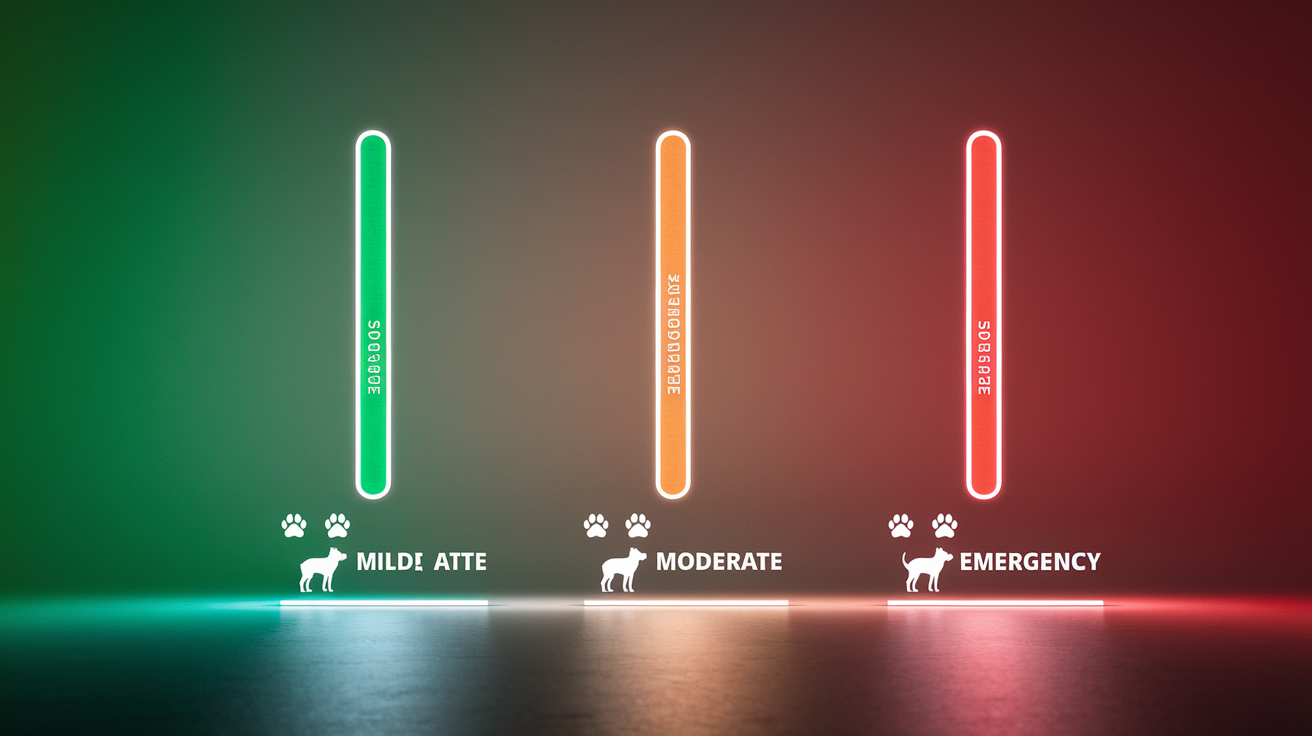
Not every pain signal means rush to the ER, but knowing the difference between mild discomfort and a crisis can save your pet’s life. Use this to figure out how fast you need to act.
Mild signs, you monitor at home for 24 to 48 hours. Slightly less active, a little stiff after rest, skips one meal. Still eating, drinking, walking, interacting. Just not at 100%. If these don’t improve in two days, or they get worse, schedule a vet visit within the week. Light limping that improves, occasional restlessness, small changes in grooming or play.
Moderate signs mean contact your vet within 24 hours. Clear discomfort, but not a crisis. Won’t eat for 24 hours, limping consistently, avoiding all stairs and jumping. Hiding for a full day, pain when you touch a spot, vomiting a few times with noticeable lethargy. These need professional eyes soon, not next week.
Emergency signs need immediate care. Call ahead and go now if they collapse, can’t stand, won’t bear weight on a limb. Nonstop crying or howling. Bloated, hard belly, especially in large breed dogs, can mean bloat. Repeated vomiting, can’t breathe right, seizures, visible trauma, deep wounds, suspected breaks. Pale, blue, or brick red gums are critical. If you’re unsure whether it’s an emergency, call your vet or an emergency clinic. Describe what you’re seeing. They’ll help you decide.
When to Contact a Veterinarian and What to Expect

If pain signs have been around more than 48 hours, or any moderate or emergency signs show up, call your vet. Early help prevents complications, reduces suffering, usually means simpler and cheaper treatment. Waiting to see if it gets better can turn something fixable into something serious.
When you call, be ready to describe what you’ve noticed. How long has the limping been going on? Eating and drinking normally? Any vomiting, diarrhea, bathroom changes? Did the pain start suddenly after a fall, or has it been building over days or weeks? If you’ve been tracking symptoms, bring notes, photos, or short videos showing how your pet walks or behaves. A 10 second video of your dog walking or your cat trying to jump gives your vet info before the exam even starts.
During the visit, your vet does a physical exam. Checking for tenderness, swelling, range of motion, other clues. They might recommend tests like X-rays, ultrasound, or blood work to nail down the cause. Pain assessment tools help vets measure discomfort and track improvement. Treatment depends on the diagnosis. Could be pain meds (NSAIDs or other vet approved options), physical therapy, joint supplements, weight management, or surgery for severe cases. Your vet gives you a monitoring plan too. What to watch at home, when to follow up, which changes mean call back sooner.
Final Words
Use the pet pain symptoms checklist now: scan behavior, physical signs, movement, and eating or bathroom habits.
This article gave a quick checklist, then covered behavior changes, overlooked physical clues, mobility and appetite shifts, dog vs cat differences, a severity scale, and when vets can help.
If you see emergency signs, call the vet right away. For milder changes, monitor for 24–48 hours, take notes and photos, and bring them to your appointment.
Keep the pet pain symptoms checklist close so you can act calmly and help your pet get prompt care.
FAQ
Q: How to tell if your dog is suffering or in pain?
A: You can tell if your dog is suffering or in pain by spotting changes like limping, hiding, less appetite, restlessness, vocalizing, aggression, or altered grooming. Call a vet for collapse, breathing trouble, or repeated vomiting.
Q: How do dogs say “I love you”?
A: Dogs say “I love you” through body language and bonding behaviors like leaning on you, relaxed eye contact, tail-wagging, following you, bringing toys, and calm cuddling, simple consistent signals of affection.
Q: What is the 7 second rule for dogs?
A: The 7 second rule for dogs usually means giving your dog seven seconds to respond to a cue before repeating or correcting, which helps timing, patience, and clearer, calmer training responses.
Q: What is the silent killer in dogs?
A: The silent killer in dogs often refers to gastric dilatation-volvulus (bloat), a rapid, life-threatening stomach twist. Signs include a swollen belly, retching, pacing, or collapse. Seek emergency veterinary care immediately.