

Worried after your dog vomits once?
Often one episode is mild and can be managed at home, not an emergency.
Start by giving the stomach a short rest, then offer small sips of room-temp water and a tiny bland meal if they keep it down.
This guide walks you through safe first steps, simple hydration tips, a bland-diet plan, what to watch for, and clear red flags that mean you should call your veterinarian.
If you can only do one thing right now, note the time and what the vomit looked like.
Immediate Care Steps to Settle a Dog’s Stomach After Vomiting
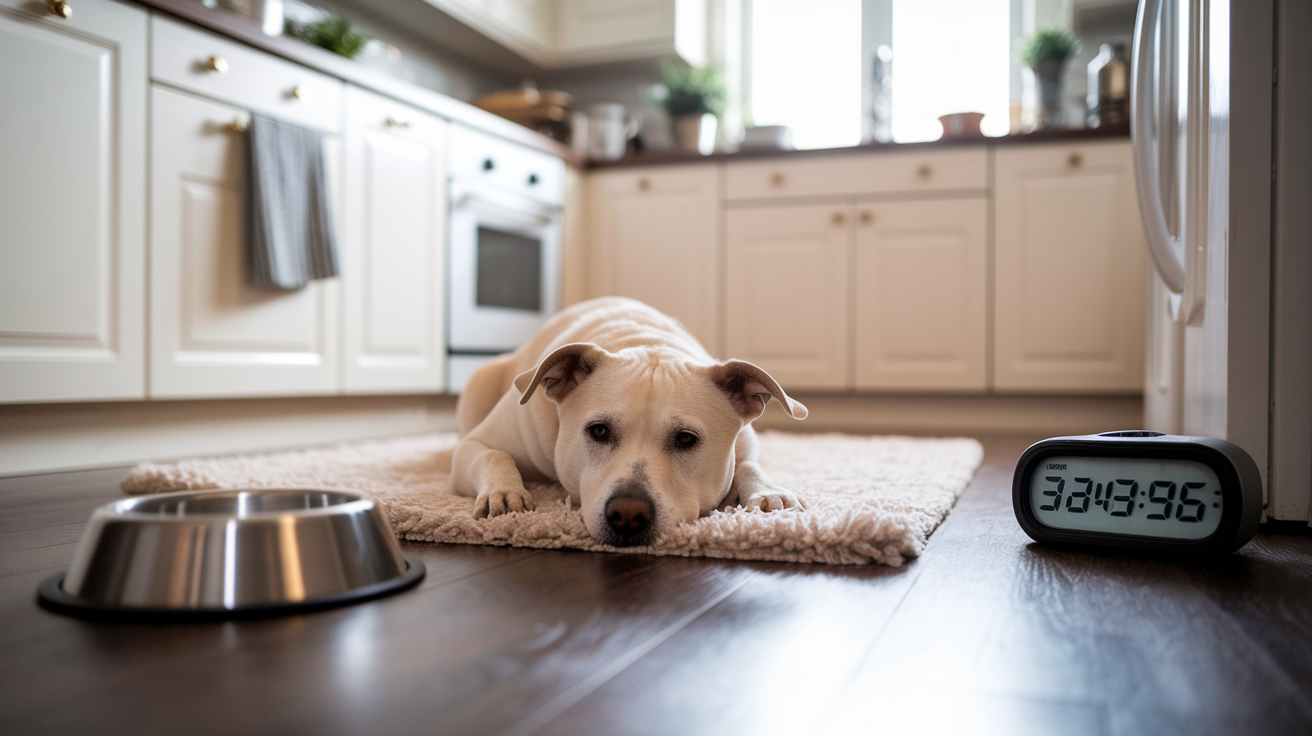
If your dog throws up once and seems fine otherwise, tail wagging and curious about what you’re up to, you can probably handle this at home. First thing? Give the stomach a break. Hold off on food for 4–6 hours if your dog’s an adult and otherwise healthy. Most dogs can go up to 12 hours without food safely, and that longer window really lets the GI tract calm down.
But don’t fast puppies, toy breeds, or dogs with conditions like diabetes or Addison’s without checking with your vet first.
After the fasting window, offer a few small sips of room-temperature water. Cold water can shock a sensitive stomach right back into vomiting mode, so keep it neutral. If your dog keeps the water down for an hour or two, you can offer a little more. Watch this part closely. If they gulp down a whole bowl and vomit again, pull the water and wait another hour before trying smaller amounts.
One episode of vomiting is different from repeated vomiting in a short window. Multiple vomits within 30 minutes can count as one episode if your dog settles after. But if vomiting keeps happening every hour, or if your dog can’t keep water down at all, that’s when you call your vet instead of continuing to monitor at home.
5 first steps after vomiting:
- Note the time, what the vomit looked like, and what was in it (undigested food, yellow bile, foam, anything weird).
- Hold all food for 4–12 hours depending on your dog’s age, size, and health.
- Offer small sips of room-temperature water every 2–3 hours once the stomach’s had a rest.
- Watch for repeat vomiting, low energy, drooling, pacing, or belly discomfort during the fasting period.
- If your dog keeps water down and acts normal after 6–12 hours, prep a small bland meal to test tolerance.
Hydration and Rehydration Methods for Dogs After Vomiting
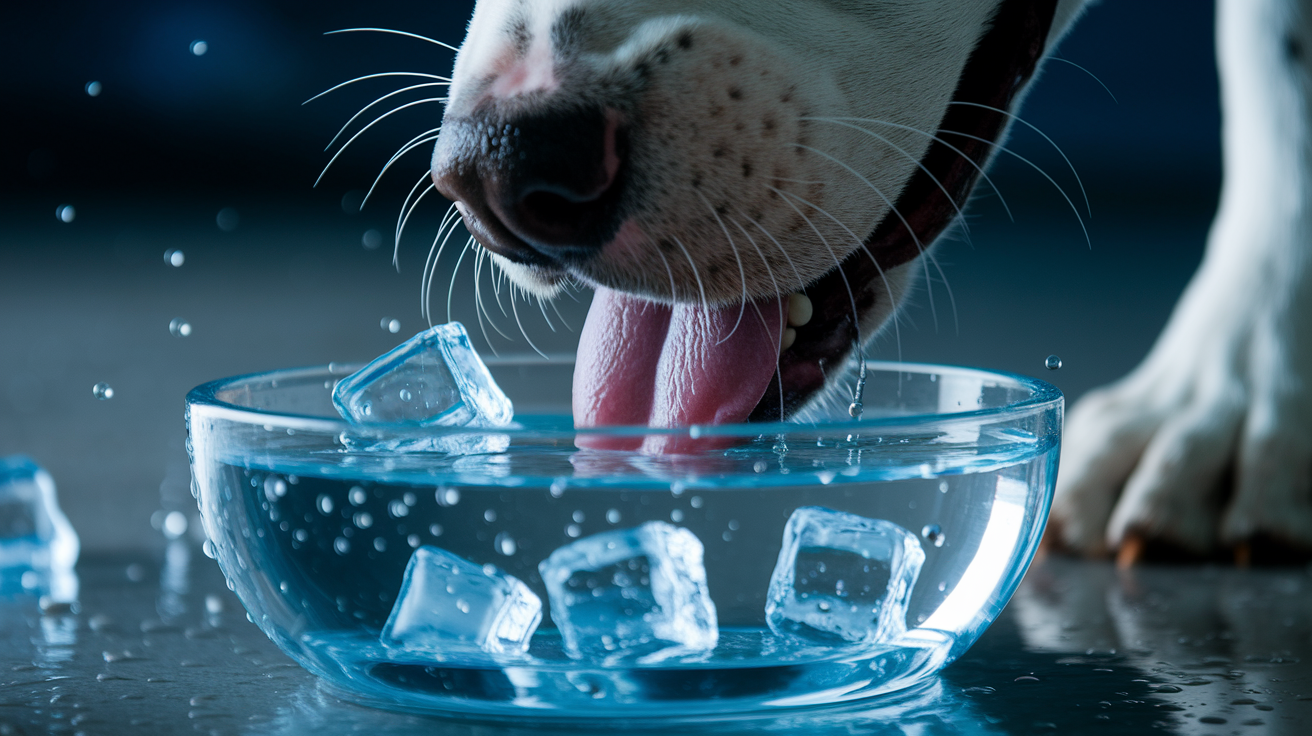
Dehydration happens fast when a dog loses fluids through vomiting, especially if diarrhea shows up too. Small amounts of water every 2–3 hours prevent the stomach from getting overwhelmed while keeping hydration moving in the right direction. If your dog won’t drink or seems nauseous when you offer the bowl, try ice chips or cubes. They melt slowly and can be easier to handle. Bone broth works too, cooled to room temp and with no onion or garlic. It adds a little flavor and some nutrition.
Check for dehydration by lifting the skin at the back of your dog’s neck. If it snaps back right away, hydration’s decent. If it stays tented or sinks back slowly, your dog may already be dehydrated. Other signs include dry or tacky gums, sunken eyes, reduced energy, and less frequent urination. After 24 hours without enough water, organ stress becomes a real concern. If your dog won’t drink or keeps vomiting up what they try, contact your vet.
Hydration aids after vomiting:
- Ice chips: Let your dog lick or chew them slowly to avoid gulping large amounts at once.
- Bone broth: Homemade or store-bought with no seasoning. Offer a few tablespoons at a time.
- Unsweetened coconut water: Start with a few ounces per day and increase if tolerated. Provides natural electrolytes.
- Pedialyte (use with caution): Can work in a pinch but contains added sugar. Not great for routine rehydration.
Bland Diet Recipes to Calm a Dog’s Upset Stomach After Vomiting
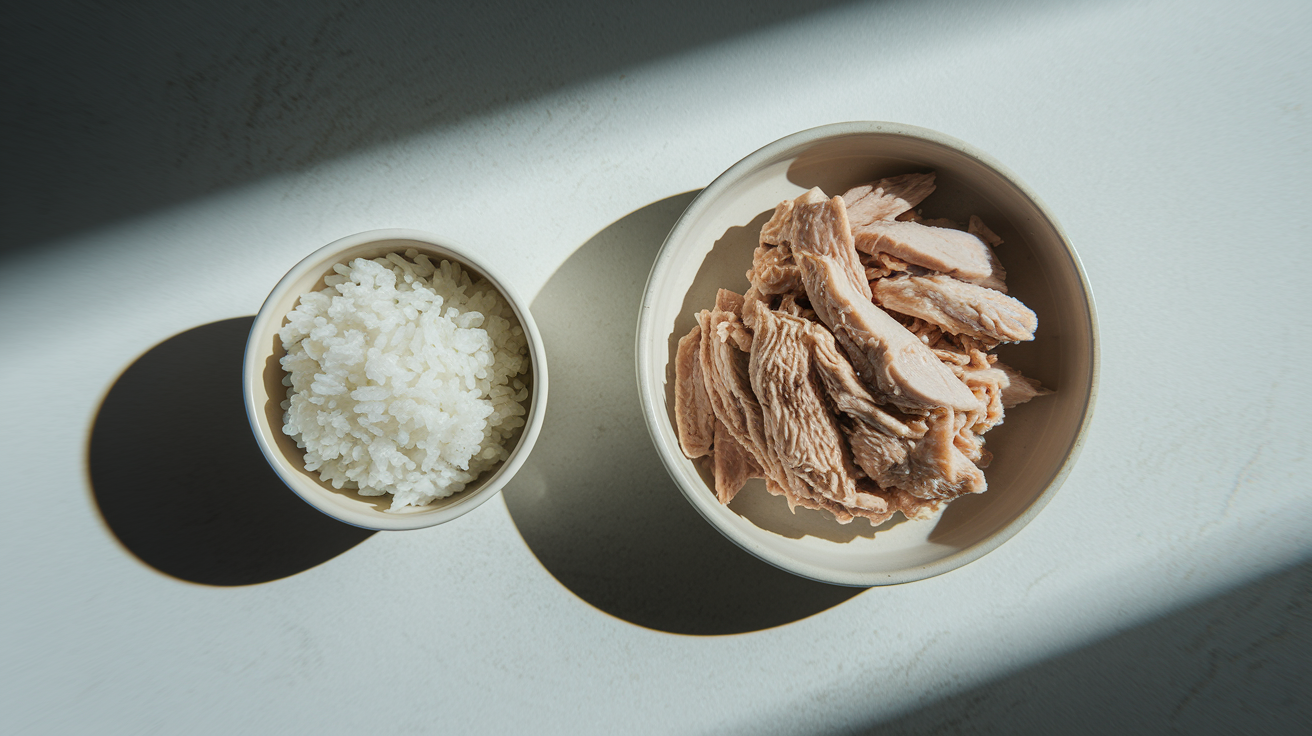
A bland diet is the safest way to bring food back after vomiting because it’s low in fat, easy to digest, and gentle on an irritated stomach. The classic recipe? 75% plain boiled white rice and 25% plain white chicken meat with no skin, bones, seasoning, butter, or oil. Boil the chicken in water until fully cooked, let it cool, shred or chop it into small pieces, and mix it with the rice. That’s it.
For the first meal, offer just 1–2 tablespoons and wait an hour or two. If your dog keeps it down and seems comfortable, you can offer another small portion. Gradually work up to about ½ cup every 3–4 hours for medium-sized dogs, adjusting up or down based on your dog’s weight. Large dogs might handle closer to 1 cup per feeding. Small dogs may need only a few tablespoons at a time.
If chicken isn’t an option or your dog has a known poultry sensitivity, you can swap in extra-lean ground beef (99% lean or 97% lean), thoroughly cooked and drained of all fat. Other safe alternatives include plain egg whites, boiled sweet potato, canned 100% pumpkin (not pie filling), or low-fat cottage cheese. Skip anything with added salt, sugar, spices, or rich fats during the recovery window.
| Ingredient | Preparation Method | Notes |
|---|---|---|
| White chicken meat | Boil in plain water, remove skin and bones, shred or chop | Low-fat, highly digestible protein, most commonly used |
| Extra-lean ground beef | Boil or brown in a pan, drain all fat thoroughly | Alternative protein for dogs with poultry sensitivities |
| Sweet potato | Boil or steam until soft, mash or dice | Provides fiber and is gentle on the stomach |
| 100% pumpkin (canned or fresh) | Use plain canned or cook fresh and puree | Supports digestion, do not use pie filling with spices/sugar |
| Low-fat cottage cheese | Serve plain at room temperature | Easy protein source, check for lactose tolerance first |
Feeding Schedule and Portion Sizes After a Vomiting Episode
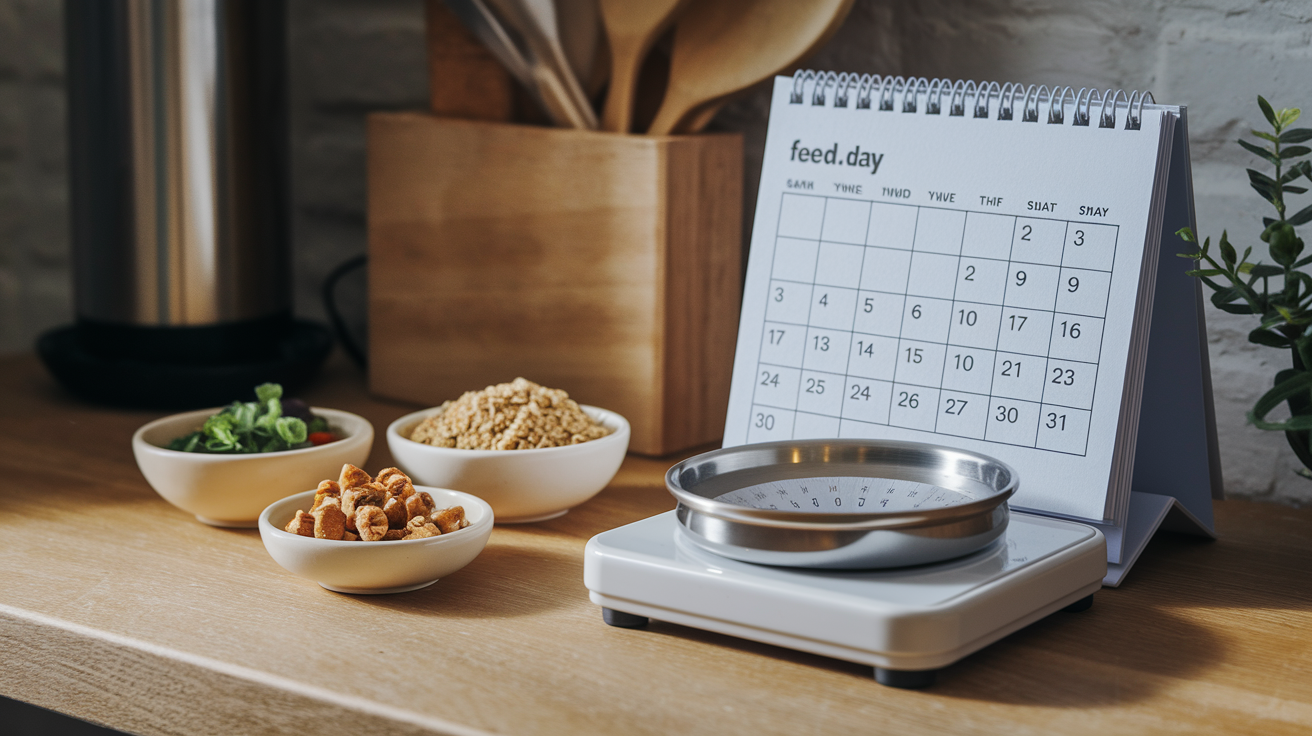
Once your dog tolerates the first small bland meal without vomiting, keep feeding the bland diet in small portions every 3–4 hours throughout the day. Keep each meal light, about the size of what they’d normally eat divided into four or five smaller servings. This schedule rests the stomach between feedings and cuts down the chance of overloading the digestive system too soon.
Stay on the bland diet for 3–5 days, watching stool consistency and energy levels. When stools start to firm up and your dog seems back to normal, begin transitioning back to their regular food. Mix a small amount of their usual kibble or wet food into the bland mix, gradually increasing the proportion of regular food over the next 3–5 days until you’re back to 100% normal diet. If vomiting or diarrhea comes back during the transition, stop and call your vet.
Day-by-day feeding timeline:
- Day 1 (after fasting window): Offer 1–2 tablespoons of bland diet. If tolerated, feed small portions every 3–4 hours for the rest of the day.
- Days 2–5: Continue bland diet in small, frequent meals. Monitor stool and energy. No treats or table scraps.
- Days 6–8: Begin mixing 25% regular food with 75% bland diet. Increase regular food by 25% each day.
- Day 9+: Return to 100% regular diet if no symptoms return. Resume normal feeding schedule and portion sizes.
Red Flags and When Vomiting Requires a Veterinary Visit
Most single vomiting episodes clear up with rest and a bland diet, but certain patterns mean you need to stop monitoring at home and get your dog seen. Repeated vomiting, multiple times in one day or over consecutive days, is a red flag. So is vomiting that happens right after eating or drinking, or a dog who can’t keep even small sips of water down. These patterns point to something more serious than a mild stomach upset.
Blood in vomit is another urgent sign. Bright red blood means active bleeding. Vomit that looks like coffee grounds indicates partially digested blood from the stomach or upper GI tract. Dark, tarry stools or stool that looks like raspberry jam also point to internal bleeding and need immediate evaluation. Unproductive retching, where your dog keeps trying to vomit but nothing comes up, can signal bloat or a foreign-body obstruction. Both are life-threatening emergencies.
Bloat, or gastric dilatation-volvulus (GDV), is especially dangerous in large, deep-chested breeds like Great Danes, German Shepherds, Standard Poodles, and even Dachshunds. Signs include a visibly distended or hard abdomen, pacing, drooling, restlessness, and unsuccessful attempts to vomit. If you see these signs together, get to an emergency vet right away. Time matters with bloat.
Veterinary red flags that need immediate or urgent care:
- Vomiting more than twice in 24 hours, or vomiting that continues over multiple days
- Can’t keep water down for more than a few hours
- Blood in vomit (bright red or coffee-ground appearance) or in stool (dark/tarry or red/jelly-like)
- Unproductive retching or a swollen, painful abdomen
- Severe lethargy, collapse, or can’t stand
- Signs of dehydration (dry gums, sunken eyes, skin that doesn’t snap back, reduced urination)
Safe and Unsafe Remedies for Settling a Dog’s Stomach
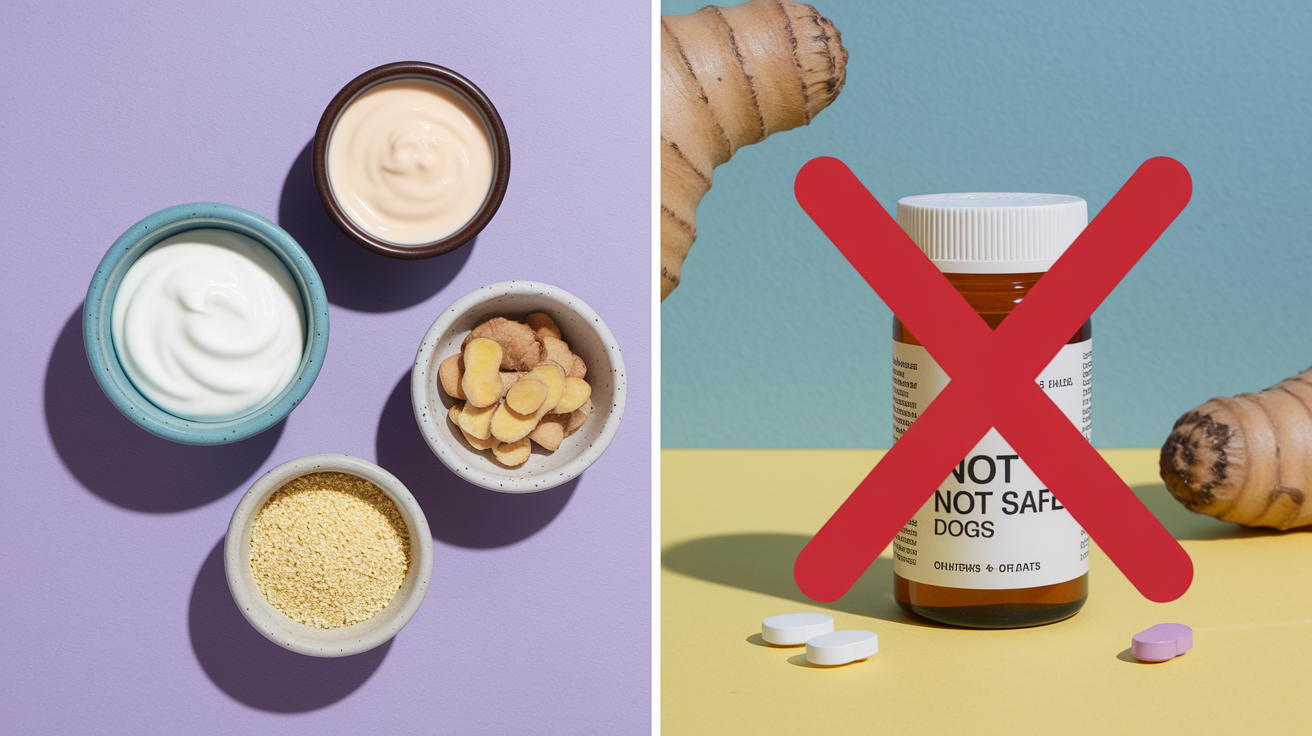
Human over-the-counter medications might seem like a quick fix, but most of them carry risks for dogs and should only be used under direct veterinary guidance. Pepto Bismol, for example, can turn your dog’s stool greenish-black and shows up as a radio-opaque material on x-rays. That can confuse diagnostic imaging if your vet needs to rule out a blockage or other issue. Imodium (loperamide) is especially risky. It slows gut motility, which can trap infectious agents in the intestines. It’s dangerous or even fatal for dogs with the MDR1 gene mutation, common in Collies, Shelties, and Australian Shepherds.
Pepcid (famotidine) is sometimes recommended by vets for acid-related nausea, but it can cause side effects like loss of appetite, drowsiness, or diarrhea. It may also interact with other medications your dog is taking. Never dose any human medication on your own. If you’re unsure whether something’s safe or your dog’s symptoms feel urgent, contact your vet or the ASPCA Animal Poison Control hotline.
Probiotics, on the other hand, are generally safe and helpful after a vomiting episode. Strains like Lactobacillus acidophilus, Bifidobacterium longum, and Enterococcus faecium support gut health and can speed recovery. You can use veterinary probiotic powders, plain unsweetened Greek yogurt, unsweetened kefir, or raw goat milk in small amounts. Ginger, in very small quantities, may help with mild nausea, but always introduce new remedies slowly and watch for any reaction.
What NOT to give your dog after vomiting:
- Pepto Bismol (messes with stool evaluation and imaging)
- Imodium/loperamide (dangerous for certain breeds, can worsen infection-related diarrhea)
- Human anti-nausea or anti-diarrheal medications without vet approval
- Fatty foods, table scraps, treats, or anything rich or heavily seasoned
Monitoring Recovery After Vomiting and What Stool/Behavior Changes Mean
Most mild stomach upsets improve within 24–48 hours. You should see your dog’s energy return, their interest in food pick back up, and their stool start to firm over the next 1–3 days. If your dog’s still vomiting, refusing food, or acting lethargic past the 48-hour mark, it’s time to call your vet. Persistent symptoms suggest something beyond simple dietary indiscretion. Infection, parasites, a foreign body, or an underlying metabolic issue.
Pay attention to stool changes during recovery. Soft or slightly loose stool in the first day or two is normal as the GI tract resets. But watery diarrhea, especially with blood, mucus, or a jelly-like “raspberry jam” appearance, is concerning and needs veterinary evaluation. Tracking the frequency and appearance of both vomiting and stool helps your vet narrow down possible causes if you do need to bring your dog in.
Stool patterns to watch during recovery:
- Normal recovery: Stool gradually firms from soft to formed over 1–3 days. Color returns to normal brown.
- Mild concern: Soft stool that doesn’t firm by day 3, or intermittent loose stool with normal energy and appetite. Call your vet for advice.
- Urgent concern: Watery diarrhea, blood (bright red or dark/tarry), mucus, “raspberry jam” texture, or foul smell paired with lethargy or refusal to eat. Seek veterinary care right away.
Preventing Future Vomiting Episodes in Dogs
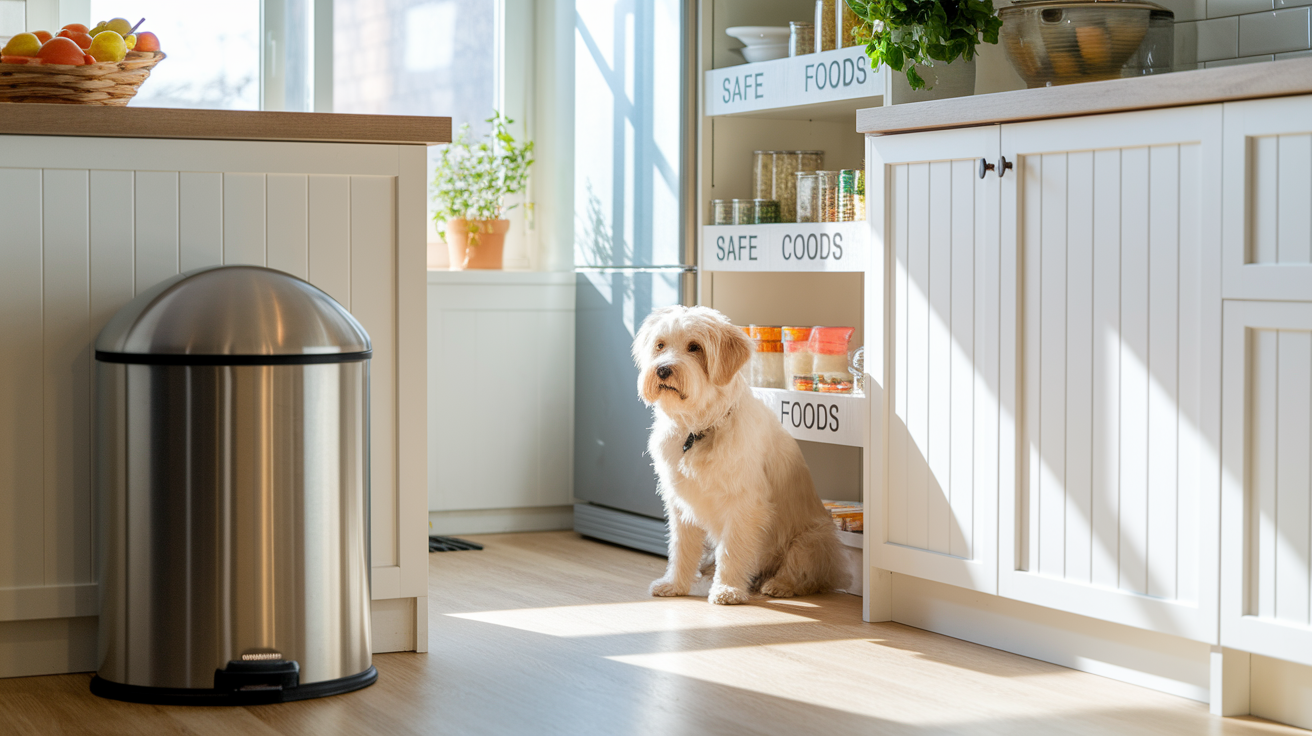
The most common cause of vomiting in otherwise healthy dogs? Dietary indiscretion. Eating something they shouldn’t have, whether that’s trash, table scraps, a dead animal on a walk, or something toxic like grapes or chocolate. Securing your trash cans, keeping human food out of reach, and being watchful at gatherings where guests might slip your dog unsafe snacks are simple but effective prevention steps. If you have kids, teach them which foods are dangerous for dogs and make it a family rule.
Sudden diet changes are another frequent trigger. If you’re switching your dog’s food, do it gradually over 5–7 days by mixing increasing amounts of the new food with the old. This gives the gut time to adjust and cuts down the chance of vomiting or diarrhea. Stick to a consistent, high-quality diet that suits your dog’s age, size, and any sensitivities they have. Frequent diet hopping or rotating too many different proteins and formulas can backfire in sensitive dogs.
Routine parasite prevention is part of the picture too. Intestinal parasites like roundworms, hookworms, whipworms, giardia, and coccidia can all cause vomiting and diarrhea. Regular deworming, fecal testing at annual vet visits, and year-round parasite preventatives help keep those risks low. Stress-related vomiting is real as well, especially around big changes like moving, boarding, or travel. Keeping routines as steady as possible and using calming strategies during stressful times can help prevent stress colitis and GI upset.
5 prevention tips to reduce future vomiting:
- Secure trash cans and keep toxic foods (grapes, chocolate, onions, xylitol) completely out of reach.
- Transition to new foods gradually over at least 5–7 days. Skip sudden diet changes.
- Limit or cut out table scraps and rich, fatty human foods.
- Maintain routine parasite prevention and annual fecal testing with your vet.
- Keep feeding schedules, routines, and environments as consistent as possible to reduce stress-related GI upset.
Final Words
In the action, we walked through immediate care: safe fasting times, how to reintroduce water slowly, simple bland meals, what to watch for, and when to call the vet.
Stick to small sips, short fasts for healthy adults, tiny bland portions, and track vomiting and hydration closely over the next 24–48 hours.
If you need a quick refresher, this guide on how to settle dog stomach after vomiting gives practical steps you can use now. You’re doing the right thing. Steady, calm care helps most dogs recover.
FAQ
Q: What calms a dog’s stomach from throwing up?
A: To calm a dog’s stomach after vomiting, rest the gut: withhold food 4–6 hours for healthy adults, offer small sips of room-temperature water, then tiny bland meals (boiled chicken and rice); call a vet for repeated vomiting or dehydration.
Q: How long does it take for a dog’s stomach to settle after vomiting?
A: A dog’s stomach usually settles within 24–48 hours for mild cases; fast healthy adults 4–6 hours (up to 12 if needed). Contact a vet sooner for repeated vomiting, blood, bloating, or inability to keep water down.