

Brown vomit in dogs is often blamed on a quick snack, but it can also hide serious bleeding.
Color alone won’t tell you what’s wrong.
It can be partly digested food or bile, or digested blood (dark, grainy like wet coffee grounds).
When the vomit happens, how it smells, and other signs help point to the cause.
This post walks you through the likely reasons, what timing can reveal, safe at-home steps to try today, and the exact red flags that mean call your vet right now.
Immediate Answers: What It Means When a Dog Is Vomiting Brown Liquid
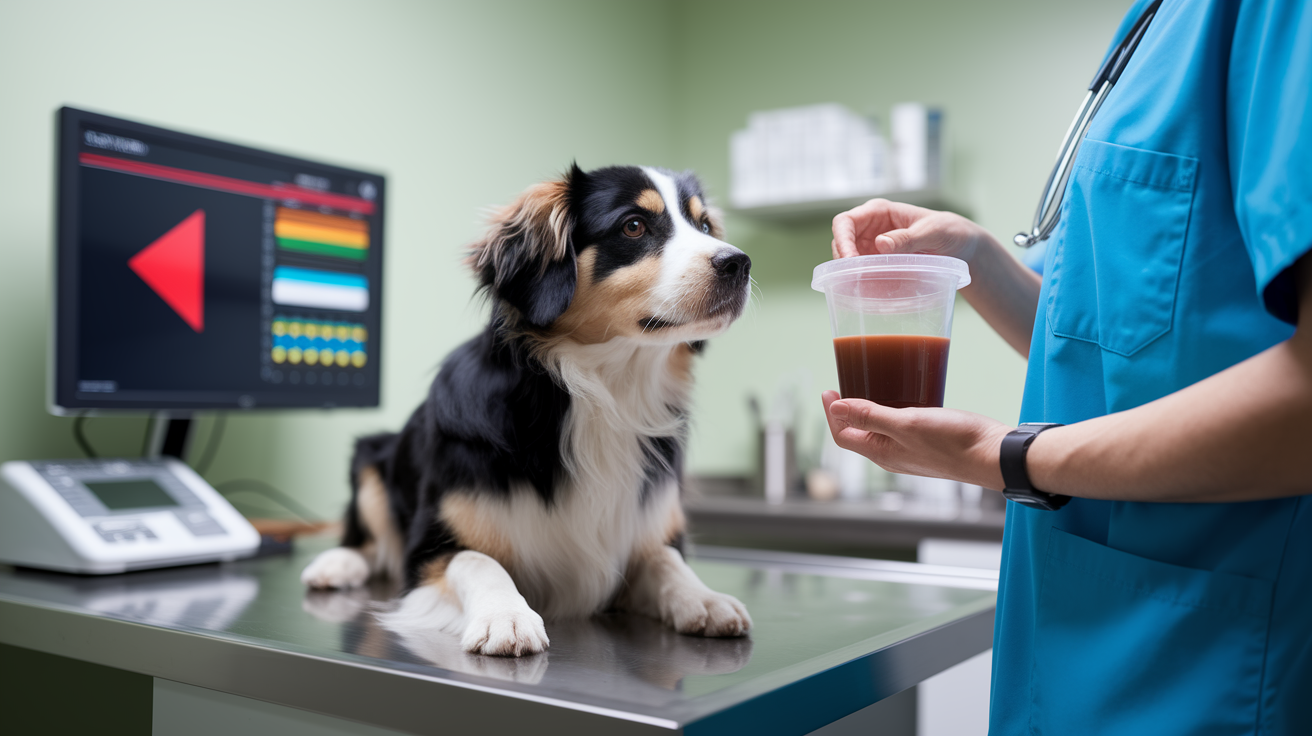
Brown vomit can be digested food mixed with bile, old food that’s been sitting in the stomach, or something more serious: digested blood from a bleeding ulcer or stomach injury. Color alone won’t tell you everything. You need to look at what else is happening with your dog and how the vomit actually looks and smells.
Most of the time, brown liquid means your dog threw up partly digested food or bile stained with food particles. That happens after eating too fast, getting into something they shouldn’t have, or going too long on an empty stomach. But if the vomit looks dark brown and grainy, like wet coffee grounds, that’s a strong sign of digested blood from the upper GI tract. And that’s serious.
Timing after meals gives you clues about where the problem is. If your dog vomits whole kibble hours after eating, that points to delayed stomach emptying, possibly from a blockage or stomach issue.
Not every episode of brown vomit is an emergency. But you need to know when to act fast. Call your vet or head to an emergency clinic right away if you see any of these red flags:
- Vomiting repeatedly every 30 to 60 minutes
- Vomit that looks like coffee grounds or contains fresh blood
- Pale or white gums
- Severe abdominal pain, bloating, or distended belly
- Weakness, collapse, or can’t stand
Understanding the Possible Causes of Brown Vomit in Dogs
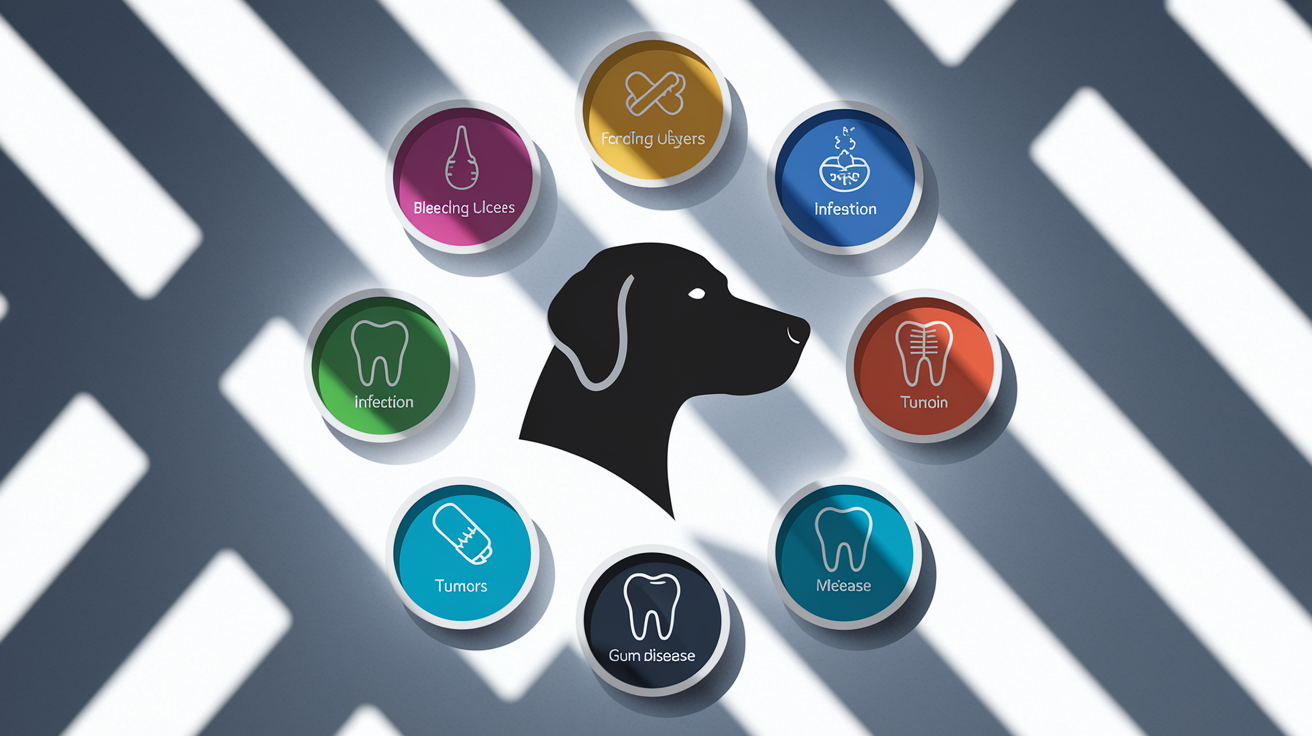
The list of possible causes ranges from minor dietary mistakes to life threatening internal bleeding or blockages. Knowing which category fits your dog helps you decide how urgent things really are.
Upper GI bleeding from stomach ulcers, tumors, or severe gastritis produces dark brown or black vomit that looks like coffee grounds. This happens when blood sits in the stomach long enough for stomach acid to partially digest it. If you see this texture or very dark color, assume it’s blood until a vet says otherwise.
Foreign objects, toxins, and intestinal blockages create brown vomit in different ways. A foreign object stuck in the esophagus or stomach can irritate the lining and cause bleeding. Or it can block the pylorus (the exit valve from the stomach), causing vomiting shortly after eating. Toxins like rodenticides or human medications can damage the stomach lining or mess with clotting, which leads to blood in vomit. Total intestinal blockages often produce fetid smelling brown vomit because digestion backs up.
Infections, tumors, and gum disease can also turn vomit brown. Bacterial or viral infections may cause stomach inflammation and small amounts of bleeding. Tumors in the mouth, throat, or stomach can bleed slowly and mix blood with saliva or stomach contents. Advanced gum disease can cause dogs to swallow blood, which shows up later as brown vomit.
Here are the six main cause categories and what to watch for with each:
- Bleeding stomach or intestinal ulcers – coffee grounds vomit, tarry black stools, pale gums
- Foreign object or intestinal blockage – vomiting shortly after eating, abdominal pain, can’t defecate
- Toxin or poison ingestion – known exposure, sudden onset, neurological signs, bleeding from multiple sites
- Bacterial or viral infection – fever, diarrhea, loss of appetite, lethargy
- Tumors or gum disease – bad breath, visible mouth bleeding, weight loss, chronic vomiting
- Feces ingestion (coprophagia) – fetid smell, known behavior, otherwise normal energy
How to Visually Interpret Dog Vomiting Brown Liquid
What you’re looking at in the vomit bowl or on the floor can point you toward the cause before you even call the vet. Color, texture, smell, and what’s mixed in all matter.
Dark brown or blackish vomit that looks grainy or has a coffee grounds texture is the biggest red flag for digested blood. If the vomit smells foul or like feces, suspect either a total intestinal blockage or feces ingestion. Yellow or orange liquid mixed with brown usually means bile from an empty stomach. Less urgent but still worth monitoring.
Tarry black stools alongside brown vomit confirm upper GI bleeding. Fresh bright red blood in vomit or stool means active bleeding and needs immediate attention.
| Color/Appearance | What It May Mean |
|---|---|
| Dark brown, grainy, coffee grounds texture | Digested blood from stomach ulcer or upper GI bleed |
| Light brown, liquid or foamy | Digested food mixed with bile, often benign |
| Brown with fetid (feces-like) smell | Intestinal blockage or feces ingestion |
| Brown with yellow/orange streaks | Bile reflux on an empty stomach |
Dog Vomiting Brown Liquid After Eating: What Timing Tells You
When your dog vomits in relation to their last meal can help pinpoint where the problem is in the digestive tract. Normal GI transit time is 10 to 24 hours, so food moves from mouth to colon over about a day. If something disrupts that timeline, vomiting happens at specific intervals.
Vomiting whole kibble six hours after eating suggests the stomach isn’t emptying properly. A pylorus blockage, stomach tumor, or severe inflammation can slow or stop gastric emptying. Vomiting within an hour or two of eating usually points to the esophagus or upper stomach, especially if your dog shows lip licking, frequent swallowing, or tubular shaped vomit with undigested kibble.
Blockage symptoms typically appear within 12 to 24 hours of swallowing a foreign object, but esophageal lodgment shows signs almost immediately. If vomiting starts suddenly and keeps happening every few hours, especially after meals, that timeline fits a mechanical obstruction.
Here are four timing clues that help narrow the cause:
- Vomiting immediately or within 30 minutes of eating – esophageal problem, regurgitation, or very fast eating
- Vomiting 2 to 6 hours after eating – delayed stomach emptying, pylorus blockage, or stomach inflammation
- Vomiting 12 to 24 hours after eating – possible intestinal blockage or slow moving foreign object
- Vomiting unrelated to meals, especially at night or early morning – bile reflux, empty stomach, or systemic illness
When Brown Vomit Is an Emergency for Dogs
Some situations demand immediate veterinary care, not a wait and see approach. If your dog is vomiting brown liquid and showing any of the following, get to a vet or emergency clinic right now.
Vomiting every 30 to 60 minutes without stopping is a red flag. It means your dog can’t keep anything down, not even water. Dehydration and electrolyte imbalance happen fast. Pale or white gums, rapid heartbeat, and cold ears or paws signal shock, which can follow severe blood loss or dehydration.
Abdominal pain is another urgent sign. If your dog is pacing, whining, can’t get comfortable, or has a tight, distended belly, suspect a blockage, perforation, or severe inflammation. Dogs with total obstructions often try to vomit but bring up very little. What does come up may smell foul.
Tarry black stools (melena) alongside brown vomit confirm upper GI bleeding. Blood passing through the intestines turns black and sticky. If you see this, your dog is losing blood internally and needs treatment to stop the bleed and replace lost blood volume.
Here are six emergency signs that mean “go to the vet now”:
- Vomiting repeatedly every 30 to 60 minutes or continuous retching
- Vomit that looks like coffee grounds or contains fresh red blood
- Pale, white, or bluish gums
- Severe abdominal pain, bloating, or can’t defecate
- Collapse, extreme weakness, or unresponsiveness
- Known toxin ingestion (rodenticide, human medication, chocolate, xylitol)
What to Do at Home if a Dog Is Vomiting Brown Liquid
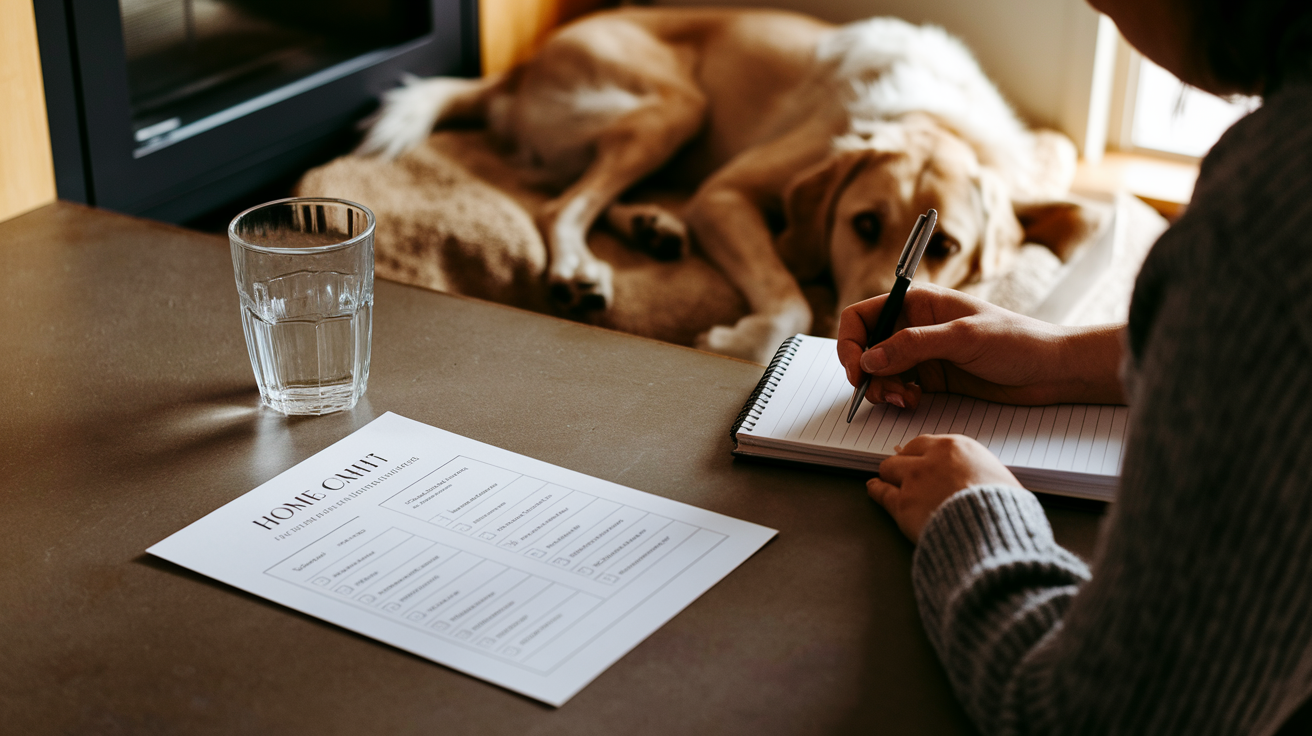
If your dog is alert, hydrated, and not showing emergency signs, you can start safe home care while monitoring closely. The goal is to rest the stomach, prevent dehydration, and watch for any worsening.
First, note the exact time of the first vomit, how many times it’s happened, what it looks like, and whether your dog ate or drank anything unusual. Take a photo if you can. Vets find visual evidence helpful.
Withhold food for 12 to 24 hours for adult dogs to let the stomach settle. Puppies, small dogs, and dogs with health conditions like diabetes shouldn’t fast that long. Call your vet for guidance. Offer small sips of water every 15 to 30 minutes instead of free access to a full bowl. Too much water at once can trigger more vomiting.
If vomiting stops for 12 to 24 hours, reintroduce a bland diet in very small portions. Plain boiled chicken and white rice or plain boiled ground turkey and rice. Divide the daily amount into 3 to 4 small meals and feed every few hours. Keep this up for 24 to 72 hours, then gradually mix in regular food over 3 to 4 days.
Never give human medications like Pepto Bismol, aspirin, or ibuprofen without asking your vet first. Some are toxic to dogs. Masking symptoms can delay diagnosis of a serious problem.
Here are five home care steps in order:
- Stop all food – fast for 12 to 24 hours (adults only, check with vet for puppies/small dogs)
- Offer small sips of water – 1 to 2 tablespoons every 15 to 30 minutes, not a full bowl
- Monitor closely – watch for repeated vomiting, lethargy, pain, or abnormal gum color
- Reintroduce bland food slowly – after 12 to 24 hours vomit free, feed tiny portions 3 to 4 times per day
- Document everything – write down times, frequency, appearance, and any possible exposures for the vet
Veterinary Diagnosis for Dogs Vomiting Brown Liquid
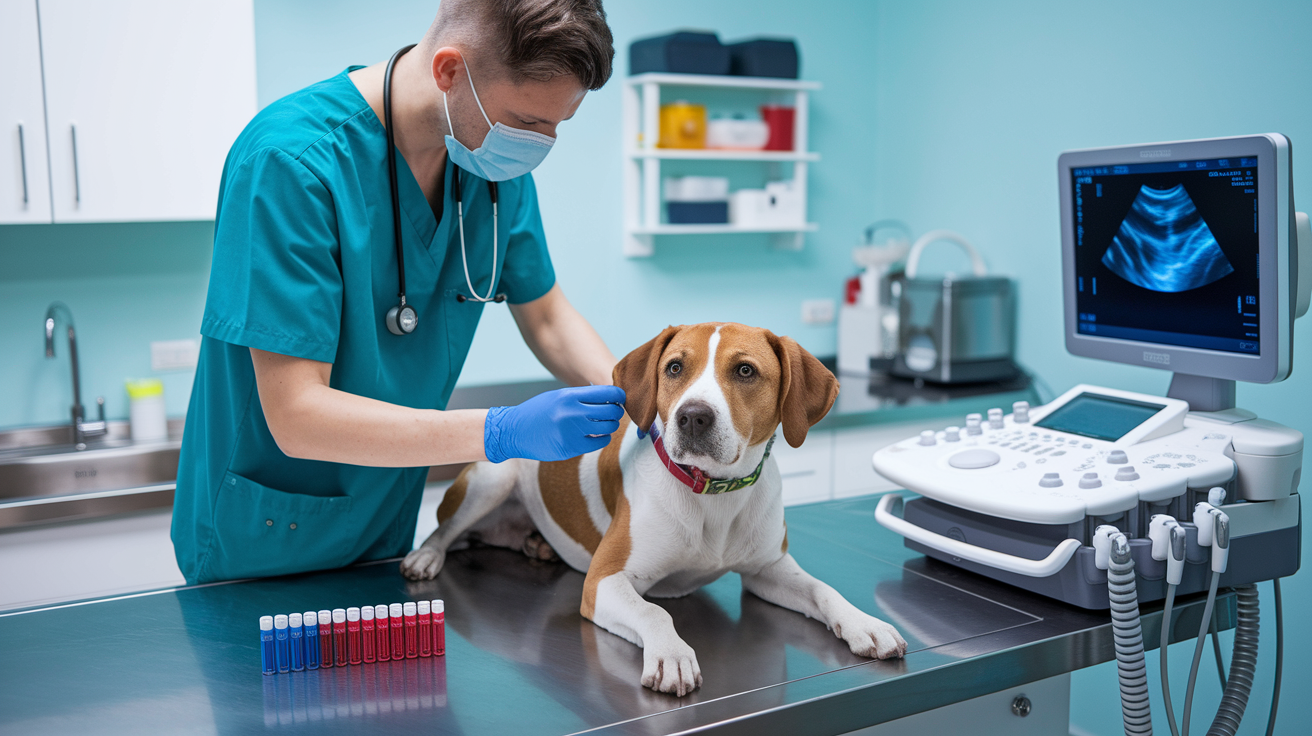
When you bring your dog in, the vet will perform a physical exam and choose tests based on what they find and what you tell them. Expect questions about timing, frequency, diet changes, possible toxin exposure, and any other symptoms like diarrhea or lethargy.
Bloodwork and Fecal Exam
A complete blood count (CBC) checks for anemia (low red blood cells from bleeding), infection (high white blood cells), and platelet levels (clotting ability). A chemistry panel evaluates kidney and liver function, electrolyte balance, and blood sugar. If bleeding is suspected, a coagulation profile measures how fast blood clots. A fecal exam looks for parasites, bacteria, or blood in the stool.
Imaging (X-ray & Ultrasound)
Abdominal X-rays can show foreign objects, gas patterns suggesting obstruction, or masses. Not all foreign bodies show up on X-ray. Soft objects like fabric or plastic may be invisible. Ultrasound gives a detailed view of organ structure, stomach lining thickness, intestinal layering, and fluid pockets. It’s especially useful for spotting tumors, intussusception (telescoping intestine), or pyloric thickening.
Endoscopy and Specialized Tests
If imaging and bloodwork don’t give a clear answer, the vet may recommend endoscopy. That’s a camera scope passed down the esophagus and into the stomach to look for ulcers, tumors, or foreign objects. Biopsy samples can be taken during the procedure. In cases of suspected clotting disorders, additional tests like von Willebrand factor or platelet function tests may be ordered.
Treatment Options When a Dog Vomits Brown Liquid
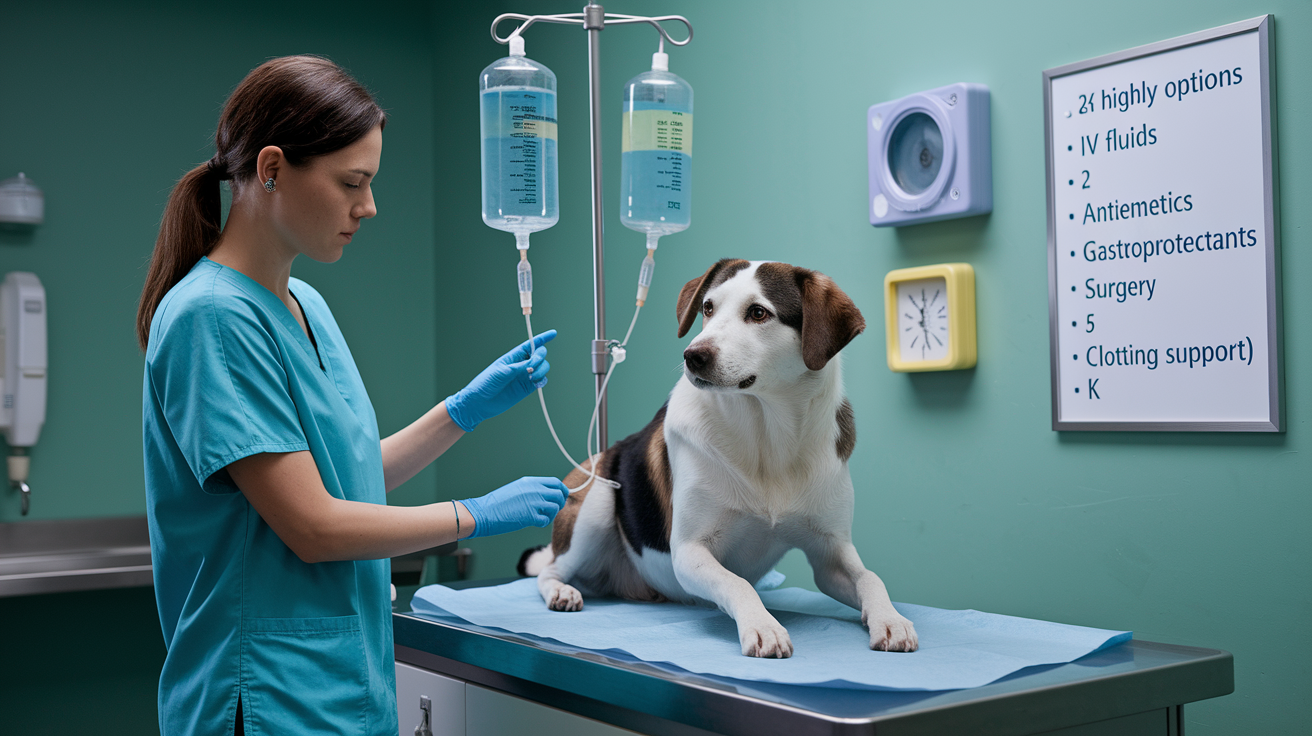
Treatment depends on the underlying cause. But most dogs will receive supportive care to stop vomiting, restore hydration, and protect the stomach lining while the vet investigates or treats the root problem.
IV fluids correct dehydration and electrolyte imbalances within hours. Dogs often perk up noticeably once fluids are on board. Antiemetic medications like maropitant (Cerenia) or ondansetron stop vomiting signals to the brain. Most dogs stop vomiting within 1 to 24 hours of the first dose.
Gastroprotectants like famotidine, omeprazole, or sucralfate reduce stomach acid and coat ulcers, allowing healing over days to weeks. If infection is suspected, antibiotics may be started. If a foreign object or obstruction is confirmed, surgery is necessary. Recovery time ranges from a few days to several weeks depending on how much intestine was affected.
In cases of significant blood loss, a blood transfusion may be needed. Clotting support with vitamin K or plasma is given if rodenticide poisoning or clotting disorders are diagnosed.
Here are five treatment categories and what they address:
- IV fluids and electrolytes – dehydration, shock, electrolyte imbalance
- Antiemetic medications – stop vomiting reflex, allow stomach rest
- Gastroprotectants and antacids – heal ulcers, reduce acid damage
- Surgery – remove foreign objects, repair perforations, resect damaged intestine
- Blood transfusion or clotting therapy – replace lost blood, correct clotting defects
Prevention Strategies for Dogs Prone to Brown Vomiting

Once your dog recovers, focus on preventing recurrence. Many cases of brown vomit come from dietary indiscretion or environmental hazards you can control.
Secure trash cans with locking lids and keep human food, medications, and cleaning products out of reach. Supervise outdoor time to prevent scavenging, eating feces, or swallowing sticks and rocks. Maintain regular deworming and fecal exams to catch parasites early.
Feed consistent, measured meals at the same times each day. Use slow feeder bowls if your dog gulps food. Fast eating increases the chance of vomiting. When switching foods, do it gradually over 5 to 7 days to avoid stomach upset.
Track patterns in a notebook or phone app. Note when vomiting happens, what your dog ate that day, stool appearance, and energy level. Patterns help you and your vet identify triggers or early warning signs of chronic problems.
Here are four prevention tips to reduce future episodes:
- Secure trash and hazards – use locking trash cans, store medications and cleaners in cabinets, remove small objects from floors
- Supervise outdoor time – watch for scavenging, feces eating, or foreign object ingestion
- Feed smaller, regular meals – avoid long fasting periods, use slow feeder bowls for fast eaters
- Keep a symptom log – document vomiting episodes, diet changes, stool appearance, and activity level to spot patterns
Final Words
If you just saw your dog vomiting brown liquid, this post walked you through common reasons—digested food or bile, and when brown can mean old blood—and how color and timing help point to causes.
You also got simple, safe steps to try at home: small water sips, a short fast, slow bland meals, and what to record.
If you’re watching dog vomiting brown liquid, note timing and take photos, then call your vet for red flags. You’re doing the right thing, and prompt care often leads to quick answers.
FAQ
Q: What does brown vomit usually mean in dogs?
A: The brown vomit in dogs usually means digested food, bile mixed with food, or possible digested blood; a fetid smell can point to intestinal blockage or feces ingestion.
Q: When is brown vomit likely blood versus harmless causes?
A: Brown vomit is more likely digested blood when it is very dark, blackish, or coffee-grounds in texture; lighter brown after eating often reflects food or bile instead.
Q: Could brown vomit come from my dog eating feces or trash?
A: Brown vomit can come from eating feces or trash; a strong foul odor and vomiting soon after scavenging suggest ingestion rather than internal bleeding and may need veterinary checks.
Q: What does brown vomit after eating tell me about timing?
A: Brown vomit after eating can signal delayed stomach emptying or a pylorus blockage if it happens right after meals; vomit with whole kibble six hours later suggests delayed transit or obstruction.
Q: What immediate signs mean I need emergency vet care?
A: Immediate signs needing emergency care include vomiting every 30–60 minutes, inability to keep water down, pale gums, collapse, severe abdominal pain, or tarry black stools—call your vet now.
Q: What should I do at home right now if my dog vomits brown liquid?
A: If your dog vomits brown liquid, withhold food for 12–24 hours, offer small sips of water every 15–30 minutes, record times and color, and contact your vet if red flags appear.
Q: How long should I monitor my dog before seeing a vet?
A: The monitoring period is usually 24 hours for mild cases—track vomiting frequency, appetite, water intake, gum color, and energy—and see a vet sooner if symptoms repeat or worsen.
Q: What will the vet do to diagnose the cause of brown vomit?
A: The vet will rephrase your history, do a physical exam, then often run bloodwork, fecal testing, X-rays or ultrasound, and possibly endoscopy to find bleeding, blockage, or infection.
Q: What treatments might the vet recommend for brown vomit?
A: Treatment options include IV fluids, anti-nausea medications (like maropitant), stomach protectants (famotidine, sucralfate), antibiotics if needed, or surgery for obstructions or severe bleeding.
Q: How can I prevent my dog from vomiting brown liquid in the future?
A: Prevent brown vomit by securing trash, supervising outdoor time, using slow-feeders, feeding consistent meals, deworming regularly, and tracking triggers to discuss with your vet.
Q: What should I bring to the vet appointment about my dog’s brown vomit?
A: Bring a clear timeline of vomiting, photos or a safe sample if possible, recent meal and medication details, notes on scavenging or toxin exposure, and any stool changes.