

Think your cat hiding is just “being a cat”?
Not always.
Hiding can be a comfy nap spot, a stress reaction, or a way cats hide pain.
In this post I’ll explain simple clues to tell which it is, give safe steps you can try at home, and point out clear red flags that mean you should contact a vet.
Read on so you know when to watch, when to act, and what to tell your vet if the hiding feels wrong.
Why Cats Hide: Quick Explanation of Common Causes
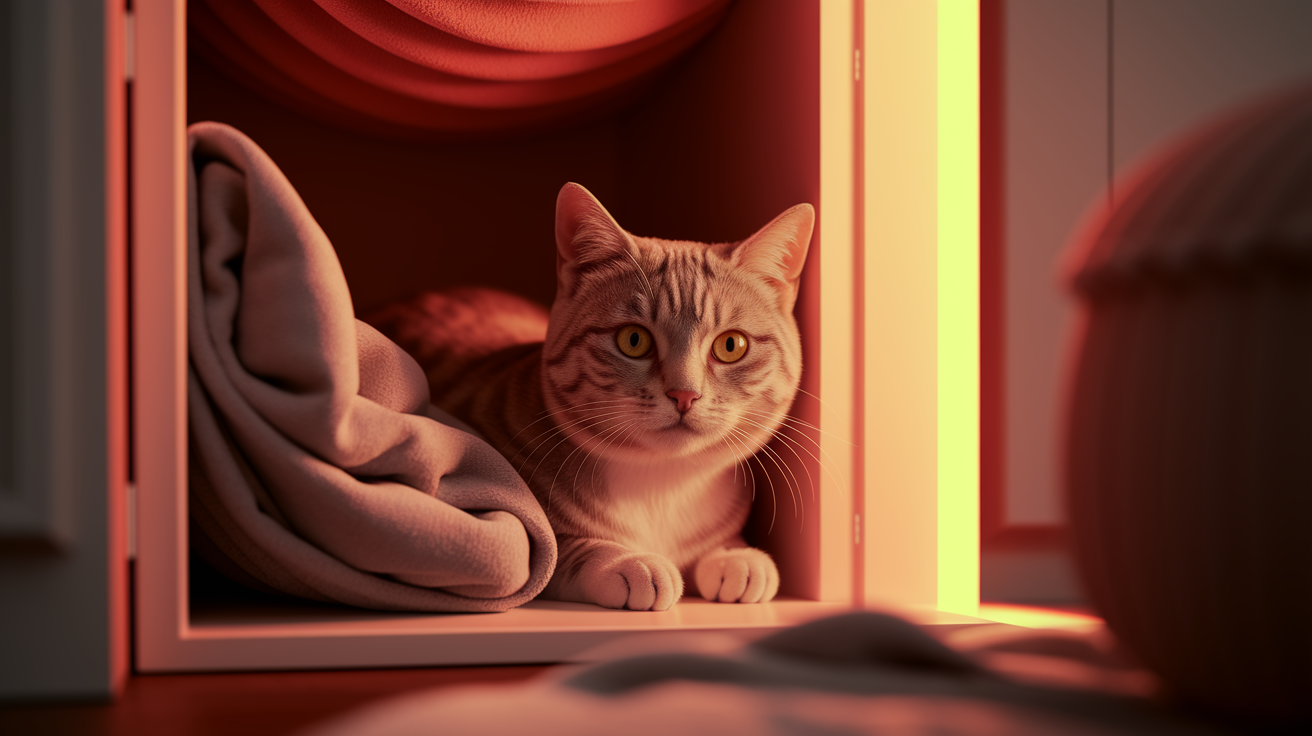
Cats hide because they’re wired to seek small, protected spaces where they can rest without being seen. In the wild, hiding kept cats safe from bigger predators and gave them cover to ambush prey. Your house cat carries the same instinct, even when there’s no real danger around. A cat tucked into a closet or under a bed is just following an ancient survival blueprint, picking a spot that feels secure and gives them a clear view of what’s happening.
But hiding can mean different things depending on what’s going on. A cat that sometimes retreats to the same cozy corner for a nap? Totally normal. A cat that suddenly vanishes for hours or days, won’t come out, or hides somewhere it never used to? That’s different. New stressors, household changes, loud noises, unfamiliar people or animals, even subtle shifts in routine can all push a cat into hiding mode.
Medical issues also drive hiding. Cats instinctively mask pain and illness to avoid looking vulnerable. So a sick or injured cat will often withdraw to a hidden spot. If hiding shows up suddenly and pairs with other changes (eating less, not using the litter box normally, lethargy, visible discomfort), you’re looking at a red flag, not routine behavior.
Top reasons cats hide:
- Instinct — seeking safety, warmth, and a quiet place to rest or observe
- Stress or fear — triggered by changes, loud noises, new pets, or unfamiliar visitors
- Environmental disruption — moves, renovations, rearranged furniture, or schedule shifts
- Overstimulation — too much activity, noise, or handling
- Illness or pain — dental issues, digestive upset, injury, infection, or chronic conditions
Normal Versus Concerning Cat Hiding Behavior
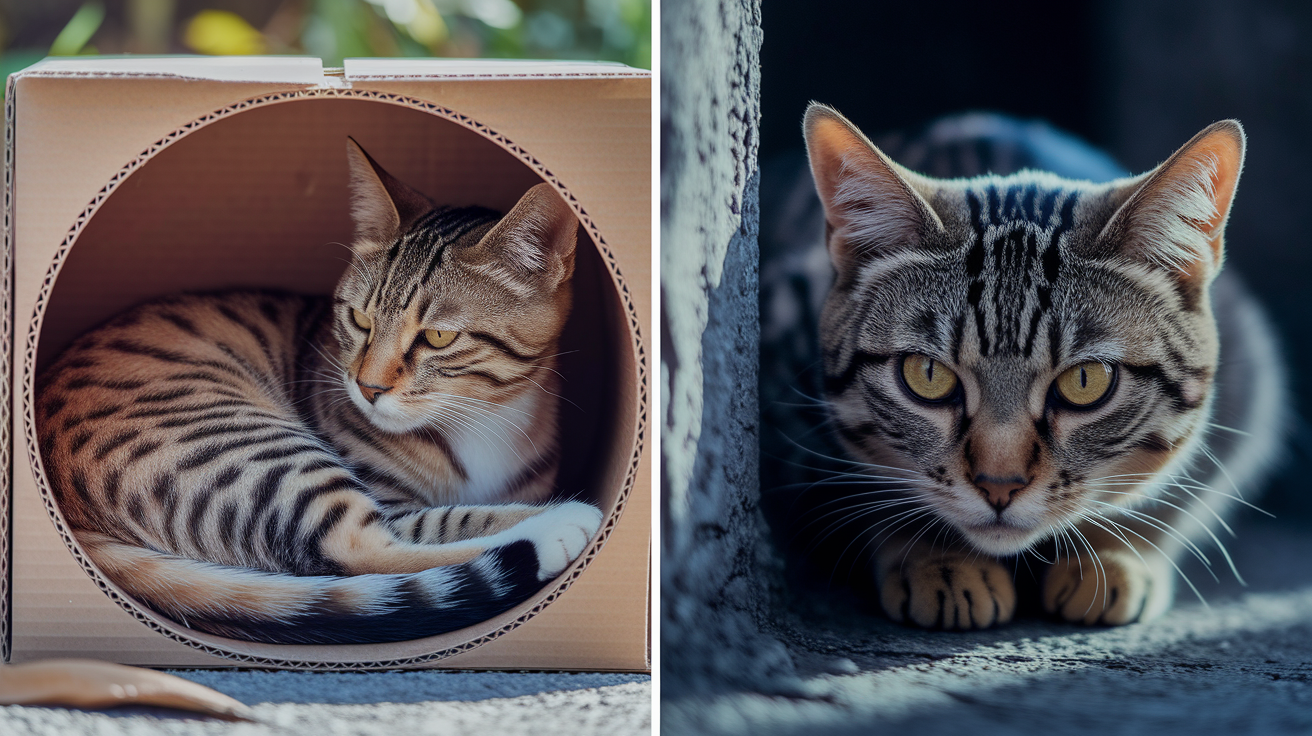
Short bursts of hiding are part of normal cat life. Many cats sleep 12 to 16 hours a day, and some of that rest happens in tucked-away spots like closets, under beds, or inside cardboard boxes. If your cat comes out for meals, uses the litter box, and engages with you or plays at some point during the day, the hiding is almost always routine. Cats that retreat during daytime hours and come out in the evening or early morning are just following their natural rhythm. They’re most active at dawn and dusk.
Concerning hiding looks different. It starts suddenly. Lasts longer than usual. Or happens in response to a clear trigger that hasn’t gone away. A cat that used to greet you at the door but now stays hidden all day? Or a cat that won’t leave a single spot for 24 hours or more? That’s telling you something has shifted. When hiding pairs with other changes (skipped meals, drinking less, litter box avoidance, vomiting, diarrhea, visible discomfort), the behavior moves from “probably fine” to “schedule a vet visit soon.”
The timeline matters. A cat hiding for a few hours after a loud thunderstorm or a visit from unfamiliar guests is reacting to a short-term stressor and will likely come out once things settle. A cat hiding for two full days with no interest in food or interaction needs veterinary attention.
Signs that hiding is concerning:
- Hiding suddenly starts or increases noticeably from your cat’s usual pattern
- Your cat won’t come out even for favorite treats or meals
- You notice changes in appetite, water intake, or litter box use
- Your cat hides and also shows lethargy, limping, vomiting, or other physical symptoms
Environmental Triggers That Cause Cats to Hide
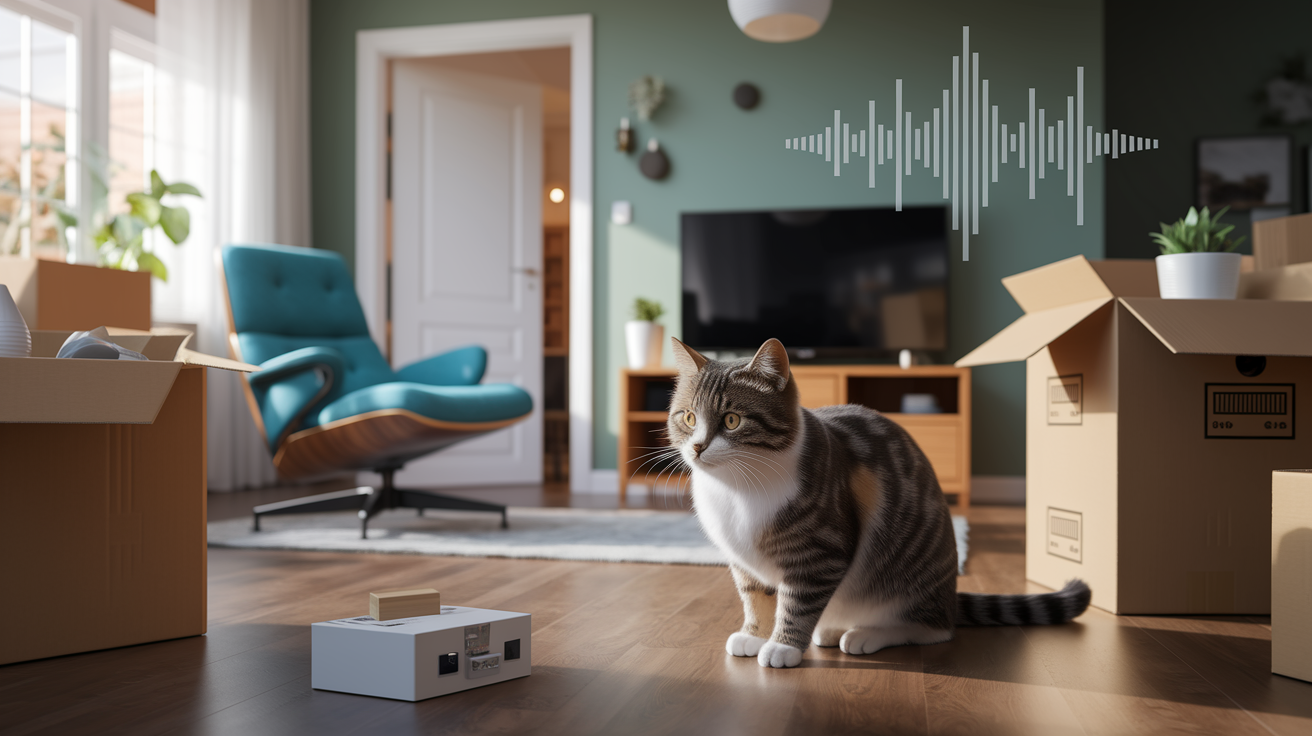
Cats crave predictability. When their environment changes, many respond by retreating until they feel safe again. Moving to a new home is one of the most common triggers. A cat in an unfamiliar space will often hide for the first day or two while mapping out the new territory, checking for threats, and learning where food, water, and litter are located. This is normal adjustment behavior, but it can stretch out if your cat doesn’t get a quiet room to decompress or if the household is chaotic.
Loud or sudden noises also send cats into hiding. Fireworks, construction, vacuum cleaners, shouting, even a dropped pan can startle a cat into retreat mode. Some cats will hide during the noise and come out when it stops. Others stay hidden for hours afterward, waiting to be sure the threat is gone. Household changes like new furniture, rearranged rooms, or a different daily schedule can feel destabilizing, especially for cats that thrive on routine.
The presence of new people or animals is another major stressor. A visiting friend, a new baby, or a newly adopted pet can make a resident cat feel crowded or threatened. Multi-cat households can also create hiding behavior if one cat is bullying another or if resources like food, water, or litter boxes are too close together or too few.
Common environmental triggers:
- Moving to a new home or staying in an unfamiliar location
- Loud noises like fireworks, construction, thunderstorms, or household appliances
- New pets, visitors, or household members
- Rearranged furniture, renovations, or changes to your cat’s usual spaces
- Disrupted routine, inconsistent feeding times, or schedule changes
Medical Reasons Behind Hiding Behavior

When a cat hides because of illness or pain, the behavior often shows up suddenly and doesn’t go away on its own. Cats are really good at masking discomfort. It’s a survival trait that kept wild cats from being targeted by predators. By the time hiding becomes obvious, your cat may already be feeling quite unwell. Dental disease is a common culprit. Painful teeth or inflamed gums make eating uncomfortable, and a cat with a sore mouth may retreat to avoid food or interaction.
Digestive issues (nausea, constipation, or diarrhea) also drive hiding. A cat with an upset stomach may withdraw to a quiet spot and stay there until the discomfort passes. Urinary problems, especially in male cats, can escalate quickly. Straining to urinate, producing little or no urine, or crying out in the litter box are urgent signs that need immediate vet care. Hiding often comes with these symptoms. Arthritis and joint pain are underdiagnosed in cats. A cat that used to jump onto high perches but now hides at floor level may be avoiding movement that hurts.
Infections, fevers, injuries, and chronic conditions like kidney disease or hyperthyroidism can all cause a cat to withdraw. If your cat is hiding more than usual and you notice any additional signs (not eating, drinking less, vomiting, diarrhea, limping, labored breathing, discharge from eyes or nose, or visible injury), contact your vet. Don’t wait to see if it gets better. Hiding paired with physical symptoms is a strong signal that something medical is happening.
Common medical issues linked to hiding:
- Dental disease (painful teeth, swollen gums, difficulty eating)
- Digestive upset (nausea, vomiting, diarrhea, constipation)
- Urinary blockage or infection (straining, little or no urine, frequent litter box visits)
- Arthritis or joint pain (reluctance to jump, stiffness, hiding at floor level)
- Infections or fever (lethargy, reduced appetite, warm ears or body)
- Chronic illness (kidney disease, hyperthyroidism, diabetes)
Behavioral Cues That Reveal Why a Cat Is Hiding
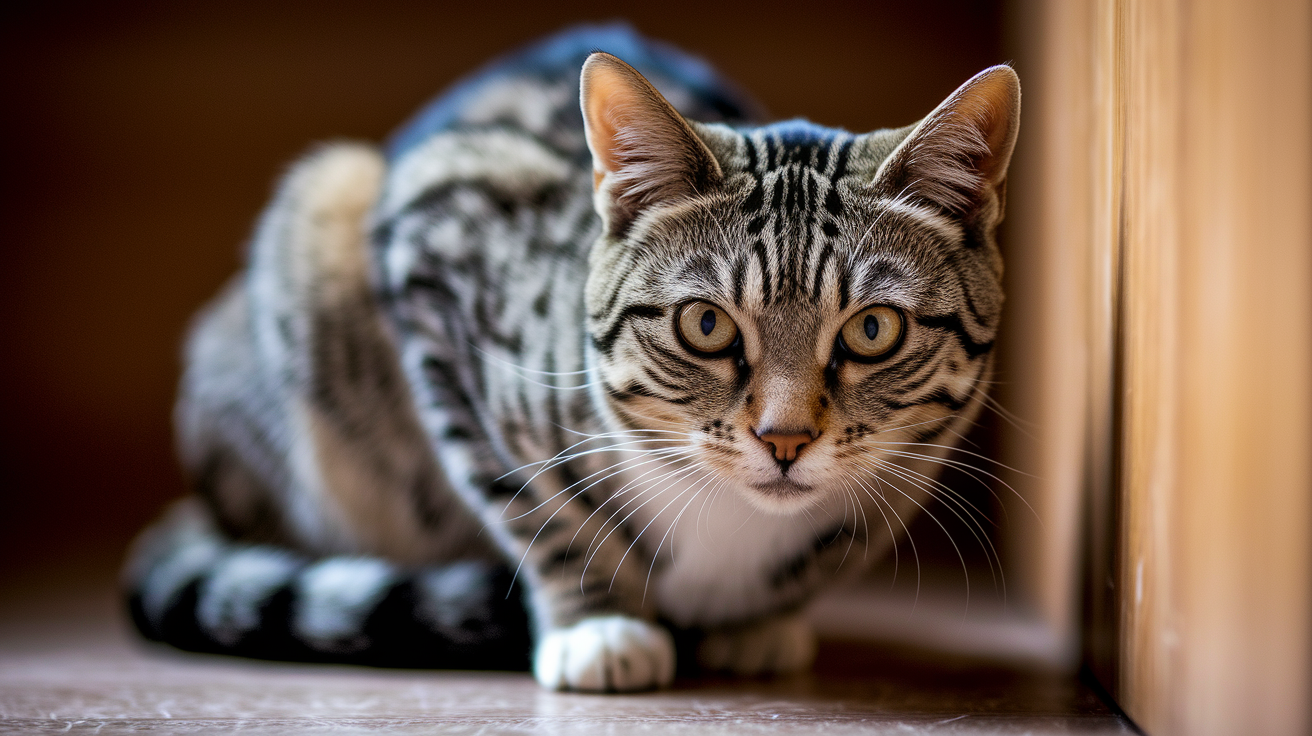
Your cat’s body language while hiding tells you a lot about what’s driving the behavior. A fearful or stressed cat will often crouch low with ears flattened back, pupils dilated wide, and tail wrapped tightly around the body. If you approach, the cat may hiss, swat, or try to retreat further into the hiding spot. This posture says “I don’t feel safe, leave me alone.” A cat hiding from overstimulation or too much activity may look similar but will relax once the household quiets down.
A sick or injured cat hiding often shows different cues. The body may be still and hunched rather than crouched. Your cat might not react much when you approach. No hissing, no tail flick, just quiet withdrawal. Ears may be neutral or slightly back, and the eyes may look half-closed or unfocused. Vocalizations can also shift. A cat in pain may growl softly, cry out when touched, or go silent when it would normally meow.
Response to interaction is another key clue. A fearful cat that’s hiding will usually come out for favorite treats or toys once the stressor is gone. A cat hiding due to illness may ignore treats entirely, avoid eye contact, and stay motionless even when you offer food or playtime. Pay attention to how long the hiding lasts and what brings your cat out. If nothing tempts them and the hiding continues past 24 hours, it’s more likely medical than behavioral.
Behavioral cues to watch:
- Posture — crouched and tense suggests fear; hunched and still suggests pain
- Ears and eyes — flattened ears and wide pupils indicate fear; neutral ears and half-closed eyes may signal illness
- Tail position — wrapped tight around the body shows anxiety; limp or unmoving may indicate discomfort
- Vocalization — hissing or growling suggests fear; soft crying or silence can point to pain
- Response to interaction — ignoring favorite treats or toys is concerning; coming out when the household is calm is normal
Helping a Cat Feel Safe and Encouraging Healthy Behavior
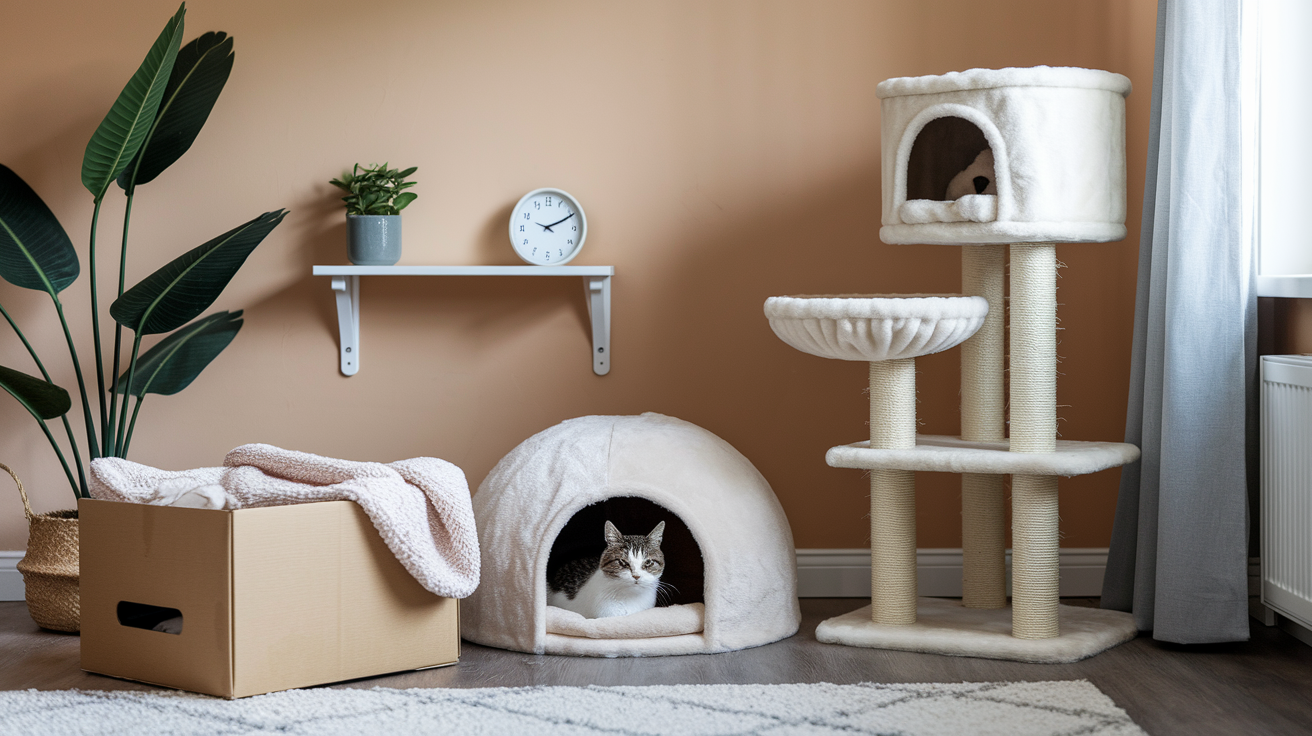
The first step is giving your cat appropriate hiding options. Instead of trying to stop hiding, provide spots that feel secure but are also accessible for you to monitor your cat’s health. A simple cardboard box with a soft blanket inside works well. Covered cat beds, igloo-style shelters, or cat trees with enclosed cubby holes give your cat a retreat that meets their instinct for small, dark, protected spaces. Place these options in quiet areas of your home, away from high-traffic zones, food bowls, and litter boxes.
Pheromone diffusers can help reduce anxiety, especially during transitions like a move or the arrival of a new pet. These plug-in devices release synthetic versions of the calming pheromones cats produce naturally. Place one near your cat’s favorite hiding spot. Maintaining a consistent daily routine also helps. Feed at the same times, keep play sessions predictable, and avoid sudden changes to furniture arrangement or household activity when possible. Cats feel safer when they know what to expect.
Never force a hiding cat to come out. Reaching into a hiding spot, grabbing, or cornering a cat will increase stress and can damage trust. Instead, sit quietly nearby without staring directly at your cat. Offer a high-value treat (a small piece of plain cooked chicken, a squeeze treat, or a favorite canned food) and place it near the entrance to the hiding spot. Let your cat decide when to come out. When they do emerge on their own, reward calm behavior with gentle praise or a treat.
In multi-cat homes, make sure each cat has separate hiding spots and resources. Competition for space, food, or litter boxes can drive one cat into constant hiding. Add vertical territory (cat trees, wall-mounted shelves) to give submissive cats escape routes. If a cat is hiding persistently and your vet has ruled out medical causes, consult a qualified cat behaviorist for structured support.
Supportive strategies:
- Provide multiple hiding options in quiet, low-traffic areas
- Use pheromone diffusers near favorite hiding spots to reduce anxiety
- Keep daily routines consistent (feeding, play, and interaction times)
- Add vertical spaces and separate resources in multi-cat households
- Avoid forcing your cat out; reward voluntary emergence with treats and calm praise
Final Words
If your cat is hiding more than usual, check appetite, movement, and how they react when you approach. That helps separate normal hiding from worry.
Reduce loud noises, offer quiet vertical spaces, and watch body language for fear versus pain. If hiding is sudden, lasts more than a day or two, or comes with eating changes or limpness, call your vet.
Understanding cat hiding behavior meaning helps you pick safe at-home steps and know when to seek care. Small changes often make a big difference.
FAQ
Q: Why is my cat hiding and acting weird?
A: Your cat is hiding and acting weird because cats hide for instinct, stress, fear, sudden change, overstimulation, or possible illness. Watch appetite, energy, and bathroom habits; call your vet for sudden or worsening signs.
Q: What is a red flag behavior in cats?
A: A red flag behavior in cats is sudden severe change like trouble breathing, collapse, seizures, repeated vomiting or diarrhea, blood in stool or urine, severe pain, or not eating for 24–48 hours—call a vet immediately.
Q: When should I be concerned about a cat hiding?
A: You should be concerned about a cat hiding when it starts suddenly, lasts more than 24–48 hours, or comes with reduced eating, drinking, movement, vocalizing, grooming, or signs of pain—then contact your vet.
Q: Why is my cat isolating itself?
A: Your cat is isolating itself because cats withdraw to feel safe from stress, new people or pets, pain, or illness. Give quiet hiding spots, keep routine, monitor 24–48 hours; call a vet if symptoms worsen.