

Is your dog panting at night when everything seems calm and you can’t find a reason?
Nighttime panting can be harmless, or a clue that something needs attention.
I’ll walk you through the common causes, simple at-home checks, and quick steps to help your dog settle.
You’ll learn what counts as normal breathing, what signs are worrying, and exactly when to call the vet.
If you only have one thing you can do tonight, I’ll tell you that first so you can act fast and feel less worried.
Key Reasons Dogs Pant at Night and How to Tell What’s Normal vs. Concerning
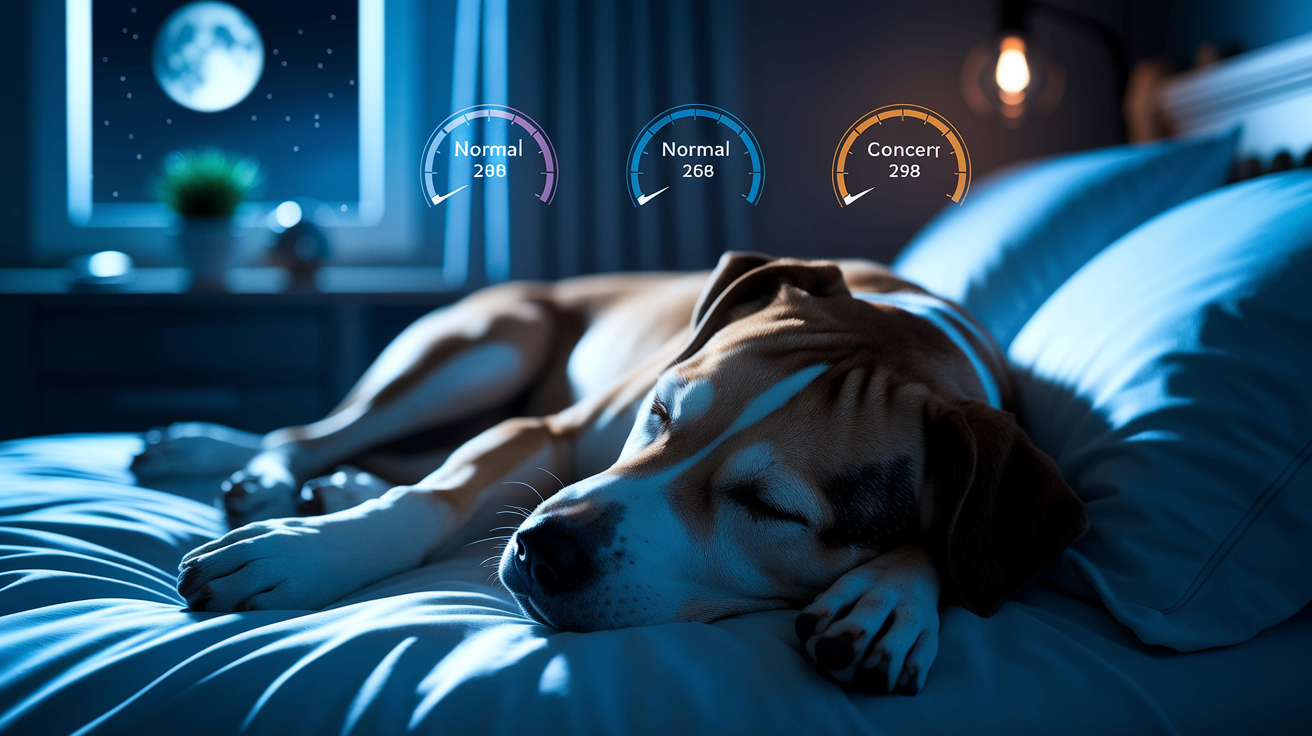
Panting is how dogs cool down. They don’t sweat like we do. So breathing hard after a run, on a hot day, or when they’re excited? Totally normal. But nighttime panting is different. Your dog should be resting somewhere cool and quiet, with nothing recent to explain the heavy breathing. When panting starts in the middle of the night without a clear reason, something else might be going on.
Normal panting stops pretty quickly once the trigger disappears. Heat, activity, excitement—once those are gone, breathing should settle. Abnormal nighttime panting lasts longer, happens more often, and usually comes with restlessness or pacing. If your dog’s moving from room to room, standing instead of lying down, or panting so hard they can’t relax, that’s a sign the panting isn’t just routine cooling. Context matters. A dog panting in a 75°F bedroom with no recent playtime is acting differently than one who just ran up the stairs.
Here’s what to check when you’re trying to figure out what’s happening:
Room temperature. Is the bedroom warm or stuffy? Try dropping the thermostat a few degrees or turning on a fan.
Recent activity. Did your dog run, play, or go outside within the last hour?
Anxiety triggers. Is a storm coming? Fireworks? Did your routine change today?
Pain signs. Is your dog limping, reluctant to jump, or licking one spot over and over?
Breathing pattern. Is the panting shallow and fast, or deep and labored? Is the tongue a normal pink, or turning blue, purple, or grey?
Duration. Has the panting lasted more than 20 to 30 minutes? Does it happen every night this week?
If panting is brief, your dog settles quickly, and you can pinpoint a normal trigger—hot room, dream, brief excitement—it’s usually nothing to worry about. But if panting happens night after night, comes with pacing or whining, or you can’t find a simple reason, it’s time to dig deeper.
Medical Causes Behind Nighttime Panting in Dogs
Heat problems and fever both cause panting because the body’s trying to cool off. Heatstroke risk jumps when a dog’s temperature climbs above 106°F. Heavy panting leads to dehydration fast, especially in short-nosed breeds like Pugs, French Bulldogs, and Bulldogs. Their airways don’t move air as efficiently. Even at night, a poorly ventilated bedroom or leftover heat from the day can push a dog’s temperature up. Fever from infection works the same way. The body heats up, the dog pants to cool off.
Endocrine disorders mess with metabolism and temperature control. Cushing’s disease is common in senior dogs and often shows up as heavy panting plus increased thirst, constant hunger, frequent urination, thinning hair, and a pot belly. Thyroid problems can also affect heart rate and energy regulation, though they’re less likely to cause nighttime panting than Cushing’s.
Respiratory disease makes it harder for dogs to get enough oxygen, so they pant more to compensate. Conditions like laryngeal paralysis (throat muscles fail to open fully), tracheal collapse, or chronic bronchitis all increase breathing effort. Even light activity during the day can leave a dog struggling at night. Watch your dog’s tongue and gums closely. A tongue that turns blue, purple, or grey means oxygen isn’t reaching the bloodstream properly. You need a vet immediately.
Heart disease and congestive heart failure reduce the heart’s ability to pump blood efficiently. The body responds by breathing harder and faster to keep oxygen flowing. You’ll often see panting paired with coughing, especially after short walks or when lying down. Nighttime panting happens because fluid can build up in the lungs when a dog is resting flat, making breathing harder.
| Condition | Key Signs | Why It Causes Night Panting |
|---|---|---|
| Heatstroke / Fever | Temperature over 106°F, dehydration, lethargy, drooling | Body tries to cool down through rapid breathing |
| Cushing’s Disease | Increased thirst/hunger, frequent urination, pot belly, hair loss | Excess cortisol raises metabolism and body heat |
| Respiratory Disease | Labored breathing after light activity, blue/purple tongue, wheezing | Oxygen deprivation forces harder, faster breathing |
| Heart Disease | Panting with coughing, reduced exercise tolerance, rapid heart rate | Poor circulation and fluid buildup in lungs increase breathing effort |
Behavioral and Emotional Triggers for Nighttime Panting
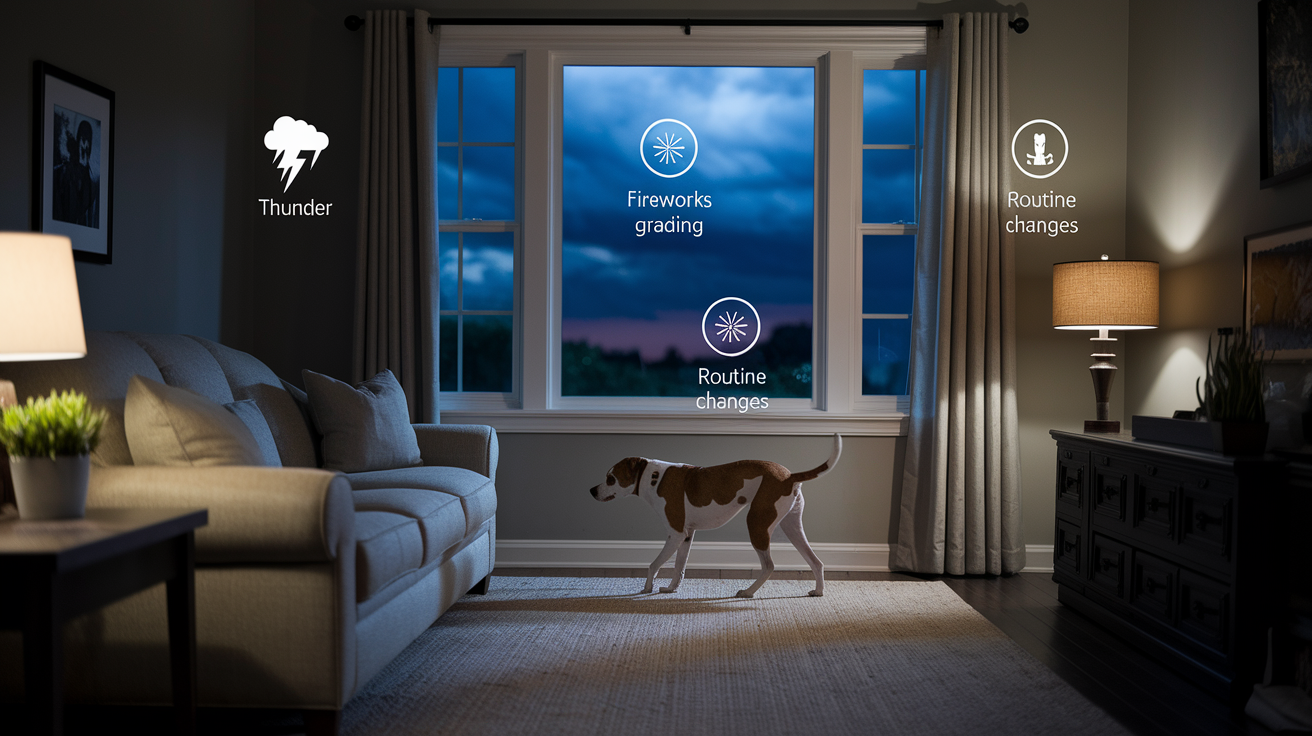
Stress and anxiety raise a dog’s heart rate and cortisol levels, which can trigger panting even when the room is cool and your dog hasn’t been active. Anxiety often comes with pacing, whining, drooling, trembling, or trying to hide. Nighttime can make anxiety worse because the house is quiet. Dogs notice sounds they’d ignore during the day—distant thunder, neighborhood activity, unfamiliar noises. Separation anxiety can show up at night too, especially if your dog sleeps alone or you recently changed their sleeping spot.
Canine cognitive disorder (dog dementia) is common in senior dogs and disrupts normal sleep cycles. Dogs with cognitive decline may pace, pant, stare at walls, or seem confused about where they are. Nighttime panting in an older dog who also seems disoriented or anxious is often linked to this. The brain isn’t processing rest cues properly, so the dog feels restless instead of calm.
Common anxiety triggers at night include:
Thunderstorms or approaching weather changes. Dogs can sense pressure shifts before the storm arrives.
Fireworks, construction noise, or loud neighborhood activity.
Separation anxiety if the dog sleeps away from family members.
Routine changes—new baby, house guest, different feeding schedule, moving furniture.
Fear of the dark or unfamiliar shadows in low light.
Environmental Factors That Contribute to Panting at Night
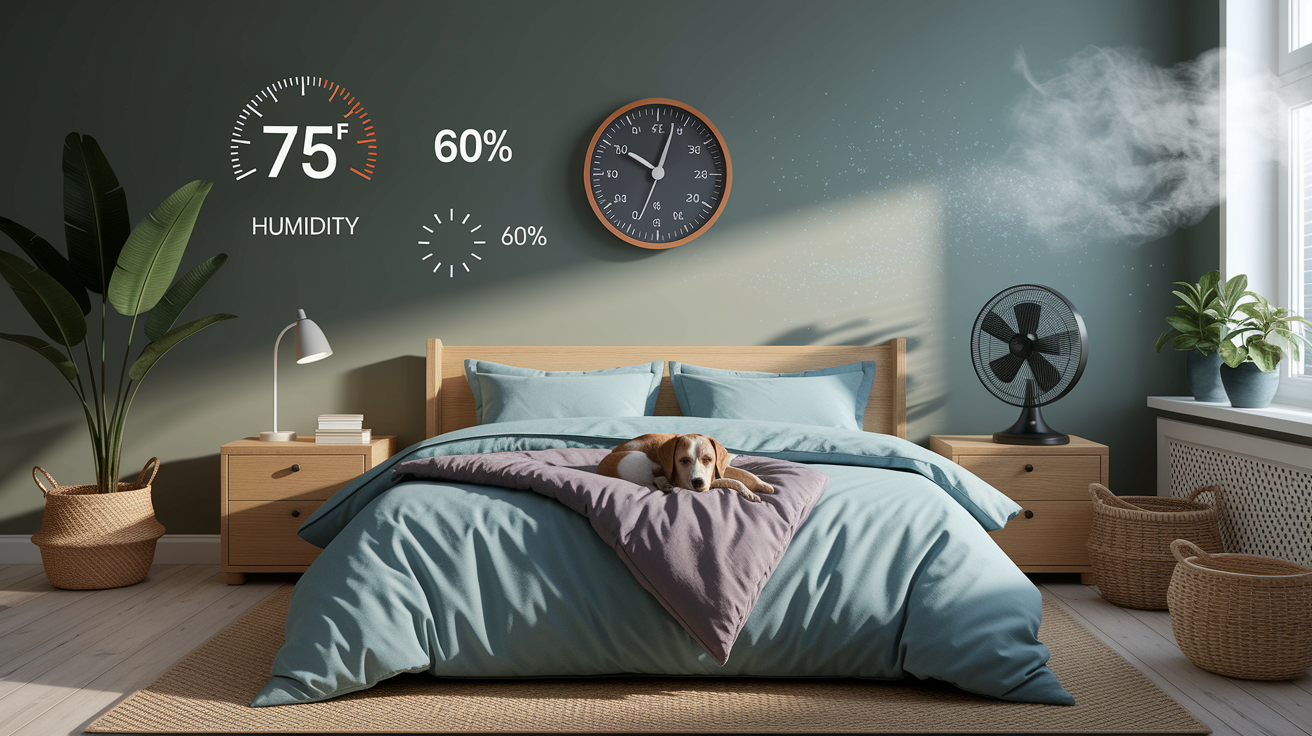
Temperature is the most common environmental cause of nighttime panting. Dogs regulate their body heat by breathing, so a bedroom that’s too warm will keep them panting. Even a few degrees can make a difference. Most dogs sleep best between 65 and 75°F, but heavy-coated breeds and seniors with poor circulation may need cooler spaces. High humidity makes cooling harder because moist air doesn’t absorb heat as well.
Air quality and ventilation matter too. Dust, pollen, mold, or strong cleaning product scents can irritate a dog’s airways and make breathing harder. Poor ventilation traps stale air and raises the room temperature. Dogs with seasonal allergies may pant more at night if pollen or dust settles on their bedding or if windows are open during high pollen hours.
Check these environmental factors if your dog pants at night:
Room temperature higher than 75°F or poor air circulation.
Humidity levels above 60% (makes cooling less efficient).
Dust, strong scents, or allergens in the sleeping area.
Bedding that traps heat—thick memory foam, heavy blankets, synthetic fabrics.
Pain, Discomfort, and Physical Conditions That Cause Dogs to Pant at Night
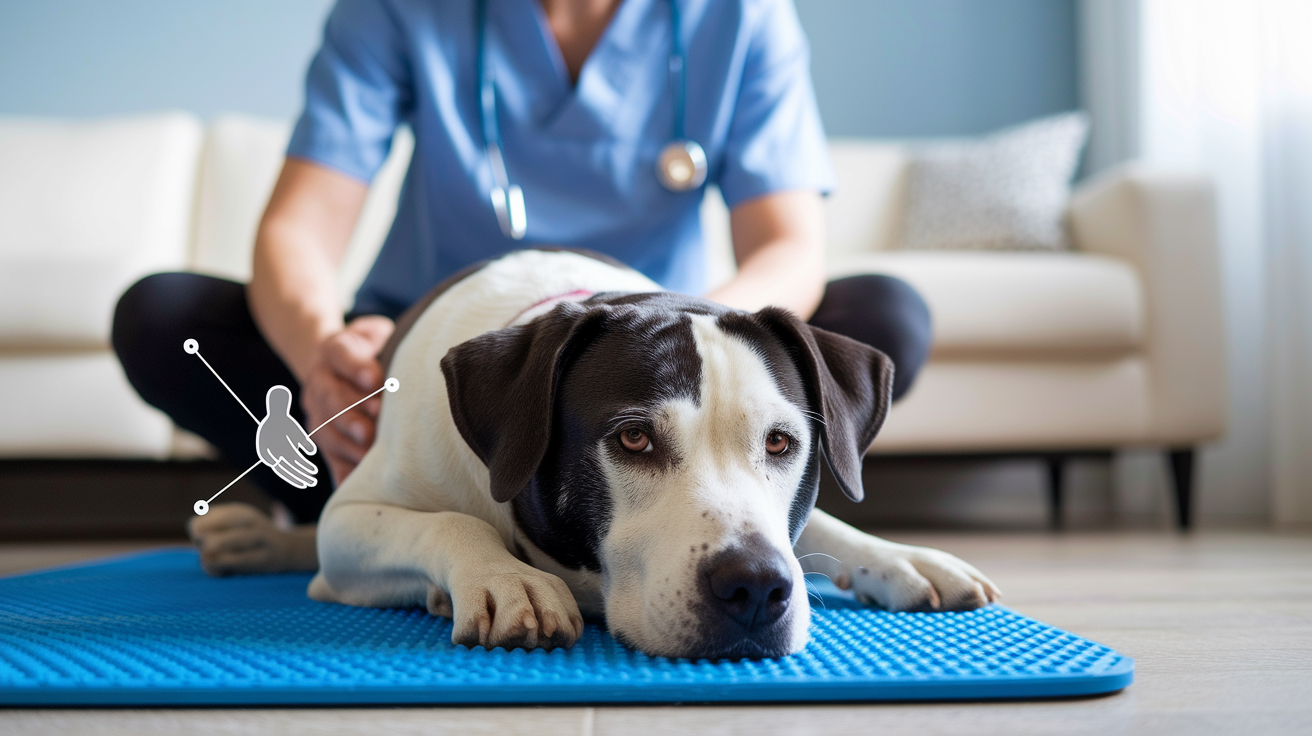
Pain increases heart rate and stress hormones. Both trigger panting. Injury, arthritis, muscle strain, or post-surgery discomfort can all make a dog restless and unable to settle. Nighttime is when dogs notice pain more because there are fewer distractions. A dog who seemed fine during the day may start panting and pacing at night as soreness sets in or as they try to find a comfortable sleeping position.
Arthritis is especially common in senior dogs and often worsens at night. Stiff, aching joints make it hard to lie down comfortably. You may see your dog stand up, circle, lie down, then stand again repeatedly. Panting happens because the effort of moving hurts and the dog can’t relax. Cold floors or drafty sleeping areas can make joint pain worse, so older dogs may pant more in unheated rooms or on hard surfaces.
Digestive discomfort like nausea, gas, or bloat also causes panting. Bloat (gastric dilatation-volvulus) is a life-threatening emergency where the stomach fills with gas and twists. Dogs with bloat pant heavily, pace, drool, and have a swollen, tight belly. They may try to vomit but nothing comes up. Milder digestive issues—upset stomach, acid reflux, constipation—can still cause enough discomfort to keep a dog panting and restless through the night.
Warning Signs That Nighttime Panting May Be an Emergency
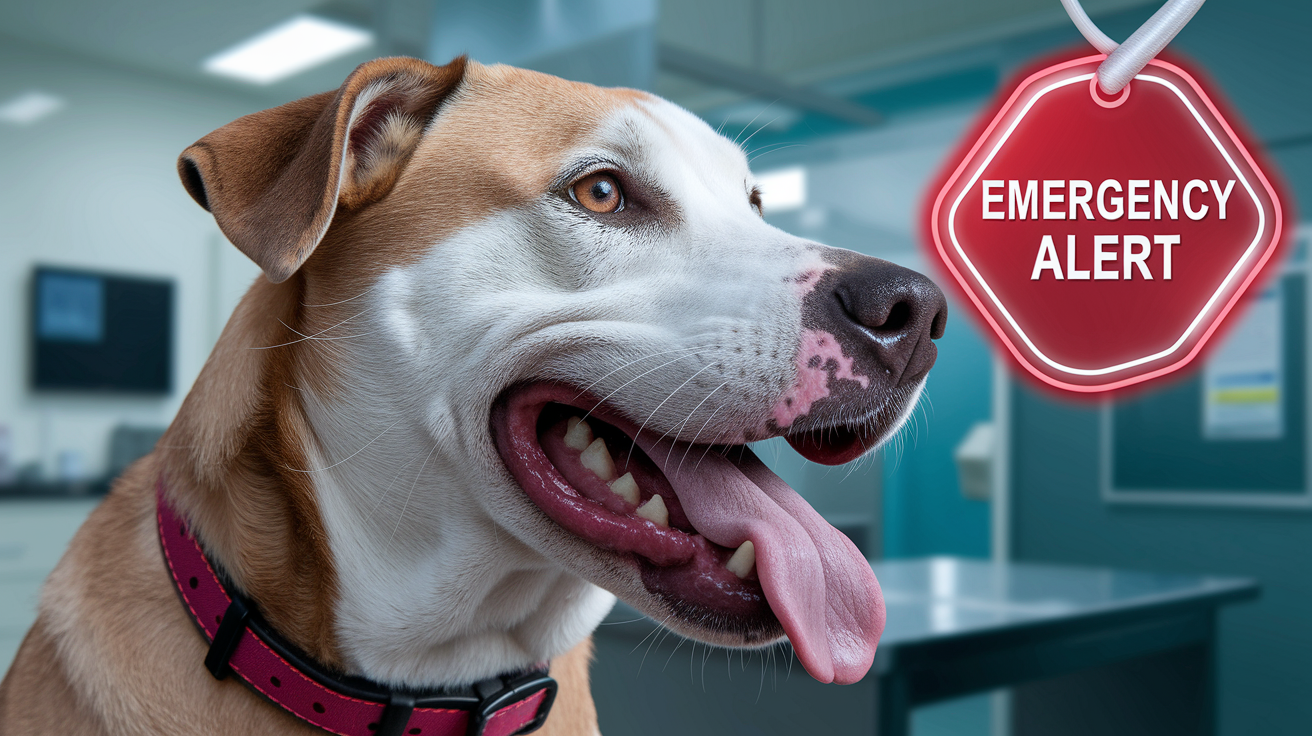
Some combinations of signs mean you need to contact a vet or emergency hospital right away, not wait until morning. Tongue or gum color is one of the fastest danger signals. Healthy gums and tongue are pink and moist. If they turn blue, purple, or grey, it means your dog isn’t getting enough oxygen. The situation is urgent. White or very pale gums can indicate shock or severe blood loss.
Panting that comes with collapse, severe lethargy, vomiting, or diarrhea is also a red flag. These signs together suggest systemic illness—infection, toxin exposure, organ failure, severe dehydration. Wheezing, choking sounds, or gasping for air point to a blocked airway or severe respiratory distress. Heatstroke signs (heavy panting, drooling, staggering, temperature over 106°F) require immediate cooling and veterinary care because brain damage and organ failure can happen fast.
Watch for these emergency indicators:
Blue, purple, or grey tongue or gums.
Panting with vomiting, diarrhea, or bloated belly.
Collapse, inability to stand, or extreme weakness.
Gasping, choking, or struggling to breathe.
Heatstroke signs (excessive drooling, staggering, very high temperature).
Sudden, severe worsening in an older dog or a dog with known heart or respiratory disease.
How Vets Diagnose the Cause of Nighttime Panting
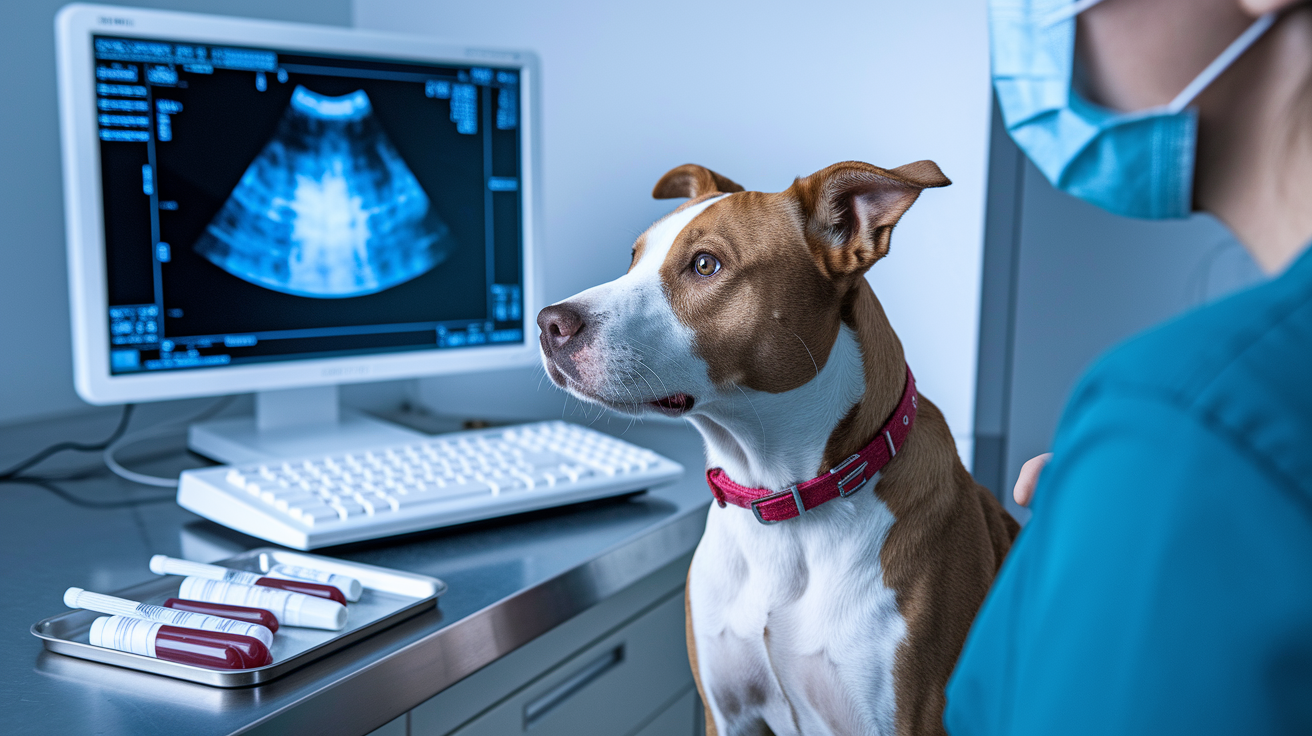
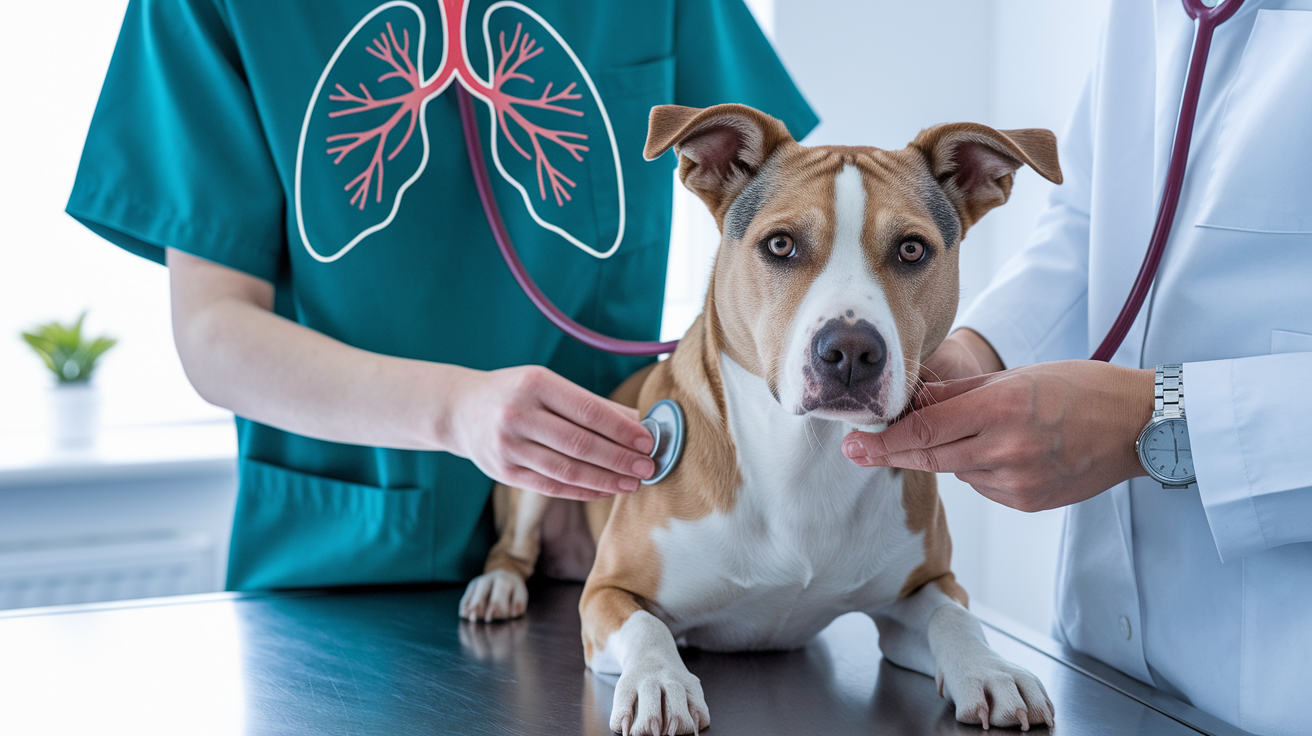
When you bring your dog in for nighttime panting, the vet will start with a full physical exam. They’ll listen to the heart and lungs with a stethoscope, check your dog’s temperature, look at gum color and capillary refill time (how fast blood returns to the gums after pressing), and feel the abdomen for pain, bloating, or masses. They’ll also ask about the panting pattern—how long it lasts, how often it happens, what else you’ve noticed.
Bloodwork and urine tests help identify infections, organ problems, anemia, and endocrine issues. A complete blood count checks red and white blood cells. A biochemistry panel evaluates kidney function, liver enzymes, blood sugar, and electrolytes. Urinalysis can catch urinary infections, diabetes, or kidney disease. If Cushing’s disease is suspected, vets often run an ACTH stimulation test to measure how the adrenal glands respond to hormone signals.
Imaging and advanced diagnostics come next if initial tests don’t explain the panting. X-rays show heart size, lung fluid, tracheal collapse, or masses. Ultrasound gives a closer look at the heart, liver, kidneys, and abdomen. For complex respiratory or heart cases, vets may refer you for bronchoscopy (camera exam of the airways), echocardiogram (ultrasound of the heart), CT scan, or MRI.
| Test Type | What It Detects | When Vets Use It |
|---|---|---|
| Physical Exam & Vitals | Heart rate, lung sounds, temperature, pain, gum color | First step for every case of nighttime panting |
| Bloodwork & Urinalysis | Infection, organ function, anemia, diabetes, electrolytes | When panting is persistent or paired with other symptoms |
| Endocrine Testing (ACTH Stimulation) | Cushing’s disease, hormonal imbalances | Suspected Cushing’s (increased thirst, hunger, pot belly) |
| Imaging (X-ray, Ultrasound, CT) | Heart size, lung fluid, tracheal collapse, masses, organ abnormalities | Respiratory distress, heart disease signs, or unexplained panting |
Practical Ways to Reduce or Prevent Dog Panting at Night
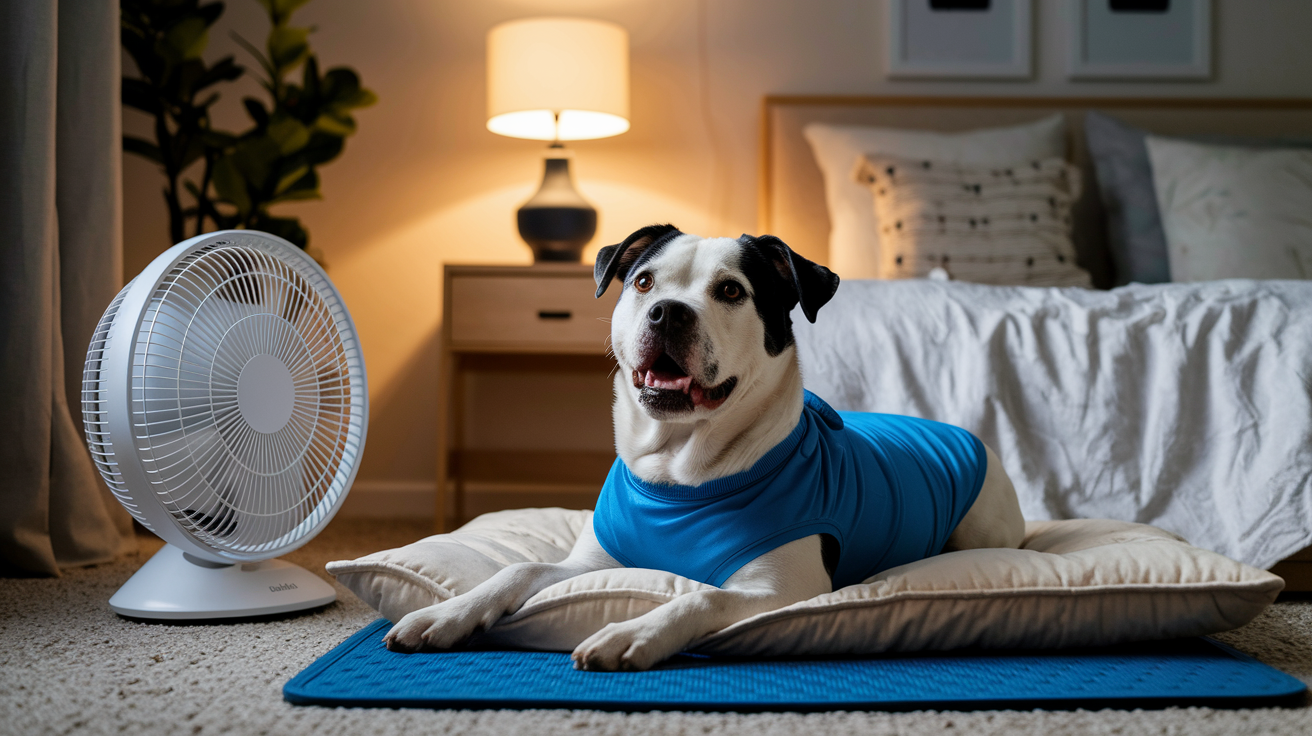
Start by cooling the sleeping environment. Lower the room temperature by a few degrees, turn on a fan, or use a cooling mat designed for dogs. Make sure your dog has access to fresh water at all times. If your dog has a thick coat, consider a summer trim (check with your vet or groomer first, some coats shouldn’t be shaved). Remove heavy bedding and switch to breathable fabrics like cotton.
Reduce noise and create a calm bedtime routine. White noise machines, soft classical music, or pet sound therapy apps (one example is Zoundz) can mask sudden sounds that trigger anxiety. Keep the lights low and the space quiet for at least 30 minutes before bed. Calming aids like pheromone diffusers, sprays, or collars mimic the scent mother dogs produce to soothe puppies. Compression shirts like Thundershirt or Anxiety Wrap apply gentle, constant pressure that can help anxious dogs feel more secure.
If pain or anxiety seems to be the issue, talk to your vet about treatment. Pain relief—anti-inflammatory medications, joint supplements, physical therapy—can make a huge difference for arthritic dogs. For anxiety, your vet may suggest behavior modification, calming supplements (like L-theanine or melatonin), or prescription anti-anxiety medication. Never give your dog over-the-counter pain relievers or calming supplements without checking with your vet first.
Here are additional steps to help manage nighttime panting:
Avoid feeding large meals or intense exercise within two hours of bedtime. Both raise body temperature and energy.
Keep a symptom journal noting when panting happens, how long it lasts, and what else you observe (pacing, whining, drinking water).
Record short videos of the panting episodes to show your vet. It helps them see breathing pattern and severity.
Address underlying allergies with vet-approved antihistamines or allergy management plans.
Provide a consistent sleep schedule so your dog’s body knows when to wind down.
Check bedding and sleeping surfaces for comfort, especially for senior dogs with joint pain.
Monitor hydration by checking gum moisture and watching water intake. Sticky gums or reduced drinking can signal dehydration.
Final Words
In the action, you’ve learned how panting works and which nighttime patterns are expected versus worrying.
You ran through medical, behavioral, environmental, and pain-related causes, plus clear warning signs and practical fixes like cooling the room, a steady bedtime routine, and tracking episodes.
If panting is persistent, worsening, or shows emergency signs, call your vet. For milder nights, try the calming steps and note what changes. With steady observation and a simple plan, most owners feel more confident managing dog panting at night.
FAQ
Q: When should I worry about dog panting at night?
A: You should worry about dog panting at night when it’s unexplained or comes with trouble breathing, blue or pale gums, vomiting, collapse, severe restlessness, lethargy, or won’t ease—call your vet.
Q: How to calm a panting dog at night?
A: To calm a panting dog at night, move them to a cool, quiet room, offer small sips of water, use a fan or cooling pad, gently soothe, watch for 30 to 60 minutes, and call a vet if breathing worsens.