

Can skipping food and offering tiny sips really help when your dog is vomiting?
Often, yes, small, safe steps can calm the stomach and prevent dehydration.
This guide gives clear, practical options you can try at home: short fasting for adult dogs (not puppies), tiny amounts of water or unflavored Pedialyte, bone broth, and bland meals like boiled chicken and white rice.
It also highlights red flags and exactly when to call your vet, so you know what to do in the first 24 hours.
Immediate Safe Options to Give a Dog for Vomiting at Home
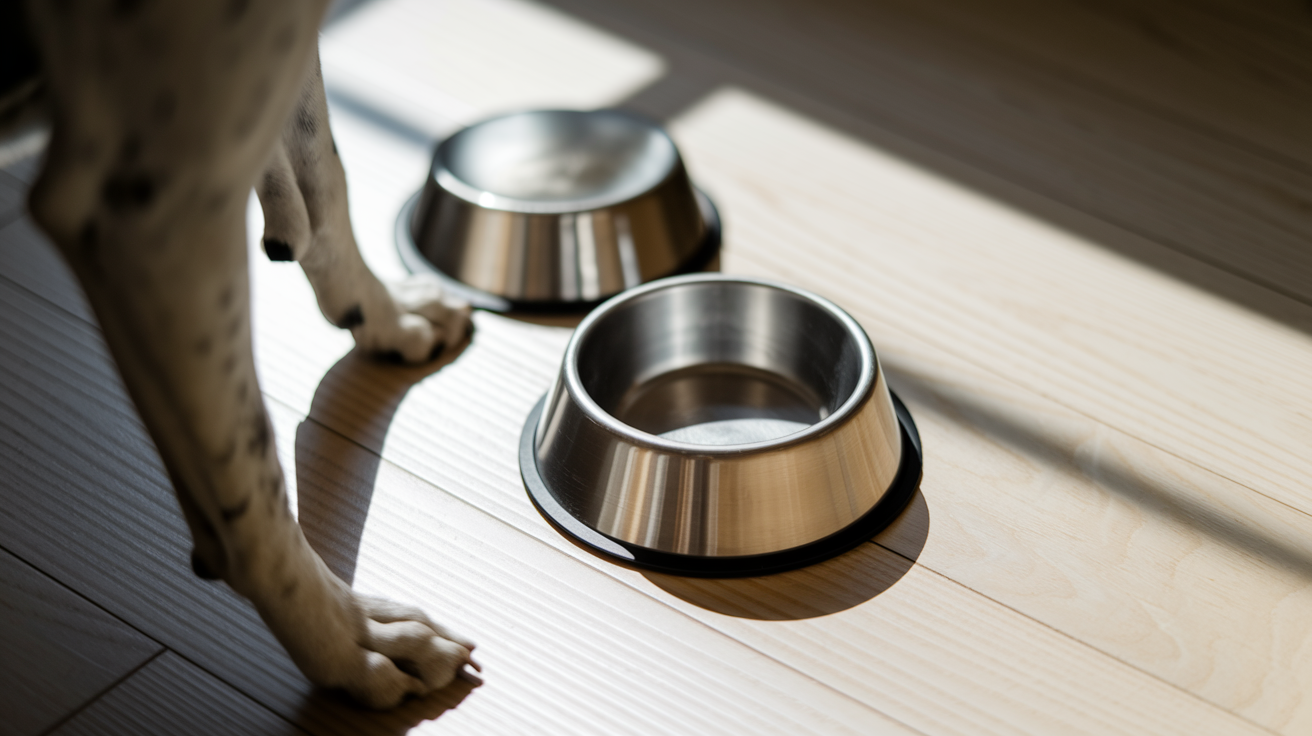
When your dog throws up, the first thing you do is simple. Stop feeding for a few hours and ease into fluids. Pull food and water bowls for six to eight hours if you’ve got an adult dog. Let the stomach rest. But don’t fast puppies. Their blood sugar can crash fast.
After that rest window, offer tiny amounts of cool water. One or two tablespoons per hour for a small dog. One or two ounces for a medium dog. If water stays down after three or four tries, you can start thinking about bland food.
Boiled chicken works. No skin, no bones. Tear it into little pieces and mix it with plain white rice. Serve it warm, not hot. Keep portions smaller than your palm. If your dog handles that for twelve hours, add a teaspoon of plain pumpkin or a bit of homemade chicken broth. Dog probiotics can help balance things out in the gut. Feed small meals often instead of one big plate.
You need to stop home care and call your vet if vomiting happens more than twice in a day, if your dog won’t drink, if gums look dry or sticky, or if there’s blood. Puppies, older dogs, and dogs with other health problems need faster attention.
Safe things to offer at home:
- Small amounts of water: one to two tablespoons per hour for toy or small dogs, one to two ounces per hour for medium dogs, four to six ounces for large dogs.
- Electrolyte solution: unflavored Pedialyte in those same small amounts. Ask your vet for the exact volume.
- Homemade bone broth: no salt, no onions or garlic, fat skimmed off, served warm.
- Boiled chicken and white rice: skinless, boneless chicken shredded fine, plain white rice, mixed at a 1:3 ratio.
- Plain canned pumpkin: one teaspoon per fifteen pounds of body weight, once a day. Not pumpkin pie filling.
- Dog probiotics: check the label for live cultures and follow package instructions.
Possible Causes of Dog Vomiting and What They Mean
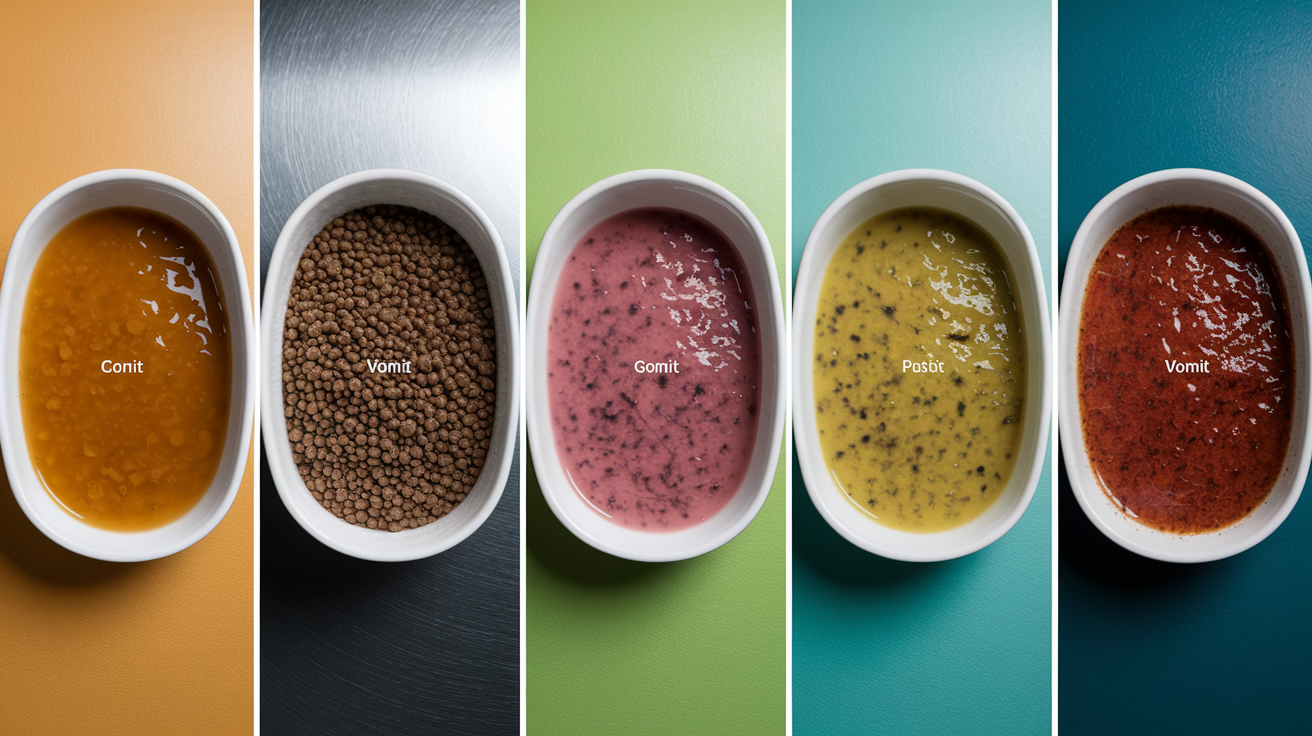
Dogs throw up for all kinds of reasons. Most of the time it’s dietary indiscretion. That’s the polite way of saying they got into the trash, ate too fast, or wolfed down something unfamiliar. A sudden diet change can mess with digestion, especially if your dog’s stomach is sensitive. Intestinal parasites like roundworms or giardia cause nausea and gut inflammation. Toxic stuff (chocolate, grapes, rat poison, antifreeze, certain plants) and foreign objects (socks, toys, rawhide chunks) both trigger vomiting and need urgent vet care. Motion sickness from car rides, medication side effects, and bigger systemic issues (kidney disease, liver problems, pancreatitis) round out the list.
The type of vomit tells you something. Bile vomit is yellow or white foam. It usually happens on an empty stomach, first thing in the morning or late at night. You might see lip smacking or your dog eating dirt. Vomiting undigested food a few hours after a meal points to poor digestion or eating too fast. Emotional or nervous stomach vomiting can follow stress or anxiety and often means the gut microbiome is depleted. Motion sickness vomit happens during or right after travel, often with drooling and panting. Vomiting right after drinking a lot of water fast usually just means they gulped too much, too quickly.
Five vomiting types and what they suggest:
- Yellow or white foam (bile): empty stomach, low stomach acid. Consider smaller, more frequent meals.
- Undigested food chunks: ate too fast, poor digestion. Add digestive enzymes or use a slow feeder bowl.
- Watery, clear fluid: drank too much water at once. Offer smaller amounts more often.
- During or after travel: motion sickness. Give ginger thirty to forty minutes before the car ride.
- With diarrhea and lethargy: infection, parasites, or toxin. Watch hydration closely and call your vet.
Safe Foods to Give a Vomiting Dog (Bland Diet Options)
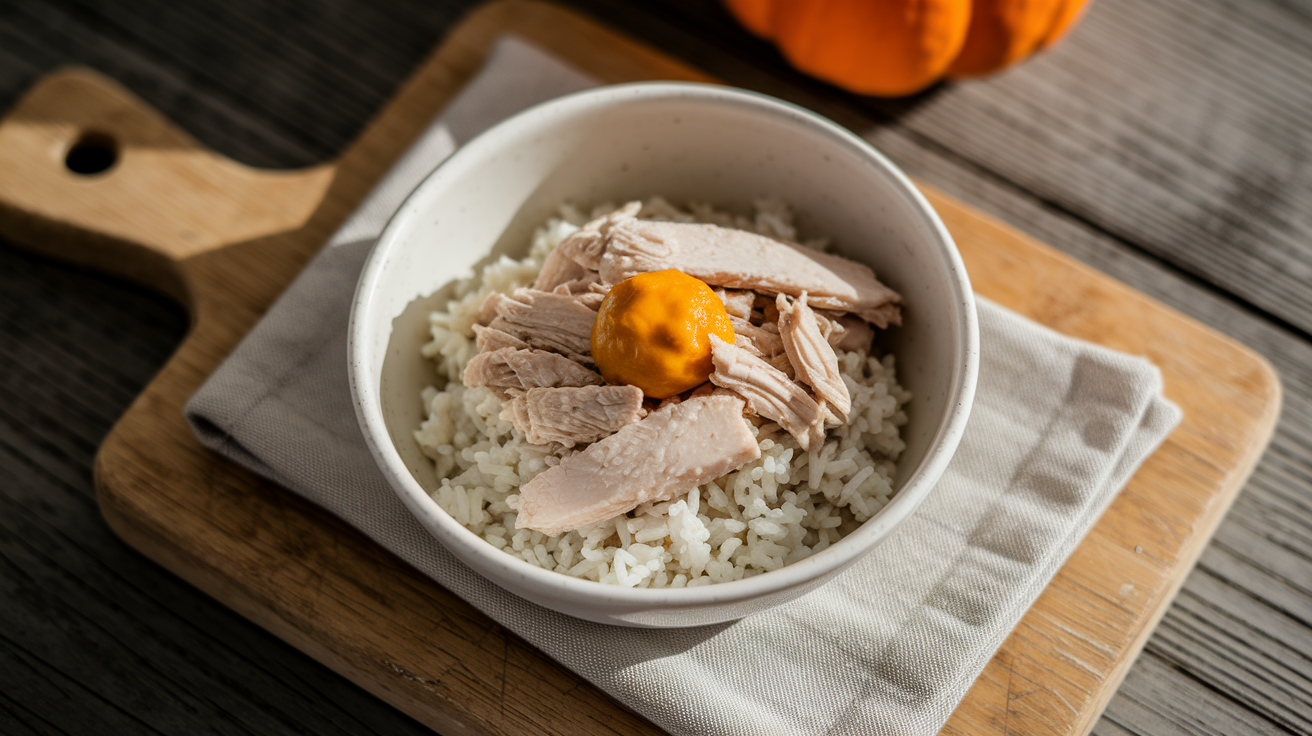
Bland foods are low in fat, easy to digest, and gentle on an irritated stomach. Boiled chicken (skinless, boneless breast) paired with plain white rice is the standard go-to. White rice is blander than brown and breaks down easier. Plain cooked pasta or low fat cottage cheese can substitute for rice. Lean ground turkey or very lean hamburger (fat drained and rinsed) mixed with cooked pasta works for dogs who won’t eat chicken. Always cook protein fully and shred or chop it fine to reduce choking risk.
Plain canned pumpkin (not pie filling) is high in soluble fiber. It can firm up loose stool while soothing the gut. Homemade bone broth works well too. Bones removed, no salt, no onion, no garlic. It provides hydration and easy nutrients. Porridge made from plain oats cooked in water (no milk, no sugar) is another gentle option, especially if diarrhea’s present. Serve all foods warm but never hot. Skip seasoning entirely.
Feed small portions every two to three hours instead of one or two large meals. A small dog might get a quarter cup per serving. A large dog might get half to three quarters of a cup. Track what stays down and adjust. If your dog tolerates bland food for twenty four to forty eight hours without vomiting, you can start mixing in a spoonful of regular kibble and gradually transition back over three to five days.
| Food | Why It Helps | How Much to Offer |
|---|---|---|
| Boiled chicken and white rice | Low fat protein and easily digestible carbs soothe the stomach lining | 1:3 ratio (one part chicken to three parts rice), quarter to three quarter cup per meal depending on dog size |
| Plain canned pumpkin | High soluble fiber helps firm stool and calms inflammation | One teaspoon per fifteen pounds body weight, once or twice daily |
| Homemade bone broth | Hydrating, nutrient rich, and gentle. Supports gut lining repair | One to two tablespoons per hour for small dogs, two to four ounces for medium or large dogs |
| Plain oat porridge (water cooked) | Bland carbohydrate with mild fiber supports digestion during diarrhea | Two to four tablespoons per meal for small dogs, quarter to half cup for medium or large dogs |
| Lean cooked turkey or hamburger with pasta | Alternative low fat protein for dogs who refuse chicken, pasta is bland carb | Same as chicken and rice. Drain and rinse fat thoroughly |
Fluids, Electrolytes, and Rehydration for Vomiting Dogs
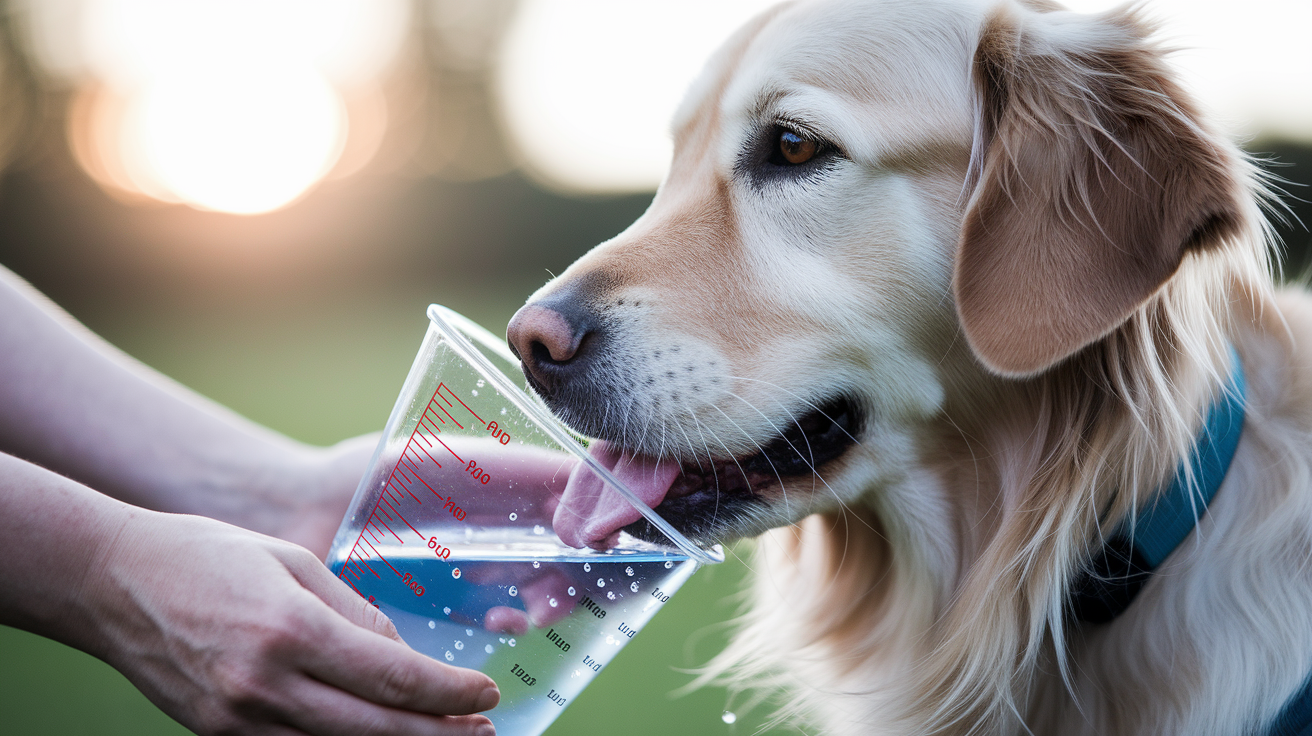
Vomiting drains fluids and electrolytes fast, especially if your dog also has diarrhea. Dehydration is a bigger short term risk than hunger. Offer cool, clean water in tiny amounts every hour. If your dog vomits the water back up, wait four to five hours before trying again. Unflavored Pedialyte or a similar electrolyte solution designed for children can replace lost sodium and potassium. Ask your vet for the right volume, but general guidance is the same as water. One to two tablespoons per hour for small dogs, one to two ounces for medium dogs, four to six ounces for large dogs, and up to eight ounces for giant breeds.
Homemade bone broth counts as both fluid and nutrition. It’s gentler than plain water for some dogs and easier to keep down. Serve it at room temperature or slightly warm. Track how often your dog pees. Reduced urination is a dehydration warning sign. If your dog refuses all liquids, can’t keep anything down for more than a few hours, or shows the signs below, contact your vet right away.
Four signs of dehydration to watch for:
- Dry, sticky gums instead of wet and slippery.
- Skin that stays tented when you gently pinch the scruff of the neck. Normal skin snaps back instantly.
- Glazed, sunken, or dull eyes.
- Lethargy, weakness, or unsteady walking.
Rehydration process in four steps:
- Hour one to six: Offer one to two tablespoons (small dog) or one to two ounces (medium dog) of water or electrolyte solution every hour. If vomited, stop and wait four hours.
- Hour six to twelve: If liquids stay down, continue the same volume and frequency. Add bone broth as an option.
- Hour twelve to twenty four: Gradually increase fluid amounts by half. Watch for normal urination and moist gums.
- After twenty four hours of keeping fluids down: Begin offering a teaspoon of bland food (chicken and rice) alongside continued small fluid portions. Monitor stool and energy.
Medications Commonly Given to Vomiting Dogs (Vet Guided Only)
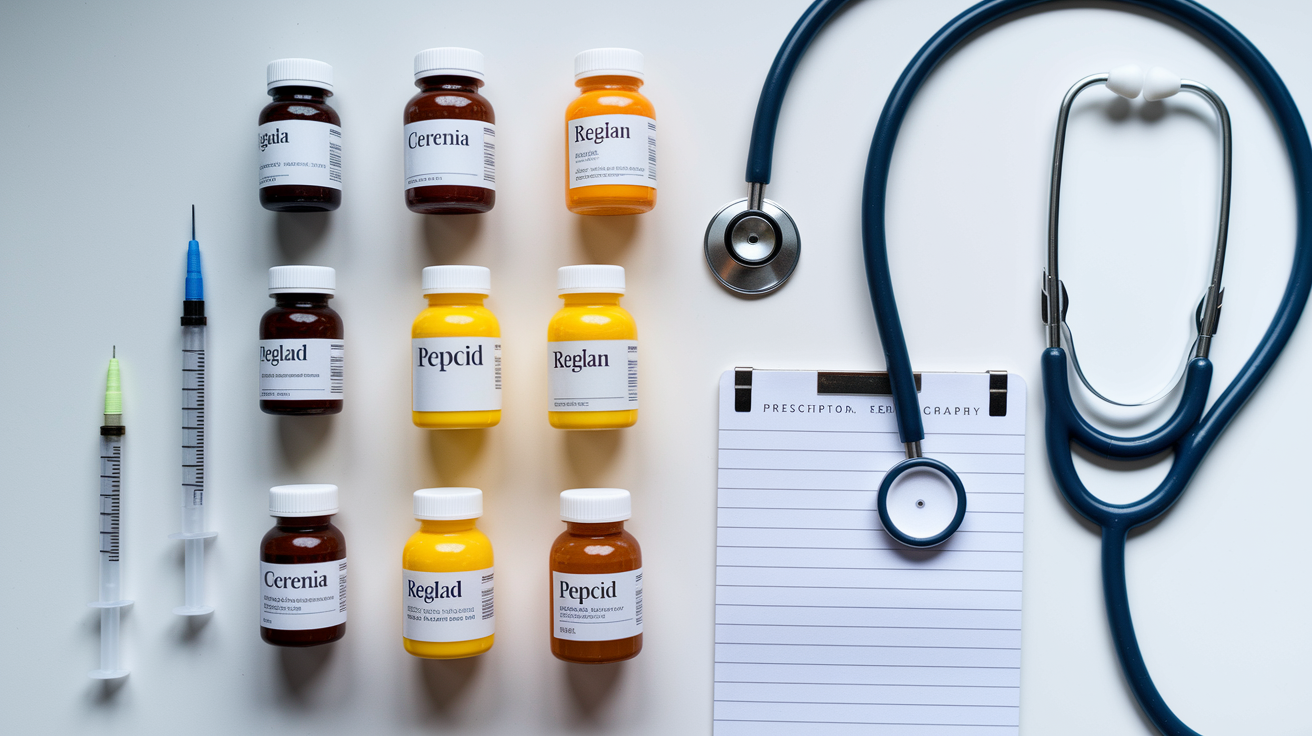
Antiemetic medications reduce nausea and stop vomiting, but dosing depends on your dog’s weight, the cause of vomiting, and other health conditions. Never give a dog medication without checking with your vet first. These drugs are commonly prescribed or recommended. Understanding how they work helps you follow instructions accurately and watch for side effects.
Maropitant (Cerenia)
Maropitant is the only FDA approved antiemetic for dogs. It blocks the brain’s vomiting trigger and works for motion sickness, general nausea, and vomiting from infections or toxins. Your vet will dispense it as a tablet or give an injection in the clinic. It’s typically dosed once daily. Side effects are rare but can include drooling, lethargy, or loss of appetite. Follow your vet’s instructions exactly and give tablets with a small amount of food to reduce stomach irritation. Most dogs tolerate maropitant well and show improvement within one to two hours.
Ondansetron
Ondansetron (brand name Zofran) is a human medication used off label in dogs. It’s prescribed for vomiting caused by chemotherapy, anesthesia, food poisoning, or infections. It comes as an oral disintegrating tablet or liquid solution and is usually given two to three times per day. Ondansetron is safe for most dogs when dosed correctly, but overdose can cause constipation or changes in heart rhythm. So precision matters. Your vet will calculate the dose based on weight. Don’t use leftover human ondansetron without veterinary guidance.
Metoclopramide
Metoclopramide (Reglan) improves stomach motility and reduces nausea. It helps dogs with slow digestion, reflux, or motility disorders. Because it speeds up the movement of food through the stomach, it’s often prescribed for nausea that worsens after eating. Typical dosing is three to four times per day as a tablet. Side effects can include restlessness, diarrhea, or rarely muscle spasms. It shouldn’t be used if your dog has a suspected intestinal blockage because increasing motility can make an obstruction worse.
Famotidine & Antihistamines
Famotidine (Pepcid) is an over the counter acid reducer used for dogs with stomach ulcers, acid reflux, or frequent vomiting from too much stomach acid. It’s not an antiemetic but can reduce irritation that triggers vomiting. Your vet will confirm the dose. Human tablets are sometimes used but must be portioned correctly by weight. Antihistamines like dimenhydrinate (Dramamine) or diphenhydramine (Benadryl) can prevent motion sickness vomiting. They’re usually given about thirty minutes before a car ride. Dosing must be precise to avoid overdose, which can cause sedation, agitation, or dangerous heart effects.
Do not give Pepto Bismol (bismuth subsalicylate) without veterinary approval. It’s not FDA approved for dogs and overdose can harm the liver or kidneys. Some vets use it in specific cases, but you need exact dosing and supervision. Never give human anti nausea drugs, aspirin, ibuprofen, or any medication designed for people unless your vet has calculated a safe dose for your individual dog.
What Not to Give a Vomiting Dog
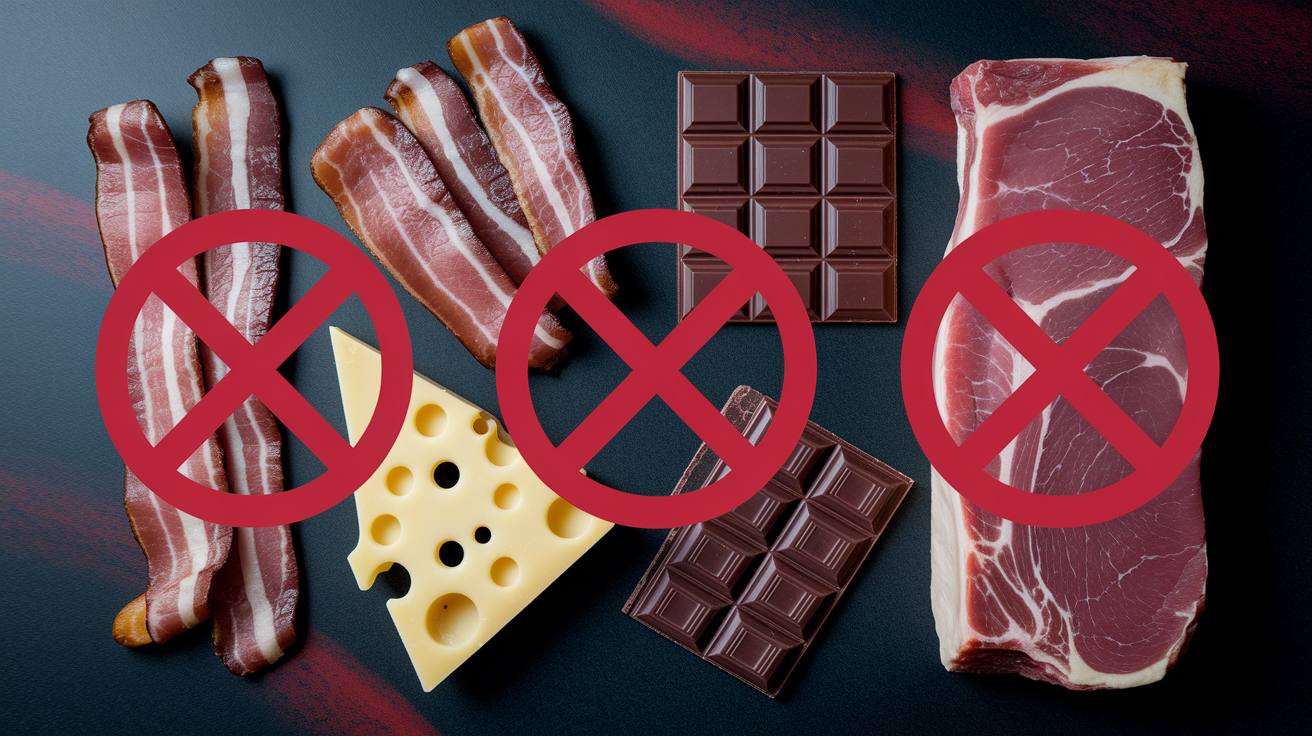
Certain foods, supplements, and actions can make vomiting worse or cause new, dangerous problems. High fat foods like bacon, sausage, cheese, or fatty cuts of meat can trigger pancreatitis, especially in dogs recovering from digestive upset. Raw meat carries bacteria that can worsen infection or cause food poisoning. Table scraps often contain onion, garlic, or seasoning that irritates the gut or is toxic in larger amounts. Avoid milk and dairy unless it’s plain low fat cottage cheese. Most dogs are lactose intolerant and dairy causes diarrhea.
Don’t induce vomiting at home unless your vet or a poison control hotline tells you to. Some toxins (like caustic cleaners or petroleum products) cause more damage coming back up. If your dog swallowed a foreign object, inducing vomiting can cause choking or perforate the esophagus. Gelatin capsules dissolve too slowly in a dog’s stomach. If you’re giving powdered ginger for motion sickness, use vegetable capsules instead. Unknown herbal supplements, essential oils, or human vitamins can be toxic or interfere with medications.
Restraint and caution prevent serious mistakes. When in doubt, ask your vet before offering anything beyond water, bland chicken and rice, or plain pumpkin.
Seven things NOT to give a vomiting dog:
- Pepto Bismol or other human anti nausea medications without explicit veterinary dosing and approval.
- Fatty foods (bacon, sausage, cheese, fried foods, fatty cuts of meat).
- Raw meat, raw eggs, or unpasteurized dairy.
- Milk or sugary dairy products. Most dogs lack the enzyme to digest lactose.
- Table scraps containing onion, garlic, salt, butter, or seasonings.
- Any medication, supplement, or essential oil not confirmed safe and dosed by your vet.
- Induction of vomiting unless directed by a veterinarian or poison control expert.
When Vomiting Requires a Vet Visit or Emergency Care
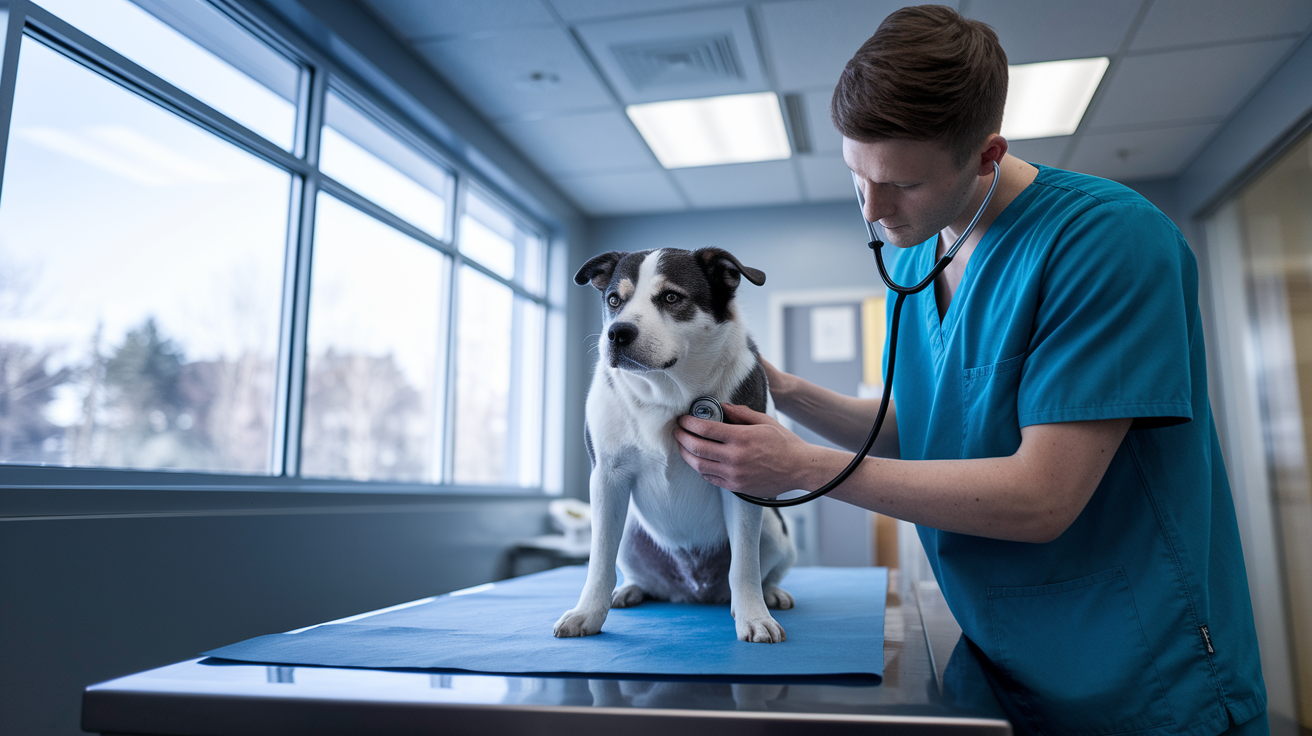
Some vomiting episodes need professional care within hours, not days. If your dog vomits more than twice in twenty four hours, that’s your signal to call the vet. Vomiting that continues intermittently over a full day without improvement, or projectile vomiting, means something more serious is happening. Blood in the vomit, whether bright red or dark brown like coffee grounds, indicates bleeding in the stomach or esophagus and requires same day veterinary attention. Unproductive retching combined with a swollen, hard, or distended abdomen is a hallmark of bloat (gastric dilatation volvulus), a life threatening emergency most common in deep chested breeds like Great Danes, Dobermans, and Boxers.
If your dog vomited after eating something toxic (chocolate, grapes, rat poison, antifreeze, xylitol, certain plants, human medications), contact your vet or the ASPCA Animal Poison Control Center immediately, even if vomiting has stopped. Foreign body obstructions from toys, rawhide, socks, or bones cause persistent vomiting, often with constipation or straining. Vomiting feces or material that smells like feces is a sign of a complete intestinal blockage. Foaming at the mouth, loss of muscle control, seizures, or collapse alongside vomiting are poisoning red flags that need emergency intervention within minutes.
Dehydration accelerates quickly in puppies and senior dogs. If your dog can’t keep liquids down for more than a few hours, or if you see dry gums, sunken eyes, lethargy, or skin that stays tented, seek veterinary care. Dogs with pre existing kidney disease, liver disease, or diabetes are higher risk and should be seen sooner rather than later when vomiting starts.
Ten red flags that require immediate veterinary or emergency care:
- Blood in vomit (bright red or dark brown, coffee grounds appearance).
- Unproductive retching with a distended, hard, or bloated abdomen (possible bloat or torsion).
- Vomiting more than twice in twenty four hours or continuous vomiting over a full day.
- Suspected ingestion of toxins (chocolate, grapes, antifreeze, xylitol, rat poison, medications, toxic plants).
- Vomiting feces or material that smells like stool (sign of intestinal blockage).
- Inability to keep water or any liquids down for more than four to six hours.
- Severe lethargy, weakness, collapse, or inability to stand.
- Foaming at the mouth, tremors, seizures, or loss of muscle control.
- Projectile vomiting or vomiting with extreme force.
- Puppies under six months old, senior dogs, or dogs with chronic illness (kidney disease, diabetes, liver problems) who vomit more than once.
The twenty four to forty eight hour rule is a helpful guide for mild cases. If vomiting happens once and your dog acts normal otherwise, you can monitor at home. If it happens again within twenty four hours, or if any red flag appears, contact your vet. Puppies and seniors skip the waiting period. One vomiting episode in a high risk dog warrants a check in call.
Step by Step Recovery Plan After a Vomiting Episode
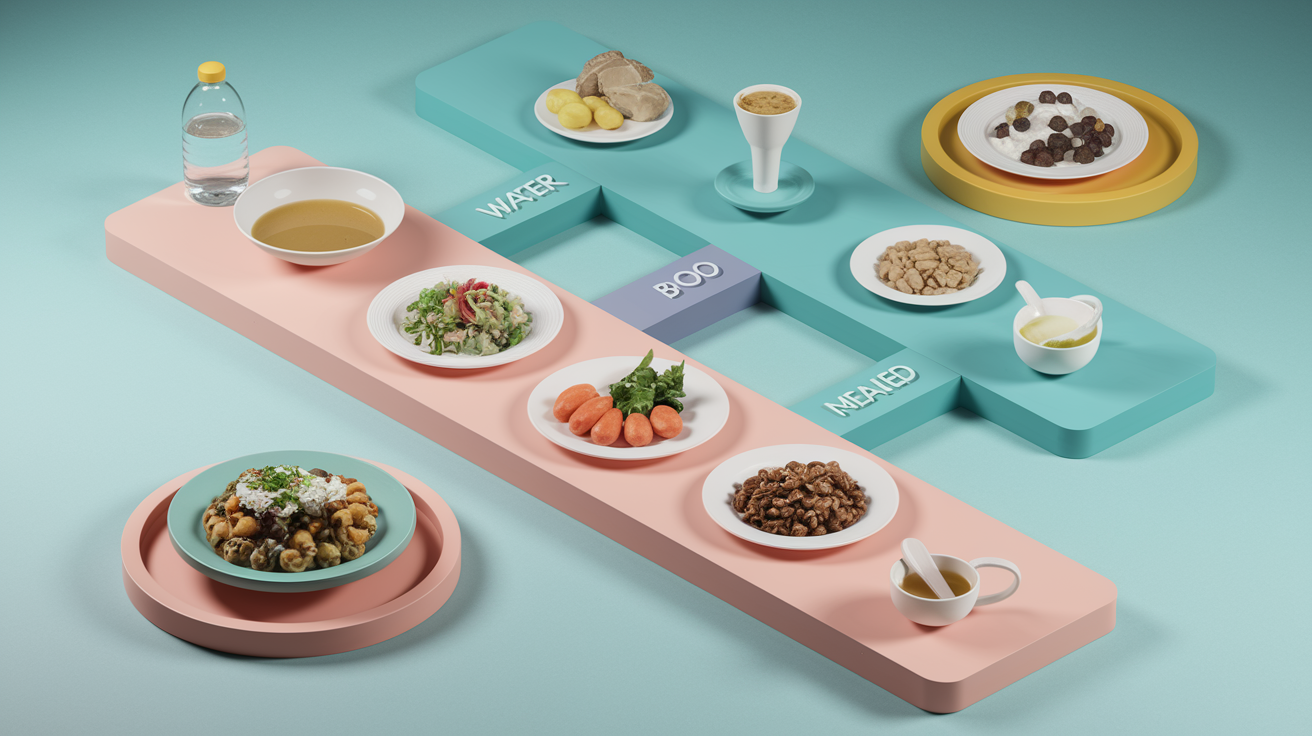
Once your dog stops vomiting and can keep small amounts of water down for at least twelve hours, you can begin reintroducing food slowly. Move through each step only if your dog tolerates the previous one without vomiting. Rushing back to normal meals can restart the cycle. This plan assumes no red flags and that your vet has cleared home care. If vomiting resumes at any point, stop feeding and call your vet.
Six step recovery timeline over twenty four to seventy two hours:
- Hour zero to twelve: Offer only small amounts of water or electrolyte solution every hour (one to two tablespoons for small dogs, one to two ounces for medium dogs). No food yet. Track whether liquids stay down.
- Hour twelve to twenty four: If water is tolerated, introduce one to two tablespoons of plain bone broth or continue electrolyte solution. Still no solid food. Watch for normal urination and moist gums.
- Hour twenty four to thirty six: Offer a teaspoon to a tablespoon of bland food (boiled chicken and white rice) alongside continued small fluid portions. Feed every two to three hours in tiny servings. Monitor stool for diarrhea or blood.
- Hour thirty six to forty eight: Gradually increase bland food portion size to a quarter cup (small dogs) or half cup (medium or large dogs) per meal, still every two to three hours. Add a teaspoon of plain pumpkin if stool is loose.
- Hour forty eight to sixty: If no vomiting or diarrhea, begin mixing in a tablespoon of regular kibble with the bland food. Continue small, frequent meals.
- Hour sixty to seventy two and beyond: Slowly increase the ratio of regular food to bland food over three to five days. Return to normal meal frequency (typically twice daily) once stool is firm and energy is back to baseline.
Track every vomit and every bowel movement during recovery. Note the time, consistency, color, and whether your dog seems uncomfortable. Write down water intake and appetite. If you see blood in stool, black tarry stool, or mucus coated diarrhea, call your vet even if vomiting has stopped. Diarrhea that lasts more than twenty four hours alongside vomiting suggests infection, parasites, or ongoing inflammation that needs diagnostics.
Return to your dog’s regular diet gradually. A sudden switch back to kibble can trigger another round of vomiting. Mix increasing amounts of kibble into the bland food base, adding about twenty five percent more kibble each day. By day four or five, your dog should be back on full regular meals. If at any point vomiting returns, diarrhea worsens, or your dog refuses food, pause the transition and contact your vet. Persistent issues after a vomiting episode often point to food intolerance, parasites, or an underlying condition that needs investigation.
Final Words
Start by removing food briefly and offering small sips of water or an electrolyte. If those stay down, offer small portions of bland food like boiled chicken and rice.
We covered common causes, safe fluids, simple home steps, and when medications need a vet. Watch for blood, repeated vomiting, or signs of dehydration and call your vet right away.
If symptoms are mild, this guide shows what to give dog for vomiting and how to watch over 24–48 hours. You’ve got a calm plan and clearer next steps.
FAQ
Q: How do you settle a dog’s stomach after throwing up?
A: Settling a dog’s stomach after throwing up involves removing food for 6–8 hours (adults), offering small water or electrolyte sips, then a bland chicken-and-rice meal; watch gums, water intake, and worsening symptoms.
Q: When should I worry if my dog is vomiting?
A: You should worry if your dog is vomiting when vomiting is persistent over 24 hours, contains blood, they can’t keep liquids, show severe lethargy, abdominal swelling, collapse, seizures, or suspected toxin ingestion—call a vet immediately.
Q: What is the immediate remedy to stop vomiting?
A: The immediate remedy to stop vomiting is removing food, offering tiny water or electrolyte sips and ice chips, and resting; anti-vomiting medicines must be given only under veterinary guidance if vomiting continues.
Q: Is Pepto Bismol good for dogs with vomiting?
A: Pepto Bismol is not routinely recommended for dogs without vet approval because of overdose and side-effect risks; always check with your veterinarian before using it, and prefer vet-prescribed antiemetics instead.