

Could a single flea bite wreck your dog’s skin for weeks?
Flea allergy dermatitis is an allergic reaction to proteins in flea saliva that makes dogs itch, chew, and develop raw, inflamed spots.
Left alone it often spirals into painful sores and secondary infections.
This post shows clear, practical treatment and prevention steps you can use right away.
You’ll get fast-action fixes, home and household control tips, and simple signs that mean stop home care and call your veterinarian.
Immediate Treatment for Flea Allergy Dermatitis

Dogs with flea allergy dermatitis need help the second symptoms show up. Just one flea bite delivers proteins that kick off an intense allergic reaction. Itching, inflammation, and skin damage happen fast. The longer your dog scratches, the worse the tissue trauma gets and the higher the risk of secondary infection. Immediate treatment stops the allergic response, kills feeding fleas before they inject more saliva, and prevents the whole thing from spiraling into open wounds.
Fast acting prescription medications control the allergic itch within hours to days. Apoquel (oclacitinib) is an oral tablet that many veterinarians reach for first. It targets itch pathways and can reduce scratching within four to six hours, with peak effect in 24 hours. “By the next morning, she finally stopped chewing her tail base.” Cytopoint (lokivetmab) is a monoclonal antibody injection that binds and neutralizes the itch protein interleukin 31. A single injection often provides four to eight weeks of relief, ideal for dogs that resist daily pills or need longer coverage during peak flea season. Both work alongside flea control, not instead of it, because if fleas keep biting, the allergy keeps firing.
Prescription flea preventatives are the cornerstone of immediate care. Modern isoxazoline products like Simparica, NexGard, and Bravecto begin killing adult fleas within two to four hours of administration and continue protecting for 30 days or longer, depending on the product. Topical spot ons and some oral options also act rapidly. If your dog has open sores, scabs, or a foul smell, secondary bacterial or yeast infections have likely set in. Your veterinarian will prescribe appropriate antibiotics, often a two to three week course, and may add a short course of corticosteroids to calm severe inflammation when infection is under control. Anti inflammatory shampoos or gentle oatmeal baths can soothe raw skin while medications take hold.
5 step immediate response protocol:
- Administer a fast acting flea preventative to stop new bites within hours and kill any fleas currently on your dog.
- Give prescribed antipruritic medication (Apoquel, Cytopoint, or vet approved antihistamine) to interrupt the itch scratch cycle.
- Treat any secondary infection with antibiotics or antifungals as directed by your veterinarian. Delay worsens skin damage.
- Provide topical comfort through medicated or gentle hypoallergenic shampoos to cleanse damaged skin and reduce irritation.
- Begin environmental flea control immediately. Vacuum, wash bedding, and treat all household pets to prevent reinfestation while the dog heals.
Identifying Symptoms and Severity Levels

Recognizing flea allergy dermatitis early shortens your dog’s discomfort and prevents complications. The hallmark is intense, relentless itching focused on predictable body zones: the base of the tail, lower back, inner thighs, belly, and sometimes the neck. You’ll often see hair loss or thinning in those areas, red or inflamed skin, scabs or crusty patches, and open sores or hot spots where your dog has licked or scratched through the skin. Restlessness, constant licking, scooting, or sudden biting at the hindquarters are behavioral red flags. “He couldn’t settle at night, just kept spinning to chew his tail.”
You may never see a single flea. Allergic dogs groom so aggressively that they remove fleas before you spot them, but flea dirt (tiny black specks that turn reddish brown when dabbed on a wet paper towel) is proof fleas have been feeding. A fine toothed flea comb run over the tail base and back often picks up flea dirt even when live fleas are invisible.
Severity escalates quickly without intervention. Mild cases show localized redness and occasional scratching. Moderate cases feature hair loss, multiple scabs, and frequent scratching that disrupts sleep or play. Severe cases present with widespread raw skin, bleeding sores, thick crusts, foul odor from infection, and behavioral changes like irritability or withdrawal. If your dog’s skin is hot to the touch, oozing pus, or if scratching becomes frantic and nonstop, the condition has moved into urgent territory.
Most common physical signs:
- Hair loss or broken hair, especially at tail base and lower back
- Red, inflamed, or thickened skin with visible bumps or scabs
- Hot spots. Moist, painful, rapidly spreading sores.
- Flea dirt (digested blood) visible on comb or bedding
Veterinary Treatment Protocols
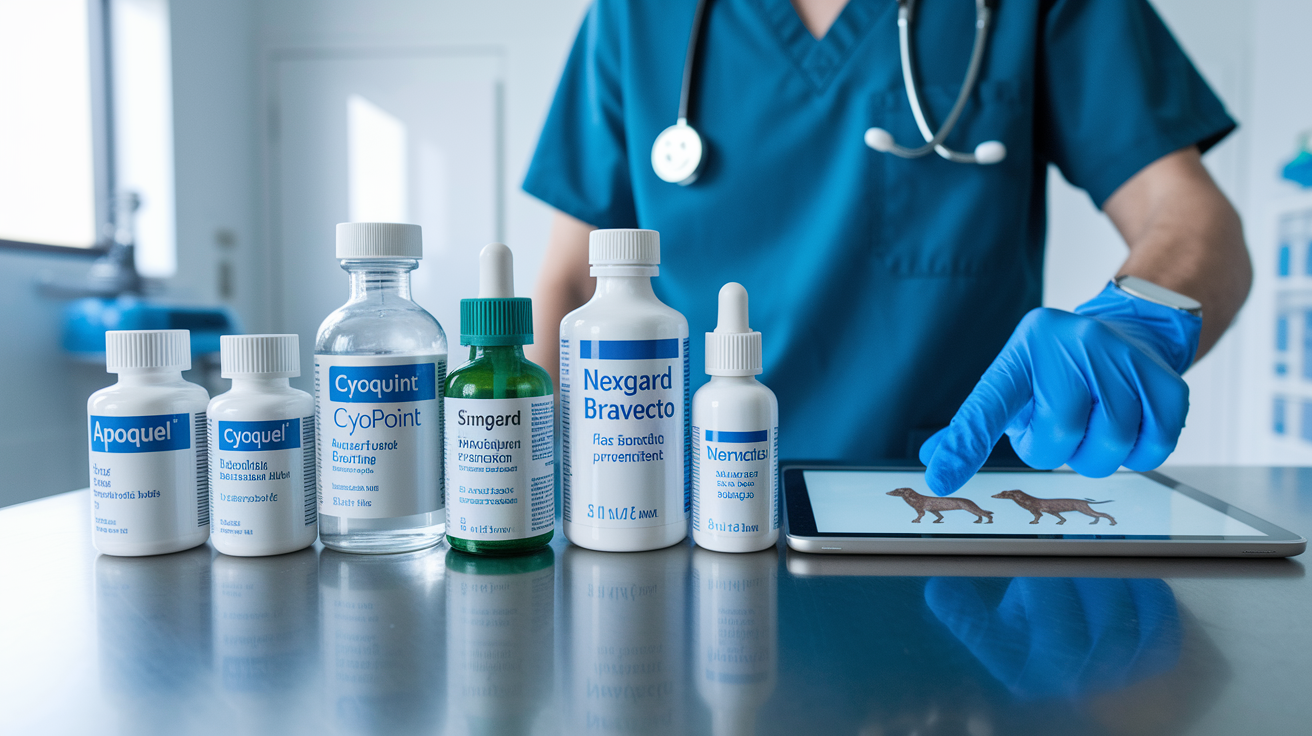
Veterinarians approach flea allergy dermatitis with layered protocols that address the allergy, kill fleas, control infection, and support healing. The first priority is fast itch relief through medications like Apoquel or Cytopoint, described above, because stopping the scratch reflex prevents further self trauma. When inflammation is severe and not infected, short term corticosteroids (oral prednisone or an injectable dexamethasone) can be used cautiously for a few days to a week, though they carry more side effects than newer options and are typically reserved for cases where cost or availability limits access to targeted therapies.
Prescription flea preventatives form the medical backbone. Isoxazoline products (Simparica, NexGard, Bravecto, Credelio) are oral or topical chewables that kill fleas rapidly and continuously for 30 days or longer. They’re highly effective even in dogs with heavy infestations. Topical spot ons containing fipronil, selamectin, or imidacloprid also work well when applied correctly to the skin. Your veterinarian will select the product that fits your dog’s age, weight, health status, and household situation. Every pet in the home (including cats, with cat safe products) must be treated simultaneously, or fleas will shuttle between animals and reinfest your dog.
Secondary skin infections are common in flea allergy dermatitis and require specific antimicrobial therapy. If bacterial infection is present, expect a two to four week course of oral antibiotics like cephalexin or amoxicillin clavulanate. Yeast infections, often identified by a sweet or musty odor and greasy skin, may need antifungal medication such as ketoconazole or fluconazole. Medicated shampoos containing chlorhexidine or miconazole support topical infection control and are usually recommended twice weekly during the acute phase. Follow up exams every two to four weeks let your veterinarian track healing, adjust medications, and confirm the infection has cleared before stopping antibiotics.
| Medication Type | Purpose | Duration |
|---|---|---|
| Antipruritics (Apoquel, Cytopoint) | Rapidly reduce allergic itch and inflammation | Daily (Apoquel) or 4–8 weeks per injection (Cytopoint) |
| Prescription flea preventatives (isoxazolines, topicals) | Kill fleas on contact and prevent new infestations | Monthly, year round |
| Antibiotics or antifungals | Treat secondary bacterial or yeast skin infections | 2–4 weeks, sometimes longer for deep infections |
| Corticosteroids (short term) | Calm severe inflammation when infection is controlled | 3–7 days, tapered as symptoms improve |
Eliminating Fleas From the Home Environment
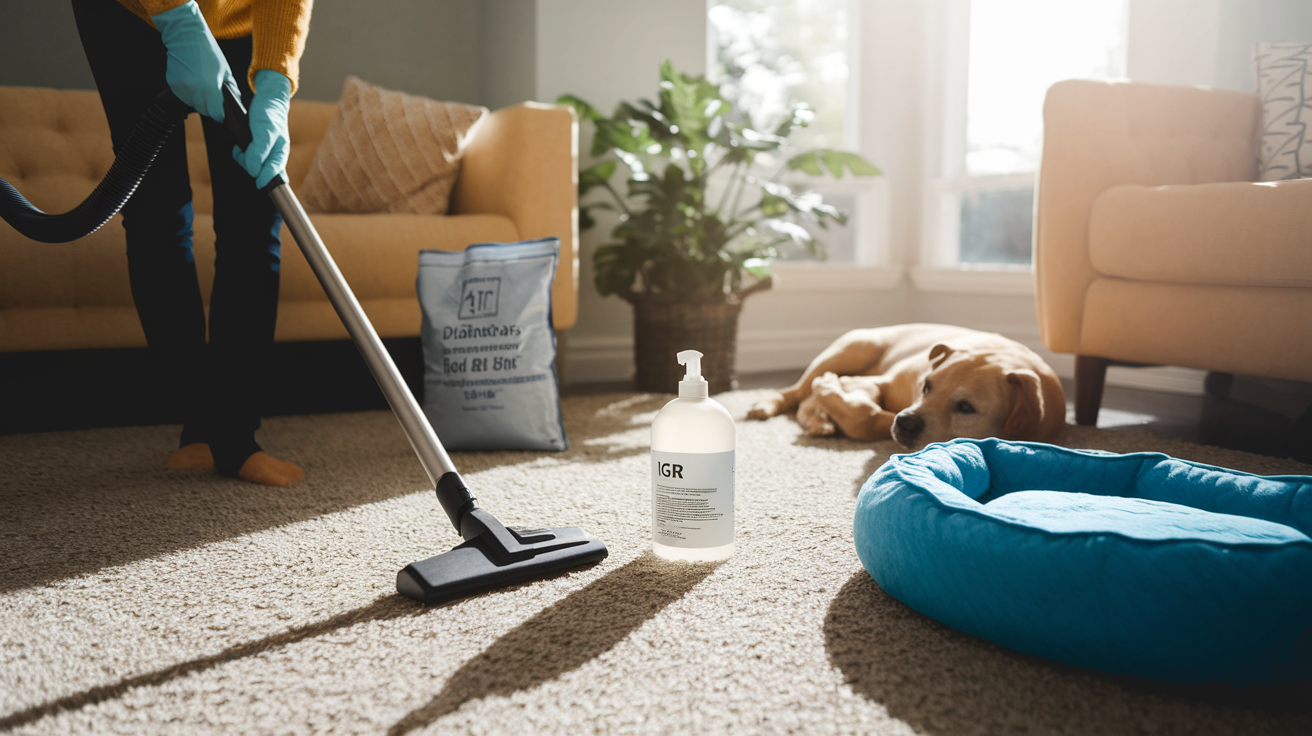
Most of the flea population (up to 95 percent) lives off your dog. Adult fleas spend brief periods on the pet to feed and lay eggs, then eggs drop into carpets, bedding, furniture crevices, and floor cracks where they hatch into larvae. Larvae hide in dark, humid spots, feed on organic debris and adult flea feces, then spin cocoons and become pupae. Pupae are nearly indestructible. They can lie dormant for months and hatch when vibration, warmth, or carbon dioxide signals a host is near. Breaking this cycle requires targeting every life stage in your home.
Vacuum daily during an active infestation. Vacuuming removes up to 90 percent of flea eggs and a significant portion of larvae from carpets and upholstery. It also stimulates pupae to hatch so they’re exposed to insecticides or picked up on the next pass. Immediately seal and dispose of the vacuum bag or empty the canister into an outdoor trash bin. Live fleas and larvae can crawl back out. Focus on areas your dog frequents: under furniture, along baseboards, in closets, and any cracks in hardwood or tile floors. Wash all pet bedding, blankets, and removable sofa covers in hot water (at least 130°F) weekly. The heat kills eggs, larvae, and adult fleas. If your dog sleeps on your bed, wash your linens weekly too.
Use veterinarian recommended environmental flea control products when infestations are heavy or persistent. Premise sprays or powders that contain insect growth regulators (IGRs) like methoprene or pyriproxyfen prevent eggs and larvae from maturing, effectively sterilizing the environment. Apply these products to carpets, upholstery, and pet resting areas according to label directions. Many require you to keep pets and people out of treated rooms for a few hours. For households preferring non chemical options, food grade diatomaceous earth can be lightly dusted onto carpets and pet bedding. It’s a fine powder that damages the exoskeleton of larvae but must be vacuumed up after 24 to 48 hours and repeated weekly. Keep in mind that outdoor areas where your dog spends time also harbor fleas. Keep grass trimmed short, remove leaf litter and debris, and consider treating shaded, moist yard zones with outdoor safe flea control products.
Environmental cleaning steps:
- Vacuum all carpets, rugs, and upholstered furniture daily. Dispose of contents immediately in an outdoor bin.
- Wash pet bedding, blankets, and any washable fabric covers in hot water weekly.
- Treat carpets and pet areas with veterinarian approved premise sprays or IGR products as needed.
- Dust food grade diatomaceous earth lightly on carpets, leave 24–48 hours, then vacuum. Repeat weekly during active infestations.
- Maintain outdoor areas by mowing grass, removing debris, and treating shaded, humid zones where fleas thrive.
- Treat all household pets simultaneously with appropriate flea preventatives to stop cross infestation.
Long Term Prevention Strategies

Preventing future flea bites is the only reliable way to stop flea allergy dermatitis from returning. Because allergic dogs react to even a single flea, consistent year round flea prevention is non negotiable. Monthly prescription preventatives (whether oral tablets, topical spot ons, or long lasting collars) create a chemical barrier that kills fleas before they bite or within hours of contact, stopping the allergic cascade before it starts. Modern isoxazoline products remain highly effective across flea populations and offer the convenience of a once monthly chewable. Some formulations like Bravecto extend protection to 12 weeks. Topical options work well when applied correctly to the skin between the shoulder blades, though they can wash off if your dog swims frequently or is bathed often.
Many veterinarians recommend combination products that protect against fleas, ticks, heartworms, and intestinal parasites in a single dose, simplifying compliance and broadening protection. Year round dosing matters even in cold climates because fleas survive indoors through winter. Central heating and humidity keep flea eggs and larvae viable in carpets and furniture, and a warm snap in February can trigger hatching. Missing even one monthly dose opens a window for reinfestation, and in allergic dogs, that window is enough to restart itching, hair loss, and infection. Mark a calendar, set phone reminders, or link the dose to a monthly routine. “We give it on the first of every month with breakfast.” If you travel or board your dog, confirm that the facility enforces strict flea prevention for all animals, because a single exposed dog can spread fleas to others.
Managing Chronic or Recurring Cases

Some dogs experience repeated flare ups despite consistent prevention, and understanding why helps you adjust the plan. The most common reason is gaps in flea control. Missed doses, late refills, or failure to treat all household pets allow fleas to rebound. Environmental reinfestation happens when eggs, larvae, or pupae remain in carpets or furniture and hatch weeks or months later, reinfecting treated dogs. Outdoor exposure is another culprit. Dogs that visit parks, doggy daycare, grooming facilities, or homes with unprotected animals pick up fleas despite their own prevention.
Some chronic cases involve additional allergies layered on top of flea allergy. Dogs with food sensitivities or environmental allergies (pollen, mold, dust mites) may show ongoing itching even when fleas are controlled. Allergy testing and elimination diets, guided by your veterinarian or a veterinary dermatologist, can identify other triggers so you can address the full allergic load. Immunotherapy (customized allergy injections or oral drops) may be recommended for dogs with multiple confirmed allergies. It gradually desensitizes the immune system and reduces flare frequency over six to twelve months of treatment.
Common reasons for recurrence:
- Inconsistent flea prevention or missed monthly doses
- Household or environmental reinfestation from untreated areas or unprotected pets
- Additional allergies (food, pollen, mold) contributing to ongoing itching and skin inflammation
Supporting Skin Healing and Comfort

While medications control the allergy and kill fleas, supportive care soothes damaged skin and speeds recovery. Medicated shampoos containing chlorhexidine or benzoyl peroxide cleanse infected or inflamed skin, reduce bacterial counts, and remove crusts and debris. Oatmeal or aloe based shampoos offer gentle relief for dogs with raw or sensitive skin. Colloidal oatmeal forms a protective film that calms irritation without stinging. Bathe your dog once or twice a week during the acute healing phase, using lukewarm water and letting the lather sit for five to ten minutes before rinsing thoroughly. “The vet said to think of it like a medicated soak, not a quick rinse.”
Omega 3 fatty acid supplements, especially those rich in EPA and DHA from fish oil, support skin barrier function and reduce inflammation over time. They won’t stop an active flare, but consistent daily dosing (added to food or given as a soft chew) can improve coat quality, reduce dryness, and make skin more resilient to future irritation. Ask your veterinarian for dosing guidance based on your dog’s weight. Avoid over bathing once symptoms improve, as frequent shampooing strips natural oils and can dry the skin. Once or twice a month is usually enough for maintenance unless your veterinarian advises otherwise.
When to Seek Immediate Veterinary Attention
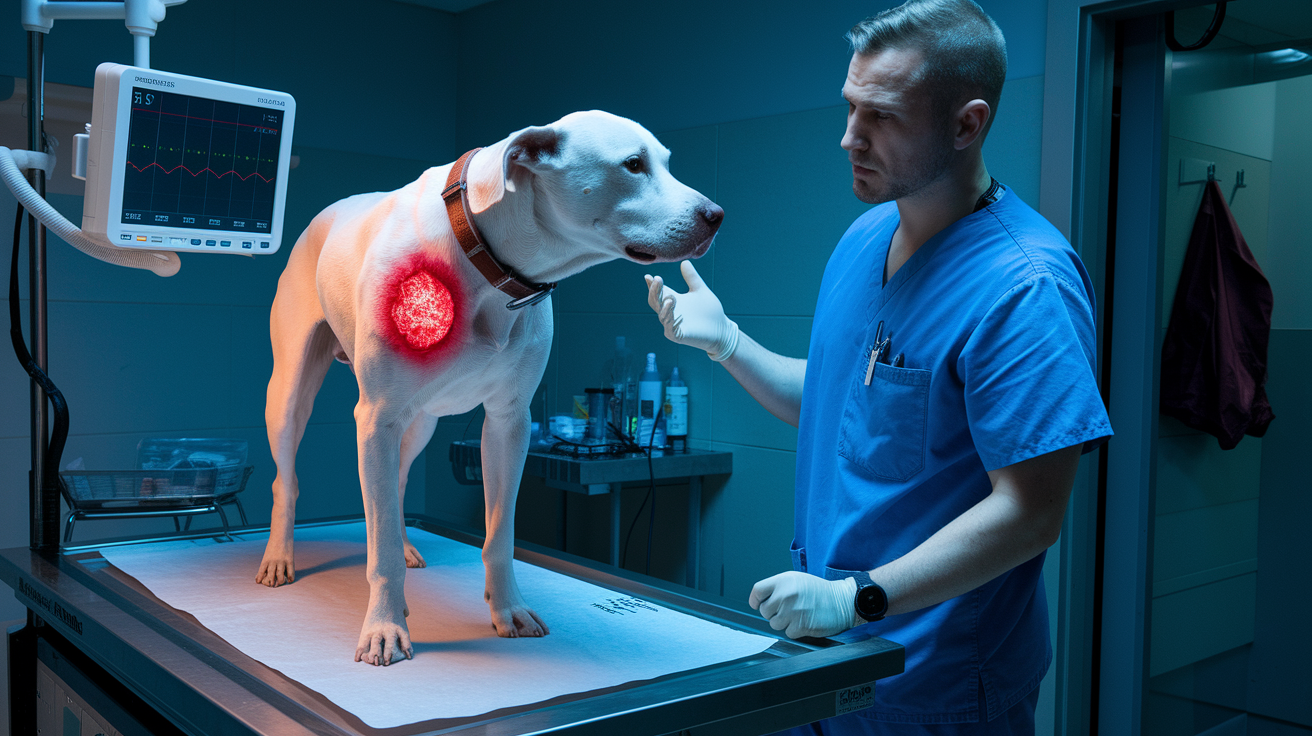
Certain signs mean your dog’s condition has moved beyond at home management and requires urgent veterinary care. If you see raw, bleeding skin or open sores that are spreading rapidly, infection is advancing faster than the immune system or any home treatment can handle. A foul odor, especially a sweet or rotten smell, indicates a deep bacterial or yeast infection that needs aggressive antimicrobial therapy. Pus, swelling, heat, or discolored discharge from sores are red flags for abscess formation or cellulitis.
Systemic signs (lethargy, loss of appetite, fever such as hot ears, warm belly, shivering, or obvious pain when touched) suggest the infection has spread beyond the skin or that your dog is becoming systemically unwell. Uncontrollable itching that doesn’t improve with initial treatment or that worsens despite medication may signal a more complex allergic picture or a misdiagnosis.
Emergency warning signs:
- Rapidly spreading open sores, bleeding, or areas of skin sloughing off
- Foul odor, pus, significant swelling, or warm, discolored discharge from wounds
- Fever, lethargy, refusal to eat, or withdrawal from normal activity
- Severe, relentless scratching that causes new injuries despite antipruritic medications
Preventing Future Flares Through Lifestyle Management
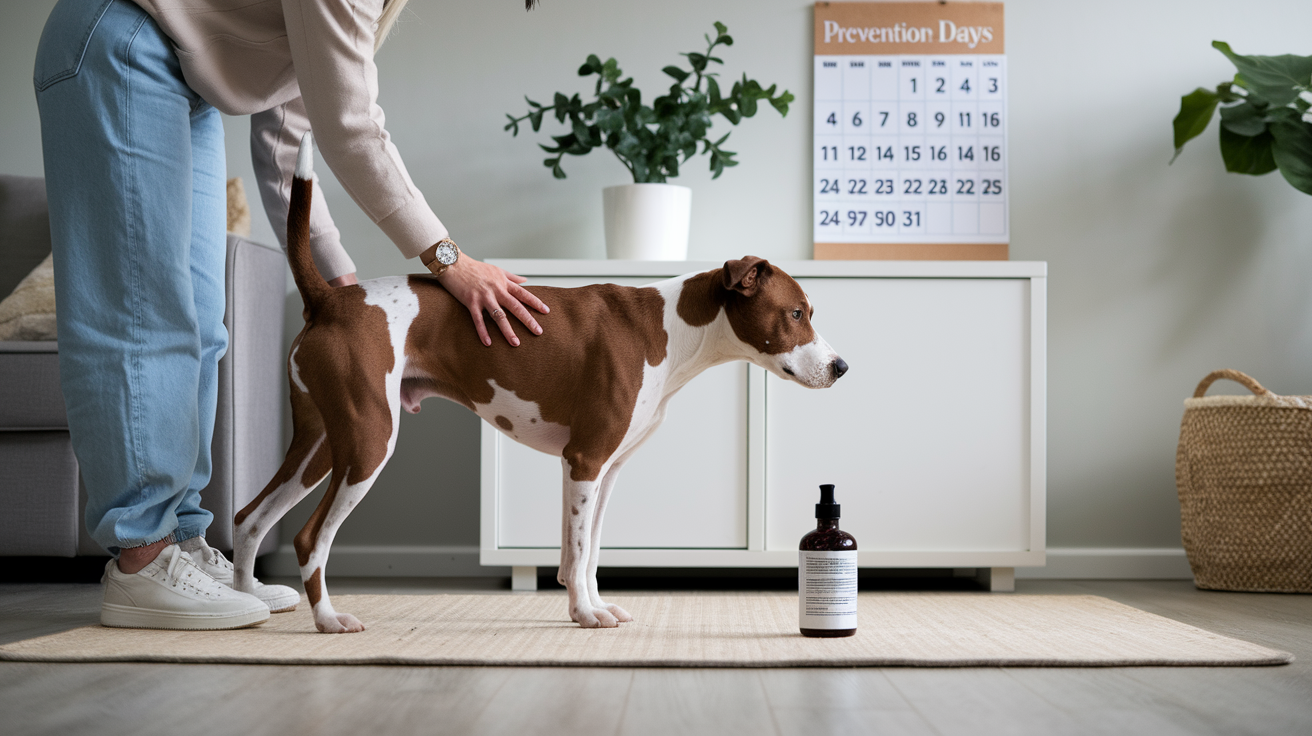
Long term success relies on integrating flea control into your dog’s routine until it becomes automatic. Keep a year’s supply of flea preventatives on hand or enroll in your veterinary clinic’s auto ship program so you never run low. Perform a quick skin check every week during grooming or petting. Run your hands along the tail base, back, belly, and inner thighs, looking for redness, bumps, hair thinning, or new scratching. Early detection of a flare lets you intervene before it escalates into infection or severe trauma.
Maintain a clean living environment with regular vacuuming and periodic washing of pet bedding, even when no fleas are visible. Fleas brought in on shoes, visiting animals, or through open doors can establish themselves quickly in a hospitable home. If your dog visits high risk areas like dog parks, boarding facilities, or grooming salons, check for fleas and flea dirt within 24 hours of return and bathe if needed. Consistency, vigilance, and a strong partnership with your veterinarian turn flea allergy dermatitis from a recurring nightmare into a manageable, preventable condition.
Final Words
Act fast: start prescription flea control, ease intense itching with a vet-recommended option, and check for any skin infection right away.
Tidy the home, keep prevention on schedule, and support healing with gentle skin care. Watch your dog for 48-72 hours; note itching level, hair loss, and any new sores.
If symptoms worsen or you see open wounds, fever, or severe scratching, call your vet. Managing flea allergy dermatitis in dogs takes quick steps and consistent prevention, and most pups improve with steady care. You’ve got this.
FAQ
Q: How to soothe flea allergy dermatitis on dogs?
A: To soothe flea allergy dermatitis on dogs, start fast flea control, give vet-prescribed antipruritics like Apoquel or Cytopoint, use gentle medicated baths, treat any infection, and clean bedding and home thoroughly. Call your vet for severe signs.
Q: How to treat flea-induced dermatitis?
A: To treat flea-induced dermatitis, combine immediate flea kill, short-term itch meds (Apoquel/Cytopoint), antibiotics if infected, skin-soothing shampoos, and environmental cleaning; follow your vet’s treatment plan and recheck if it worsens.
Q: How long does it take for flea allergy dermatitis to go away in dogs?
A: The time to improve varies: itching can drop within hours with antipruritics, Cytopoint lasts 4–8 weeks, and skin often needs several weeks to heal after fleas are cleared; call your vet if no improvement in 48–72 hours.
Q: What does flea dermatitis look like?
A: Flea dermatitis looks like intense itching, hair loss (often at the tail base), red bumps, scabs, black flea dirt, and sometimes oozing or crusted sores from secondary infection—see the vet for open wounds or spreading lesions.