

Think your dog looks fine?
Most owners underestimate their pet’s weight, and that slow creep can hide for months before it starts to strain joints, breathing, and energy.
You see your dog every day, so tiny changes are easy to miss; simple hands-on checks give clear, repeatable markers you can actually do at home.
This post walks you through easy signs to check, like how the ribs should feel, what a waist looks like, plus breathing and gait clues, and gives a short at-home plan to track weight and know when it’s time to call the vet.
Key At-Home Checks to Identify If Your Dog Is Overweight
You see your dog every day. That familiarity makes subtle weight gain nearly impossible to catch. By the time you notice a rounder belly or heavier breathing, your dog might already be carrying serious excess weight. Hands-on checks give you clear, repeatable markers you can actually track week to week.
Stand over your dog and look straight down. You should see a visible waistline, an inward curve between the ribs and hips that creates a gentle hourglass shape. If your dog’s silhouette looks round, oval, or boxy with no waist definition, that’s a visual sign of excess weight. Next, run your hands along your dog’s ribcage without pressing. You should feel each rib easily under a thin layer of skin and fat. If you need to press or can’t locate the ribs at all, there’s too much body fat. Finally, look at your dog from the side. A healthy dog shows an abdominal tuck, the belly rises slightly from the chest toward the hind legs. A sagging, flat, or rounded belly usually means extra pounds.
Watch for these six functional and physical signs:
Rib feel: You can’t feel ribs without applying firm pressure, or they’re completely obscured by fat.
Waist visibility: Viewed from above, your dog’s body shows no inward curve. The torso appears round or barrel-shaped.
Abdominal tuck: From the side, the belly hangs level with or lower than the chest instead of sloping upward.
Gait changes: Your dog moves stiffly, limps slightly, or takes shorter steps, often because joints are bearing extra load.
Breathing effort: Heavy panting begins after a short walk around the block or mild play indoors.
Energy levels: Your dog tires quickly, lies down mid-walk, or declines invitations to fetch or wrestle.
The body condition score (BCS) formalizes these observations into a nine-point scale. A score of 4 to 5 is ideal, 6 to 7 indicates overweight, and 8 to 9 signals obesity. If your at-home checks reveal hard-to-feel ribs, no waist, a sagging belly, and behavioral slowdown, your dog is very likely at a 6 or higher. That combination of findings is a strong signal to adjust portions, activity, and schedule a vet appointment.
Understanding Weight-Related Health Risks in Dogs

Over half of dogs in the United States are classified as overweight or obese, yet more than a third of owners believe their dog’s weight is normal. That gap means many dogs carry extra pounds for months or years before anyone intervenes.
Excess weight immediately strains the musculoskeletal system and lungs. Every extra pound forces joints, especially hips, knees, and elbows, to absorb more impact during walks and play. Breathing becomes harder because chest fat compresses the lungs and abdomen presses upward against the diaphragm, leaving less room for air.
Over time, obesity raises the risk of serious chronic conditions. Overweight dogs face higher rates of diabetes because persistent fat interferes with insulin regulation and blood sugar control. Heart disease develops as the cardiovascular system works harder to supply oxygenated blood to heavier tissue. Arthritis and cartilage breakdown accelerate under constant joint overload. Ligament injuries, particularly ACL tears, become more common. Skin folds created by excess fat can trap moisture, leading to bacterial or fungal infections. Studies show that obese dogs may live one to two years less than dogs at a healthy weight, and they often spend those final years managing pain, reduced mobility, and medication side effects. Recognizing weight gain early gives you the chance to reverse these risks before they become permanent.
What Causes Weight Gain in Dogs and How It Impacts Overweight Status

Dogs gain weight when calorie intake consistently exceeds energy expenditure, but the specific drivers vary by household and dog.
Overfeeding and portion size: Free-feeding, leaving food out all day, or using large scoops instead of measuring cups delivers far more calories than a dog needs. Many owners follow bag guidelines that overestimate portions, especially for less-active pets.
High-calorie treats and table scraps: A handful of biscuits, a piece of cheese, or leftover dinner can add hundreds of calories per day. Processed treats often contain starches, sugars, and fillers that spike calorie counts without providing satiety.
Lack of exercise: Busy schedules, bad weather, or small living spaces mean some dogs get only brief bathroom breaks instead of sustained walks or play. Low activity slows calorie burn and weakens muscle tone.
Breed predisposition: Certain breeds, Labrador Retrievers, Beagles, Cocker Spaniels, Dachshunds, and Bulldogs, have genetic tendencies toward weight gain. They may have slower baseline metabolisms or stronger food motivation.
Age and metabolic slowdown: Middle-aged and senior dogs burn fewer calories at rest. If portions and treat habits stay the same while activity declines, weight climbs steadily.
Pinpointing your dog’s primary cause makes correction more effective. If treats are the issue, swapping biscuits for carrot sticks solves it. If inactivity is the driver, adding ten minutes to each walk starts reversing the trend. When you know what tipped the balance, you can design a plan that actually fits your routine and your dog’s needs.
Using the Body Condition Score to Determine If Your Dog Is Overweight

The body condition score (BCS) is a standardized nine-point system veterinarians use to assess body fat and overall physique. It’s more reliable than a bathroom scale for most owners because dog weights vary widely by breed and frame, and human scales often can’t accommodate or accurately measure a wriggling pet.
Understanding the 1 to 9 Scale
Each BCS range corresponds to specific visual and tactile findings. A score of 1 to 3 indicates underweight. Ribs, spine, and hip bones are prominently visible, muscle mass is minimal, and there’s little to no fat cover. Dogs in this range often appear gaunt or skeletal. A score of 4 to 5 represents the ideal body condition. Ribs are easily felt under a thin fat layer but not visible, a clear waist is present when viewed from above, and the abdomen tucks upward when seen from the side. Dogs at 6 to 7 are overweight. Ribs require moderate pressure to feel, the waist is less defined or absent, and the belly may sag slightly. Scores of 8 to 9 signal obesity. Ribs are very difficult or impossible to palpate, no waist is visible, the abdomen may hang, and fat deposits appear over the back, tail base, and chest. Mobility often becomes labored at this stage.
Applying BCS at Home
Perform a three-point manual exam every week or two. First, run both hands gently along your dog’s ribcage from shoulder to hip. You should feel individual ribs without needing to press. If you must push or can’t distinguish ribs at all, estimate a higher BCS. Second, stand directly over your dog and look down at the topline. Identify the last rib, then trace an imaginary line to the hips. There should be a visible inward curve forming a waist. A straight or bulging line suggests a BCS of 6 or above. Third, crouch beside your dog and view the profile. The belly should slope upward from the chest toward the rear legs. A level or drooping belly indicates excess abdominal fat. For fluffy or long-coated breeds, rely more on palpation than sight. Thick fur can hide body shape, but your hands will still detect fat cover over the ribs and spine.
| BCS Range | Description |
|---|---|
| 1–3 (Underweight) | Ribs, spine, and hips prominently visible; minimal muscle; little to no fat cover. |
| 4–5 (Ideal) | Ribs easily felt without pressure; visible waist from above; abdominal tuck from side. |
| 6–7 (Overweight) | Ribs hard to feel; waist poorly defined or absent; slight abdominal sag. |
| 8–9 (Obese) | Ribs not palpable; no waist; hanging abdomen; fat deposits on back, chest, tail base; reduced mobility. |
Reassess your dog’s BCS every two weeks while implementing weight-loss changes, and every month once your dog reaches an ideal score. Consistent tracking helps you catch small rebounds before they become big problems.
When to See a Veterinarian for Weight Concerns
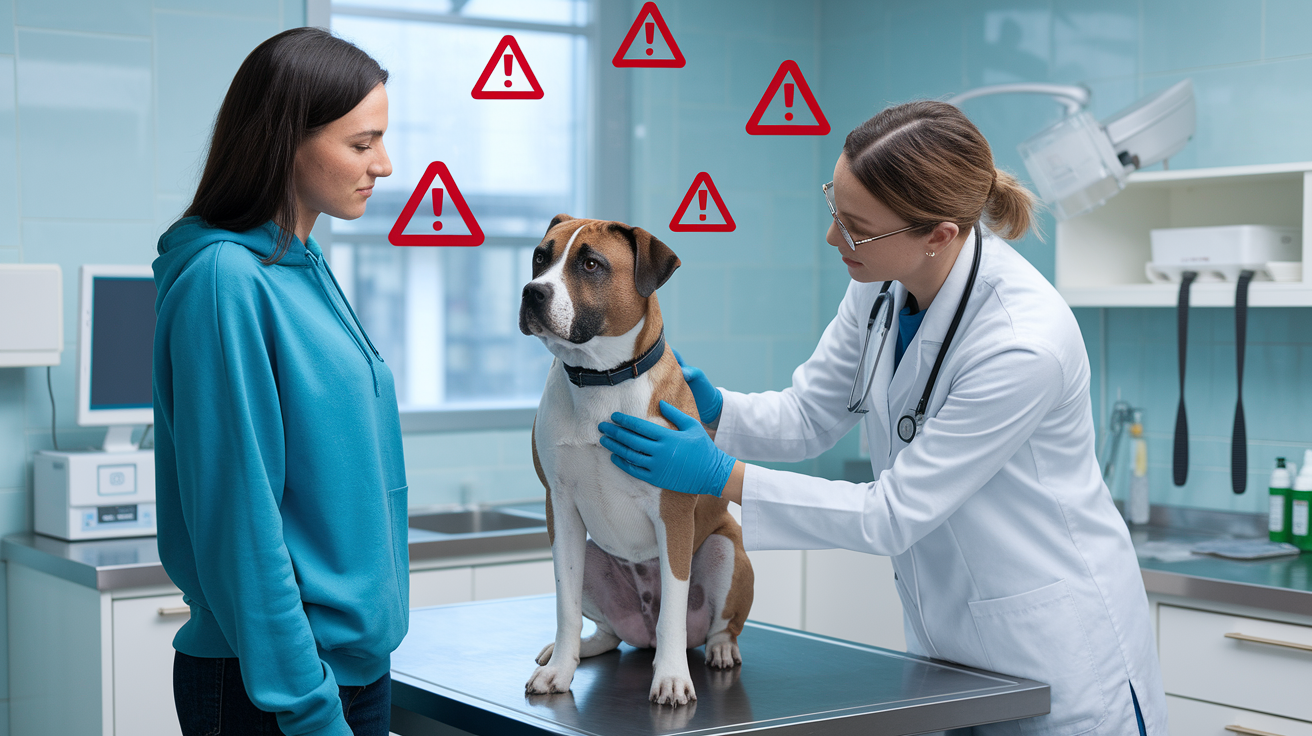
Schedule a veterinary appointment if you observe any of the following red flags, because they may indicate underlying medical conditions or advanced obesity that requires professional management.
Inability to feel ribs: If moderate pressure along the ribcage reveals no distinct ribs, your dog is carrying substantial excess fat and needs a full health assessment.
Rapid weight gain: A noticeable increase in body size over two to four weeks, especially without a change in diet or activity, can signal hormonal disorders such as hypothyroidism or Cushing’s disease.
Breathing difficulties: Panting heavily at rest, labored breathing during short walks, or wheezing sounds suggest respiratory strain that may be compounded by chest fat or heart stress.
Mobility changes: New limping, reluctance to climb stairs, difficulty standing up, or reduced willingness to jump into the car often means joints are overloaded and possibly inflamed.
Suspected medical causes: Conditions like low thyroid function slow metabolism and promote weight gain even when calorie intake stays the same. Only blood work can diagnose these issues.
Your veterinarian will perform a physical exam, palpate the abdomen and lymph nodes, listen to the heart and lungs, and may order blood tests to rule out metabolic or endocrine disease. They’ll also calculate a target weight based on your dog’s breed, age, frame size, and current condition, then design a calorie-controlled feeding plan and exercise schedule tailored to your dog’s health status. Twice-yearly wellness exams allow early detection of weight-related problems and give you regular accountability for progress. If any of the five signs above are present, call your vet this week. Waiting can allow reversible issues to become chronic.
Practical Steps to Help an Overweight Dog Reach a Healthy Weight

Safe, sustainable weight loss happens gradually. Rapid drops can stress the liver, weaken muscle, and leave your dog hungry and anxious, so aim for a steady reduction of 1 to 2% of current body weight per week. That pace protects organ function and keeps your dog comfortable throughout the process.
Consult your veterinarian first: Before reducing calories or changing food, get a full exam to rule out thyroid disease, Cushing’s, or other metabolic conditions that require medication. Your vet will calculate a target weight and daily calorie goal specific to your dog’s needs.
Implement strict portion control: Use a standard measuring cup or kitchen scale. Never eyeball portions. Follow your vet’s recommended amount, not the feeding guide on the bag, which is often too generous. Divide the daily total into two or three smaller meals to help your dog feel satisfied.
Switch to a weight-management food: Transition gradually over seven to ten days to a high-protein, lower-fat formula designed for weight loss. These foods provide more satiety per calorie and help preserve lean muscle during fat loss. Mix increasing amounts of the new food with decreasing amounts of the old to avoid digestive upset.
Limit treats to 10% of daily calories: Calculate your dog’s total daily calorie budget, then reserve no more than 10% for treats. Swap high-calorie biscuits for low-calorie options like baby carrots, green beans, or small pieces of apple. You can also use kibble from the daily ration as training rewards.
Increase exercise by small increments: Start by adding ten minutes to each walk. Once your dog handles that comfortably, add another five-minute session or introduce fetch, swimming, or gentle agility. Avoid sudden jumps in intensity. Overweight dogs tire quickly and can injure joints if pushed too hard too fast.
Monitor progress weekly: Weigh your dog at the same time of day each week, ideally at the vet clinic on a calibrated scale. Keep a simple log noting weight, portions fed, treats given, and minutes of activity. If weight loss stalls for two consecutive weeks, contact your vet to adjust calories or activity rather than guessing on your own.
Transitioning diets slowly prevents vomiting and diarrhea, and consistency is more important than perfection. If you slip up with an extra treat or a shorter walk, just return to the plan the next day. Small, repeated actions over weeks and months deliver lasting results without stress or deprivation.
Breed, Age, and Lifestyle Factors That Influence Ideal Weight
Ideal weight isn’t a fixed number. It varies by breed standard, individual frame size, age, and daily activity level. A lean, muscular Labrador Retriever might weigh sixty-five pounds, while another Lab of the same height carrying extra fat could weigh eighty pounds, and both came from the same litter.
Breed predisposition matters because genetics influence metabolism, appetite drive, and fat distribution. Labrador Retrievers, Beagles, Cocker Spaniels, Dachshunds, and Bulldogs tend to gain weight more easily than Border Collies or Greyhounds, even on identical diets. Age also plays a role. Puppies and young adults burn calories rapidly through growth and play, but metabolism slows in middle age and further declines in senior years. A seven-year-old dog may need 20 to 30% fewer calories than it did at age two. Lifestyle compounds these factors. A dog who hikes daily can maintain a higher calorie intake than a dog whose exercise consists of two ten-minute leash walks.
Breed tendencies: Research your breed’s typical weight range, but remember that range is broad. Use BCS and physical assessment rather than relying solely on charts.
Age-related slowdown: Adjust portions downward as your dog ages, especially if activity decreases or you notice gradual weight creep.
Activity level: An active working dog, agility competitor, or hiking companion needs more food than a calm companion who prefers napping. Tailor calories to actual energy expenditure, not assumptions.
Human bathroom scales are unreliable for dogs. They can’t account for movement, and weight alone doesn’t distinguish muscle from fat. Instead, combine regular vet weigh-ins with weekly BCS checks at home. That pairing gives you both objective data and a functional picture of your dog’s body composition, which together define true ideal weight better than any chart.
Final Words
In the action, you practiced hands-on checks—feeling ribs, scanning for a waist from above, and checking the abdominal tuck—so small changes don’t sneak up on you.
You also learned the BCS ranges, common causes, health risks, and a step-by-step plan: vet check, portion control, more activity, and weekly tracking.
If you remember one thing, use those checks regularly and talk to your vet if anything looks off. That will help you confidently tell how to tell if your dog is overweight and take steady, positive steps forward.
FAQ
Q: What is the 7 second rule for dogs? What is the 7 7 7 rule for dogs?
A: The 7 second rule for dogs is a brief pause used to interrupt and refocus unwanted behavior. The 7-7-7 rule is a short, repeated exposure technique to build tolerance; consult a trainer for specifics.
Q: What is the 3-3-3 rule with dogs?
A: The 3-3-3 rule with dogs is an adoption timeline: 3 days to decompress, 3 weeks to settle into routines, and about 3 months to feel secure and fully comfortable in a new home.
Q: What is the quickest way for a dog to lose weight?
A: The quickest way for a dog to lose weight is a vet-supervised, steady plan: vet check, reduce calories safely, limit treats, add gentle exercise, and aim for about 1–2% body weight loss per week.