

Think all dogs “throw up” the same way? That’s a mistake many of us make.
Vomiting and regurgitation can look alike but mean very different things.
Vomiting is a noisy stomach heave, while regurgitation is a quiet backflow from the esophagus (the food tube).
Read on for clear, simple clues about timing, effort, smell, and what comes up so you know when to watch at home and when to call the vet.
Key Differences in Dog Vomiting vs Regurgitation Explained Clearly
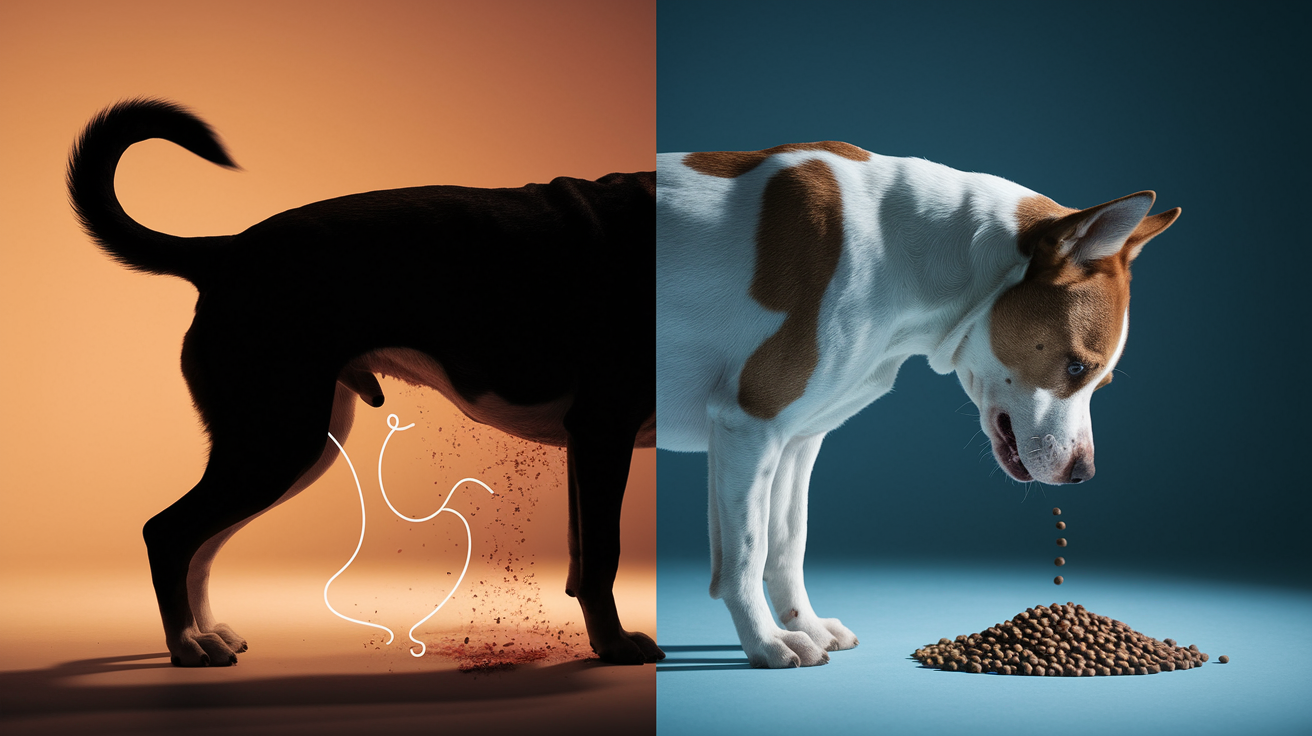
Vomiting is active. Your dog’s belly heaves, contracts, and you’ll hear loud retching sounds. Drooling usually comes first. What comes up? Digested or half-digested food, often mushy or liquid. You might see bile, that yellow or greenish fluid from the small intestine. It can happen anytime after eating, minutes or hours later. Before it happens, watch for lip licking, excessive swallowing, or pacing.
Regurgitation is passive and sudden. No abdominal effort. No retching. Often no warning at all. Food comes up quickly, almost sliding back out. What you’ll see is undigested food that looks nearly identical to what your dog just ate. Often tube-shaped from the esophagus, mixed with saliva or mucus. Typically expelled within seconds to minutes after eating or drinking. Your dog may lower their head and the material simply flows out. “After drinking, the water just poured back out of her mouth with no heaving at all, that’s regurgitation, not vomiting.”
Timing is one of the clearest clues. Regurgitation almost always happens shortly after a meal or drink. Vomiting can occur on an empty stomach or hours after eating. Bile in expelled material? That means it came from the stomach or small intestine, confirming vomiting. Undigested kibble shaped like a sausage signals regurgitation from the esophagus. Watch for belly movement, listen for sounds, and note how quickly it happens after eating.
| Feature | Vomiting | Regurgitation | Timing | Key Risk |
|---|---|---|---|---|
| Effort | Active abdominal heaving, retching, drooling | Passive, no effort, sudden expulsion | Any time (minutes to hours after eating) | Dehydration, obstruction, systemic disease |
| Origin | Stomach or upper small intestine | Esophagus, pharynx, or mouth | Immediately or within minutes of eating/drinking | Aspiration pneumonia, esophageal damage |
| Appearance | Digested, mushy, fluid, bile (yellow/green), foam | Undigested, tubular shape, saliva-coated, food intact | Variable (vomit); immediate (regurgitate) | Depends on cause |
| Sound | Loud retching, gagging, grunting | Silent or soft gurgle | Vomit: variable; Regurgitate: right after meals | Depends on frequency and underlying condition |
| Warning Signs | Lip licking, drooling, pacing, nausea behaviors | None, happens suddenly | Vomit: signs before; Regurgitate: no warning | Both can indicate serious conditions |
Observable Signs of Vomiting in Dogs for Accurate Identification

Before your dog vomits, you’ll often notice nausea signals. Excessive drooling, repeated swallowing, lip licking, pacing, or hiding. Your dog may refuse food or water and appear restless. When vomiting begins, you’ll see forceful abdominal contractions. The belly visibly tightens and releases in waves. The sound is unmistakable. Loud retching, gagging, or heaving that sounds like your dog is trying hard to bring something up. This effort is the hallmark of true vomiting.
The material your dog vomits can vary widely and offers important clues. Vomit may be mostly liquid, foamy, or contain recognizable food chunks that are partially broken down. It often smells strong and sour. Vomiting can occur any time. On an empty stomach hours after eating, or shortly after a meal if the stomach is irritated. Timing alone doesn’t always tell you the cause, but repeated vomiting over hours or days signals a problem that needs veterinary attention.
What the vomit looks like helps narrow down the cause. Yellow or greenish fluid is bile, indicating the stomach is empty or contents from the small intestine are being expelled. White foam often means stomach acid and mucus, common in cases of indigestion or when the stomach is empty for too long. Bright red streaks or clots mean fresh blood, suggesting irritation or injury to the stomach lining. Brown, coffee-ground material is older, partially digested blood. A sign of bleeding higher up in the digestive tract. A foul, putrid smell can indicate an obstruction or severe infection.
Yellow or green vomit contains bile from the small intestine. White, foamy vomit is usually stomach acid and mucus. Bright red blood means fresh bleeding in the stomach or esophagus. Coffee-ground appearance signals older, digested blood. Strong, sour, or putrid smell can indicate infection, obstruction, or fermentation.
Recognizing Regurgitation in Dogs and What It Looks Like
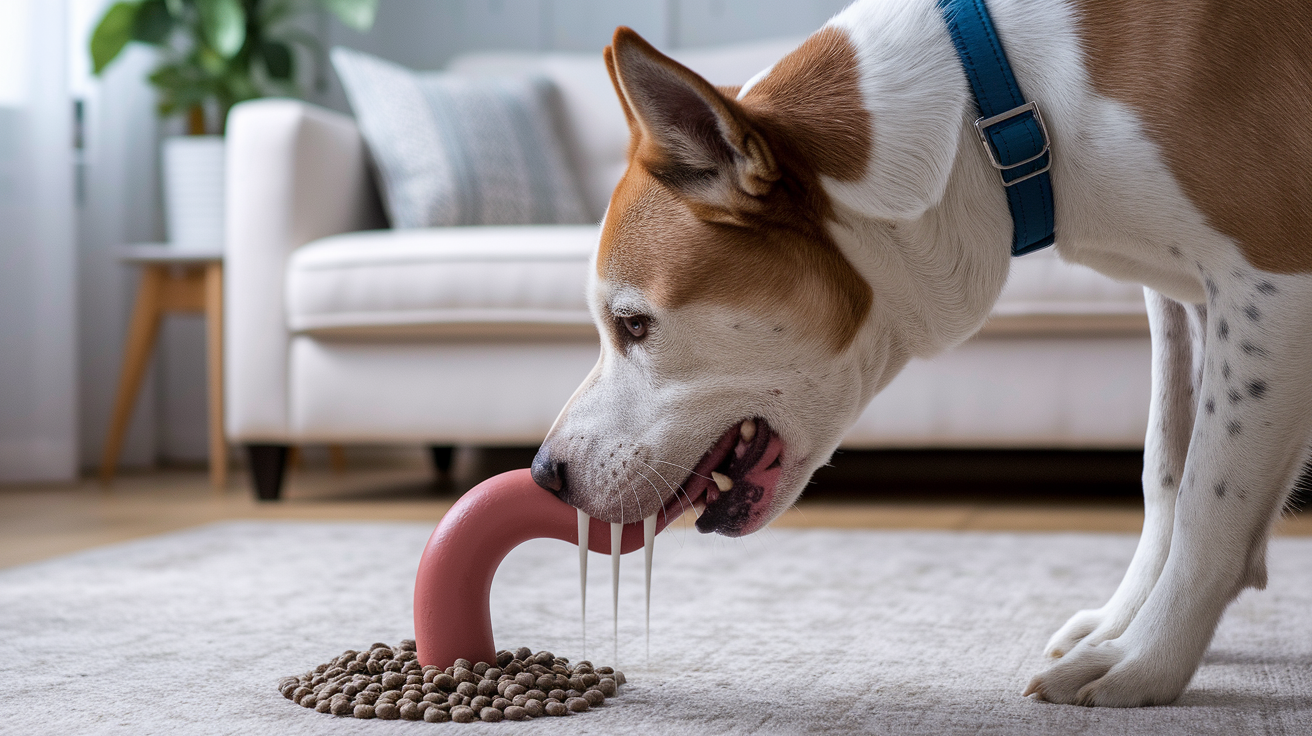
Regurgitation happens quickly and quietly. Your dog lowers their head, and food or water comes back up with little to no effort. There’s no retching, no abdominal heaving, and often no warning at all. The material flows out almost passively, sometimes while your dog is standing still or just after finishing a meal. This suddenness and lack of effort are the clearest signs you’re seeing regurgitation, not vomiting.
What comes up during regurgitation is noticeably different. The food is undigested. It looks almost exactly like it did when your dog ate it. Kibble pieces are whole and recognizable, not mushy or broken down. The material is often tube-shaped or cylindrical, molded by the esophagus as it comes back up. It’s usually coated in saliva or clear mucus rather than stomach acid or bile, and it has little to no smell. If your dog drank water and it comes right back up clear and unchanged, that’s regurgitation. “The kibble came up in a neat log shape, still crunchy, with no bile or digestion at all.”
Food appears undigested and looks like it did at mealtime. Material is often tube-shaped or cylindrical from the esophagus. Coated in saliva or mucus, not bile or stomach fluid. Soft texture, not acidic or broken down. Little to no odor, unlike the sour smell of vomit. Happens immediately or within minutes of eating or drinking.
Common Causes of Vomiting in Dogs and Their Clinical Clues

Vomiting originates in the stomach or upper small intestine and has a wide range of causes. Dietary indiscretion, eating spoiled food, garbage, or something unusual, is one of the most common triggers. Food intolerances and allergies can also cause repeated vomiting, especially if your dog has recently switched diets. Motion sickness during car rides is another frequent cause, particularly in younger dogs. These cases are usually self-limiting, but repeated vomiting points to something more serious.
Systemic diseases often show up as vomiting because the stomach is highly sensitive to toxins and metabolic changes. Kidney disease, liver disease, and pancreatitis all cause nausea and vomiting as waste products build up or inflammation spreads. Infections, both viral (like parvovirus) and bacterial, trigger vomiting as part of the body’s immune response. Intestinal parasites, especially roundworms, can irritate the stomach lining and cause vomiting. If you see worms in the vomit, that’s a clear sign of parasitic infection and requires immediate veterinary care.
Obstructions and toxins are emergencies. Foreign bodies, toys, bones, fabric, or other objects, can block the stomach or intestines, causing repeated, forceful vomiting and abdominal pain. Toxin ingestion, from household cleaners, certain plants, chocolate, or medications, often leads to sudden, severe vomiting. The appearance of blood in vomit, whether bright red or coffee-ground, suggests stomach ulceration or injury and is always a red flag. Persistent vomiting that lasts more than a few hours or occurs multiple times in one day means your dog needs to be seen by a veterinarian.
Dietary indiscretion and food intolerances. Motion sickness, especially in young dogs. Systemic diseases (kidney failure, liver disease, pancreatitis). Viral or bacterial infections (parvovirus, bacterial gastroenteritis). Intestinal parasites (roundworms visible in vomit). Foreign body obstruction (toys, bones, fabric). Toxin ingestion (plants, chocolate, medications, cleaners).
Common Causes of Regurgitation in Dogs and Underlying Esophageal Problems

Regurgitation points to a problem in the esophagus, the muscular tube that connects the mouth to the stomach. The causes fall into two main categories: mechanical blockages and functional disorders. Mechanical causes include anything physically blocking or narrowing the esophagus. Foreign bodies, bones, toys, or large pieces of food, can lodge in the esophagus and prevent normal swallowing. Tumors, masses, and strictures (scar tissue that narrows the esophagus after injury or inflammation) also create physical obstructions. Vascular ring anomalies, a congenital defect where blood vessels wrap around the esophagus, and hiatal hernias, where part of the stomach pushes into the chest cavity, are structural problems seen more often in certain breeds or young puppies.
Esophageal parasites, though less common, are a real risk in some regions. Spirocerca lupi, a parasitic worm, is found in the southern United States and the Caribbean and forms nodules in the esophageal wall, causing chronic regurgitation and difficulty swallowing. If you live in or have traveled to these areas and your dog is regurgitating, mention it to your veterinarian.
Functional causes involve the esophagus not working properly, even when there’s no physical blockage. Megaesophagus, a condition where the esophagus becomes enlarged and loses its ability to push food down into the stomach, is the single most common reason for regurgitation in dogs. It can be congenital (present from birth) or acquired later in life due to other diseases. Myasthenia gravis, an autoimmune disease that weakens the muscles, is a leading cause of acquired megaesophagus. Addison’s disease (low adrenal hormone levels), hypothyroidism (low thyroid hormone), and esophagitis (inflammation from acid reflux or GERD) can all interfere with normal esophageal function. Toxin exposure, from lead, organophosphates, or botulinum toxin, can paralyze esophageal muscles. In many cases, the cause remains unknown and is labeled idiopathic esophageal dysmotility.
Foreign bodies lodged in the esophagus (bones, toys). Tumors and masses in or around the esophagus. Strictures (scar tissue narrowing the esophagus). Vascular ring anomaly (blood vessels constricting the esophagus). Hiatal hernia (stomach pushes into the chest). Spirocerca lupi infection (esophageal parasites in southern U.S. and Caribbean). Megaesophagus (congenital or acquired). Myasthenia gravis, Addison’s disease, hypothyroidism, GERD, and toxin exposure.
Diagnostic Testing for Dog Vomiting vs Regurgitation (What Vets Look For)

Your veterinarian’s first step is a detailed history and physical exam. Describing what you saw, effort, timing, appearance, sounds, and any videos or photos you took, helps your vet decide whether the problem originates in the esophagus or the stomach and intestines. This distinction directs all further testing. For regurgitation, imaging focuses on the esophagus and chest. Chest and neck X-rays can reveal megaesophagus, foreign bodies, masses, or signs of aspiration pneumonia. Barium studies, where your dog swallows a contrast liquid that shows up on X-rays, help identify strictures, abnormal motility, or hiatal hernias. Endoscopy allows the veterinarian to look directly inside the esophagus, remove some foreign bodies, take tissue samples, and assess inflammation or tumors.
For vomiting, diagnostics shift to the stomach, intestines, and systemic health. Abdominal X-rays and ultrasound look for foreign bodies, masses, organ enlargement, or fluid accumulation. Blood work is essential to screen for kidney disease, liver disease, pancreatitis, electrolyte imbalances, and dehydration. Specific tests, such as a pancreatic lipase test, thyroid hormone panel, or ACTH stimulation test, may follow depending on initial findings. In some cases, endoscopy of the stomach and upper intestine is performed to look for ulcers, inflammation, or tumors.
Specialized tests help diagnose specific causes of regurgitation. An acetylcholine receptor antibody test checks for myasthenia gravis, a common cause of acquired megaesophagus. Blood lead levels are measured if toxin exposure is suspected. Thyroid function tests rule out hypothyroidism, and an ACTH stimulation test evaluates for Addison’s disease. Videos you record at home showing the episode, whether your dog heaves or the material simply flows out, can be as valuable as any test in guiding the diagnostic plan.
What you should document and bring to your veterinarian: Videos of the episode showing effort, posture, and sounds. Photos or a sample of the expelled material. Written log of frequency, timing relative to meals, and appearance. Any associated signs (coughing, breathing changes, lethargy, appetite loss).
Emergency Signs in Vomiting vs Regurgitation That Require Immediate Vet Care
Certain signs mean you need to stop monitoring and get your dog to a veterinarian right away. Repeated regurgitation combined with coughing, labored breathing, or sudden lethargy signals possible aspiration pneumonia. A life-threatening condition where regurgitated material enters the lungs. Aspiration can happen because the airway doesn’t close in time during passive regurgitation. If your dog is regurgitating and then starts coughing or breathing harder than usual, treat it as an emergency.
Persistent vomiting, especially more than two or three episodes in a few hours, carries serious risks. Dehydration happens quickly, and repeated vomiting can indicate a blockage, toxin exposure, or severe infection. If your dog tries to vomit but nothing comes up, or if the belly looks swollen and tight, suspect bloat or gastric torsion. An emergency that requires surgery within hours. Blood in vomit, whether bright red or coffee-ground, means bleeding somewhere in the digestive tract and always warrants immediate care. Worms visible in vomit indicate a heavy parasitic load and need prompt treatment. Abdominal pain, shown by a hunched posture, whining, or sensitivity when you touch the belly, suggests pancreatitis, obstruction, or another acute abdominal crisis.
Repeated regurgitation with coughing or difficulty breathing (aspiration pneumonia risk). Vomiting that won’t stop, three or more episodes in a few hours. Unproductive retching with a swollen, hard belly (possible bloat or torsion). Blood in vomit, bright red or dark coffee-ground appearance. Worms visible in vomit or regurgitated material. Severe abdominal pain, hunched posture, or sensitivity to touch. Signs of dehydration (dry gums, sunken eyes, lethargy). Sudden collapse, seizures, or extreme weakness.
At-Home Management and Monitoring for Vomiting vs Regurgitation Episodes

For mild, isolated vomiting with no red flags, you can try supportive care at home for 12 to 24 hours. Withhold food for 6 to 12 hours to let the stomach settle, but keep small amounts of water available. After the fasting period, offer a bland diet in small, frequent meals. Boiled chicken (no skin or bones) with plain white rice or plain boiled sweet potato. Gradually reintroduce your dog’s regular food over two to three days if vomiting has stopped. Monitor hydration by checking gum moisture. If gums feel sticky or dry, or if your dog isn’t drinking, contact your vet.
Regurgitation requires a completely different approach because the problem is in the esophagus, not the stomach. The single most important intervention is upright feeding. Use a Bailey chair, a specially designed elevated seat that holds your dog in a sitting or near-vertical position while eating. After your dog finishes eating, keep them upright for at least 15 minutes to allow gravity to move food into the stomach. Water should also be given while your dog is upright or immediately after. Feed smaller, more frequent meals, three or four times a day instead of two, to reduce the volume and pressure in the esophagus at any one time.
Food texture and consistency matter. Some dogs with regurgitation do better on soft, moist food or even liquid diets, while others tolerate meatballs or dense, sticky food that clumps together and moves as a unit. High-quality, nutrient-dense diets, including veterinary gastrointestinal formulas, help ensure your dog gets enough nutrition in smaller portions. Avoid dry kibble that can scatter and stick in a dilated esophagus. Slow feeder bowls can help dogs who gulp food too quickly, though upright feeding is still the priority. During sleep, elevate your dog’s head with a bolster bed or wedge pillow to reduce reflux and aspiration risk.
Vomiting: fast for 6 to 12 hours, then offer bland diet in small meals. Regurgitation: feed in an upright position using a Bailey chair. Keep regurgitating dogs upright for at least 15 minutes after eating or drinking. Feed smaller, more frequent meals (3 to 4 times daily). Adjust food texture (soft, moist, or meatball form) based on what your dog tolerates. Elevate the head during sleep to reduce reflux and aspiration.
| Aspect | Vomiting Care | Regurgitation Care |
|---|---|---|
| Feeding | Fast 6–12 hours, then small bland meals | Upright feeding only; use Bailey chair; hold upright 15 min after |
| Water Intake | Small amounts frequently to prevent dehydration | Offer water while dog is upright or right after meals |
| Positioning | Normal; no special position needed | Upright during and after meals; elevate head during sleep |
Long-Term Management and Prognosis for Dogs with Vomiting vs Regurgitation Patterns
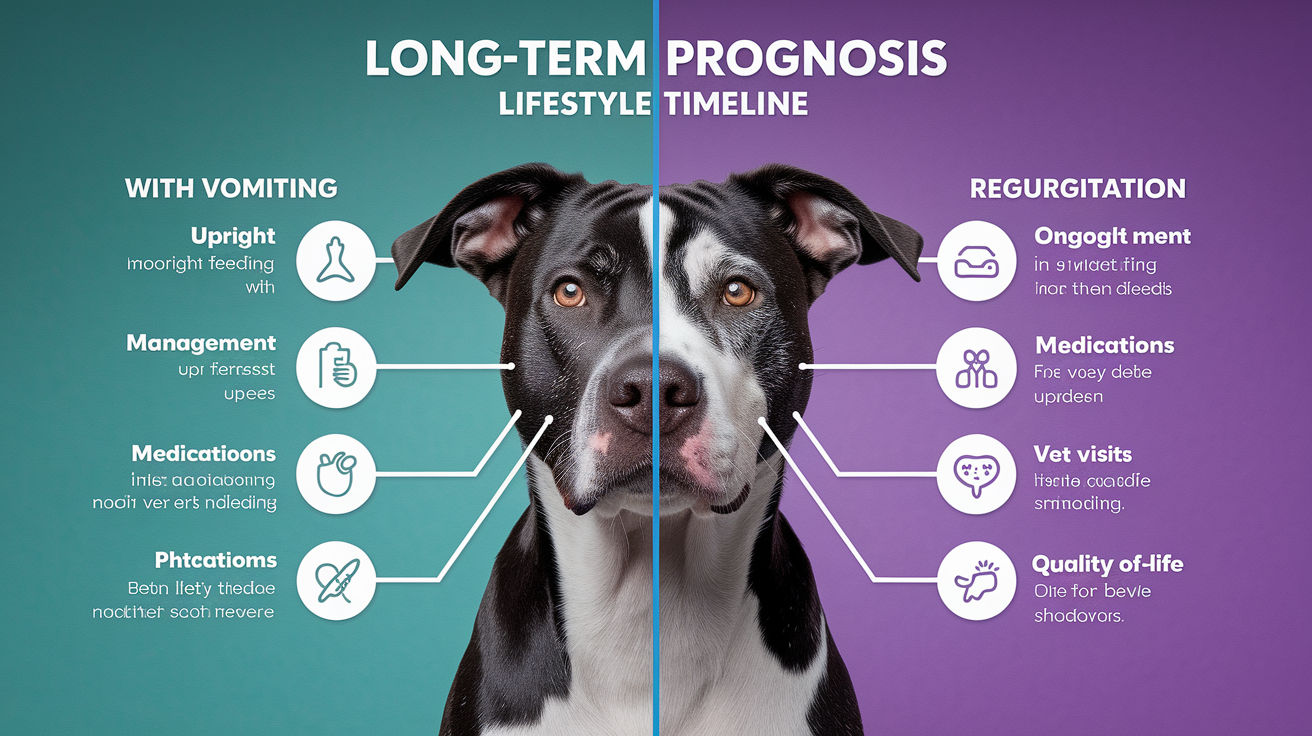
Dogs with chronic vomiting due to metabolic diseases like kidney or liver failure, or inflammatory bowel disease, often require lifelong medication, special diets, and regular monitoring. Prognosis depends on the underlying cause. Vomiting caused by a foreign body obstruction or infection usually resolves completely once treated. Pancreatitis may recur and require dietary changes and close management. Cancers of the stomach or intestines carry a guarded to poor prognosis depending on type and stage, but early intervention and supportive care can improve quality of life.
Regurgitation from megaesophagus, whether congenital or acquired, is typically a lifelong condition. Dogs with megaesophagus need permanent upright feeding, careful monitoring for aspiration pneumonia, and sometimes medication to reduce acid reflux and protect the esophagus. Quality of life can be good with diligent management, but aspiration pneumonia remains the leading cause of death in these dogs. If megaesophagus is secondary to another disease, like myasthenia gravis or hypothyroidism, treating the underlying condition may improve or even resolve the regurgitation. Surgical correction is possible for some structural causes. Vascular ring anomalies, hiatal hernias, and certain tumors or strictures. Prognosis after surgery is often excellent.
Chronic vomiting may require lifelong diet changes and medication. Megaesophagus usually requires permanent upright feeding and vigilant aspiration monitoring. Secondary megaesophagus may improve if the underlying disease is treated. Surgical correction of structural esophageal problems often leads to full recovery.
What to Track for Your Veterinarian When Differentiating Dog Vomiting vs Regurgitation

Accurate, detailed tracking helps your veterinarian diagnose the problem faster and with fewer tests. Start by noting the exact timing of each episode relative to eating or drinking. Did it happen immediately, within minutes, or hours later? Record how many times it happened in a day and over how many days. Write down what the material looked like: color (yellow, green, white, red, brown), texture (liquid, foamy, chunky, tubular), and whether it contained undigested food, bile, or blood. Note any smells. Sour, putrid, or no odor at all.
Observe and record your dog’s behavior before, during, and after the episode. Did your dog show signs of nausea, drooling, lip licking, pacing, or did the material come up suddenly with no warning? Was there visible abdominal effort and retching sounds, or did it flow out passively? After the episode, did your dog seem normal, or were there signs of lethargy, coughing, or difficulty breathing? Videos are incredibly valuable because they capture the effort, sounds, posture, and timing in real time, helping your vet see exactly what you saw.
Exact timing relative to meals (immediate, minutes, or hours after). Frequency (how many episodes per day, over how many days). Appearance (color, texture, tubular vs mushy, bile vs undigested food). Presence of blood, worms, or foreign material. Behavior before and during (nausea signs, effort, sounds, suddenness). Associated symptoms (coughing, breathing changes, lethargy, appetite loss, diarrhea).
Final Words
When your dog gags, heaves, or suddenly spits up, it feels urgent. This guide walked you through the key differences: vomiting is active with retching and possible bile, while regurgitation is passive, often tubular and right after eating.
You also got causes, what vets check, safe at‑home steps, emergency red flags, and what to track for a visit. If you’re unsure, video the event, note timing, and call your vet for worrying signs.
Knowing dog vomiting vs regurgitation helps you make calm, faster choices—and that’s a big win for your pet.
FAQ
Q: How do I know if my dog is vomiting or regurgitating?
A: To know if your dog is vomiting or regurgitating, look for effort and timing: vomiting has abdominal heaving, retching, and digested food or bile; regurgitation is sudden, undigested, usually after meals. Call your vet for repeated, bloody, or breathing problems.
Q: Is regurgitation worse than vomiting in dogs?
A: Regurgitation can be worse than vomiting because it often signals esophageal disease and raises aspiration pneumonia risk. Severity depends on cause; seek veterinary care for repeated episodes, coughing, weight loss, or breathing changes.
Q: What are the first signs of internal bleeding in dogs?
A: The first signs of internal bleeding in dogs are pale or white gums, weakness, rapid breathing, fainting or collapse, bloody stool or vomit, and a swollen or painful belly. This is an emergency. Get immediate veterinary care.