

Is every bout of dog vomiting an emergency, or mostly just an annoying mess?
Dog vomiting causes range from eating trash or motion sickness to infections, toxins, or a blocked gut, and how it looks, how often it happens, and how your dog acts tells the story.
This article walks you through common causes, simple at-home checks, clear red flags that need a vet right away, and what to watch for over the next 24 to 48 hours so you can act with confidence.
Vomiting vs. Regurgitation: What You’re Really Seeing

Before you can figure out what’s wrong, you need to know what you’re looking at.
Vomiting is active. Your dog will heave, retch, and contract their abdomen. What comes up is usually partially digested food mixed with bile or stomach fluid. It might be yellow, foamy, or chunky. The whole process looks uncomfortable, and your dog knows it’s about to happen.
Regurgitation is passive. No retching, no warning. Food just comes back up, often in a tubular shape, looking almost exactly like it did going down. Your dog might seem surprised. This usually points to an esophageal issue, not a stomach problem.
Why this matters: If your dog’s regurgitating repeatedly, that’s a different path. It could mean a swallowing disorder, megaesophagus, or an obstruction higher up in the throat or esophagus. That needs a vet exam and possibly imaging like a barium swallow or fluoroscopy.
If it’s true vomiting, with retching and stomach contents, then you’re dealing with the GI tract, toxins, infections, or systemic illness. The rest of this article focuses on vomiting.
Should You Panic? Quick Triage by Urgency
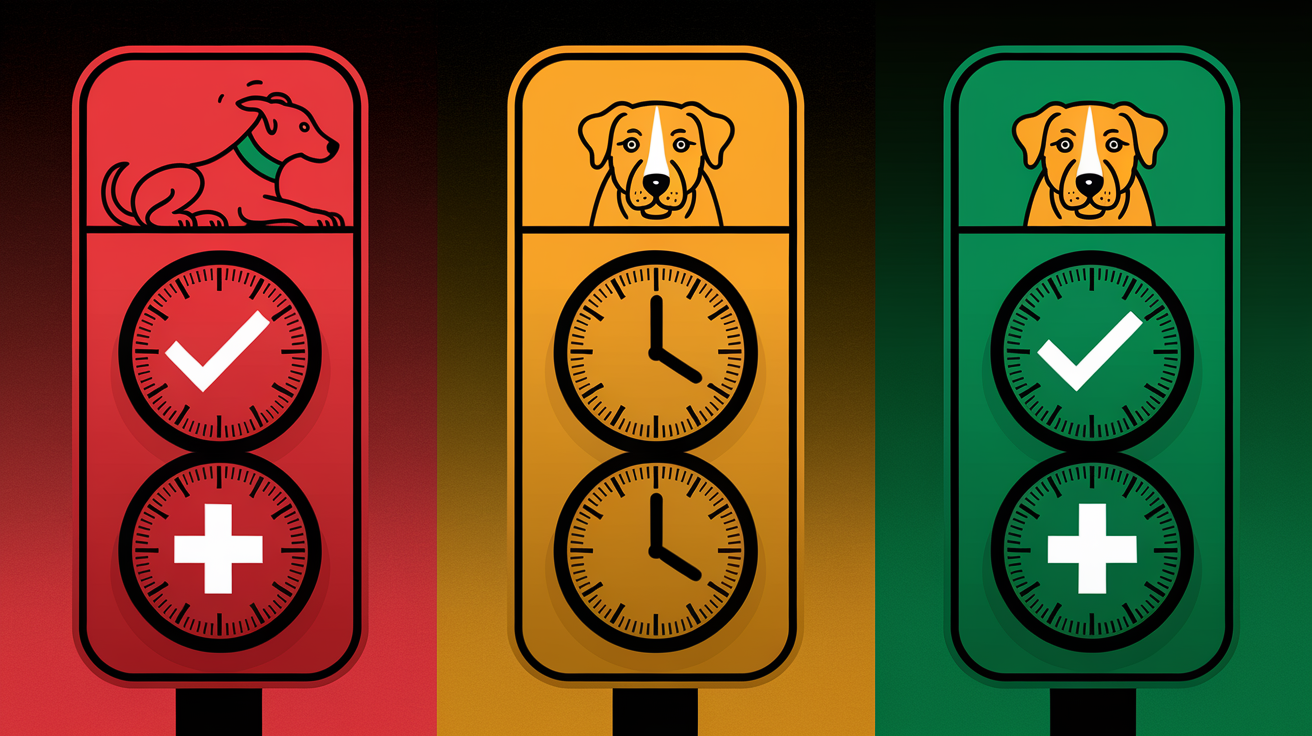
Not all vomiting is the same. Some episodes are scary but manageable at home. Others are true emergencies.
Here’s how to sort it fast.
Emergency. Go to a vet or emergency clinic right now:
Your dog’s retching repeatedly but nothing comes up, and their belly looks swollen or hard. (Suspected bloat/GDV.)
You see bright red blood or dark, coffee ground material in the vomit.
Your dog has collapsed, can’t stand, or is having a seizure.
Gums are white, gray, or brick red instead of healthy pink.
Your dog’s heart is racing or very slow, and they seem weak or unresponsive.
Body temperature is above 104°F (40°C), or you see signs of heatstroke: heavy panting, drooling, brick red gums.
Urgent. Call your vet within hours, don’t wait overnight:
Vomiting more than 2 to 3 times in 24 hours.
Vomiting has continued for more than 6 hours straight.
Your dog can’t keep water down for 12 hours.
Fever above 103°F (39.5°C).
Your dog is a puppy, a senior, or has an existing health condition like diabetes or kidney disease.
You know or strongly suspect your dog ate something toxic, even if they seem okay right now.
Non urgent. Monitor closely at home for 12 to 24 hours:
Single vomiting episode, then back to normal.
Your dog ate something questionable (garbage, new treat, too much grass) and threw up once or twice.
Still drinking water and keeping it down.
Still bright, alert, and moving around normally.
No blood, no fever, no pain.
If you’re in the non urgent group, you can try conservative home care. But if anything changes or new symptoms show up, move up the urgency ladder.
Common Causes of Vomiting in Dogs
Vomiting is a symptom, not a diagnosis. To figure out what’s causing it, you need to look at the whole picture: what your dog ate, how often they’re vomiting, what else is happening, and how they’re acting overall.
Here are the most common reasons dogs vomit, grouped by type.
Dietary Causes
Dietary indiscretion is the number one reason dogs vomit. That’s vet speak for “ate something they shouldn’t have.”
Dogs scavenge. They eat cat food, table scraps, spoiled food from the trash, small toys, bits of plastic, sticks, and sometimes even small rocks. The stomach gets irritated, and up it comes.
Usually, this causes one or two vomiting episodes, maybe some diarrhea, and then it passes. Your dog might seem a little off but not seriously sick.
Food intolerance or allergy is different. This is a chronic issue. Your dog might vomit intermittently after meals, have loose stool, lose weight slowly, or develop itchy skin and ear infections. Protein sensitivities (chicken, beef, fish) are most common. True grain allergies are rare, despite what some marketing says.
Eating too fast can also cause vomiting. When a dog bolts their food, they swallow a lot of air. That can lead to immediate vomiting or, in large, deep chested breeds, contribute to bloat (GDV), which is life threatening.
Infectious Causes
Viral infections hit puppies hardest. Parvovirus is the big one. It causes severe vomiting, profuse bloody diarrhea, and rapid dehydration. Puppies between 6 weeks and 6 months are most vulnerable. Parvovirus can kill within 48 to 72 hours if untreated.
Bacterial infections like E. coli or Salmonella can cause acute vomiting and diarrhea. These are often tied to contaminated food or water.
Intestinal parasites like roundworms, hookworms, or giardia can cause vomiting, especially in puppies or dogs with heavy worm loads. You might even see roundworms in the vomit (they look like spaghetti).
Toxic Causes
Dogs are curious and will taste almost anything. Common toxins that cause vomiting include:
Xylitol (artificial sweetener in gum, candy, peanut butter) causes vomiting and dangerous drops in blood sugar.
Chocolate, grapes, and raisins.
Human medications: ibuprofen, acetaminophen, antidepressants.
Rodent poison, slug bait, and yard chemicals.
Household cleaners and essential oils.
Toxic plants like lilies, sago palm, or oleander.
Vomiting often starts within minutes to hours after ingestion. If you know or suspect poisoning, call your vet or a pet poison hotline immediately. Don’t wait for symptoms to get worse.
Obstructive Causes
Foreign bodies are swallowed objects that get stuck in the stomach or intestines. Common culprits: pieces of toys, rubber balls, corn cobs, bones, fabric, string, and stuffing from beds or plush toys.
Signs: repeated vomiting, abdominal pain, no stool or very little stool, lethargy. Symptoms often build over 12 to 48 hours. Diagnosis usually requires X rays or ultrasound. Treatment is often surgery.
Bloat (gastric dilatation volvulus, or GDV) is an emergency. The stomach fills with gas and twists on itself, cutting off blood flow. Large, deep chested breeds (Great Danes, German Shepherds, Standard Poodles) are highest risk.
Signs: repeated retching with little or nothing coming up, progressively swollen and hard belly, restlessness, drooling, pale gums, collapse. This is a surgical emergency. Without treatment within hours, GDV is fatal.
Metabolic and Systemic Causes
Pancreatitis is inflammation of the pancreas. It’s often triggered by a high fat meal or treat. Middle aged and older dogs are more prone, as are certain breeds like Miniature Schnauzers and Cocker Spaniels.
Signs: vomiting, severe abdominal pain (hunched posture, reluctance to move), diarrhea, fever, loss of appetite. Severe pancreatitis can become life threatening if digestive enzymes leak and damage surrounding organs.
Kidney disease and liver disease allow toxins and waste products to build up in the bloodstream. Vomiting is a common sign, along with increased thirst and urination, weight loss, jaundice (yellowish gums or eyes), and lethargy.
Addison’s disease (hypoadrenocorticism) is an adrenal gland disorder that causes vomiting, weakness, and electrolyte imbalances. It’s sometimes called “the great pretender” because symptoms can look like many other conditions.
Neurologic and Motion Related Causes
Motion sickness is common, especially in puppies. Dogs vomit during car rides due to inner ear sensitivity or anxiety. Most grow out of it, but some need anti nausea medication or behavior modification.
Vestibular disease (inner ear disorder) can cause vomiting along with head tilt, loss of balance, and abnormal eye movements.
Increased pressure in the brain (from trauma, tumors, or inflammation) can trigger vomiting. This is usually paired with neurologic signs: stumbling, seizures, behavior changes, or unresponsive eyes.
Medication and Iatrogenic Causes
Any drug can cause GI side effects. Nonsteroidal anti inflammatory drugs (NSAIDs) like carprofen or meloxicam are common culprits. Antibiotics, chemotherapy drugs, and even some dewormers can also irritate the stomach.
If vomiting starts shortly after starting a new medication, call your vet. Adjusting the dose, switching drugs, or giving the medication with food may help.
What the Vomit Looks Like: Clues to the Cause
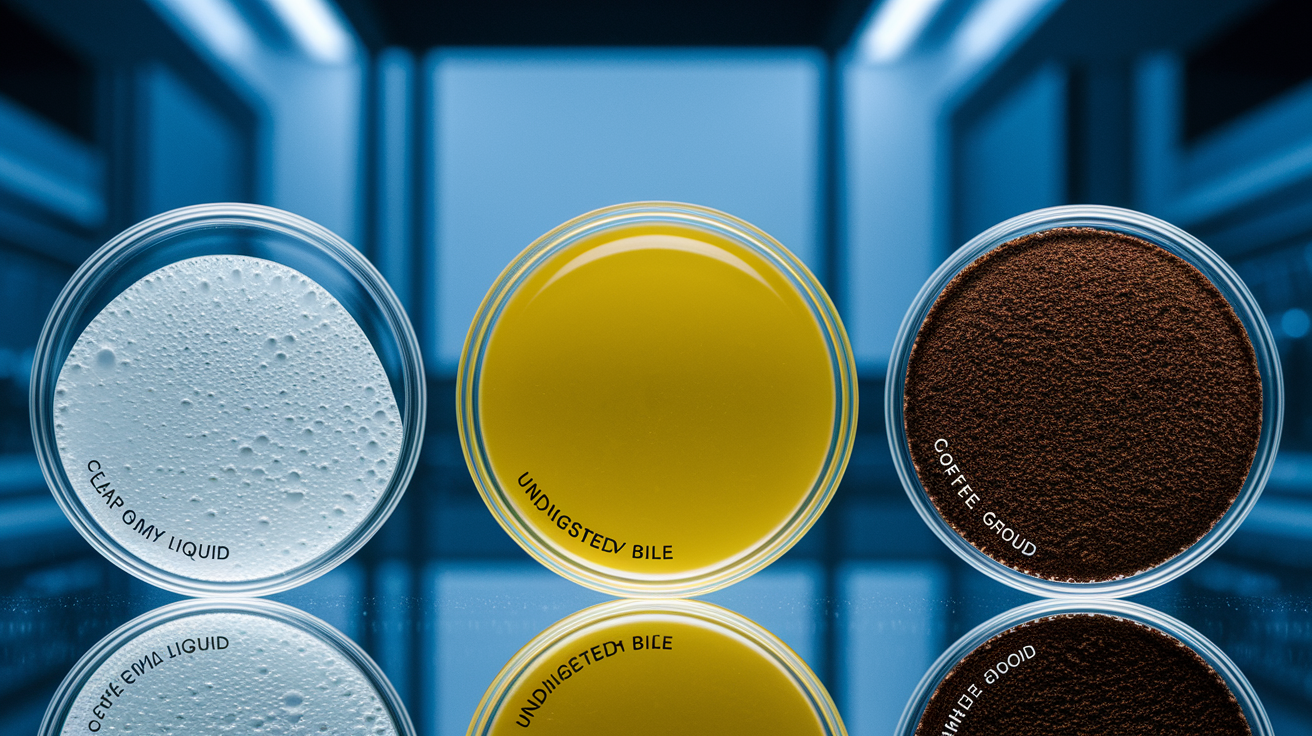
The appearance, smell, and timing of vomit can point you toward a cause.
Clear or foamy vomit: Usually bile or stomach fluid. Common when the stomach is empty or irritated. If it’s happening first thing in the morning, it might be “bilious vomiting syndrome” (hunger pukes). Small, frequent meals often help.
Yellow vomit: Bile. Produced in the liver, stored in the gallbladder, released into the small intestine. Bile vomiting can mean an empty stomach, but persistent bile vomiting may signal an obstruction or severe GI disease.
Undigested food: Your dog ate recently, and the stomach couldn’t handle it. Could be from eating too fast, a food sensitivity, or delayed gastric emptying.
Blood in vomit: Bright red blood means active bleeding, likely from the stomach or esophagus. Dark, coffee ground material is partially digested blood, also serious. Both require immediate veterinary care. Causes include ulcers, tumors, clotting disorders, or toxin ingestion (like rat poison).
Foul, fecal smell: This is feculent vomit. It suggests a severe intestinal obstruction or advanced ileus (intestinal paralysis). This is an emergency.
Grass or foreign material: Dogs eat grass for various reasons, sometimes to soothe their stomach, sometimes just because. If you see toy pieces, fabric, or other objects, that’s a foreign body concern.
Timing matters too. Vomiting right after eating suggests a food issue, eating too fast, or esophageal problem. Vomiting several hours after eating points to delayed gastric emptying, obstruction, or systemic disease. Vomiting in the early morning on an empty stomach often means bile irritation.
When to Call the Vet or Go to the Emergency Clinic
Here are the clear lines. If any of these apply, get veterinary help.
Call or visit immediately (emergency):
Vomiting with blood (bright red or coffee ground).
Repeated retching with a swollen, hard belly (suspected GDV).
Collapse, seizures, or severe weakness.
Pale, white, or brick red gums.
Difficulty breathing or very fast/slow heart rate.
Suspected toxin ingestion, even if your dog seems okay.
Fever above 104°F (40°C) or signs of heatstroke.
Call your vet within hours (urgent):
Vomiting more than 2 to 3 times in 24 hours.
Continuous vomiting for more than 6 hours.
Can’t keep water down for 12 hours.
Vomiting in a puppy younger than 6 months, a senior dog, or a dog with diabetes, kidney disease, or other chronic illness.
Severe abdominal pain: hunched posture, won’t let you touch the belly, whining.
Fever between 103°F and 104°F (39.5 to 40°C).
Monitor at home for 12 to 24 hours if:
Single vomiting episode, then normal.
Your dog is bright, alert, and drinking water.
No blood, no fever, no pain, no other symptoms.
You know the likely cause (ate something unusual) and it’s mild.
Even in the “monitor at home” category, watch closely. If new symptoms appear, vomiting repeats, or your dog gets worse, move to urgent or emergency care.
What You Can Do at Home Right Now

If your dog’s vomiting falls into the non urgent category, here’s a safe, conservative plan.
Step 1: Withhold food for 12 hours. This gives the stomach time to settle. For healthy adult dogs, a 12 hour fast is safe. Do not fast puppies under 6 months, toy breeds, or dogs with diabetes without talking to your vet first.
Step 2: Offer small amounts of water. Dehydration is a bigger short term risk than hunger. Offer a few laps or a couple of tablespoons every 30 to 60 minutes. If your dog keeps it down, gradually increase the amount.
If your dog vomits water repeatedly, stop offering it and call your vet. That’s a sign of more serious illness or obstruction.
Step 3: Watch for dehydration. Check your dog’s gums: they should be moist and slippery, not dry or tacky. Gently pull up the skin on the back of the neck. It should snap back immediately. If it stays tented for more than 2 seconds, your dog is dehydrated.
Other dehydration signs: sunken eyes, lethargy, dark or reduced urine.
Step 4: Reintroduce food slowly with a bland diet. After 12 hours of no vomiting, offer a small amount of bland food. The classic combo: plain boiled chicken (skinless, boneless) and white rice, mixed about 1:2 (one part chicken, two parts rice).
Portion size depends on your dog’s weight:
| Dog Weight | Bland Meal Size (per feeding) | Frequency |
|---|---|---|
| 5 to 10 lbs | 1 to 2 tablespoons | Every 3 to 4 hours |
| 10 to 30 lbs | 2 to 4 tablespoons | Every 3 to 4 hours |
| 30 to 60 lbs | 1/4 to 1/2 cup | Every 4 hours |
| 60+ lbs | 1/2 to 1 cup | Every 4 hours |
Feed small amounts frequently. If your dog keeps it down for 24 hours, slowly transition back to regular food over the next 2 to 3 days by mixing increasing amounts of their normal diet with the bland diet.
Step 5: Do not give human medications. No Pepto Bismol, Imodium, or other over the counter drugs unless your vet specifically tells you to. Some are toxic to dogs, and masking symptoms can delay diagnosis of a serious problem.
Step 6: Monitor and document. Keep a simple log:
Time of each vomiting episode.
What the vomit looked like (color, consistency, any blood or foreign material).
Water intake: how much your dog drank and whether they kept it down.
Urine output: frequency and color.
Stool: when, how much, appearance.
Behavior: energy level, appetite, signs of pain.
This information is incredibly helpful if you end up calling or visiting the vet.
What the Vet Will Do: Diagnostics and Treatment
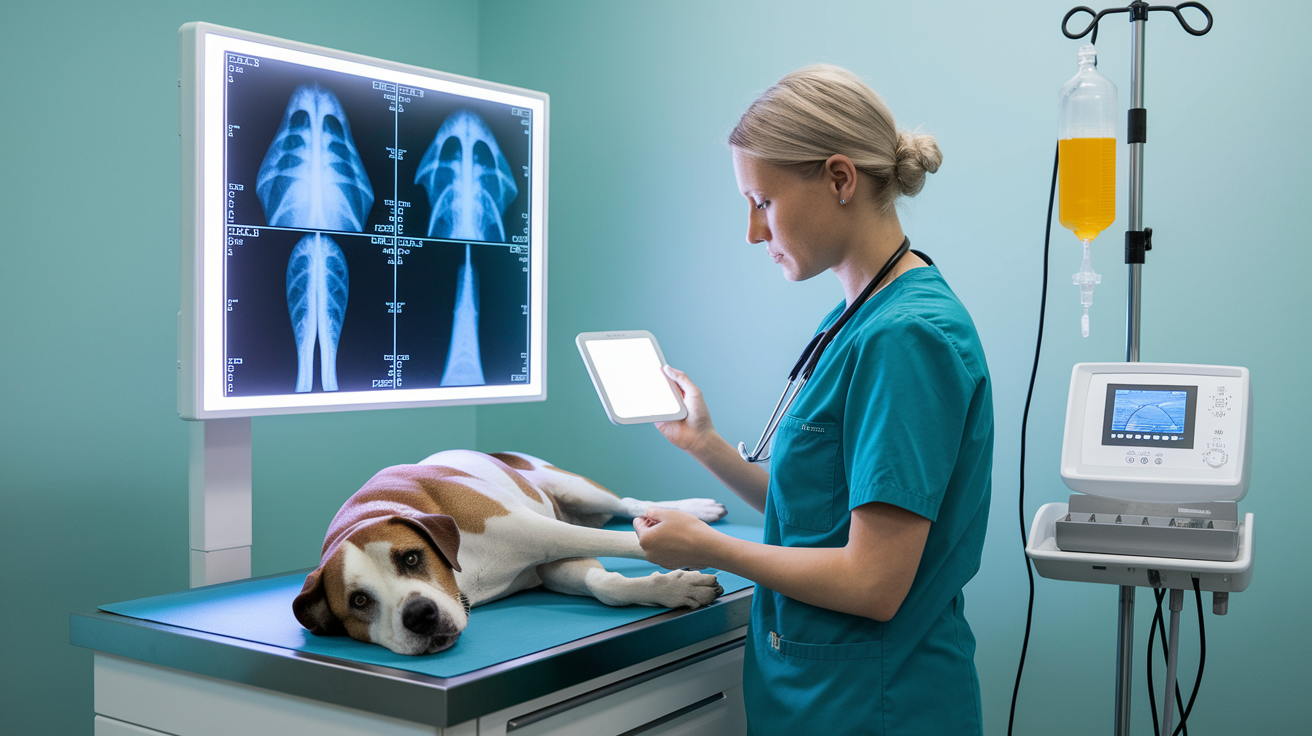
If you bring your dog in, the vet’s goal is to figure out why they’re vomiting and treat the underlying cause, not just stop the vomiting.
Physical exam: Check hydration status (gum moisture, skin turgor), abdominal palpation (pain, masses, foreign bodies, organ size), temperature, heart rate, respiratory rate, and overall body condition.
Point of care tests: Blood glucose (to rule out hypoglycemia from toxins like xylitol or Addison’s disease), packed cell volume (PCV) and total protein (TP) to assess hydration and anemia.
Bloodwork: Complete blood count (CBC) looks for infection, inflammation, or anemia. Chemistry panel checks kidney function, liver enzymes, electrolytes, and blood sugar. These tests can reveal pancreatitis, organ failure, or metabolic disease.
Urinalysis: Checks kidney function and hydration status.
Fecal testing: Looks for parasites, bacterial overgrowth, or blood.
Imaging:
X rays (radiographs) can show foreign bodies, gas patterns suggesting obstruction, organ size abnormalities, or signs of GDV.
Ultrasound gives detailed images of soft tissues: stomach lining, intestines, pancreas, liver, kidneys. It’s especially useful for diagnosing pancreatitis, intussusception (telescoping intestine), masses, or fluid accumulation.
Specific tests:
Parvovirus antigen test for puppies with bloody diarrhea and vomiting.
Pancreatitis specific tests (cPLI or SNAP cPL).
Bile acids test for liver function.
Endoscopy if a foreign body or tumor is suspected and imaging isn’t definitive.
Treatment depends on the diagnosis:
IV fluids to correct dehydration and electrolyte imbalances.
Anti nausea medications (maropitant/Cerenia, ondansetron, metoclopramide).
Gastroprotectants (famotidine, omeprazole) to reduce stomach acid.
Antibiotics if bacterial infection is confirmed or suspected.
Anti parasitics for worms or giardia.
Pain relief for pancreatitis or abdominal pain.
Surgery for foreign body removal, GDV correction, or tumor resection.
Hospitalization for severe cases: parvovirus, pancreatitis, kidney failure, toxin ingestion.
Costs vary widely by region and clinic type, but here are rough estimates:
| Service | Typical Cost Range |
|---|---|
| Basic vet visit + exam | $50 to $150 |
| Bloodwork (CBC + Chemistry) | $100 to $300 |
| X rays (2 to 3 views) | $150 to $400 |
| Abdominal ultrasound | $300 to $600 |
| IV fluids + hospitalization (24 hours) | $300 to $1,000 |
| Foreign body surgery | $1,500 to $4,000 |
| GDV emergency surgery | $2,000 to $5,000+ |
Emergency clinics and specialty hospitals usually cost more than general practice vets. If cost is a concern, ask about payment plans, pet insurance, or nonprofit assistance programs.
How to Prevent Vomiting: Practical Steps You Can Take

You can’t prevent every cause, but you can lower the risk significantly.
Control what your dog eats:
Keep garbage cans secure, with locking lids or inside cabinets.
Supervise outdoor time. Don’t let your dog scavenge on walks or in the yard.
Avoid table scraps, especially fatty foods. Even small amounts of fat can trigger pancreatitis in sensitive dogs.
Transition to new food slowly, over 7 to 10 days. Mix small amounts of the new food with the old, increasing the ratio gradually.
Toxin proof your home and yard:
Store all human medications, cleaning products, and chemicals in locked cabinets or high shelves.
Avoid xylitol containing products: sugar free gum, candy, peanut butter, baked goods.
Keep chocolate, grapes, raisins, onions, and garlic out of reach.
Research plants before bringing them home. Remove toxic plants like lilies, sago palms, azaleas, and oleander.
Use pet safe pest control and lawn products.
Prevent foreign body ingestion:
Supervise chew time. Take away toys or chews that are breaking into small, swallowable pieces.
Avoid cooked bones, which splinter and cause obstructions or perforations.
Keep socks, underwear, hair ties, string, and small toys out of reach. Dogs love these, and they’re common surgery culprits.
Reduce bloat risk in susceptible breeds:
Feed multiple small meals per day instead of one large meal.
Use a slow feeder bowl or puzzle feeder to slow eating.
Avoid vigorous exercise for at least one hour before and after meals.
Discuss prophylactic gastropexy (preventive stomach tacking surgery) with your vet if you have a high risk breed.
Manage motion sickness:
Start with short car trips and gradually increase duration.
Keep your dog facing forward in a secured crate or harness.
Avoid feeding right before travel.
Ask your vet about anti nausea medication (maropitant, meclizine) for known motion sick dogs.
Keep up with routine care:
Vaccinate puppies on schedule to protect against parvovirus and distemper.
Use monthly parasite prevention (heartworm, flea, tick, and intestinal worm control).
Schedule annual or biannual wellness exams, especially for seniors, to catch kidney or liver disease early.
Maintain a healthy weight. Obesity increases the risk of pancreatitis and other metabolic issues.
Quick Decision Checklist: Monitor or Call the Vet?
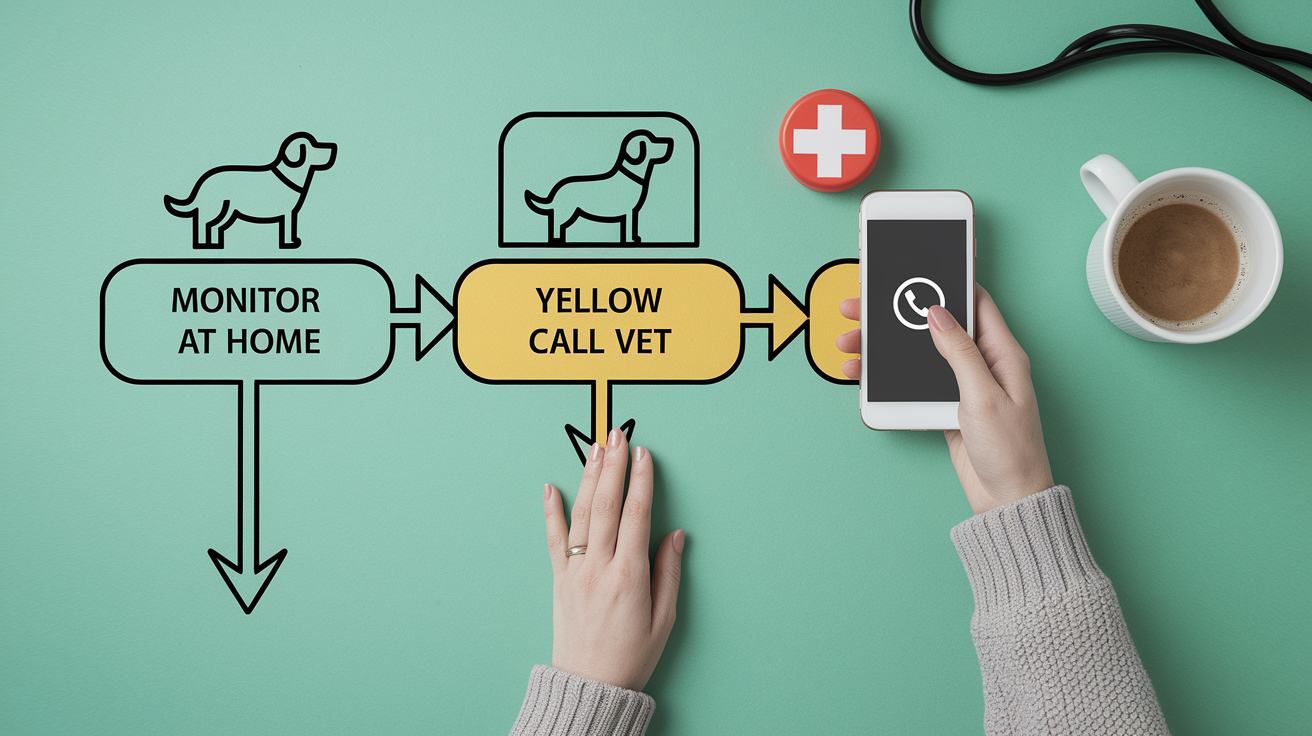
Use this checklist when your dog vomits.
You can monitor at home for 12 to 24 hours if ALL of these are true:
Single vomiting episode, or two episodes within a few hours, then stopped.
Your dog is alert, responsive, and acting mostly normal.
They’re drinking water and keeping it down.
No blood in the vomit.
No severe abdominal pain (your dog lets you gently touch their belly without flinching or crying).
No fever, no collapse, no difficulty breathing.
You have a likely explanation (ate garbage, new treat, grass).
Call your vet within hours if ANY of these apply:
Vomiting more than 2 to 3 times in 24 hours.
Vomiting continues for more than 6 hours.
Can’t keep water down for 12 hours.
Puppy under 6 months, senior dog, or dog with chronic illness.
Vomiting plus diarrhea, lethargy, fever, or loss of appetite.
Abdominal pain or distention.
Go to an emergency clinic immediately if ANY of these apply:
Blood in vomit (red or coffee ground).
Repeated retching with no vomit and a swollen belly.
Collapse, seizures, or extreme weakness.
Pale, white, or brick red gums.
Suspected toxin ingestion.
Difficulty breathing or very abnormal heart rate.
Fever above 104°F (40°C) or signs of heatstroke.
When in doubt, call. Vets would rather reassure you over the phone than have you wait too long on something serious.
Final Words
You learned how to spot vomiting patterns, judge severity, and try safe at-home steps like brief fasting and offering small sips of water.
We covered red flags that need urgent vet care, what to watch for over 24–48 hours, and how to prepare notes and photos for a visit.
Keep tracking episodes, appetite, and energy.
Many mild cases settle with simple care, and knowing common dog vomiting causes helps you act calmly and get timely help when needed.
FAQ
Q: When should I be concerned about my dog throwing up?
A: You should be concerned about your dog throwing up when vomiting is repeated, contains blood, is paired with lethargy, collapse, severe pain, bloating, dehydration, or if your pet ingested a toxin, contact your vet right away.
Q: What do I give my dog for vomiting?
A: For vomiting, offer small sips of water, withhold food for 8 to 12 hours, then offer small bland meals like boiled chicken and rice, avoid giving medicines without vet approval, call if vomiting continues.
Q: What is the most common cause of dogs throwing up?
A: The most common cause of dogs throwing up is eating something they shouldn’t (dietary indiscretion), like trash, table scraps, or sudden diet changes, monitor for ongoing vomiting, lethargy, or blood and call your vet.
Q: What color is parvo throw up?
A: Parvo throw up is often bloody or dark brown, sometimes yellow or foul-smelling, and blood in vomit with severe diarrhea or lethargy needs immediate veterinary care.