

Think all dog seizures look the same?
They don’t, and that misunderstanding can waste precious minutes.
Knowing which signs to watch, and how to time and record them, gives you a clear way to keep your dog safe and give your vet useful details.
This checklist separates movement, involuntary body signs, and behavior changes so you can spot warning signs fast and act calmly.
Read it now so you’re ready before anything happens.
Complete Checklist of Dog Seizure Symptoms for Fast Recognition
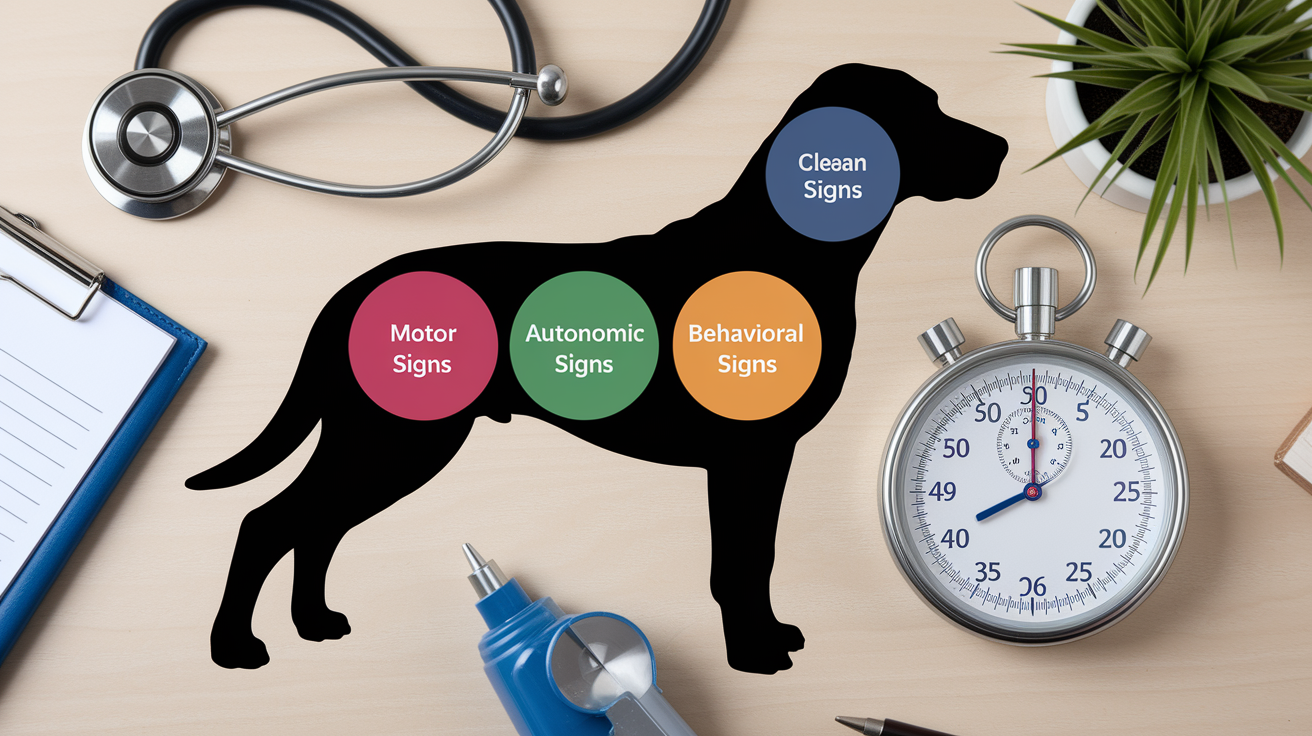
Recognizing seizure symptoms quickly gives you what you need to keep your dog safe, time the event, and give your vet the details that matter. Most seizures happen fast. In that moment you need a clear picture of what you’re seeing so you can stay calm and record the essentials. This checklist breaks signs into three groups: motor symptoms (movement and muscle activity), autonomic symptoms (involuntary body functions), and behavioral or consciousness changes.
Every dog’s seizure looks a bit different. But certain signs show up again and again. Scanning this list now, before anything happens, helps you tell the difference between a seizure and something else like fainting or a balance issue. The goal is fast recognition, not trying to diagnose at home.
Motor Signs (Movement and Muscle Activity)
- Uncontrollable shaking, tremors, or convulsions affecting the whole body or just one side
- Sudden muscle stiffening or rigidity, usually right before or during convulsions
- Limb paddling or rhythmic jerking, like running while lying down
- Twitching in the face, jaw, or individual limb muscles
- Chewing motions, chomping, or biting at the air with no food there
- Collapse or sudden inability to stand, often without warning
- Falling over sideways or backwards during the episode
Autonomic Signs (Involuntary Body Functions)
- Excessive drooling or foaming at the mouth
- Involuntary urination during the event
- Involuntary defecation during the event
Consciousness and Behavioral Signs
- Loss of consciousness, unresponsive to voice or touch
- Blank staring with eyes open but no reaction to surroundings
- Disorientation or confused behavior right before or after the active seizure
- Unusual vocalizations like whining, howling, or barking without clear cause
- Behavioral oddities confined to one limb or one side of the face, which might suggest a focal seizure
Keep a clock or phone nearby and time how long any of these symptoms last. Note which signs you see and in what order. That record becomes critical information for your vet’s assessment and treatment plan.
Early Pre‑Ictal Warning Signs Owners Should Watch For
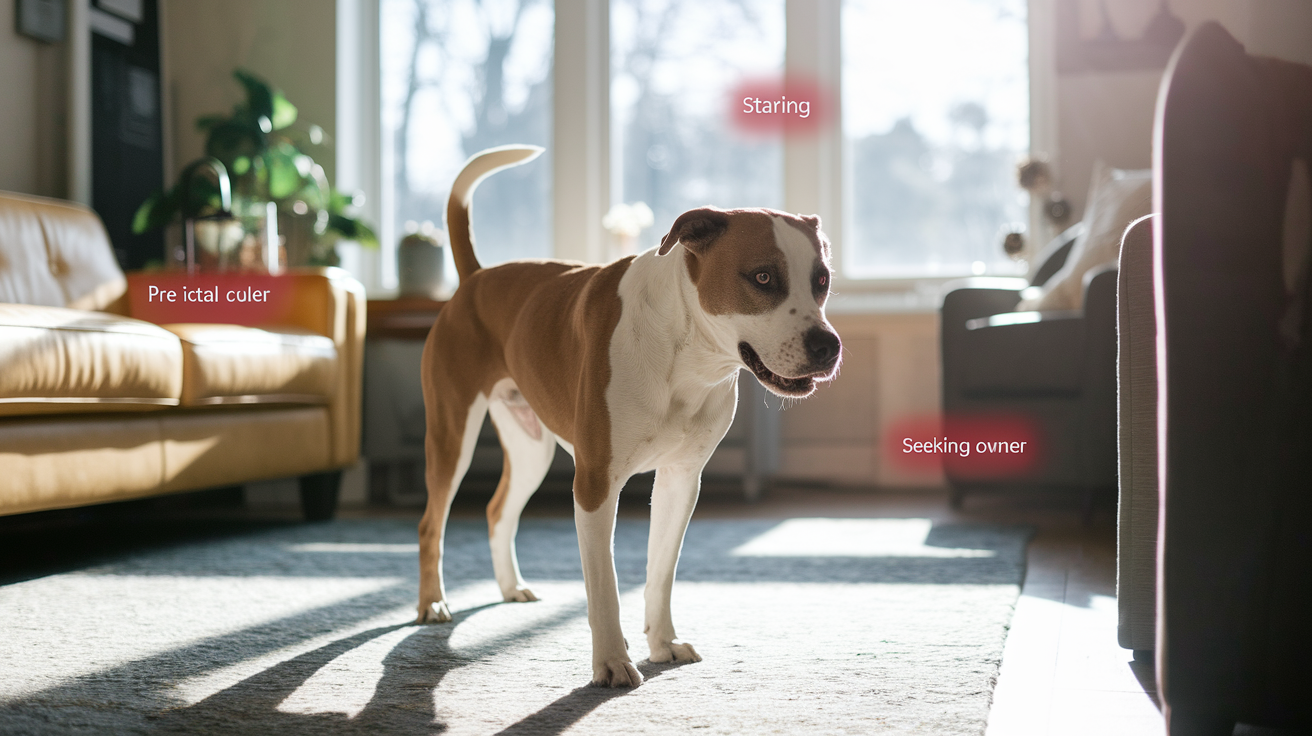
The pre‑ictal phase is the window of time, often just minutes, before the seizure starts. During this period your dog may show subtle behavioral shifts that signal something is building in the brain. These early warning signs don’t always appear. They can be easy to miss if you’re not watching closely. But recognizing them helps you prepare, move your dog to a safer spot, and start timing the event as soon as the active seizure begins.
Pre‑ictal signs are rarely dramatic. Your dog might act restless, pace without settling, hide in a corner, or stare blankly at a wall. Some dogs become unusually clingy or anxious. Others stop responding to their name or a favorite treat held right in front of them. Logging these patterns over time can help your vet understand seizure triggers and adjust treatment, because consistent aura behaviors often mean the seizures follow a predictable rhythm.
Typical Aura Behaviors to Watch For
- Pacing back and forth or circling without clear purpose
- Hiding in unusual places or seeking you out repeatedly
- Restlessness, inability to settle, or whining
- Staring blankly at walls, into space, or through you
- Unresponsiveness when you call their name or offer a high value treat
If you notice these signs and a seizure follows, write down the time gap between the behavior change and the start of the convulsions. That data point, repeated across multiple episodes, becomes one more clue your vet can use to fine‑tune diagnosis and dosing.
Understanding Active (Ictal) Dog Seizure Symptoms

The ictal phase is the active seizure itself. The moment when abnormal electrical activity floods the brain and produces visible physical signs. This is the event you need to time, observe, and keep safe.
Understanding whether a seizure is generalized or focal helps your vet narrow down which part of the brain is affected and what underlying cause to investigate. Generalized seizures involve both sides of the brain at once, so you’ll see whole‑body convulsions, loss of consciousness, and symmetrical paddling or stiffening. Focal seizures begin in a localized brain region, and the signs may stay confined to one limb, one side of the face, or repetitive behaviors like lip licking or head turning. Focal seizures can spread and become generalized mid‑event. What starts as twitching in one paw may escalate into full collapse and convulsions within seconds.
Severity isn’t always obvious from the outside. A dog lying quietly with a blank stare and subtle jaw twitching may be having a focal seizure that’s just as real as dramatic thrashing. The key is to note exactly what you see, which body parts are involved, and whether your dog remains conscious and responsive. That level of detail shapes diagnostic next steps, from basic blood work to advanced brain imaging.
| Symptom | Generalized Seizure? | Focal Seizure? |
|---|---|---|
| Whole-body convulsions and paddling | Yes | Rarely (may progress to generalized) |
| Loss of consciousness | Yes | Not always |
| Twitching or jerking in one limb only | No | Yes |
| Repetitive face or jaw movements | Sometimes | Yes |
| Drooling and involuntary urination | Common | Possible |
| Muscle stiffening followed by rhythmic jerks | Yes | Can occur in affected limb |
Post‑Ictal Recovery Symptoms and Behavioural Changes

The post‑ictal period is the recovery window after the active seizure stops. It can last anywhere from a few minutes to several hours. During this phase your dog’s brain is resetting, and you’ll often see confusion, exhaustion, unsteady movement, pacing, or temporary changes in vision and coordination. These behaviors are a normal part of the seizure cycle, not a separate emergency. But understanding what to expect helps you tell the difference between typical recovery and signs that something more serious is happening.
Common Post‑Ictal Behaviors
- Confusion or disorientation, acting like they don’t recognize familiar rooms or people
- Pacing restlessly or wandering without clear direction
- Temporary blindness or bumping into furniture
- Ataxia (wobbly, uncoordinated walking) or stumbling
- Extreme tiredness, lying down heavily and sleeping for hours
- Increased thirst or ravenous hunger
- Clingy behavior or mild aggression if touched or startled
Most dogs bounce back within an hour or two, gradually returning to normal behavior as their brain chemistry stabilizes. If confusion lasts way longer than a few hours, if your dog can’t walk at all, or if they seem to slip back into another seizure during recovery, contact your vet right away. Cluster seizures, where multiple events happen within 24 hours, often start during the post‑ictal window. Stay close and keep monitoring even after your dog seems calm.
Final Words
If a seizure is happening, use the checklist to spot motor, autonomic, and behavioral signs fast.
This post packed a scannable list of symptoms, common early warning signs, how to read active seizure behaviors, and typical recovery changes.
Time each event and note what you saw. Call your vet right away if a seizure lasts more than 5 minutes, your dog has several seizures in a short time, or breathing looks difficult.
Keep the dog seizure symptoms checklist handy so you can act calmly and quickly when it matters.
FAQ
Q: What are bad signs after a dog has a seizure?
A: Bad signs after a dog has a seizure include prolonged recovery, repeated seizures, trouble breathing, collapse, unresponsiveness, high fever, continuous vomiting, or blood in urine/stool—call your vet or emergency clinic immediately.
Q: What do dogs do right before a seizure?
A: Dogs right before a seizure often show pacing, hiding, restlessness, staring, clinginess, or ignoring commands; they may drool or whine—note timing and video it, then discuss patterns with your vet.
Q: What is the biggest trigger for seizures in dogs?
A: The biggest trigger for seizures in dogs is often underlying epilepsy (no clear trigger); acquired causes include toxins, low blood sugar, liver or kidney disease, head trauma, or metabolic problems—talk to your vet.
Q: What can be mistaken for a seizure in a dog?
A: Things that can be mistaken for a seizure in a dog include fainting, vestibular episodes, severe anxiety or panic, tremors from pain or low blood sugar, and sleep attacks—record video and have your vet evaluate.