

Could one soft stool be harmless, or a sign of something that needs emergency care?
A single loose poop often comes from a treat or stress and clears in a day.
But repeated watery stools, blood, vomiting, or a cat who won’t eat or is very weak can mean dehydration, blockage, or serious infection.
This post cuts through the worry with clear red flags, safe at-home steps for the next 24 to 48 hours, and exact thresholds for calling your vet.
You’ll know what to watch and when to act.
How to Tell When Cat Diarrhea Needs a Veterinarian
If your cat has loose stool but is acting normal, eating, drinking, playing like usual, a single soft bowel movement isn’t urgent. Lots of cats get a brief digestive hiccup from something small. Maybe a treat didn’t sit right. Usually clears up within a day.
Contact a vet if you’re seeing more than two episodes in a short stretch. When it keeps coming back over a day or two, there’s probably something going on that won’t fix itself. Diarrhea past 24 hours? Worth a call, even if your cat seems fine otherwise.
Red flags that mean you need urgent or emergency care:
- Blood in the stool (bright red, or black and looks like tar)
- Straining but only passing tiny amounts of watery stool (could be a blockage)
- Vomiting on top of the diarrhea
- Really lethargic, won’t move much
- Stopped eating for more than a day
- Drooling weirdly or seems painful
Straining in the box with just watery trickles? That’s a possible intestinal blockage. Emergency. Same goes for blood in stool, throwing up repeatedly, or a cat who won’t eat and barely lifts their head. All of that needs same-day attention.
Symptoms That Make Cat Diarrhea More Concerning
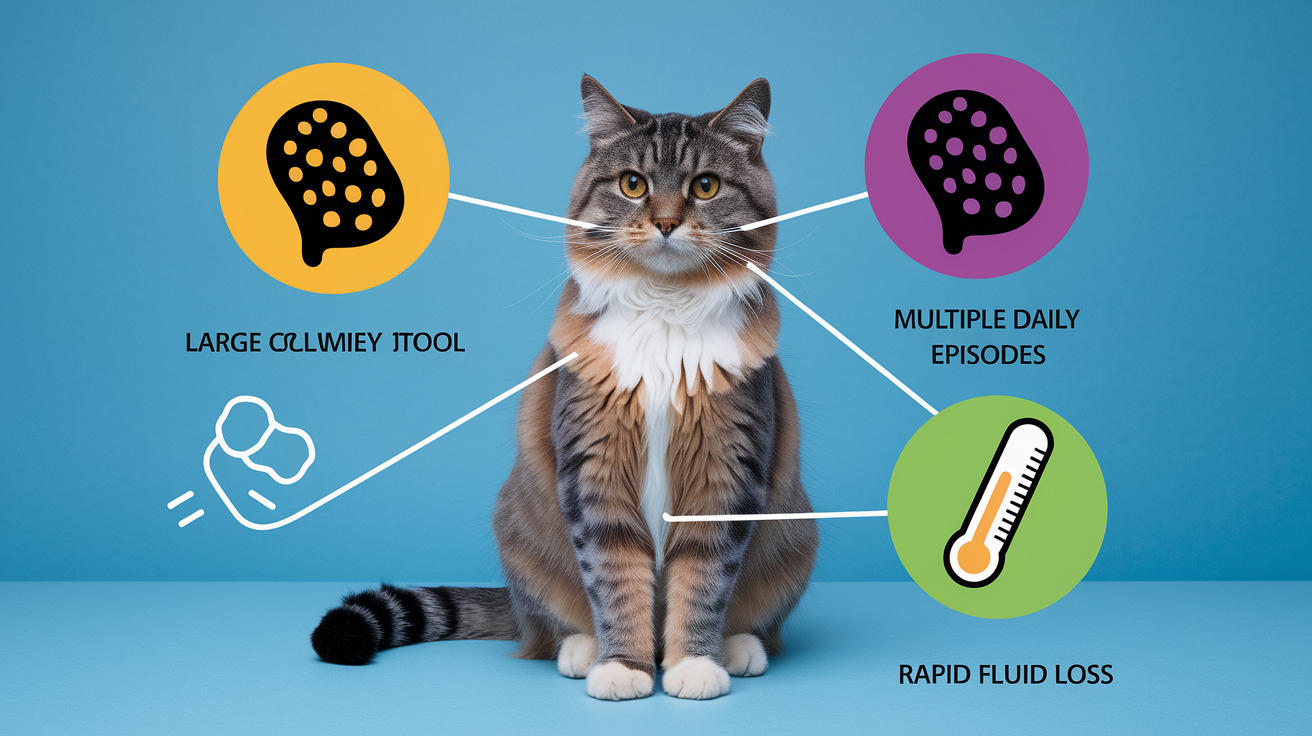
Some symptoms aren’t quite emergency level but they do push the timeline up. Large volumes of watery stool happening multiple times a day means your cat’s losing fluids and electrolytes fast. Dehydration becomes a real risk even if they still seem alert.
Color and texture tell you things. Black, tarry stool means digested blood, usually from higher up in the digestive tract. Could be ulcers or internal bleeding. Mucus coating the stool? That’s often colon inflammation. Fever over 103°F plus diarrhea usually points to infection or something systemic. Weight loss in just a few days, painful belly when touched, or straining that only produces mucus and water all need prompt vet assessment.
Watch for:
- Black tarry stool or mucus in it
- Fever over 103°F
- Watery diarrhea three or more times in 24 hours
- Noticeable weight loss over a couple days
- Belly pain (hunched up, doesn’t want to be touched)
- Not drinking or refusing water
- Weak or walking unsteady
Dehydration in Cats With Diarrhea and When to See a Vet
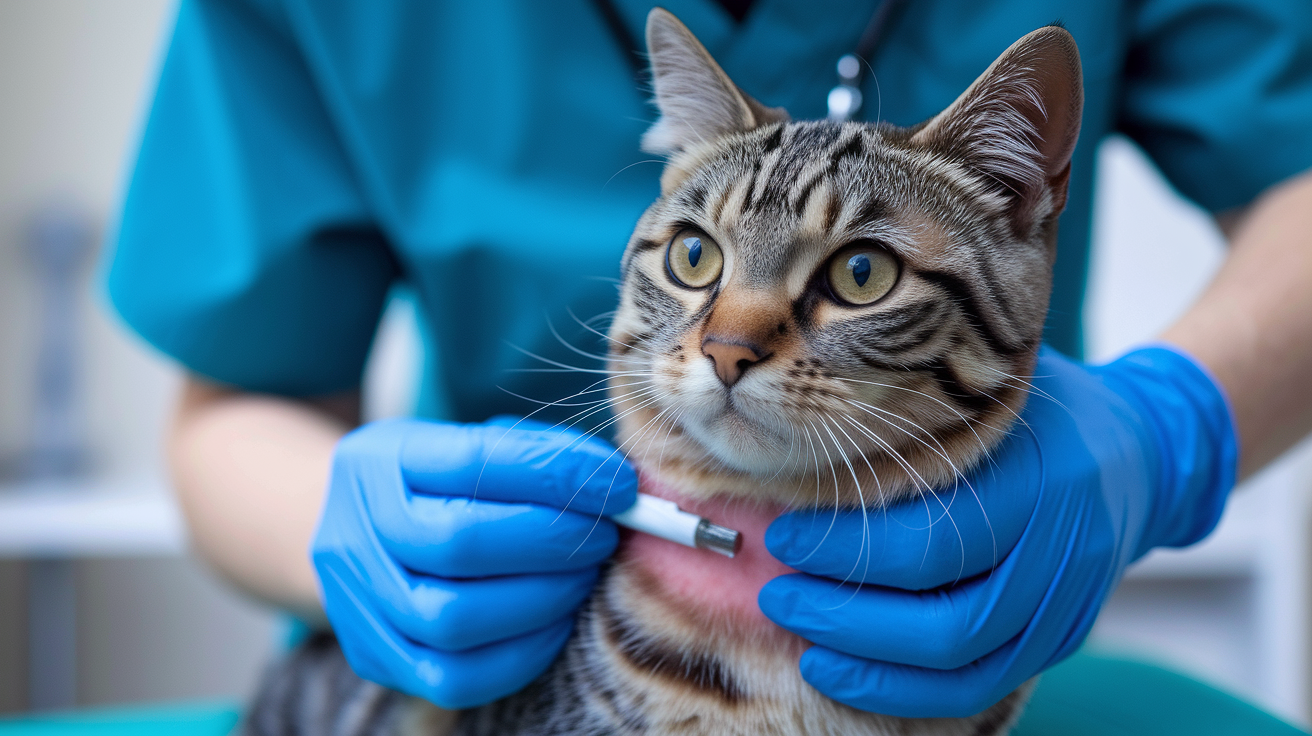
Diarrhea pulls water and electrolytes out fast. Young cats, old cats, already sick cats can tip into serious dehydration quickly. At 5 percent body weight lost, it’s mild and you might not see obvious signs. At 6 to 8 percent, skin snaps back slower and gums feel tacky. Above 8 to 10 percent it becomes life threatening. Severe lethargy, weak pulse, collapse risk.
Dangerous dehydration looks like sunken eyes, dry nose, gums that feel dry and sticky instead of wet, weak or very fast pulse, extreme tiredness. If gums are pale or white and the skin stays tented when you gently pinch it, that’s serious.
Signs to watch:
- Sunken, dull eyes
- Dry or sticky gums
- Skin that stays up after you pinch it
- Weak, fast, or irregular pulse
- Severe lethargy, can’t stand
How to Check for Dehydration at Home
Pinch a small fold of skin at the back of your cat’s neck or between the shoulder blades, then let go. Healthy cat? Skin snaps back right away. If it stays tented or comes back slowly, that’s dehydration. Check gum moisture by lifting your cat’s lip and touching the gums. Should feel slippery and wet, not tacky or dry. If either test shows delayed return or dryness and your cat’s had diarrhea for more than a few hours, call your vet same day.
Common Causes of Cat Diarrhea Requiring Veterinary Attention
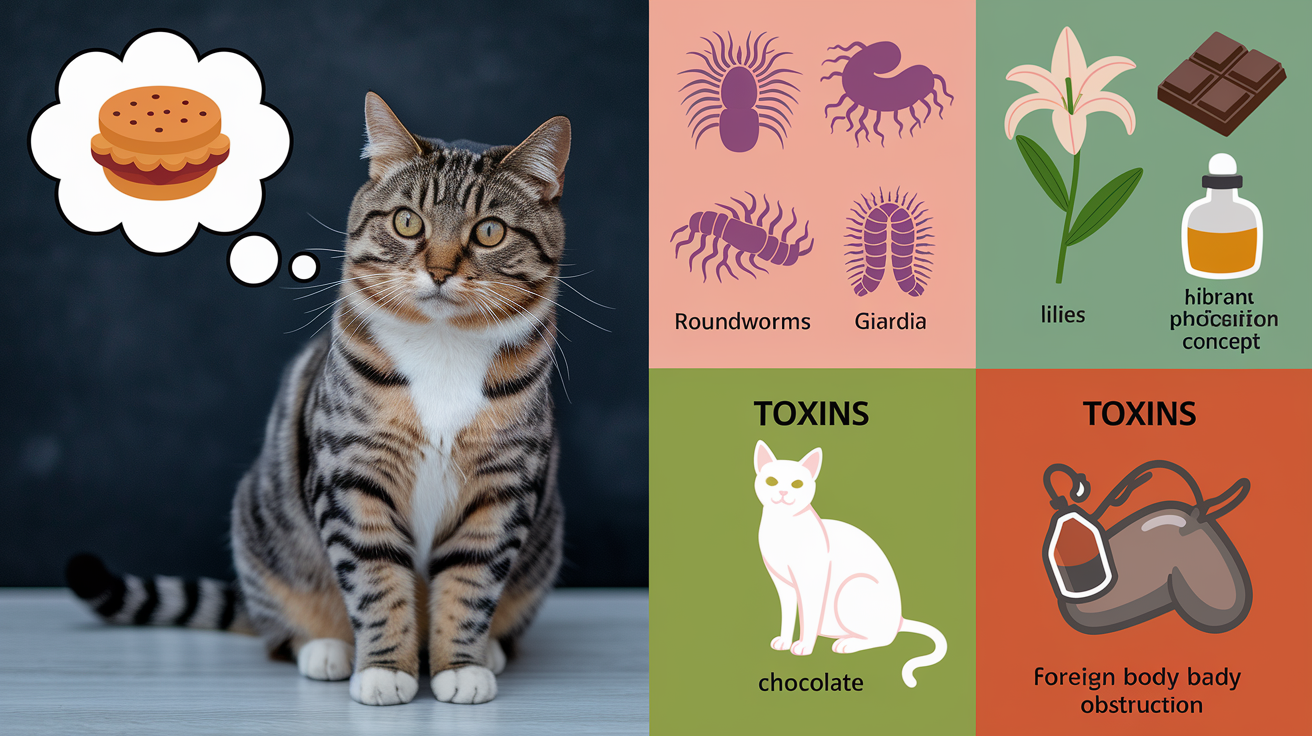
Most mild cases come from stress or something they ate, and they clear up in a day. But some causes are riskier and need diagnosis and treatment. Parasites like roundworms, hookworms, giardia are common in kittens and outdoor cats. They can cause persistent or bloody diarrhea that gets worse over days.
Bacterial and viral infections are serious. Panleukopenia (feline parvo) in unvaccinated kittens can be deadly. Toxin exposure from lilies, chocolate, rat poison, even dog flea products used on a cat often triggers severe GI upset plus other dangerous symptoms. Inflammatory bowel disease, pancreatitis, liver disease, kidney disease, intestinal cancer all show up as recurring or worsening diarrhea and need testing to figure out.
High risk causes:
- Parasites (roundworms, hookworms, giardia, coccidia)
- Bacterial infections (Salmonella, Campylobacter, Clostridium)
- Viral infections (panleukopenia, feline coronavirus)
- Toxin ingestion (lilies, human meds, household chemicals, rat bait)
- Foreign body obstruction (string, fabric, rubber bands, small toys)
- Chronic diseases (inflammatory bowel disease, pancreatitis, liver or kidney failure, intestinal cancer)
| Cause | Why It May Require a Vet |
|---|---|
| Toxin or poison exposure | Can cause organ failure, seizures, or death within hours; immediate emergency care needed |
| Intestinal parasites | May cause severe blood loss, dehydration, and malnutrition, especially in kittens; diagnosis requires fecal testing |
| Pancreatitis or organ disease | Progressive and painful; requires blood work, imaging, and targeted treatment to prevent complications |
Duration, Frequency, and Patterns of Cat Diarrhea That Require a Vet

How long it lasts and how often it’s happening are practical decision points. One loose stool after a new treat? Not worrying. But diarrhea that goes past 24 hours in an adult cat, or three or more watery episodes in one day, shifts into “call your vet” territory even if your cat seems okay.
Recurring cycles where diarrhea comes and goes over several days or weeks often signal chronic stuff like inflammatory bowel disease, food intolerance, or low grade infection. Straining that only produces small watery amounts or mucus can mean intestinal blockage. That’s an emergency.
Use these rules:
- Diarrhea lasting more than 24 hours in an adult cat: contact your vet
- More than three episodes in 24 hours: same day or next day visit
- On and off diarrhea over several days or weeks: get evaluated for chronic disease
- Straining with only watery trickles or mucus: emergency care for possible obstruction
- Switching between diarrhea and constipation: might be partial blockage or motility disorder, see your vet
High Risk Cats Who Need Faster Veterinary Care for Diarrhea
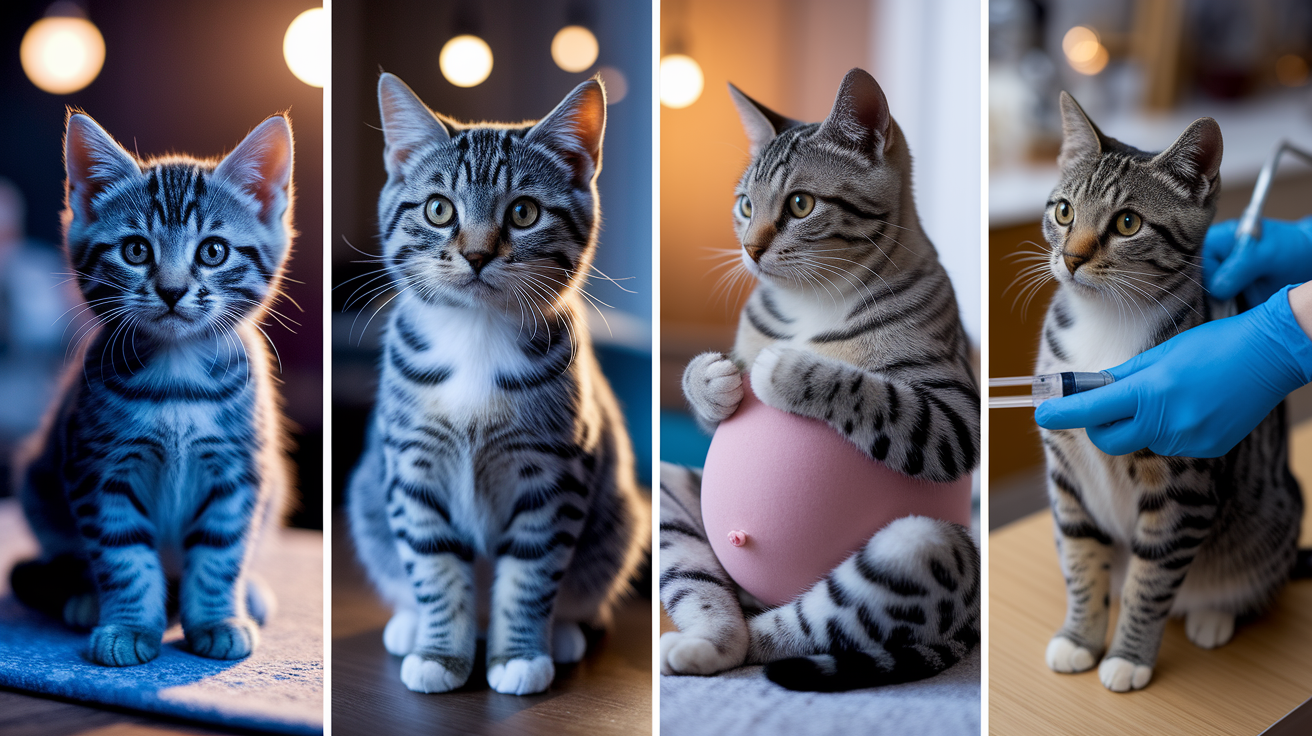
Some cats can’t afford the wait and see approach because they don’t have the reserve to handle fluid loss and infection. Kittens dehydrate within hours. Their immune systems are still developing, making them vulnerable to life threatening infections like panleukopenia. Senior cats often have underlying kidney, liver, or thyroid disease that diarrhea can quickly destabilize.
Pregnant cats, immunocompromised cats with FIV or FeLV, and cats with chronic illnesses like diabetes or inflammatory bowel disease all need vet assessment within 12 to 24 hours of persistent diarrhea starting. Even mild symptoms can escalate fast in these groups.
High risk groups:
- Kittens under six months
- Senior cats over 10 years
- Pregnant or nursing cats
- Cats with FIV, FeLV, or other immune disorders
- Cats with diabetes, kidney disease, liver disease, or chronic pancreatitis
- Underweight or frail cats
Veterinary Diagnosis and Treatment Options for Cat Diarrhea

When you bring your cat in, first step is usually a fecal exam. Fecal float checks for parasite eggs. Direct smear can identify motile parasites like giardia. If infection’s suspected, your vet might run a fecal PCR panel or bacterial culture. Blood work (complete blood count and chemistry panel) reveals dehydration levels, electrolyte imbalances, organ function, signs of infection or inflammation.
Imaging like abdominal X-rays or ultrasound helps identify foreign bodies, intestinal masses, or signs of pancreatitis. In unvaccinated kittens with severe symptoms, a panleukopenia test is often done because that virus is highly contagious and dangerous. Treatment depends on the diagnosis but commonly includes fluid therapy (subcutaneous for mild cases, IV for moderate to severe dehydration), anti-nausea medication if there’s vomiting, deworming based on fecal results, sometimes antibiotics if bacterial infection or sepsis risk is identified. Your vet may also prescribe a prescription GI diet and probiotics to support gut recovery.
| Test | What It Detects |
|---|---|
| Fecal float and direct smear | Parasite eggs, giardia, coccidia, and other intestinal parasites |
| Blood work (CBC and chemistry panel) | Dehydration, electrolyte imbalance, organ function (liver, kidney), infection markers, anemia |
| Abdominal X-rays or ultrasound | Foreign bodies, intestinal obstruction, masses, organ enlargement, pancreatitis signs |
Safe Home Care for Mild Cat Diarrhea and When to Stop and See a Vet
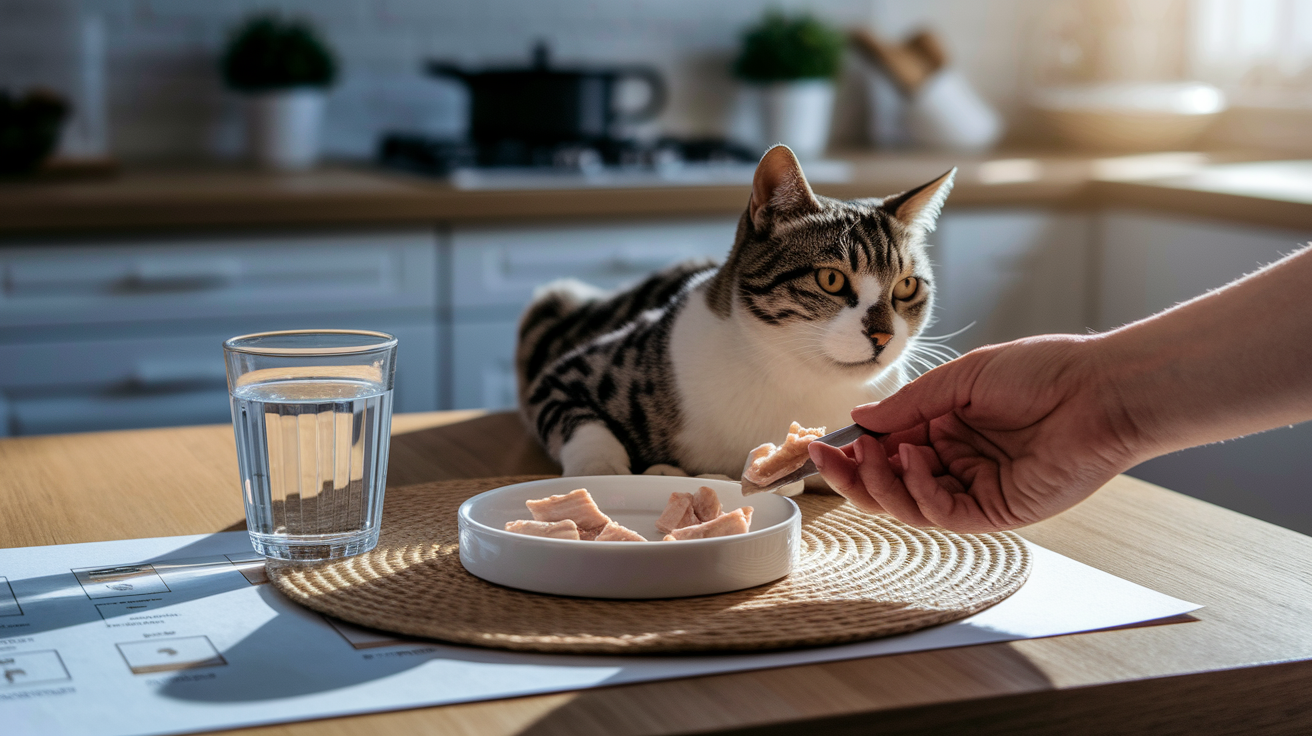
If your cat is bright, alert, eating, drinking, and has only had one or two soft stools with no other symptoms, you can monitor at home for 24 to 48 hours. Keep fresh water available and encourage small, frequent sips. Don’t withhold food for more than 12 to 24 hours because cats are at risk for a serious liver condition called hepatic lipidosis when they go without eating. Kittens and frail cats should never be fasted.
You can offer a bland, easily digestible meal. Plain boiled chicken or a prescription GI diet in small portions if your cat’s willing to eat. Don’t give over the counter human anti-diarrheal meds like loperamide without vet approval. Some are toxic to cats. Track how many times your cat uses the litter box, note stool consistency and color, watch for appetite changes, vomiting, or behavior shifts.
Safe home care do’s and don’ts:
- Do keep fresh water available and encourage drinking
- Do monitor stool frequency, color, and consistency closely
- Don’t withhold food longer than 12 to 24 hours without vet guidance
- Don’t give human anti-diarrheal medications
- Do contact your vet if there’s no improvement within 24 to 48 hours, or sooner if any red flag symptoms appear
Final Words
When your cat has loose or watery stool, start with simple checks and timing. If diarrhea lasts over 24 hours or happens more than twice in a short period, it’s time to take it seriously.
Watch for blood, repeated vomiting, severe lethargy, or straining with little output, and get help sooner for kittens, seniors, or sick cats. Try brief home measures like a bland diet and clean water only if your cat is otherwise bright.
If you’re unsure about cat diarrhea when to see vet, follow the red flags and call. Most cats do well with timely care.
FAQ
Q: How long should I wait before taking my cat to the vet for diarrhea? When should you be concerned about diarrhea in cats?
A: You should wait no more than 24 hours before seeing a vet for adult cats with diarrhea, and sooner if you spot red flags like blood in stool, repeated vomiting, severe lethargy, or multiple episodes in a short time.
Q: How do you fix a cat with diarrhea but seems fine? Why would a cat have diarrhea but act normal?
A: If a cat has diarrhea but seems fine, common causes are diet change, stress, or parasites; offer bland food and fresh water, watch for 24–48 hours, and call the vet if it continues, worsens, or new symptoms appear.