

Think your cat’s bad breath or picky eating is just “normal”?
Cats hide pain, so mouth problems often go unnoticed until they’re serious.
Catching dental issues early can mean a simple cleaning instead of losing teeth.
This post breaks down common cat dental disease symptoms, what you’ll see, what to watch closely, and what to do next.
I’ll point out the clear red flags that need urgent care and simple home checks you can do safely.
Read on so you can spot trouble in the quiet moments, at mealtimes or when your cat yawns.
Key Cat Dental Disease Symptoms You Should Look For

Cats don’t broadcast pain. It’s their thing. In the wild, looking weak can get you killed, so your cat’s wired to hide discomfort until things get really bad. That means you might not notice something’s off until dental disease has already taken hold. Catching it early can be the difference between a cleaning and losing teeth.
You’ll probably spot symptoms during the boring stuff. When your cat’s eating. When they yawn. When you’re filling the bowl or they’re rubbing against your leg. Those quiet, everyday moments? That’s where you’ll get clues about what’s happening in their mouth.
Some signs mean “book a vet visit soon.” Others, like refusing to eat, facial swelling, or blood, mean “get help today.” Knowing which is which keeps you from either freaking out unnecessarily or waiting too long.
Common symptoms include:
- Bad breath that’s foul or unusually strong
- More drool than usual, especially if it’s thick or has blood in it
- Trouble chewing, eating slower, dropping food
- Pawing at their face or rubbing their mouth on furniture
- Yellow or brown buildup along the gumline
- Red, swollen, or bleeding gums
- Loose, broken, or missing teeth
- Acting different—hiding more, cranky, not grooming, losing weight
Understanding Bad Breath and Other Mouth Odors in Cats

Healthy cat breath isn’t minty fresh, but it shouldn’t knock you over either. It’s neutral. Maybe a little meaty after dinner. When bacteria from plaque and tartar pile up along the gumline, they release waste that smells terrible. It’s one of the earliest signs of periodontal disease. If the smell sticks around even after your cat finishes eating, something’s up.
Not all bad breath comes from teeth. Some odors point to bigger problems. A fruity or sweet smell? That can mean diabetic ketoacidosis, which is a life-threatening emergency. Ammonia-like breath might signal kidney trouble. Dental-related bad breath usually comes with visible gum redness, tartar, or changes in how your cat eats, so you can tell it apart from other causes.
Four odor types and what they might mean:
- Strong, rotten smell—bacterial infection in gums or tooth roots
- Fruity or sweet odor—possible diabetic ketoacidosis; get urgent care
- Ammonia-like scent—could be kidney trouble
- Musty or yeasty smell—might point to oral fungal infection or stomatitis
Tartar, Plaque, and Gum Changes: Visual Signs of Dental Trouble
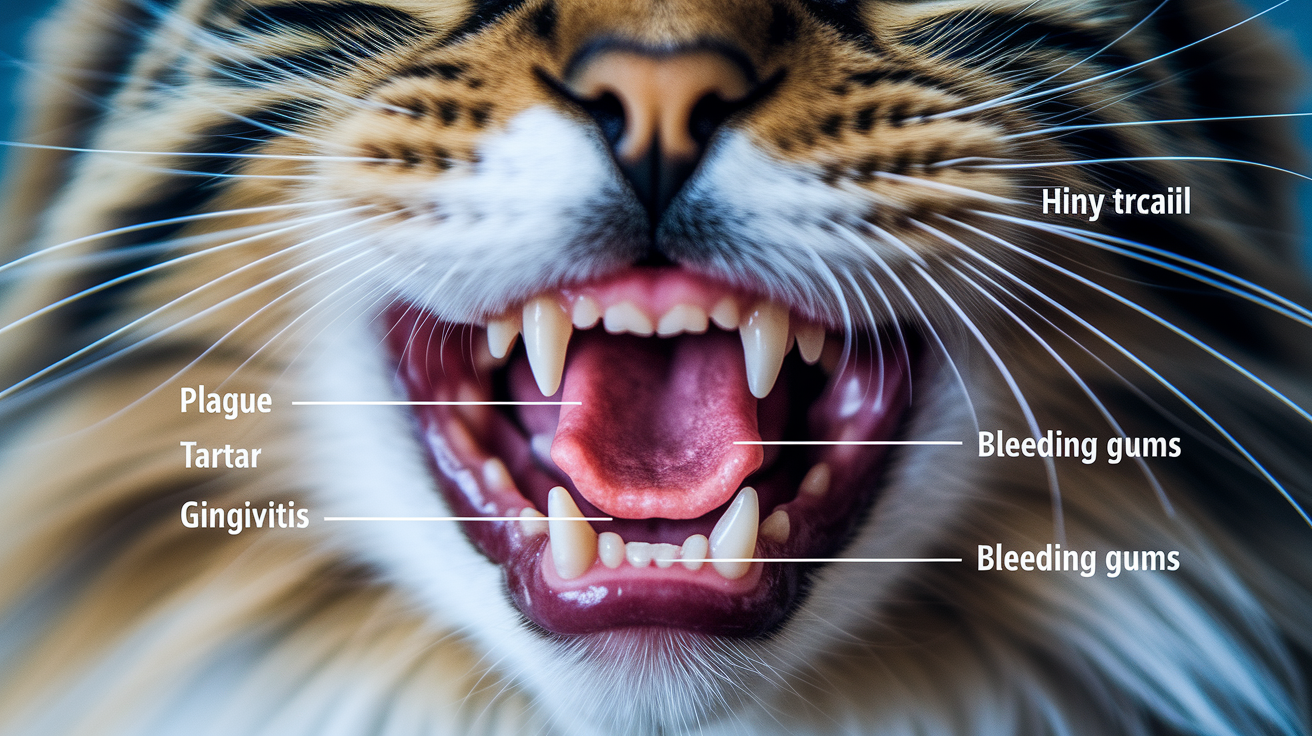
Plaque is the soft, sticky film that forms on teeth every day. It’s bacteria and food bits. You can usually brush or wipe it off. But if it sits there, minerals in your cat’s saliva harden it into tartar, that rough, yellow-to-brown crust that bonds to the tooth. Only a vet can remove it. And once it’s there, it gives bacteria an even better surface to hang out on, speeding up gum disease.
Gingivitis is what happens when bacteria invade the gumline. Healthy gums are pale pink and fit snugly around the teeth. Inflamed gums turn red, puff up, and might bleed when touched or during eating. One early sign is a thin red line where the gum meets the tooth. That’s the body’s alarm system going off.
| Sign | What It Looks Like | What It May Indicate |
|---|---|---|
| Plaque | Soft, whitish or pale yellow film on teeth | Early bacterial buildup; you can brush it off |
| Tartar | Hard, rough, brown or yellow crust along gumline | Mineralized plaque; needs professional cleaning |
| Gingivitis | Red, swollen gums; thin red line at tooth-gum junction | Active inflammation; can be reversed with cleaning and care |
| Bleeding gums | Blood on gums, in saliva, or on food | Advanced inflammation or infection; needs prompt vet attention |
Eating Changes and Pain Behaviors Linked to Dental Disease
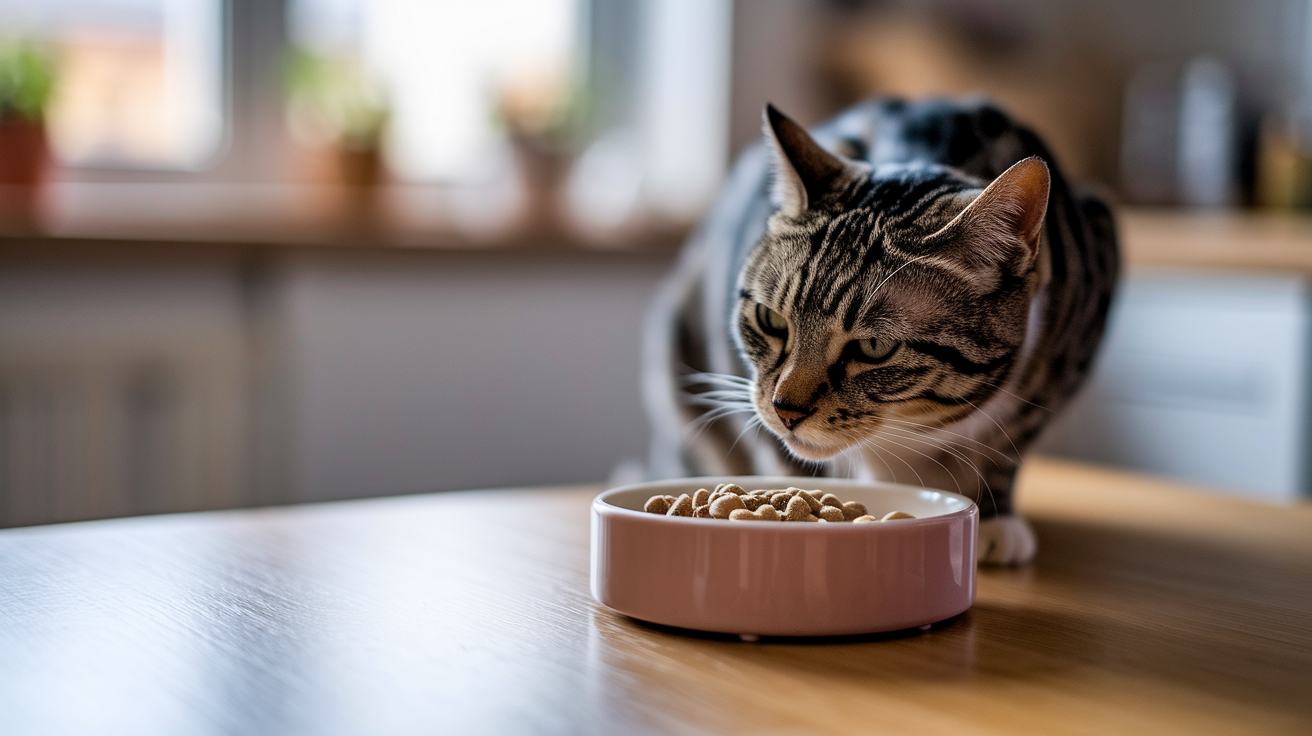
When your cat’s mouth hurts, eating becomes a problem. You might see them walk up to the bowl, take a bite, then just stop and walk away. That start-stop thing? It usually means chewing hurts. Some cats tilt their head to chew on one side, the side that doesn’t hurt as much. Or they ditch the kibble and only eat soft food because hard textures hurt their gums or loose teeth.
The changes start small. Slower chewing. Smaller bites. Dropping pieces of food. As the pain gets worse, appetite drops. Your cat might sniff the food, lick it, but refuse to actually bite down. If it goes on long enough, they’ll lose weight because they’d rather skip meals than deal with the pain. Turning away from a favorite treat or a meal they used to love is a quiet, serious warning sign.
Behavior shifts too. Cats in pain can get irritable if you touch their face or try to pet near their mouth. They might groom less because licking uses the same sore tissues. Hiding more, less affection, generally seeming “off.” These aren’t personality changes. They’re pain responses. If your once-friendly cat starts spending more time alone and looks scruffy, oral pain is a likely reason.
Drooling, Mouth Pawing, and Other Physical Indicators

Cats don’t usually drool unless they’re super relaxed or waiting for food. Excessive drool, especially if it’s thick, stringy, or has blood in it, signals irritation, infection, or injury inside the mouth. Things like stomatitis (severe gum and mouth inflammation), tooth fractures that expose the pulp, or abscesses near tooth roots all trigger more saliva as the body tries to flush out bacteria and soothe inflamed tissue.
Pawing at the mouth, rubbing the face on furniture, or pressing one side of the face against the floor? Those are instinctive attempts to relieve pain. If your cat keeps swiping at one side of their mouth or rubbing that area more than usual, there could be a painful tooth, gum lesion, or something stuck in there. These behaviors often get worse right after eating or during grooming, when the sore spot gets disturbed.
Advanced-stage drooling and pawing signs:
- Thick, discolored saliva with visible blood or pus
- Continuous pawing focused on one side of the face
- Drool that soaks the chest or front legs and doesn’t stop
Serious Cat Dental Disease Symptoms That Need Urgent Vet Care

Some symptoms cross from “schedule an appointment” to “get help now.” When a tooth root gets infected, bacteria can form an abscess, a painful pocket of pus that might swell beneath the eye, along the jawline, or inside the mouth. Abscesses can burst through the skin, creating an open, draining wound on the face. If you see sudden facial swelling, especially near the cheekbone or under the eye, that’s an emergency.
Exposed tooth pulp is another urgent situation. A fractured tooth that shows the pinkish or grayish center is extremely painful and lets bacteria straight into the nerve and bloodstream. Cats with exposed pulp often refuse all food, drool heavily, and may paw frantically at their mouth. If you find a whole tooth on the floor or notice one’s loose and wobbling, don’t wait. Infection, trauma, or advanced periodontal disease has done serious damage.
Severe stomatitis, widespread ulcerated inflammation throughout the mouth, can make eating impossible. Affected cats might approach food, then pull back in pain. Weight loss speeds up. You might also see thick drool, trouble swallowing, and a strong odor. Upper tooth root infections can erode into the nasal cavity, causing one-sided nasal discharge, sneezing, or bloody mucus from the nostril. Any of these warrant same-day vet evaluation.
Five urgent signs that need immediate veterinary care:
- Won’t eat or can’t eat for more than 24 hours
- Visible facial swelling, especially near the eye or jaw
- Thick, bloody, or pus-filled drool that doesn’t stop
- Sudden tooth loss or a visibly fractured tooth with exposed pulp
- Nasal discharge on one side, possibly from an infected upper tooth root
How to Check Your Cat’s Mouth Safely at Home

Check your cat’s mouth when they’re calm. After a nap or during a quiet moment on your lap works best. Gently lift the upper lip on one side to see the gumline and teeth. Look at the color and texture of the gums, check for tartar buildup at the base of the teeth, and note any redness, swelling, or bleeding. Do the other side and check the front incisors if your cat’s okay with it.
Six steps for a safe at-home oral exam:
- Wait until your cat’s calm; don’t force it if they’re stressed or squirming.
- Gently lift one side of the upper lip to view the molars and gumline.
- Look for yellow or brown deposits (tartar), redness, swelling, or a thin red line at the gum edge.
- Check for loose, broken, or missing teeth; note any that look gray or discolored.
- Look at drool consistency and check for blood in the saliva.
- Repeat on the other side and glance at the front teeth if possible; don’t force their mouth open.
Common Conditions Behind Cat Dental Disease Symptoms
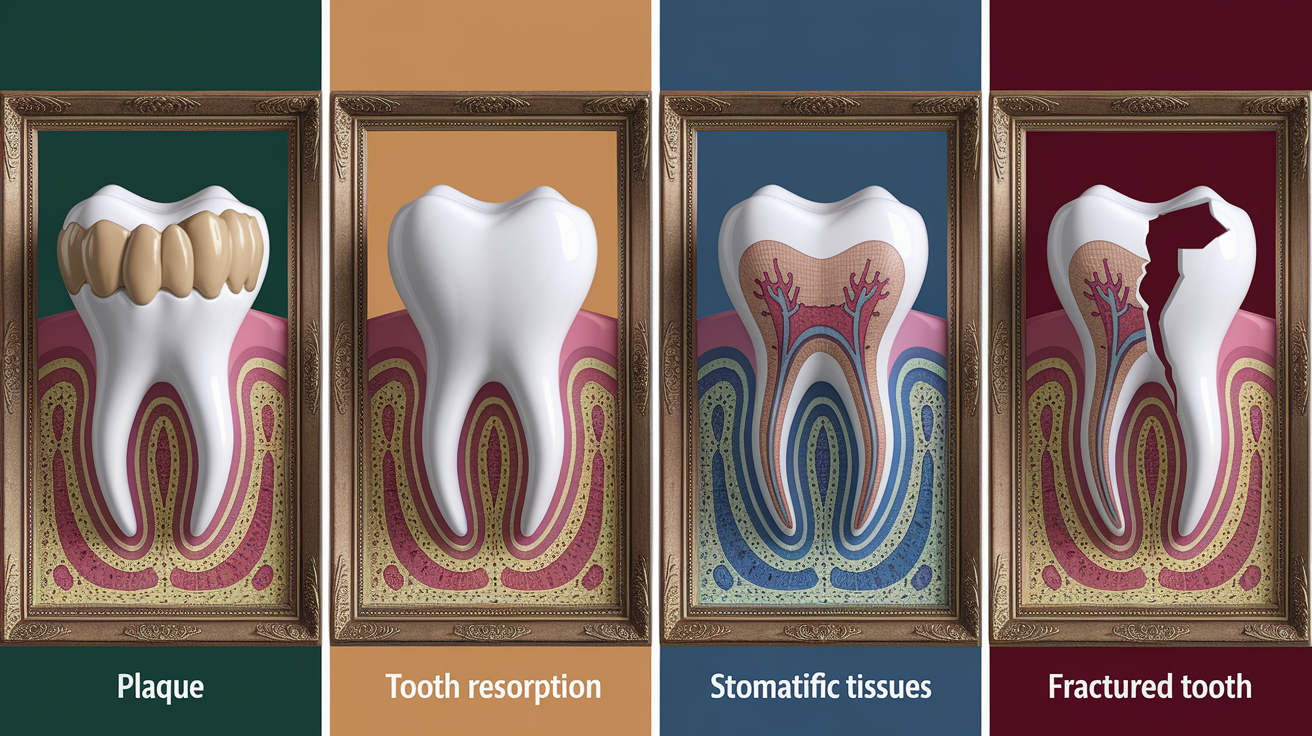
Periodontal disease is the most common oral problem in cats. It affects an estimated 70% by age three. It starts when plaque bacteria settle along the gumline, triggering gingivitis. Without treatment, bacteria dig deeper, forming pockets between the gum and tooth. Ligaments and bone that anchor the tooth weaken, leading to loose teeth, abscesses, and tooth loss. Bacteria can also enter the bloodstream, reaching the kidneys, liver, and heart.
Tooth resorption is a painful, progressive condition that might affect up to three-quarters of middle-aged and older cats. The body’s own cells start breaking down tooth structure from the inside, starting at the root and working outward. By the time you see a cavity-like defect near the gumline, significant internal damage has happened. Dental X-rays are usually required to diagnose resorption because most of the destruction happens below the surface. Lesions can’t be filled. Extraction is often the only option.
Stomatitis is severe, widespread inflammation and ulceration of the gums, tongue, cheeks, and throat. It causes extreme pain and often makes eating nearly impossible. Some cats develop stomatitis as an exaggerated immune reaction to bacteria in plaque. Persian and Himalayan breeds seem more prone. Mild cases might respond to intensive at-home care and anti-inflammatory medication, but severe stomatitis often requires surgically removing many or all teeth to eliminate the source of immune activation.
Tooth fractures are common, especially at the tips of the long canine teeth. A broken tooth may look grayish if the pulp chamber is exposed or dying. Even a small fracture can expose the nerve, causing intense pain and creating a path for infection. Fractured teeth need either extraction or root-canal treatment to remove the damaged pulp and seal the tooth. Left alone, they often abscess and spread infection to surrounding bone.
Veterinary Diagnosis and Treatment for Dental Disease
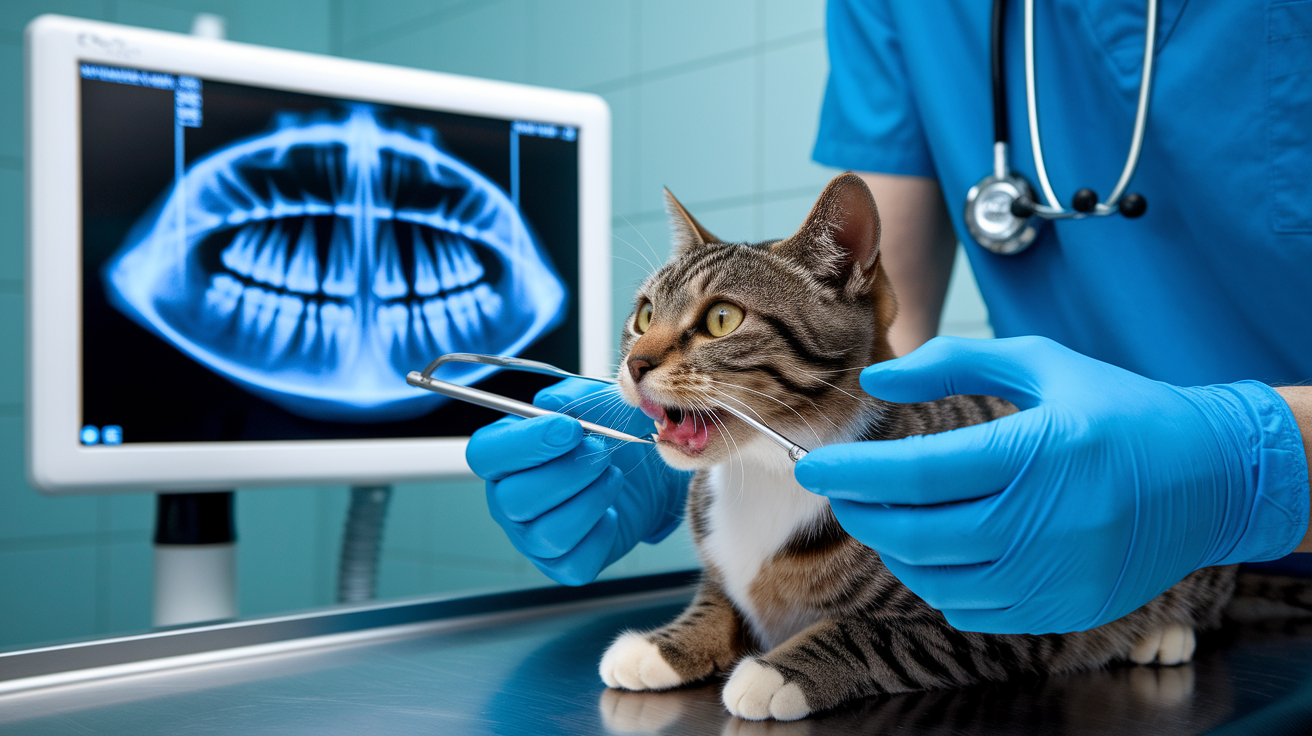
A vet oral exam is the first step. Your vet will visually inspect the teeth and gums, checking for tartar, gingivitis, loose teeth, fractures, and obvious lesions. But because many problems hide below the gumline or inside the tooth, a full assessment usually requires sedation or anesthesia so the vet can probe gum pockets, take dental X-rays, and evaluate each tooth individually without causing your cat stress or pain.
Dental X-rays reveal what you can’t see: root abscesses, bone loss, tooth resorption, and retained root fragments. X-rays are especially important for diagnosing resorptive lesions, which often destroy the tooth from the inside while the crown still looks relatively normal. Blood tests before anesthesia make sure your cat’s kidneys and liver can safely process anesthetic drugs and help identify underlying conditions like diabetes or kidney disease that might complicate treatment.
Treatment depends on severity. Professional cleaning—scaling to remove tartar and polishing to smooth tooth surfaces—addresses early gingivitis and prevents progression. Moderate to advanced disease often requires tooth extraction to eliminate sources of pain and infection. Antibiotics control active infections, and pain medication keeps your cat comfortable during recovery. Stomatitis may need full-mouth extractions if medical management fails. Tooth resorption almost always ends in extraction because the damaged tooth can’t be saved.
| Procedure | Purpose | When It’s Used |
|---|---|---|
| Dental X-rays | Detect hidden root problems, bone loss, resorption, and abscesses | During any comprehensive dental exam under anesthesia |
| Professional cleaning (scaling & polishing) | Remove tartar and plaque; smooth tooth surfaces to slow future buildup | Early to moderate periodontal disease; preventive care |
| Tooth extraction | Eliminate painful, infected, or structurally damaged teeth | Advanced periodontal disease, tooth resorption, fractures, abscesses |
| Antibiotics & pain medication | Control infection and manage discomfort during healing | Active infections, post-extraction recovery, severe stomatitis |
Preventing Cat Dental Disease and Reducing Symptom Risk
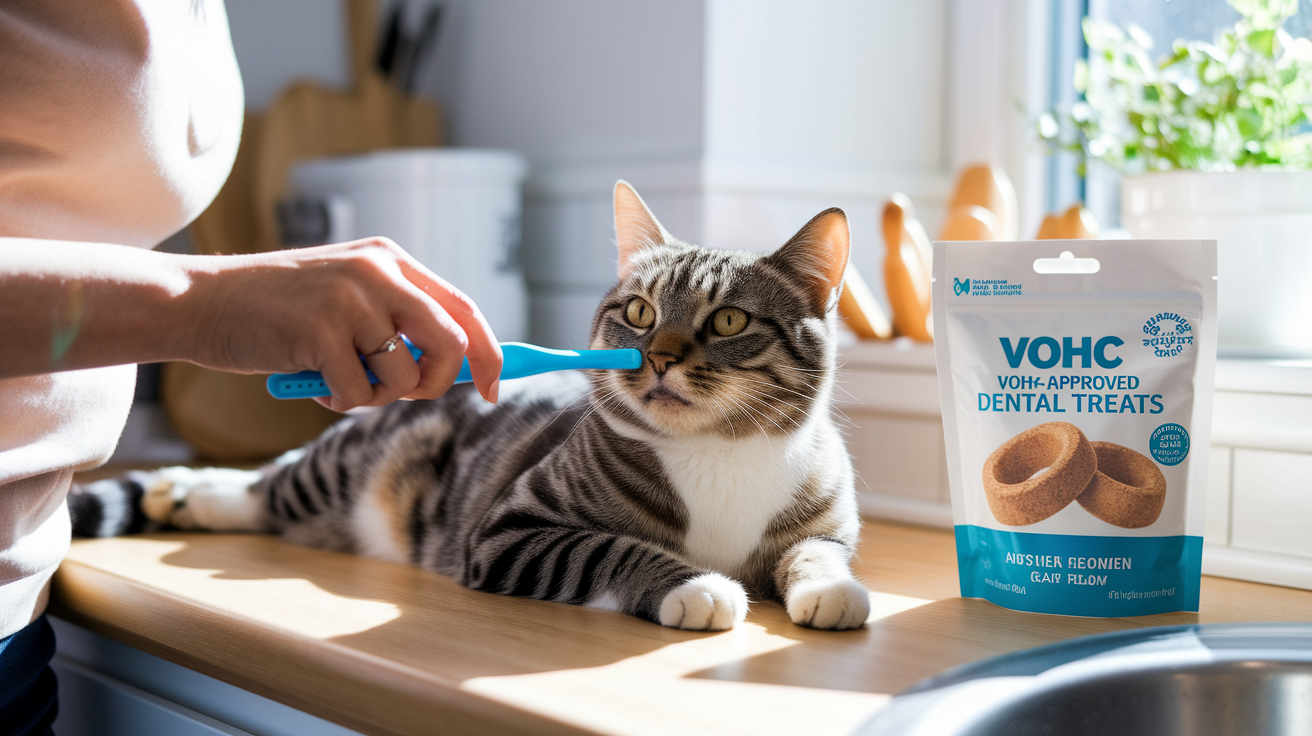
Brushing your cat’s teeth daily, or at least regularly, is the single most effective way to stop plaque from hardening into tartar. Use a soft cat toothbrush or finger brush and pet-safe toothpaste. Never human toothpaste, which contains ingredients toxic to cats. Start when your cat’s young to build tolerance, but older cats can learn to accept brushing with patience and positive reinforcement. Even wiping teeth with a damp gauze pad a few times a week helps.
Dental diets and treats formulated to reduce plaque and tartar can support oral health, though they don’t replace brushing. Look for products with the Veterinary Oral Health Council (VOHC) seal, which means they meet standards for plaque or tartar reduction. Water additives designed for cats may also help by reducing bacterial growth, but always check with your vet before adding anything to your cat’s water to make sure it’s safe and appropriate.
Five prevention strategies to reduce dental disease risk:
- Brush your cat’s teeth daily or at least several times a week using pet-safe toothpaste
- Schedule annual vet dental exams starting at one year of age
- Offer VOHC-accepted dental treats or diets as recommended by your vet
- Monitor your cat’s mouth regularly at home for early signs of tartar, redness, or behavior changes
- Address any eating changes, bad breath, or drooling quickly rather than waiting for symptoms to get worse
Final Words
Noticing bad breath, drooling, slow or picky eating, pawing at the mouth, or visible tartar? Those are the hands-on signs we walked through.
Check your cat during feeding, petting, and grooming. Watch for urgent red flags — refusal to eat, facial swelling, heavy bleeding — and call a vet right away if they appear.
Keep a simple monitoring routine, jot down what you see, and start prevention early. Catching cat dental disease symptoms sooner usually means easier care and a happier cat.
FAQ
Q: What diseases cause dental problems?
A: Diseases that cause dental problems include periodontal disease (gum infection), tooth resorption (tooth breakdown), stomatitis (severe mouth inflammation), oral abscesses, and systemic issues like diabetes or kidney disease that worsen oral health.
Q: How serious is dental disease in cats?
A: Dental disease in cats ranges from mild gum inflammation to painful tooth loss and widespread infection; left untreated it often causes eating problems, weight loss, and can require extractions or urgent veterinary care.
Q: How do I tell if my cat is having dental issues? What is early stage dental disease in cats?
A: You can tell a cat has dental issues from early signs like bad breath, mild drooling, slow or picky eating, tartar, or slightly red gums. Call a vet if they stop eating, bleed a lot, or worsen fast.