

Think a pudgy cat is just cute?
About 60% of pet cats are overweight now, and that extra weight can quietly harm their joints, heart, and lifespan.
You don’t need a scale or vet training to check.
In this post I’ll show three simple at-home checks you can do with your hands and eyes, explain what to watch for, and tell you when it’s time to call the vet.
By the end you’ll know if your cat is carrying harmless fluff or a weight problem that needs attention.
Immediate At‑Home Checks to Identify Overweight Cats
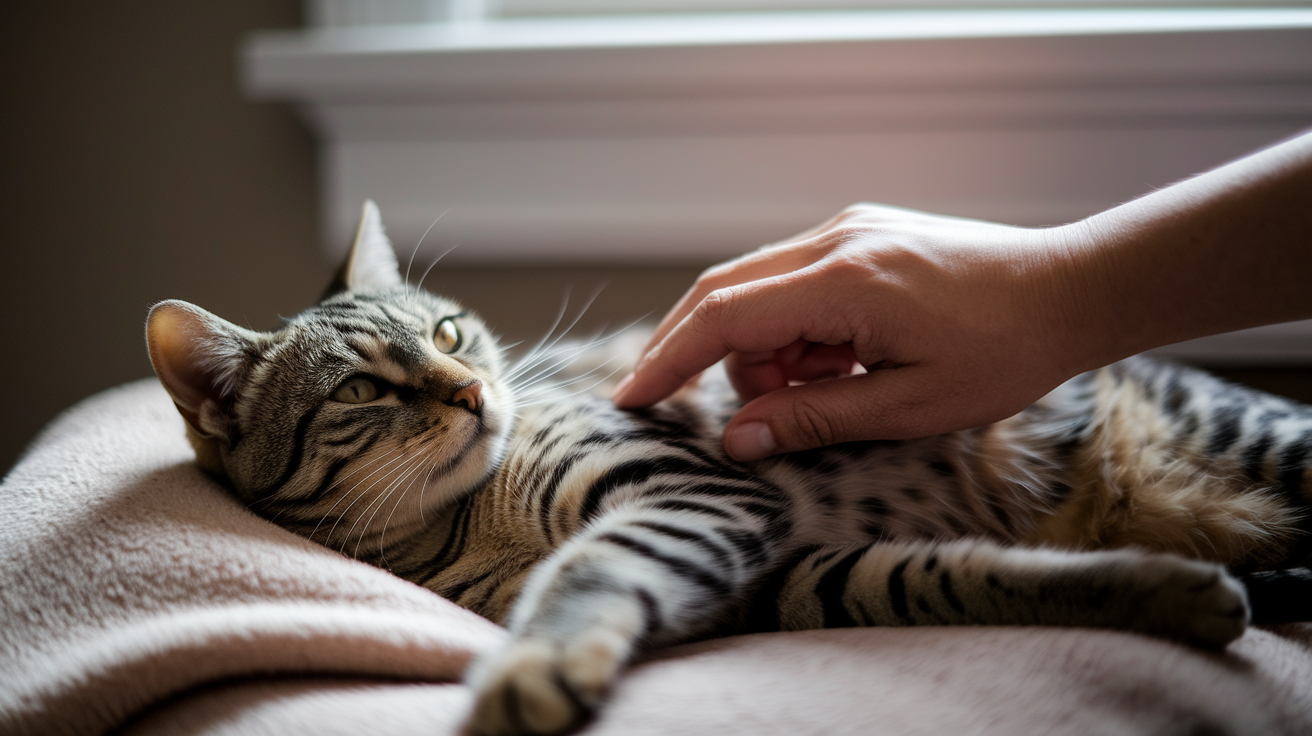
About 60% of pet cats are overweight or obese now, according to a 2022 survey. That number keeps climbing. You don’t need a scale or vet training to start checking. Your hands and eyes are the best tools you’ve got. A few minutes of observation can tell you whether your cat’s carrying extra weight that’s already harming their health.
The most reliable home check is the rib run. Place both palms flat against your cat’s rib cage and run your fingers along the sides of their chest. You should feel each rib under a thin layer of skin and muscle, like running your fingers over the back of your own hand. If you have to press down to find the ribs, or they’re buried under a thick pad of fat, that’s excess weight. Next, feel the belly. A healthy cat’s belly feels firm and should slope gently upward from chest to hind legs. A soft, sagging pouch that hangs toward the floor or swings when your cat walks usually means abdominal fat, not the normal primordial pouch all cats have along the lower midline.
Three checks you can do today:
-
Rib Run – Stand over your cat or gently hold them. Run your fingers along both sides of the rib cage. Ribs should be easy to feel without pressing hard. A thick fat pad or inability to locate ribs means overweight.
-
Tummy Test – Look at your cat from the side while they’re standing. The belly should tuck upward from chest to back legs, not sag or dip toward the floor. A low hanging belly that blocks leg movement is a red flag, especially if it’s soft and fatty rather than loose skin.
-
Waist Watch – Stand directly above your cat and look down at their back. You should see a subtle hourglass shape behind the ribs, a gentle inward curve at the waist. If the body looks round or oval from above, with no visible waist, that’s excess weight.
If your fingers can’t easily find ribs, your cat’s belly sags below the rib line, or you see no waist from above, your cat is very likely overweight. Functional clues back this up. Cats carrying extra pounds often hesitate before jumping onto furniture, tire quickly during short play sessions, or show heavy breathing after minimal activity. If you notice any of these signs alongside the body shape findings, talk to your vet.
Understanding Body Shape and Condition Scoring in Overweight Cats
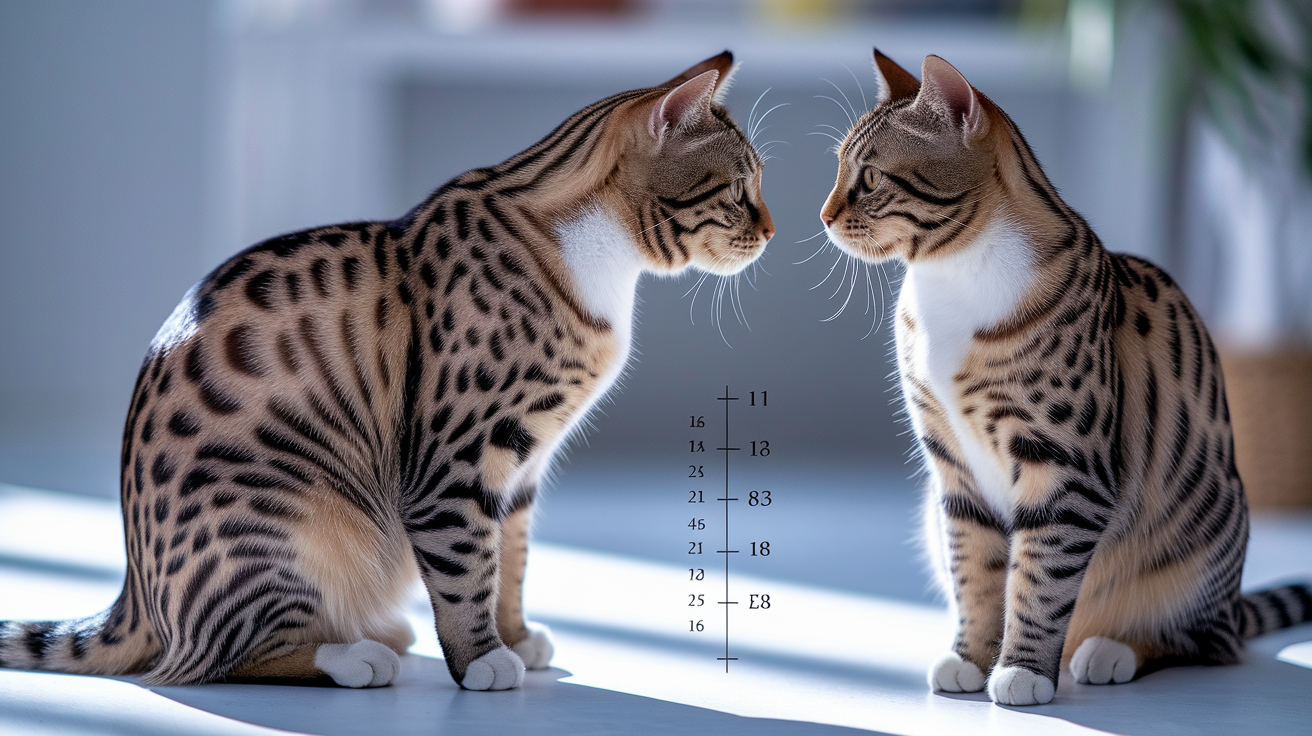
Veterinarians use a body condition score, or BCS, to classify how much fat coverage a cat carries and what their overall shape looks like. The most common system runs from 1 to 9, with 1 being emaciated, 5 being ideal, and 9 being severely obese. A healthy cat at the ideal score has ribs, spine, and hip bones you can feel easily under a thin fat layer. From the side, you’ll see an abdominal tuck. The line of the belly rises from chest to hind legs. From above, there’s a visible waistline, a gentle inward curve behind the ribs. Before and after photos of cats at different scores make these differences much easier to spot, especially if you’re new to assessing body shape.
When you check your cat, look from two angles. The view from above shows whether the waist is present or absent. The profile view, from the side, reveals whether the belly is firm and lifted or soft and sagging. Run your hands over the ribs, spine, and hips. On an overweight cat, you’ll have to press down to feel bone. Sometimes you won’t feel bone structure at all through the fat pad. The table below gives you a quick reference for interpreting what you’re seeing and feeling.
| BCS Score | Description | Visible Shape |
|---|---|---|
| 4–5 (Ideal) | Ribs, spine, hips easily felt under minimal fat; abdominal tuck present | Hourglass waist from above; belly slopes upward from side |
| 6–7 (Overweight) | Ribs difficult to feel under noticeable fat layer; waist barely visible or absent | Rounded body from above; belly hangs level or slightly below rib line |
| 8–9 (Obese) | Ribs, spine, hips not palpable through thick fat; heavy fat deposits on belly and face | No waist; oval or round outline; belly sags well below ribs |
Using Weight Charts to Tell if Your Cat Is Overweight

Weight charts organized by breed and life stage give you a ballpark range for what your cat should weigh. But they’re estimates, not hard rules. A large framed Maine Coon male may weigh 15 pounds and be perfectly healthy, while a petite Siamese at the same weight would be obese. Muscle mass also matters. An active, muscular cat will weigh more than a sedentary cat of the same frame size, even if both have healthy body condition. That’s why weight charts work best when you pair them with body condition scoring. The number on the scale tells you how heavy your cat is. The BCS tells you whether that weight is bone, muscle, or excess fat.
To read a weight chart, find your cat’s breed or general body type, then locate the age range and sex. Compare your cat’s current weight to the listed ideal range. If your cat is several pounds over the upper end of the range and you’ve confirmed excess fat through rib palpation and waist checks, that’s a clear signal. Four factors influence where your cat should fall within any chart range:
Breed and body frame. Larger breeds naturally weigh more. Small or fine boned breeds should weigh much less, even as adults.
Sex. Males typically weigh 2 to 4 pounds more than females of the same breed.
Age. Kittens and young adults are leaner. Middle aged and senior cats often gain weight if activity drops and portions stay the same.
Activity level. Indoor only cats with low activity need fewer calories and tend to carry more weight than outdoor or high energy cats.
Charts give you a useful starting point, but your hands and eyes give you the real answer. If the scale says your cat is within range but you can’t feel ribs and there’s no visible waist, trust what you’re finding during the hands on check and discuss it with your vet.
Mobility, Grooming, and Behavioral Signs Linked to Overweight Cats
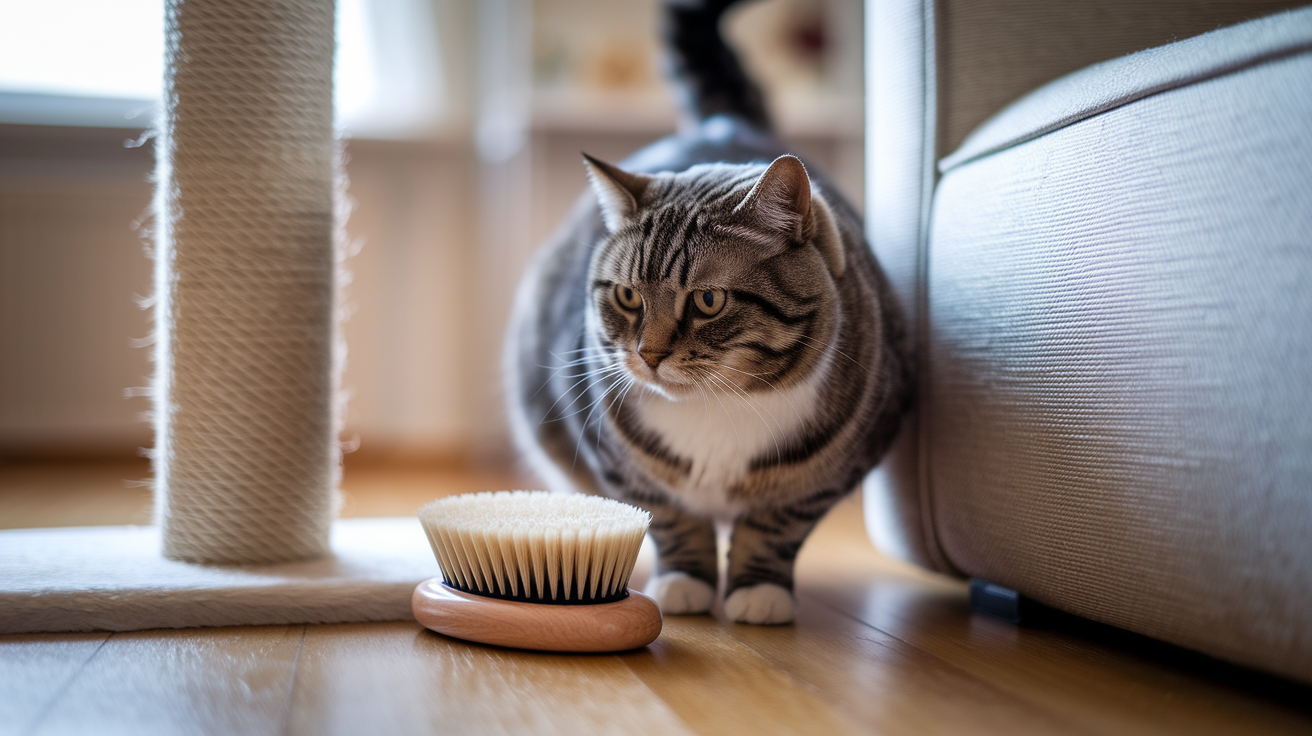
Excess weight doesn’t just change how a cat looks. It changes what they can do. Overweight cats often hesitate or make multiple attempts before jumping onto a couch, bed, or cat tree. Some give up entirely and stay on the floor. You might also notice your cat tiring quickly during play. A toy that used to spark five minutes of chasing now gets one or two half hearted swats before your cat lies down. Heavy breathing after minimal activity, panting, or open mouth breathing after a short walk across the room, is another red flag. Cats don’t pant the way dogs do. If you’re seeing it during low effort movement, the extra weight is putting strain on their heart and lungs.
Grooming problems are a major indirect sign. Cats are meticulous about cleaning themselves, but when they’re carrying extra pounds, they physically can’t twist and reach all their body parts. You’ll start to see matted fur along the back, flanks, or base of the tail. Dandruff may appear in areas the cat can no longer groom. The rear end is especially telling. Overweight cats often can’t reach back to clean after using the litter box, so you may notice staining, clumped fur, or a dirty bottom. These aren’t just cosmetic issues. Poor grooming can lead to skin infections, discomfort, and a higher chance of urinary tract problems if waste residue stays in contact with skin.
Behavioral changes round out the picture. Overweight cats tend to sleep more, play less, and show less interest in toys, climbing, or exploring. They may become irritable when handled, especially around the belly or hips, because the extra weight is already causing joint pain. If your cat used to greet you at the door and now stays on the couch, or if they’ve stopped jumping onto favorite perches, pay attention. These shifts in energy and movement often appear gradually, so it’s easy to miss them until they’re pronounced.
Health Risks of Overweight Cats and Why Early Detection Matters
Carrying even a pound or two of extra weight can shorten your cat’s life and increase their chance of serious, chronic diseases. Cats are small animals, so what looks like minor weight gain to us is proportionally huge for them. Two extra pounds on a ten pound cat is the equivalent of a 150 pound person gaining 30 pounds. That excess fat isn’t inert. It’s biologically active tissue that releases chemicals called adipocytokines, which promote inflammation and damage joints, blood vessels, and organs over time.
Diabetes is one of the most common and serious threats. Overweight cats have a much higher chance of developing diabetes mellitus, a condition that can require daily insulin injections, frequent vet visits, and careful monitoring of blood sugar. Without treatment, diabetes reduces life expectancy and quality of life. High blood pressure is another silent threat. It often shows no outward symptoms until it causes sudden blindness, heart disease, or kidney failure. Cats carrying extra weight should have their blood pressure checked regularly, because catching it early can prevent these devastating complications.
Arthritis and joint pain develop faster in overweight cats. Even one or two extra pounds add significant strain to the hips, knees, and spine. The fat tissue also releases adipocytokines that actively harm cartilage and inflame joints, so the damage is both mechanical and chemical. Vets may recommend hip or joint x rays for older overweight cats, especially if you notice limping, reluctance to jump, or litter box avoidance due to pain when climbing in and out. Fatty liver disease, or hepatic lipidosis, is a life threatening concern if an overweight cat suddenly stops eating for as little as two consecutive days. The body begins breaking down fat stores too quickly, overwhelming the liver and causing organ failure. This is why any weight loss plan must be supervised by a veterinarian. Rapid or unsupervised dieting can be deadly.
Five major health concerns tied to excess weight:
Diabetes requiring daily insulin and ongoing management.
High blood pressure leading to sudden blindness, heart problems, or kidney failure.
Arthritis and chronic joint pain from mechanical stress and inflammatory chemicals.
Fatty liver disease if food intake drops suddenly.
Shortened overall life expectancy and reduced quality of life.
When to See a Veterinarian for Suspected Overweight
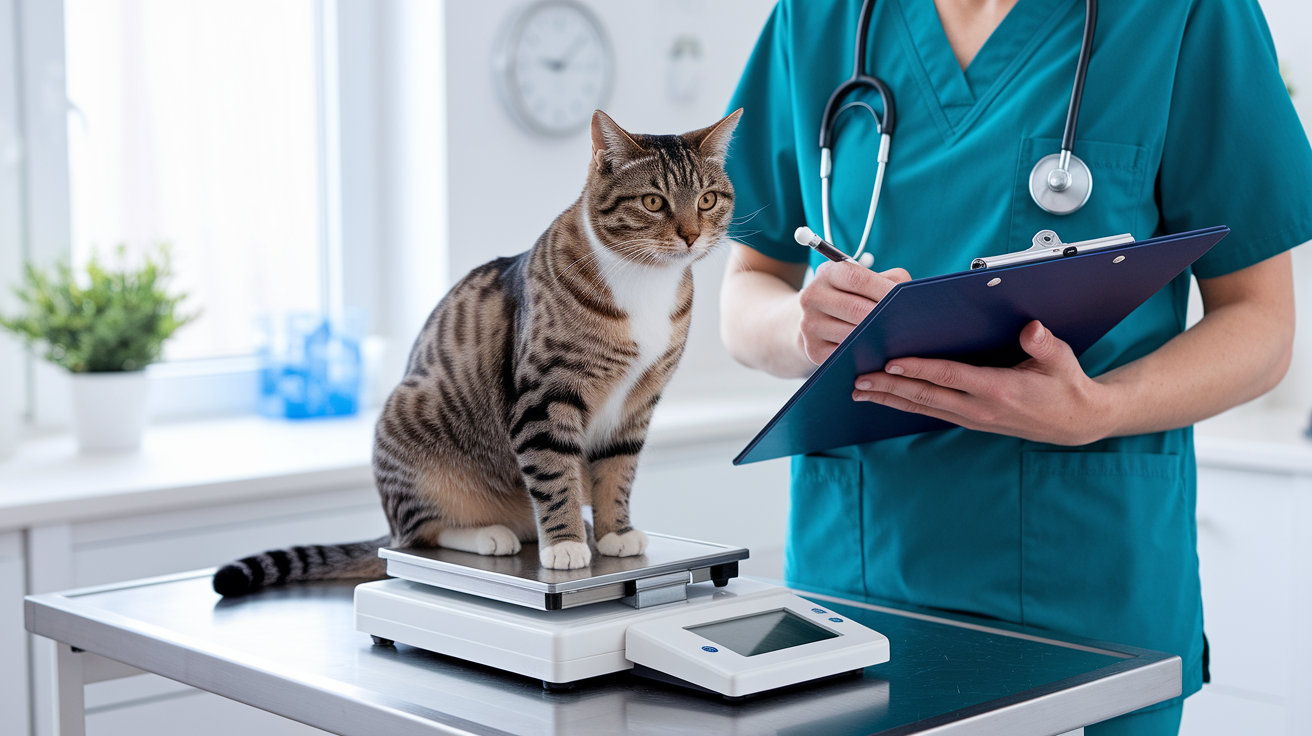
If your at home checks, rib palpation, waist assessment, or mobility observations, suggest your cat is overweight, schedule a veterinary appointment. Even if you’re not completely sure, it’s better to check early than to wait until health problems appear. Vets have accurate scales that give precise weights, and they’ll perform a full body condition score to determine how much fat your cat is carrying and where it’s distributed. They can also check blood pressure, run diagnostic bloodwork to screen for diabetes or metabolic issues, and examine joints and organs for early signs of weight related damage.
One of the most important reasons to see the vet before starting any diet is to rule out medical causes of weight gain. Conditions like hypothyroidism or hormonal imbalances can make a cat gain weight even on a normal diet. Those need treatment, not calorie restriction. Your vet will also design a safe, individualized weight loss plan that prevents the chance of hepatic lipidosis and ensures your cat loses fat, not muscle. Rapid weight loss is dangerous for cats, so portion sizes, food type, and timeline all need professional guidance.
Three key reasons to schedule a vet visit:
You’ve confirmed excess fat through home checks and want an accurate weight, BCS, and health screening.
Your cat shows mobility problems, grooming issues, heavy breathing, or other functional changes that suggest weight is affecting their daily life.
You’re ready to start a weight loss program and need a safe, veterinarian supervised plan to avoid complications like fatty liver disease.
Safe Ways to Monitor and Track Cat Weight at Home
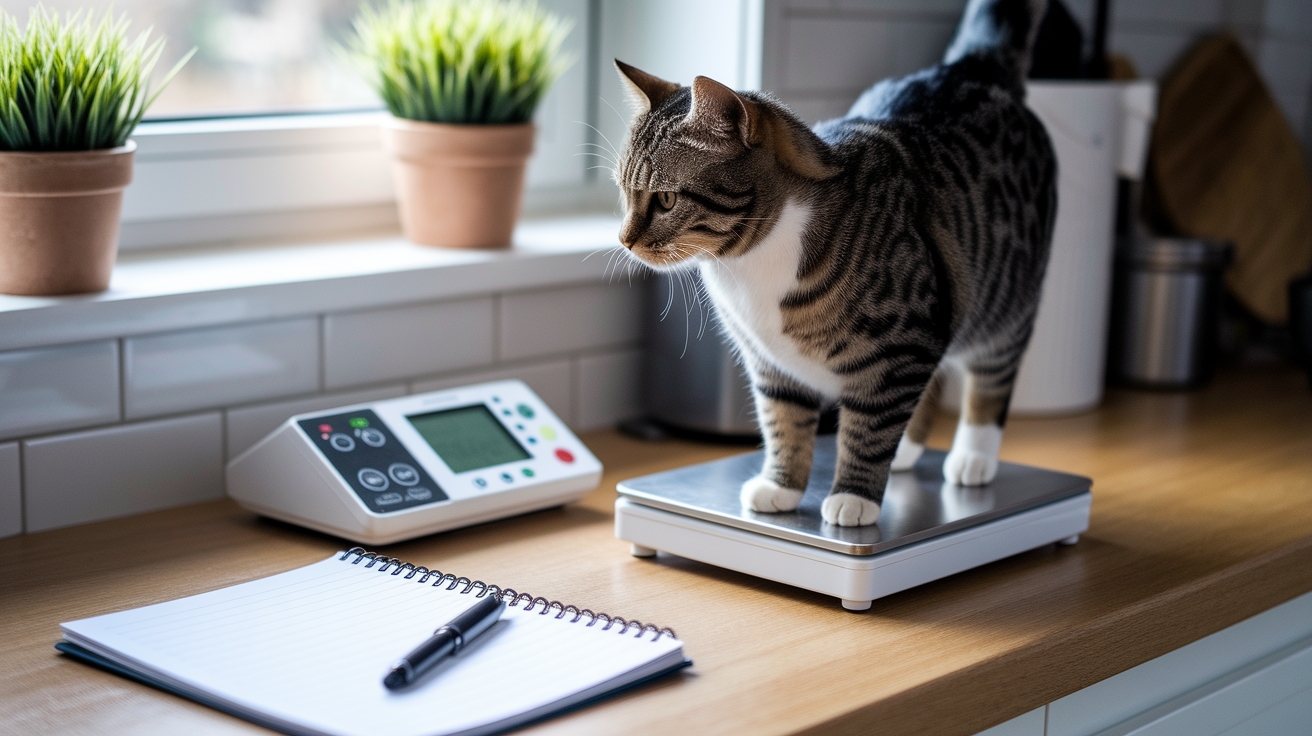
Tracking your cat’s weight at home helps you spot trends early and measure progress during a weight loss plan. The most accurate method is a pet scale designed for small animals. These digital scales measure in ounces or grams, so you can catch even small changes. If you don’t have a pet scale, you can use a bathroom scale with a simple two step method. Weigh yourself first, then pick up your cat and weigh yourself again holding them. Subtract your weight from the combined weight to get your cat’s weight. It’s not as precise, but it works for general tracking as long as you use the same scale, at the same time of day, under the same conditions each time.
Consistency is what makes home weighing useful. Weigh your cat at the same time, on the same day each week or every two weeks. Morning, before breakfast, is often the most consistent window. Write down the number every time and keep a simple log, whether it’s on paper, in your phone, or on a chart on the fridge. Small weekly changes, half a pound up or down, can be hard to notice visually but will show up clearly in your tracking record. If you’re working with your vet on a weight loss plan, bring your log to every appointment so they can adjust portions or activity recommendations based on real data.
Four steps to accurate at home weighing:
Choose your scale. Use a digital pet scale for small animals, or use the bathroom scale subtraction method if a pet scale isn’t available.
Pick a consistent schedule. Weigh your cat weekly or biweekly, same day, same time, ideally in the morning before feeding.
Record every measurement. Write down the weight immediately. Track the date, the number, and any notes about appetite, activity, or health changes.
Watch for trends, not single readings. A half pound fluctuation week to week can be normal. Look for steady increases or decreases over multiple weigh ins to identify real change.
Summary Checklist: Quick Ways to Tell if Your Cat Is Overweight
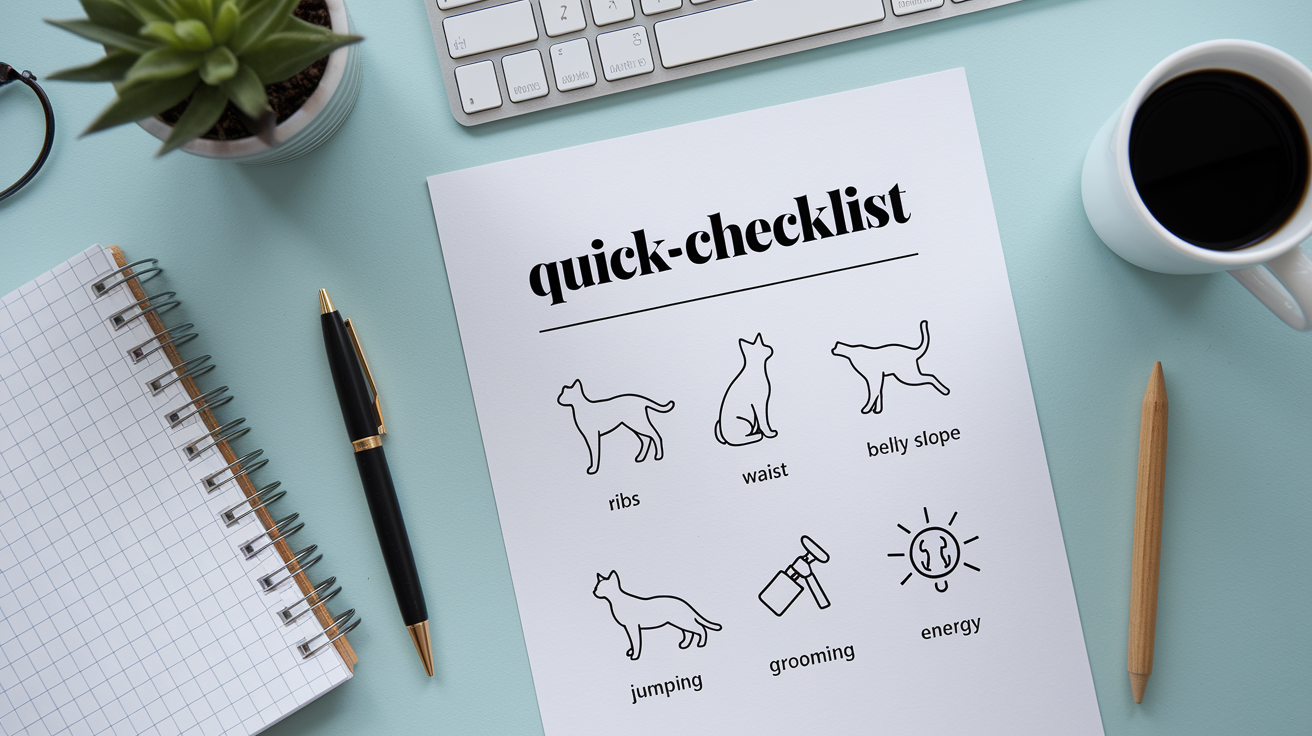
If you can’t easily feel your cat’s ribs when you run your hands along their sides, that’s the single most reliable sign of excess weight. Combine that tactile check with a quick visual scan from above and from the side. A healthy cat has a visible waistline behind the ribs when you look down from above, and their belly should tuck upward from chest to hind legs when you look from the side. If the waist is missing and the belly sags or hangs level with the rib line, your cat is likely overweight. Add in functional observations, difficulty jumping, poor grooming, quick fatigue, and the picture becomes even clearer.
Six quick checks to assess whether your cat is overweight:
Rib test. You should feel ribs easily under a thin layer of skin without pressing hard.
Waist check. From above, look for a subtle hourglass shape behind the ribs. No waist or a rounded outline suggests excess fat.
Belly slope. From the side, the belly should rise from chest to hind legs, not sag toward the floor.
Jumping ability. Hesitation, multiple attempts, or avoidance of jumps indicates extra weight is limiting mobility.
Grooming quality. Matted fur, dandruff, or a dirty rear end suggests your cat can’t reach all body areas due to excess fat.
Energy and play. Quick fatigue, heavy breathing after mild activity, or loss of interest in play are behavioral red flags.
Final Words
Start by feeling your cat’s ribs, checking the belly slope, and looking from above for a waist. Those quick at-home checks, plus watching jumping, grooming, and energy, give immediate clues.
Weigh your cat weekly or every two weeks and pair numbers with a simple body condition check to track progress.
If you’re wondering how to tell if your cat is overweight, these steps help you decide when to call a vet—especially with rapid weight change, breathing trouble, stopped eating, or clear pain. Small steady steps can make a big difference.
FAQ
Q: What is the 3-3-3 rule for cats?
A: The 3-3-3 rule for cats is a simple new-cat timeline: 3 days to settle, 3 weeks to learn the home and routine, and 3 months to fully adjust and build trust with you.
Q: How to tell if your cat needs to lose weight?
A: To tell if your cat needs to lose weight, feel for ribs under a thin fat layer, look for no visible waist, a sagging belly, reduced jumping, or grooming trouble—these often mean excess weight.
Q: What does a slightly overweight cat look like?
A: A slightly overweight cat looks like soft fat over the ribs, a faint or missing waist from above, and a small belly bulge; movement may be a bit slower but still mostly normal.
Q: Is 20 lbs too heavy for a cat?
A: Whether 20 lbs is too heavy for a cat depends on breed and frame; for most average domestic cats, 20 pounds is above ideal and suggests overweight—check body condition and consult your vet.