

Did you know about 95% of dog ear infections are linked to allergies?
If your dog keeps scratching, shaking its head, or you notice a yeasty smell, that number matters.
Allergic inflammation makes the ear warm, wet, and perfect for yeast and bacteria to overgrow.
This post walks you through the common signs, why allergies trigger ear infections, simple safe at‑home steps to try, and clear when you should call the vet.
Read on to stop repeat flare‑ups and help your dog feel better.
How Allergies Lead to Dog Ear Infections

A dog’s ear canal stays naturally warm and moist, with small amounts of yeast and bacteria hanging out in there that don’t cause any trouble under normal conditions. But when allergies show up, that balance falls apart. Environmental allergens like pollen or food proteins set off an immune response that inflames the delicate skin lining the ear canal. That inflammation cranks up moisture, wax production, and warmth, creating the perfect setup for yeast and bacteria to multiply way past safe levels. What starts as an allergic reaction becomes a full ear infection pretty quickly.
Dogs show allergies mostly through their skin, not through sneezing or watery eyes like we do. The ears are just an extension of that skin, and they’re especially vulnerable because of their shape and limited airflow. When a dog’s immune system overreacts to an allergen, the ear canal swells, turns red, and produces excess discharge. The dog scratches or shakes its head in response, which damages the tissue even more and opens the door for infection. About 95% of ear infections in dogs are linked to underlying allergies, making this one of the most common reasons for repeated vet visits.
If your dog’s had more than one ear infection in the past year, allergies are a strong possibility. Dogs with floppy ears (Basset Hounds, Cocker Spaniels, Labrador Retrievers) face even higher risk because their ear flaps trap moisture and limit ventilation. Swimmers and dogs with a history of skin issues also fall into the high-risk group. Recognizing this pattern early helps you address the root cause instead of just treating the infection over and over.
Understanding the Allergy–Ear Inflammation Connection

Allergic otitis in dogs starts when an allergen (whether inhaled, eaten, or absorbed through the skin) activates immune cells inside the ear canal. Those cells release histamines and other chemicals that make blood vessels leak fluid into the surrounding tissue. The result is visible redness, swelling, and a sticky buildup of wax and cellular debris. The ear canal, which normally stays dry and slightly acidic to discourage microbes, becomes warm, wet, and alkaline. Yeast and bacteria thrive in that new environment.
Continuous scratching makes everything worse. Each time your dog digs at the ear or rubs the side of their face on the carpet, they’re traumatizing already inflamed tissue. Tiny breaks in the skin allow bacteria to invade deeper layers, and the cycle accelerates. The ear produces even more wax to try to protect itself, but that extra discharge just feeds the infection. Dogs with chronic allergies can develop thickened, scarred ear canals over time if the inflammation isn’t controlled.
This is why treating just the infection often brings only temporary relief. If the underlying allergy continues unchecked, the ear will flare again within weeks or even days.
Common Allergens That Trigger Ear Problems

Dogs react to a surprisingly wide range of allergens, and pinpointing the exact trigger often requires detective work. Environmental allergens are the most common culprits, especially in dogs whose ear infections follow a seasonal pattern. Food allergies tend to cause year-round issues and often show up alongside gastrointestinal signs or recurring skin infections.
Some of the most frequent allergen triggers include pollen from grasses, trees, and weeds, with flare-ups typically peaking in spring and early summer. Dust mites live indoors year-round and affect dogs regardless of season. Mold spores are found both outdoors in damp areas and indoors in basements or bathrooms. Flea saliva can set off intense itching in allergic dogs, even from a single bite. Food proteins such as beef, chicken, lamb, and wheat are the most commonly reported food allergens. Animal dander from other pets or wildlife can also trigger reactions.
Seasonal allergies often give a clear clue. If your dog’s ears flare every spring or fall, environmental allergens like pollen or ragweed are likely involved. Non-seasonal, year-round infections point more often toward food allergies or indoor allergens like dust mites. Dogs can also react to multiple allergens at once, which is why a dog might have mild symptoms most of the year and severe flare-ups during pollen season. Fleas complicate the picture further. Flea allergy dermatitis can trigger ear infections even in dogs who aren’t otherwise allergic to environmental or food triggers.
Symptoms of Ear Infections Caused by Allergies

The earliest sign most owners notice is increased scratching at the ears or frequent head shaking, sometimes vigorous enough to make the dog’s ears slap against their head. Your dog may also rub the side of their face along furniture, the carpet, or your leg. Anything to relieve the itch. These behaviors signal discomfort before you see or smell anything unusual.
As the infection progresses, watch for a foul or musty odor coming from the ear, often described as yeasty or sour. You might see visible redness on the inner ear flap or just inside the ear canal opening. Brown, yellow, or greenish discharge that looks waxy, crusty, or wet is another sign. Swelling or thickening of the ear flap or canal can develop. A head tilt or reluctance to let you touch the ear indicates pain.
Chronic infections can cause the skin inside the ear to thicken and darken, a sign that inflammation has been present for weeks or months. If you lift your dog’s ear flap and see angry red tissue, heavy buildup, or notice your dog flinching when you touch the area, the infection is likely already established and needs veterinary attention.
Diagnosing Allergy‑Related Ear Infections
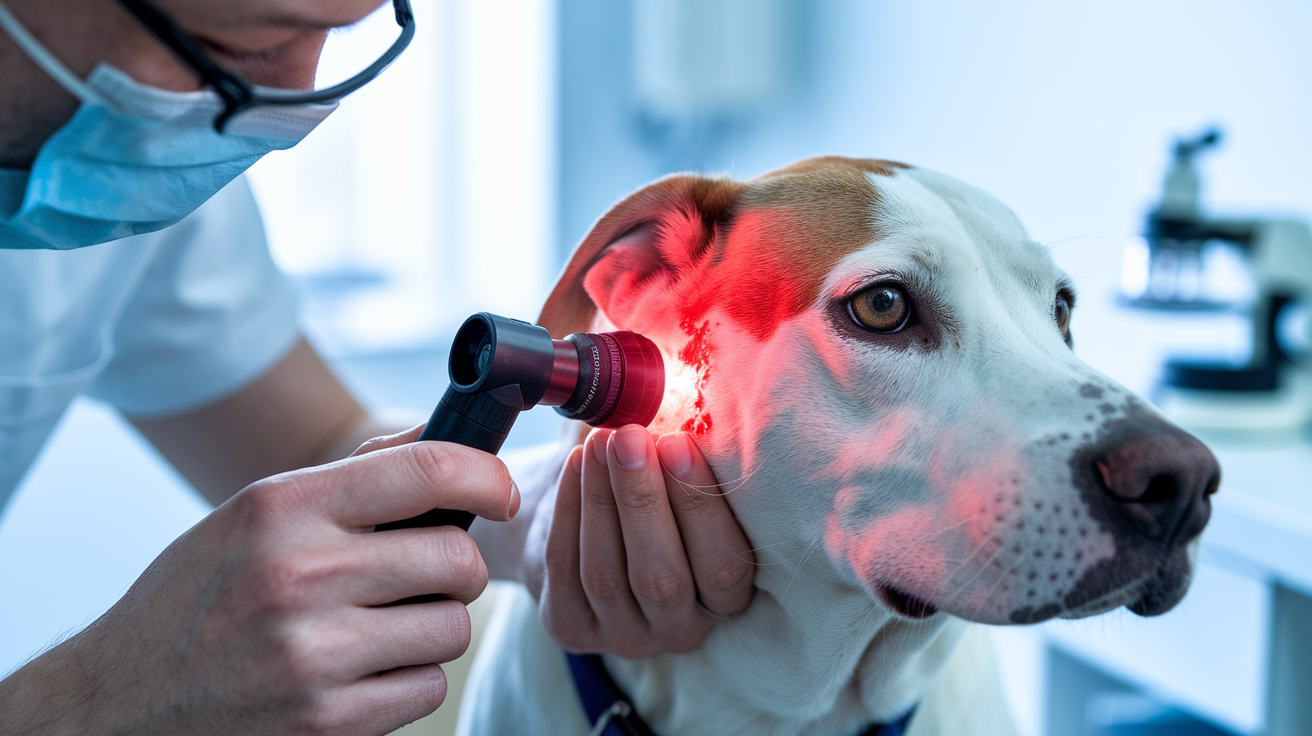
Your veterinarian will start with a physical exam of the ear canal using an otoscope, a lighted instrument that lets them see deep inside. They’re checking for redness, swelling, discharge, and any foreign objects like grass seeds or ticks that can mimic or complicate an allergic infection. A sample of the ear discharge is usually collected and examined under a microscope (a quick test called ear cytology) to identify whether yeast, bacteria, or both are present. Knowing the type of infection guides medication choice.
If your dog’s ear infections keep coming back, your vet will investigate the underlying allergy. That often involves reviewing your dog’s history for patterns. Are the infections seasonal or year-round? Does your dog have skin issues elsewhere on the body? Are there any gastrointestinal signs like soft stool or vomiting?
For suspected food allergies, a strict elimination diet trial lasting at least three months is the gold standard. Your dog eats only a prescription hypoallergenic food (either a novel protein they’ve never had before or a hydrolyzed formula where proteins are broken into tiny fragments) and you watch for improvement. If symptoms clear and then return when you reintroduce the old diet, food allergy is confirmed.
Environmental allergy testing (either a blood test or intradermal skin testing) can identify specific triggers like pollen or dust mites, though these tests are most useful once infections are controlled and you’re planning long-term management like immunotherapy. One-ear infections without skin issues elsewhere raise a red flag for foreign bodies or even tumors, so your vet may need to sedate your dog for a deeper look if the infection doesn’t follow the typical allergy pattern.
Treatment Options for Dogs With Allergy‑Driven Ear Infections
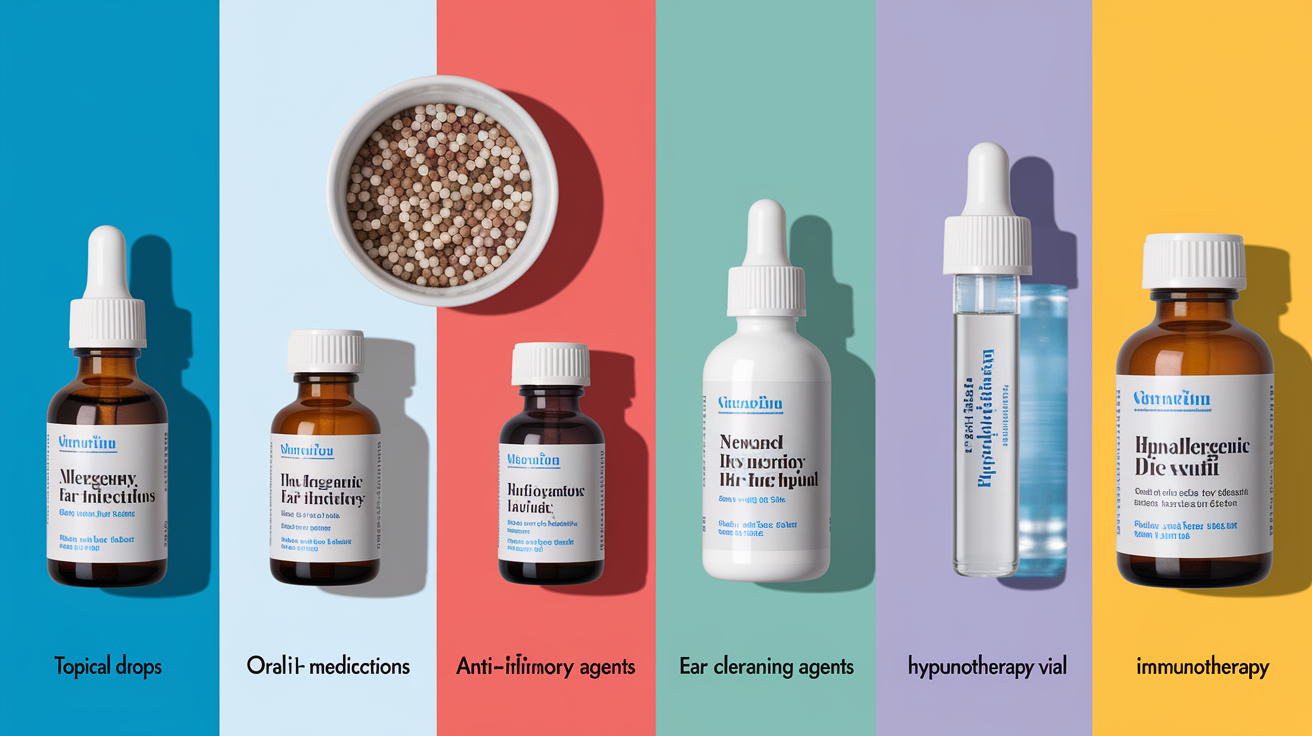
Treating allergy-driven ear infections requires a two-part approach: clearing the active infection and managing the underlying allergy to prevent recurrence. Your vet will prescribe medications based on what’s growing in the ear (yeast, bacteria, or both) and how severe the inflammation is. Most treatment plans combine immediate infection control with longer-term allergy management.
| Treatment Type | Purpose |
|---|---|
| Topical ear medications (drops or ointment) | Kill yeast or bacteria directly in the ear canal; often contain antifungal, antibiotic, and anti-inflammatory ingredients |
| Oral antibiotics or antifungals | Used for severe or deep infections that topical treatments can’t reach alone |
| Anti-inflammatory medications (steroids or others) | Reduce swelling, redness, and itching quickly to break the scratch–infection cycle |
| Prescription ear cleaners | Remove debris and discharge; prepare the ear canal so medications can work effectively |
| Allergen management (diet change, immunotherapy, antihistamines) | Address the root cause by reducing the dog’s allergic response long-term |
| Flea prevention | Essential for any dog with allergies, as flea bites can trigger or worsen ear inflammation |
Your vet will often ask you to clean the ear before applying medication, because debris and wax block the medication from reaching inflamed tissue. Wait at least 30 minutes after cleaning to apply drops, giving the ear time to dry slightly. For dogs with recurring infections, long-term strategies like hypoallergenic diets, allergy shots (immunotherapy), or daily antihistamines may be recommended. Severe, chronic cases that don’t respond to medical management can lead to scarring and canal narrowing. In rare situations, surgery may be needed to restore comfort.
Preventing Ear Infections Caused by Allergies

Prevention starts with routine ear checks. Lift your dog’s ear flap once or twice a week and look for redness, odor, or buildup. Catching early inflammation before it becomes a full infection means you can intervene with cleaning or a quick vet visit instead of weeks of medication. Dogs prone to allergies benefit from weekly ear cleaning, ideally right after a bath when the ear is already slightly damp. Use only a vet-recommended ear cleaner. Household products like rubbing alcohol, hydrogen peroxide, or witch hazel can irritate or damage the ear canal.
Managing the underlying allergy is the most effective long-term prevention. If your dog has confirmed food allergies, stick strictly to the prescription diet. Even small amounts of the wrong protein can restart the cycle. For environmental allergies, reduce exposure where possible. Wipe your dog’s paws and face after walks during pollen season, vacuum frequently to control dust mites, and keep flea prevention consistent year-round. Some dogs benefit from regular baths with hypoallergenic or medicated shampoo to remove allergens from the coat and skin.
Strategies that reduce recurrence include weekly ear cleaning for allergy-prone dogs, using a vet-approved cleaner. If food allergy is diagnosed, strict adherence to hypoallergenic diets matters. Year-round flea prevention is essential, even for indoor dogs. Routine skin and ear checks help you catch early signs of inflammation. Prompt veterinary attention for any new discharge, odor, or scratching behavior can stop problems before they escalate.
Final Words
If your dog is scratching, shaking their head, or you smell a yeasty odor from the ear, allergies can be the trigger. This post showed how immune reactions inflame the ear canal, common allergens to watch, key signs, and how vets diagnose and treat the problem.
Start with gentle ear checks, cut down on known triggers, and follow your vet’s cleaning or medication plan. If signs are severe or don’t improve, call your veterinarian. With steady care, many cases of dog ear infections from allergies improve.
FAQ
Q: How to treat an allergy-induced ear infection in dogs?
A: Treating an allergy-induced ear infection in dogs means gentle ear cleaning, topical drops for yeast or bacteria, short anti-inflammatory meds, and allergy control (diet or immunotherapy). See your vet; call immediately for severe pain, bloody discharge, collapse, or rapid worsening.
Q: Will Benadryl help a dog’s ear infection?
A: Benadryl can help itch from allergies but won’t cure an ear infection; it may ease scratching while you get veterinary care. Ask your vet first for a safe dose and when to pursue prescription treatment.
Q: What are the most common dog allergies that cause ear infections?
A: The most common dog allergies that cause ear infections are pollen, dust mites, mold, flea bite allergy, certain food proteins, and contact irritants like grooming products. Seasonal pollen often triggers flare-ups in spring and summer.
Q: Why is my dog getting ear infections all of a sudden?
A: Sudden ear infections can start when new allergens, trapped moisture from swimming, wax buildup, ear mites, or grooming changes upset the ear’s balance, letting yeast or bacteria overgrow. See your vet if infections recur or worsen.