

Is your dog’s scratching just annoying, or a sign you should call the vet right now?
This quick point-based checklist walks you through eight clear categories: scratching frequency, body area, hair loss, skin changes, behavior, duration, treatments tried, and body-wide signs, so you get a simple urgency score.
Add the points and you’ll have a clearer idea whether to watch at home, book a vet visit this week, or get care fast.
Use the guide to track what to watch, what to try safely today, and exactly when to make the call.
Quick Severity Evaluation for Your Dog’s Itching (Immediate Checklist)

This checklist uses point values across eight categories to help you figure out whether your dog needs a vet appointment today, sometime this week, or if you can monitor things carefully at home. Each category scores 0 to 3. Zero means everything looks normal, and 3 means it’s as bad as it gets.
Take scratching frequency. If your dog isn’t scratching at all, that’s 0. Occasional scratching (fewer than 5 times per hour) gets a 1. Frequent scratching, maybe 5 to 15 episodes an hour, scores 2. And if your dog’s going at it more than 15 times per hour, or you honestly lose count, that’s a 3. You’ll also score how much of their body is affected, what percentage of their coat is falling out, whether the skin shows redness or crusty patches or little pus bumps, how disrupted their behavior and sleep have become, how long this has been going on, what you’ve already tried, and whether there are any bigger body-wide symptoms like fever or throwing up.
Systemic signs jump straight to 3 points when they show up, because fever, vomiting, or collapse means something urgent is happening.
Add everything up. Your total might land anywhere from 0 to 20 or higher. If you score between 0 and 6, that’s mild. You can try home care and keep an eye on things for a week or two, watching to see if anything gets worse. A score of 7 to 13 is moderate, which means you should book a vet visit within 3 to 7 days for diagnostics and a treatment plan. Anything 14 or above is severe. Contact your vet within 24 to 48 hours, and if you see any red flags, go sooner or head straight to emergency care.
The timeline matters because untreated severe itching can spiral fast. Secondary infections, hot spots, behavioral meltdowns, all within days. A mild itch that stays mild for a week often clears up with some simple changes and a soothing bath. But if your dog’s score climbs into moderate or severe territory, professional diagnostics become the fastest path to relief. Not guesswork.
Red flags that require immediate veterinary care, no matter what your checklist score says:
- Open, bleeding wounds or skin lesions that spread fast
- Pustules paired with a nasty smell or thick yellow-green ooze
- Fever (gums feel hot, your dog’s shivering or super lethargic)
- Vomiting, diarrhea, or collapse
- Trouble breathing or noisy respirations
- Sudden swelling around the eyes or muzzle
- Severe pain when you gently touch the itchy spots
- Your dog can’t rest, sleep, or eat because of the itching
Tracking Scratching Frequency and Behavior for Itch Scoring

Scratching frequency is one of the clearest signals of how bad the itch really is, but it’s easy to misjudge when you’re busy or when most of the scratching happens at night. To score it accurately, watch your dog during a calm hour. No playtime, no meals, just a quiet stretch. Count how many times they scratch, lick, chew, or rub against furniture in 60 minutes.
Occasional means fewer than 5 episodes per hour. That’s a 1. Frequent means 5 to 15 episodes per hour, score 2. Very frequent means more than 15 episodes per hour, or scratching so constant you can’t keep up with the count. That’s a 3. If your dog isn’t scratching during your observation window, score 0.
Behavior and sleep impact add another layer. A dog who licks their paws a bit more than usual but sleeps through the night scores 1 for mild change. If your dog wakes you up scratching more than 25 percent of nights, or if their personality shifts (more cranky, less playful, doesn’t want to be touched), score 2. Severe change gets a 3. That’s when your dog can’t settle, won’t eat, or shows aggression or withdrawal you’ve never seen before.
Watch for anxiety stuff too. Pacing, panting, obsessive licking that starts after something stressful. That can blend with or mimic primary skin itch, so note timing and triggers in your log.
How to track episodes per hour without losing count:
- Set a timer for 60 minutes during a quiet period. Mid-morning or early evening works well.
- Keep a notepad or use your phone’s counter app. Tap or tally each time your dog scratches, licks, chews, or rubs.
- Write down the body part they target most often. Helps you map distribution later.
- Repeat the count on two different days to confirm the pattern isn’t a one-time fluke.
- If episodes cluster at night, do one nighttime count by sitting near your dog’s bed for an hour before you go to sleep.
Assessing Body Areas and Hair Loss for a Dog Itching Severity Checklist
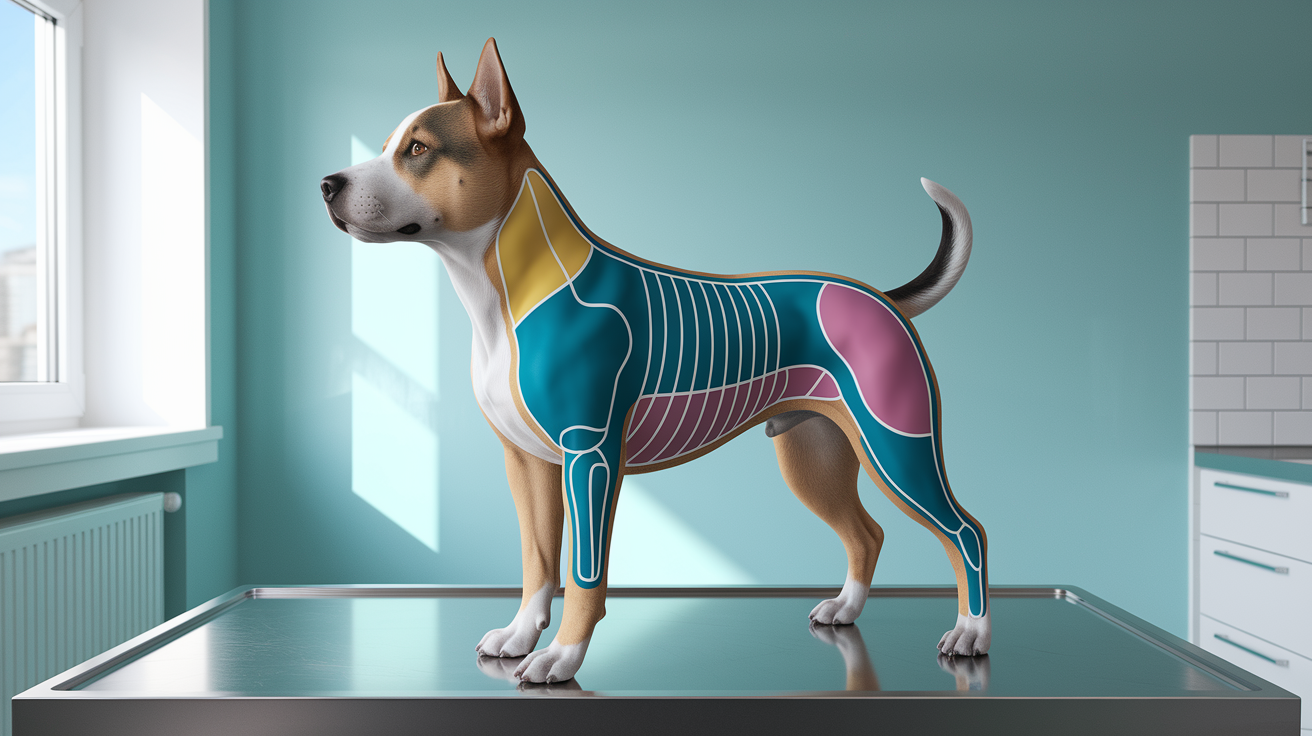
Body surface involvement and hair loss both score 0 to 3, and you’ll need to estimate the percentage of your dog’s coat that looks affected. Stand your dog in good light and mentally divide their body into sections: head and neck, chest and front legs, belly and armpits, back and sides, hind legs and tail base.
If the itchy, red, or hairless patches cover less than 10 percent of the total body (maybe one paw or a small belly spot), score 0 for body surface. Between 10 and 30 percent, like both front paws plus a strip along the belly, scores 1. Between 31 and 60 percent scores 2. Anything over 60 percent, or any involvement of the face or genitals, scores 3. Those areas are delicate and infection risk is higher.
Hair loss follows a similar scale but focuses on the percentage of coat that’s visibly thinned or bare. No hair loss at all scores 0. Less than 10 percent hair loss (a few sparse patches you can count on one hand) scores 1. Between 10 and 30 percent, where you see multiple bald spots or a noticeably moth-eaten look, scores 2. More than 30 percent hair loss, large bald areas, or spreading alopecia scores 3.
Take photos from the same angle every few days so you can compare progression objectively, especially if the hair loss is gradual.
| Area | Severity Indicator | Score |
|---|---|---|
| Localized (single paw, ear, or belly spot) | Less than 10% body surface; no face or genital involvement | 0 |
| Multiple areas (paws + belly, ears + armpits) | 10–30% body surface; mild spread but still patchy | 1 |
| Widespread (front and hind legs, back, sides) | 31–60% body surface; large continuous zones affected | 2 |
| Extensive or involving face/genitals | More than 60% body surface, or any face/genital redness | 3 |
Evaluating Skin Changes and Secondary Infection Signs
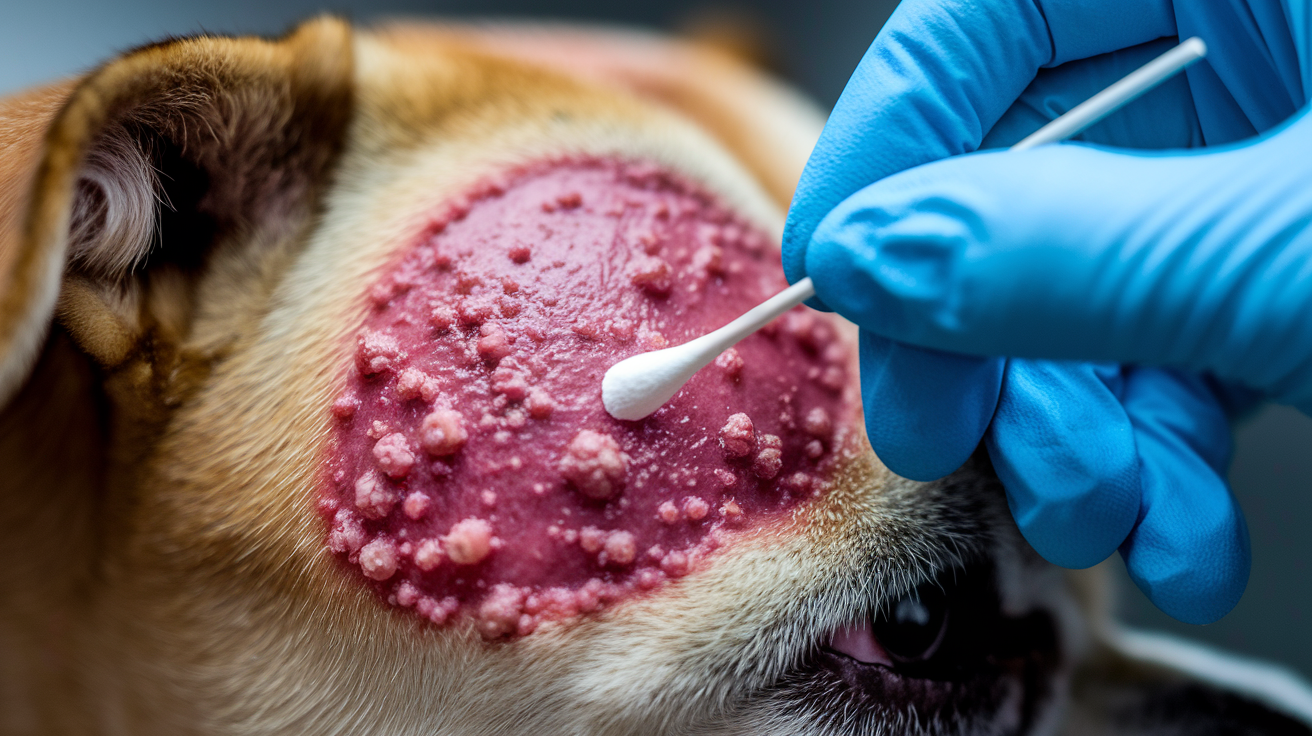
Redness scores from 0 to 3. No redness is 0, light pink is 1, bright red like a sunburn is 2, and deep red or purple with swelling is 3. Check the belly, armpits, and between the toes, where redness hides under fur.
Crusting or scaling scores 0 to 2. None is 0, a few flaky patches or light crust is 1, and thick crusts, greasy scales, or dandruff covering large areas is 2. Pustules (small pus-filled bumps) or papules (red raised bumps) also score 0 to 2. None is 0, a few scattered bumps is 1, and clusters of pustules or widespread papules score 2.
Secondary infection gets a binary bump. Either 0 points if there’s no sign of infection, or 2 points if you see pustules paired with a nasty smell, sticky yellow or green discharge, or crusty ooze. Yeast infections smell musty or like old cheese. Bacterial infections smell sour or rotten. If your dog’s skin feels thickened, greasy, or hot to the touch in the affected areas, that also suggests infection taking hold.
Don’t try to pop pustules or peel crusts at home. That spreads bacteria and increases pain.
Tracking skin changes day by day helps you catch the moment a simple itch turns into something more serious. A dog who starts with light pink belly skin on Monday and has bright red, oozing spots by Wednesday has jumped from a score of 1 to a score that demands a vet call. Write down what you see in plain words (“three dime-sized red circles on left armpit, no odor”) so you can give your vet a timeline, not just a vague “it got worse.”
Duration, Systemic Signs, and Previous Treatments in Pruritus Scoring
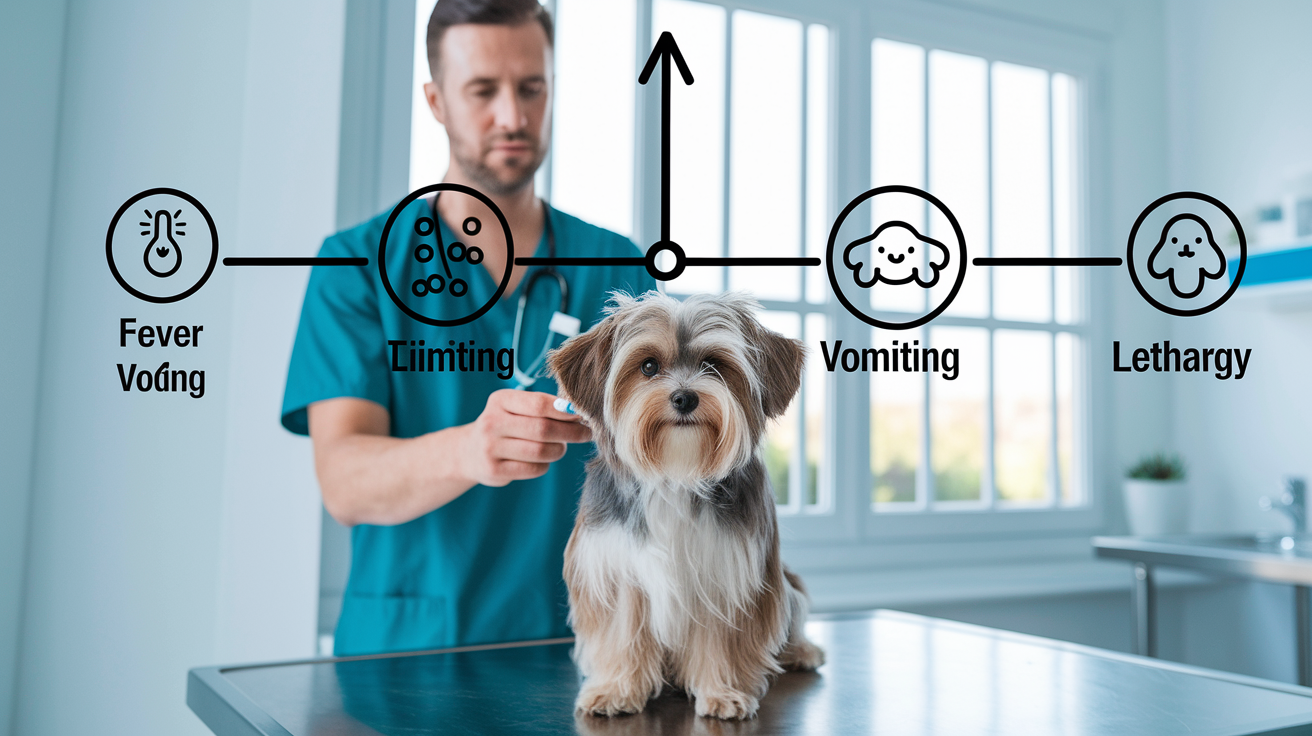
How long the itching has lasted matters almost as much as how bad it looks right now. Duration scores 0 if the itching started fewer than 7 days ago, 1 if it’s been going on for 7 to 30 days, and 2 if it’s persisted for more than 30 days.
Chronic itch (anything over a month) suggests an underlying cause like environmental allergies, food sensitivity, or low-grade infection that won’t resolve without targeted treatment. Acute itch that appears suddenly and worsens fast can mean contact irritation, a new parasite exposure, or even a reaction to a recent medication or food.
Previous treatments you’ve tried at home score 0 if you haven’t used anything yet, 1 if you’ve tried one over-the-counter product (a soothing shampoo or topical spray), 2 if you’ve tried two or more home remedies, and 3 if you’ve already used prescription treatments your vet gave you in the past and the itching came back or never improved. A high score here tells your vet that simple solutions have failed and diagnostics are the next logical step.
Systemic signs score either 0 (none present) or jump straight to 3 if your dog shows fever, vomiting, diarrhea, lethargy, or loss of appetite. These signs mean the problem isn’t just skin-deep. There’s inflammation, infection, or a reaction affecting the whole body. Even if the skin itself looks only mildly red, systemic signs push your total score into the severe range and require same-day or next-day veterinary evaluation.
Systemic signs that score 3 points and require prompt vet contact:
- Fever (feel the ears and gums, hot, dry gums or a rectal temp above 102.5°F)
- Vomiting more than once in 24 hours
- Diarrhea, especially if bloody or very watery
- Lethargy that’s new, your dog won’t get up for meals or walks they usually love
Interpreting the Dog Itching Severity Checklist Score

Once you’ve scored all eight categories, add up the points. A total of 0 to 6 falls into the mild range. Mild itching often responds to home care. A soothing oatmeal shampoo, checking for fleas, switching to a fragrance-free detergent for their bedding, or adding omega-3 supplements to their food. Monitor for 7 to 14 days, and if the itching stays the same or gets worse, or if new symptoms appear, move to the next step and call your vet. Don’t wait longer than two weeks, because even mild itch can turn moderate if the underlying trigger keeps irritating the skin.
A score of 7 to 13 is moderate. Moderate itching means the problem is persistent, affecting multiple body areas, or causing noticeable behavior changes. Book a veterinary appointment within 3 to 7 days. Expect your vet to discuss diagnostics (skin scrapings to rule out mites, cytology to check for bacteria or yeast, possibly bloodwork if there are systemic signs). Treatment might include prescription anti-itch medication, medicated shampoos, antibiotics for secondary infection, or the start of an allergy workup. Moderate cases don’t usually need same-day emergency care, but they do need a clear plan. Not more weeks of home trial-and-error.
A score of 14 or higher is severe. Severe itching requires veterinary attention within 24 to 48 hours, and sooner if any red flags are present (open sores, foul-smelling discharge, difficulty breathing, or systemic signs like fever or collapse). At this level, your dog’s at high risk for complications. Deep skin infections, hot spots that spread overnight, or behavioral breakdown from constant discomfort. Your vet may start treatment on the first visit (antibiotics, anti-inflammatory injections, pain relief) while running diagnostics to find the root cause.
Don’t try to manage a severe score at home. The window for safe home care has closed.
Score ranges and recommended action timelines:
- Mild (0 to 6 points): Try home care. Soothing baths, flea check, environmental review. Monitor for 7 to 14 days. Call your vet if itching worsens, spreads, or doesn’t improve within two weeks.
- Moderate (7 to 13 points): Schedule a veterinary visit within 3 to 7 days. Prepare for diagnostics (skin scraping, cytology) and possible prescription treatment. Don’t delay past one week.
- Severe (14+ points or any red flags): Contact your veterinarian within 24 to 48 hours. Seek same-day or emergency care if you see open wounds, foul odor with pustules, systemic signs (fever, vomiting, collapse), or difficulty breathing.
Red Flags That Override the Dog Itching Severity Checklist
Some signs mean “call the vet now” no matter what your checklist score says. Open, bleeding wounds or sores that appeared overnight (often called hot spots) can double in size within hours and need immediate cleaning, pain relief, and antibiotics to prevent deeper infection. Rapidly spreading redness, especially if the skin feels hot and your dog won’t let you touch the area, suggests aggressive bacterial infection or cellulitis.
Pustules paired with a nasty, rotten smell and thick yellow or green discharge signal deep pyoderma that won’t clear up with a bath.
Systemic red flags include fever, vomiting, diarrhea, or collapse. If your dog’s lethargic to the point they won’t lift their head, or if they vomit more than once and seem disoriented, the itching might be a symptom of a broader allergic reaction, toxin exposure, or internal illness. Difficulty breathing (noisy inhalations, pale or blue gums, open-mouth panting while resting) can mean anaphylaxis or airway swelling and requires emergency care within minutes. Not hours.
Sudden facial swelling, especially around the eyes or muzzle, also suggests a severe allergic reaction.
Emergency red flags, go to your vet or an emergency clinic immediately:
- Open, oozing, or bleeding wounds that spread quickly
- Rapidly expanding areas of bright red, hot skin
- Pustules with heavy yellow-green discharge and a nasty, rotten odor
- Fever (gums hot and dry, dog shivering or panting at rest)
- Vomiting, diarrhea, or complete loss of appetite
- Collapse, extreme lethargy, or inability to stand
- Difficulty breathing, noisy respirations, or pale gums
Home Care Steps for Mild Scores on the Dog Itching Severity Checklist

If your dog scores 0 to 6 and shows no red flags, you can try a few safe, evidence-based steps at home before calling the vet. Start with a flea check. Comb through the coat with a fine-toothed flea comb, especially along the back, tail base, and belly. Even one flea can trigger intense itching in allergic dogs, and you might see flea dirt (black specks that turn red-brown on a damp paper towel) without spotting live fleas. If you find fleas, use a vet-approved topical or oral flea control product and vacuum your home daily for two weeks to break the flea life cycle.
Bathe your dog with a soothing, fragrance-free shampoo formulated for sensitive skin. Look for oatmeal, aloe, or ceramide ingredients. Leave the lather on for 5 to 10 minutes before rinsing to let the soothing agents work. Bathing too often (more than once a week) can dry out the skin and make itching worse, so limit baths to once every 7 to 10 days unless your vet advises otherwise.
After the bath, check bedding, collars, and any new cleaning products or air fresheners you’ve introduced in the past few weeks. Contact irritation from laundry detergent or lawn chemicals is common and reversible once you remove the trigger.
Consider adding omega-3 fatty acid supplements to your dog’s diet after checking the label for dosing and talking to your vet. Omega-3s support skin barrier health and can reduce mild inflammation over 4 to 6 weeks, but they won’t stop acute allergic reactions or treat infections. Monitor closely for 48 to 72 hours after starting home care. If the itching decreases and skin redness fades, continue for another week and reassess. If there’s no improvement, or if new symptoms appear (odor, hair loss, behavior change), stop home care and schedule a vet visit.
Safe home-care checklist for mild itching (score 0 to 6):
- Check for fleas with a fine-toothed comb. Remove any fleas or flea dirt you find.
- Bathe with a fragrance-free, soothing shampoo (oatmeal or aloe-based) once every 7 to 10 days.
- Review recent changes: new detergent, yard treatment, grooming product, or food.
- Add omega-3 supplements if your vet approves the brand and dose.
- Monitor for 48 to 72 hours. If no improvement or if symptoms worsen, call your vet.
Moderate or Severe Itching Scores: What Vets Commonly Evaluate

When your dog’s score hits 7 or higher, or if red flags appear, your veterinarian will start with a thorough history and physical exam. Expect questions about when the itching started, whether it’s seasonal, what you’ve tried at home, which body areas are affected, and whether other pets or people in the house are itchy too (a clue for contagious parasites like sarcoptic mange). Your vet will examine the skin closely, looking at hair loss patterns, the type and distribution of lesions, and any odor or discharge that suggests secondary infection.
Common Diagnostics
Skin scrapings involve gently scraping the surface of the skin with a blade to collect cells and debris, which are examined under a microscope for mites (demodex or sarcoptes). Cytology uses clear tape or a cotton swab to sample the skin surface or the inside of pustules. The sample is stained and checked for bacteria, yeast, or inflammatory cells.
Fungal culture tests for ringworm by plucking hairs and incubating them for up to two weeks. Bloodwork and urinalysis may be added if systemic signs are present or if your vet suspects an internal cause like hormonal imbalance or liver disease.
Allergy & Diet Trials
If parasites and infections are ruled out, your vet will consider environmental allergies (atopic dermatitis) or food allergies. Environmental allergy testing can be done with blood tests or intradermal skin testing, where tiny amounts of common allergens are injected under the skin to see which ones trigger a reaction.
Food allergy diagnosis requires an elimination diet trial lasting 8 to 12 weeks, using a prescription hypoallergenic diet or a novel protein your dog has never eaten before. During the trial, no treats, table scraps, or flavored medications are allowed, because even small exposures can restart the itching and invalidate the test.
Treatment Pathways
Once the cause is identified, treatment is tailored. For bacterial or yeast infections, your vet may prescribe medicated shampoos (chlorhexidine or ketoconazole-based) plus oral antibiotics or antifungals. Environmental allergies often need a combination approach: prescription anti-itch medications (such as oclacitinib or lokivetmab), omega-3 supplements, regular medicated baths, and sometimes allergen-specific immunotherapy (allergy shots or oral drops) for long-term control.
Food allergies are managed by continuing the hypoallergenic diet that worked during the trial, with strict avoidance of the triggering ingredient. Parasite infestations are treated with species-appropriate parasiticides, and your vet will recommend follow-up exams to confirm the parasite is fully cleared.
Long-Term Management and Monitoring for Recurring Itching

Even after successful treatment, many dogs need ongoing prevention and monitoring to keep itching from coming back. Monthly coat and skin checks become part of your routine. Run your hands over your dog’s whole body, checking for new redness, bumps, hair loss, or odor. Pay extra attention to high-risk areas like paws, armpits, ears, and skin folds. If you spot early changes, you can intervene with a medicated bath or a quick vet call before a full flare develops.
Year-round parasite prevention is non-negotiable for dogs with a history of flea allergy or mange. Use a broad-spectrum product that covers fleas, ticks, and mites, and stay consistent with monthly dosing. Even in winter, because fleas can survive indoors.
Keep a photo log on your phone with date stamps, so you can compare this month’s skin to last month’s and catch subtle worsening that’s easy to miss day-to-day. Note any changes in diet, grooming products, or household routines, because those can be hidden triggers for contact dermatitis or food flares.
Watch for seasonal patterns. Dogs with environmental allergies often itch more in spring and fall when pollen counts peak, while year-round itching suggests food allergy, flea allergy, or chronic skin infection. If flares follow a predictable calendar, work with your vet to start preventive treatment (antihistamines, more frequent baths, or a short course of anti-itch medication) a few weeks before the high-risk season begins.
Proactive management keeps your dog comfortable and reduces the need for emergency visits or aggressive treatments.
| Tracking Item | Frequency | What to Note |
|---|---|---|
| Parasite prevention dose | Monthly, same date each month | Product name, dose given, any missed doses |
| Diet or treat changes | Every time you switch food or add a new treat | Brand, flavor, date started, any itching within 2 weeks |
| Seasonal itch patterns | Note at the start of each season | Month/season when itching worsens, outdoor activity level |
| Photo log of skin condition | Weekly during active itching; monthly when stable | Date, body area, any new redness, hair loss, or odor |
Final Words
in the action, we walked through a quick scoring system—scratch counts, body area, hair loss, skin lesions, behavior impact, duration, past treatments, and systemic signs—to total a clear severity score.
We noted red flags that need immediate care and gave safe home steps plus short check windows and when to see a vet for mild, moderate, or severe scores.
Use this dog itching severity checklist to track episodes and notes for your vet. Small, consistent checks can make a big difference—you’re on the right track.
FAQ
Q: How does the itching severity checklist scoring work?
A: The itching severity checklist works by assigning points (usually 0–3) across categories like scratching frequency, body involvement, hair loss, lesions, behavior, duration, treatments, and systemic signs, then totaling them for a score.
Q: What does my dog’s total score mean and what should I do next?
A: Your dog’s total score means risk level: mild (0–6), moderate (7–13), severe (≥14). Mild usually monitors at home, moderate needs vet visit in days, severe needs prompt veterinary care within 24–48 hours.
Q: What are the red flags that require immediate veterinary care?
A: Red flags that need immediate care include open wounds, rapidly spreading redness, pustules with foul odor, fever, collapse, facial swelling, or trouble breathing—call your vet or emergency clinic right away.
Q: How do I track my dog’s scratching frequency and behavior objectively?
A: To track scratching frequency and behavior, log episodes per hour using defined bands (none, <5, 5–15, >15), note sleep changes, and record times, triggers, and duration for clear comparison.
Q: How should I assess body areas and hair loss percentages?
A: To assess body areas and hair loss, visually estimate percent involvement (<10%, 10–30%, 31–60%, >60% or face/genitals) and score hair loss 0–3 based on percent missing coat for accuracy.
Q: Which skin changes suggest a secondary infection or need closer evaluation?
A: Skin changes suggesting secondary infection include pustules, strong foul odor, discharge, marked redness, crusting or scaling; these often raise the score and usually need veterinary treatment.
Q: How do duration, previous treatments, and systemic signs affect severity scoring?
A: Duration, prior treatments, and systemic signs raise the score: longer chronic itch, multiple failed treatments, or systemic signs like fever, vomiting, or lethargy significantly increase urgency and need vet care.
Q: What safe home care steps can I try for mild itching?
A: Safe home care for mild itching includes a soothing shampoo, consistent parasite control, omega‑3 supplementation, environmental changes, and reassess in 48–72 hours—call if worse or not improving.
Q: When I see a vet for moderate or severe itching, what will they commonly evaluate?
A: For moderate or severe itching, vets commonly evaluate with skin scrapings, cytology, fungal culture, bloodwork, allergy testing, and possibly an 8–12 week elimination diet to find underlying causes.
Q: How should I prepare for a veterinary visit about my dog’s itching?
A: To prepare for the vet visit, bring a recent score or log, photos of lesions, a list of treatments and dates, noted triggers, and clear examples of behavior or breathing changes to speed diagnosis.
Q: How can I monitor long-term and prevent recurring itching?
A: To monitor and prevent recurrence, keep monthly coat checks, year‑round parasite control, photo logs of flares, track seasonal or product triggers, and note diet changes to catch issues early.