

Is one bout of vomiting just a messy night, or a red flag your dog needs help?
Vomiting can be harmless, but it can also point to parasites, toxins, organ trouble, or a simple diet upset.
This complete resource walks you through how to tell vomiting from regurgitation (undigested food that comes up without retching), common causes, warning signs that mean act now, safe home steps, and what your vet will ask and test.
Read this so you know what to do now, what to watch for in the next 24 to 48 hours, and when to call your vet.
Understanding Dog Vomiting Causes

Vomiting is one of those things that makes most pet parents freeze up. Your dog throws up, and suddenly you’re wondering if it’s serious or just a weird stomach thing. Here’s what you need to know first: vomiting and regurgitation aren’t the same. Vomiting means your dog’s stomach muscles are actively contracting, bringing up food that’s partially digested, usually mixed with bile (that yellow or green stuff). Regurgitation is way more passive. Your dog basically brings up undigested food or water right after eating, no stomach effort involved. Being able to tell the difference helps when you’re describing what happened to the vet.
Sometimes a dog vomits once and that’s it. No big deal. If your dog seems totally fine afterward, goes back to eating and acting normal, you can probably just watch them at home for a day. But if it happens again, especially more than twice in one day, or if something else feels off, don’t wait. Timing tells you stuff too. Vomiting first thing in the morning? Could be acid buildup. Right after eating? Probably food related.
Here are six reasons dogs vomit:
Dietary indiscretion. They ate something gross. Garbage, spoiled food, a new treat that didn’t sit right.
Infections. Bacterial, viral, or fungal stuff messing with the stomach and intestines.
Toxins. Household chemicals, toxic plants, medications, chocolate, grapes. All bad news.
Parasites. Worms or protozoa irritating the digestive tract.
Organ issues. Kidney or liver disease, pancreatitis, gallbladder problems.
Chronic conditions. IBD, food allergies, or motility disorders that cause ongoing digestive trouble.
Symptoms That Accompany Vomiting in Dogs
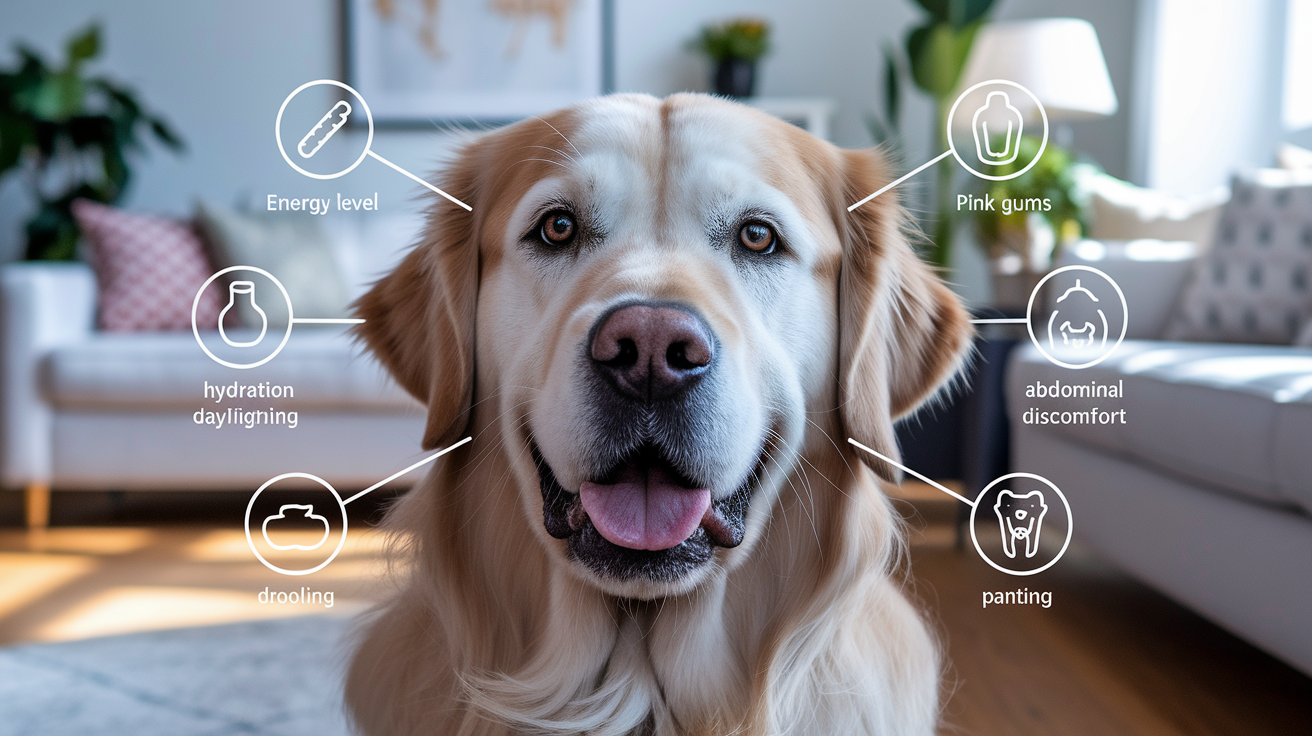
Vomiting doesn’t usually show up alone. What else is going on tells you whether this is a quick stomach bug or something that needs attention today. Start with energy. Does your dog still want to play? Do they greet you at the door, seem interested in food a few hours later? That’s way better than a dog lying flat, ignoring you, or hiding.
Check hydration by gently lifting the skin on the back of your dog’s neck. If it snaps back fast, they’re probably fine. If it stays tented or falls back slowly, they’re losing too much fluid. Look at the gums. They should be slippery and pink. Dry, sticky gums are a warning sign. Other symptoms that often come with vomiting include diarrhea (especially watery or bloody), belly pain (hunched posture, guarding the stomach, whining when you touch it), drooling more than usual, and panting when it’s not hot or after activity.
Behavior shifts matter too. A dog that won’t settle, paces nonstop, or tries to vomit but nothing comes up might have bloat. That’s life threatening. On the flip side, a dog that vomits once and curls up for a nap without anything else going on is usually dealing with something mild. It’s the combination of symptoms that helps you decide what to do next.
How Veterinarians Diagnose Vomiting Causes

When you bring your dog in, the vet’s going to ask a lot of questions. When did it start? How many times? What does the vomit look like? Bile, blood, undigested food? Did your dog eat anything weird, get into toxins, travel recently? This narrows things down before any test gets run. Then comes a full physical exam. Hydration, belly tenderness, temperature, overall condition.
If the cause isn’t obvious or the vomiting is bad, your vet will suggest diagnostic tests. Here are the five most common:
-
Bloodwork. Checks organ function (kidneys, liver, pancreas), electrolyte balance, signs of infection or inflammation.
-
Fecal tests. Screens for parasites, bacteria, and abnormal digestive markers.
-
X-rays (radiographs). Looks for foreign objects, blockages, abnormal organ size or shape.
-
Ultrasound. Detailed images of the stomach, intestines, liver, kidneys, other abdominal structures. Spots masses, fluid, organ changes.
-
Diet trial or food elimination. If food allergy or sensitivity is suspected, your vet might recommend a specific diet for several weeks to see if the vomiting stops.
Treatment Options for Dog Vomiting
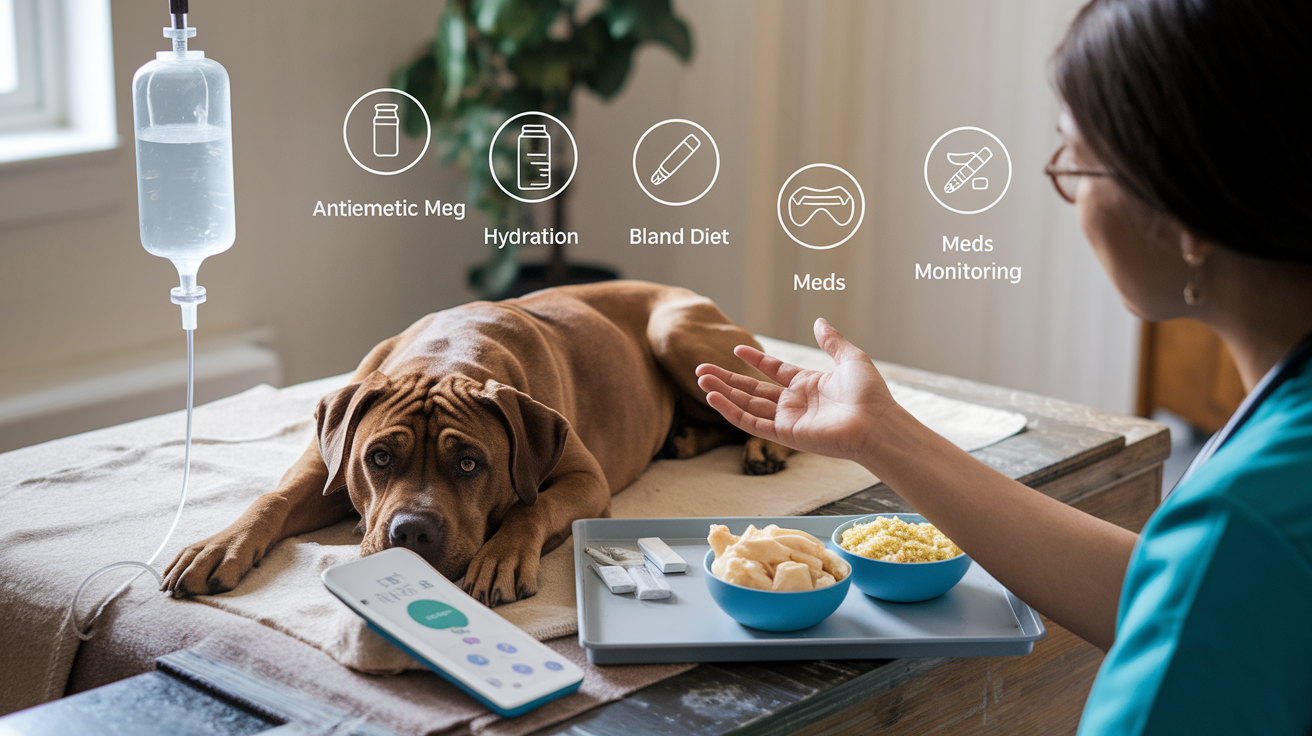
Once your vet figures out the cause, treatment gets tailored to fix the actual problem. For mild cases, the first thing is rest and hydration. Your vet might suggest withholding food for 12 to 24 hours to let the stomach settle, then reintroducing small amounts of bland food like boiled chicken and rice. Fluids are critical. If your dog is dehydrated or can’t keep water down, they might get subcutaneous fluids (under the skin) or IV fluids at the clinic to restore balance quickly.
Medications help a lot. Antiemetics (anti-vomiting drugs) stop nausea and settle the stomach, making your dog more comfortable and able to hold down water and food. If there’s an infection, antibiotics or antivirals get prescribed. Parasites get treated with dewormers targeted to the specific type of worm or protozoa. For dogs with underlying conditions like IBD, treatment often includes long term diet changes, steroids or immune modulating drugs, and regular monitoring.
When vomiting is caused by something more serious (kidney disease, pancreatitis, a foreign object stuck in the intestines), treatment gets more intensive. Hospitalization for IV fluids, pain management, close observation. Surgery might be needed to remove a blockage. The goal is always to address the vomiting while treating the underlying cause so it doesn’t come back.
When Dog Vomiting Becomes an Emergency

Some situations can’t wait. If your dog vomits more than three times in a few hours, or if it continues for more than 24 hours even with fasting, call your vet right away. Repeated vomiting depletes fluids and electrolytes fast, especially in small dogs or puppies. Dehydration can get dangerous within hours.
Blood in the vomit is an immediate red flag. Bright red or dark, coffee ground material (partially digested blood). Either one means bleeding somewhere in the digestive tract, which needs urgent diagnosis and treatment. If you know or suspect your dog ate something toxic (chocolate, grapes, xylitol, medications, household chemicals, poisonous plants), don’t wait for symptoms to get worse. Contact your vet or an emergency animal poison hotline immediately, even if vomiting hasn’t started yet.
Watch for signs of bloat, especially in large, deep chested breeds. A dog that tries to vomit but brings nothing up, has a swollen or hard belly, drools heavily, paces, and seems panicked might have gastric dilatation volvulus (GDV). Twisted stomach. This is life threatening and requires surgery within hours. Also call the vet if your dog collapses, has trouble breathing, shows extreme lethargy, or has pale gums alongside vomiting. Those are signs of shock or severe internal illness.
Preventing Vomiting in Dogs
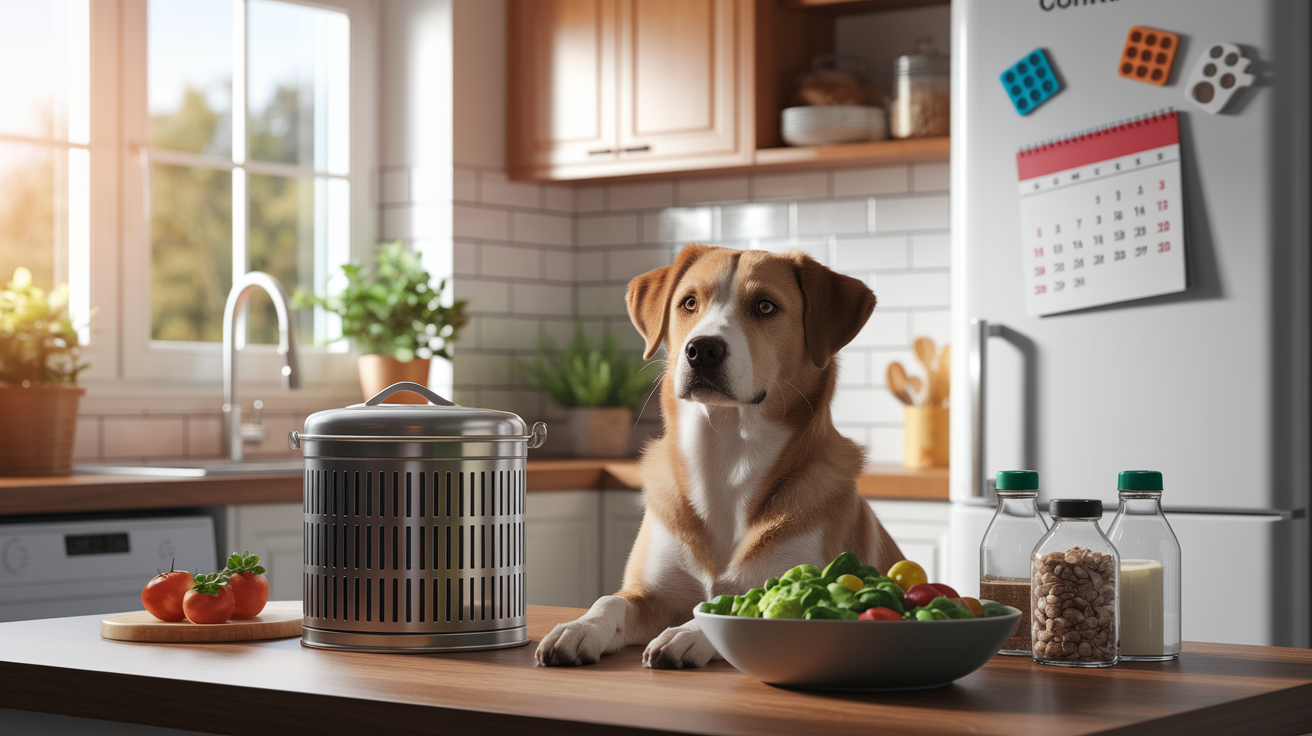
You can’t prevent every instance, but many common causes are avoidable with a few simple habits. Start by managing what your dog has access to. Keep trash cans secure, store cleaning products and medications out of reach, remove toxic plants from your home and yard. When you’re on walks, watch for things your dog tries to scoop up. Sticks, food wrappers, mystery items. All common culprits.
Diet changes should always happen slowly. If you’re switching dog food brands or formulas, mix a small amount of the new food with the old over seven to ten days, gradually increasing the ratio. Abrupt changes can trigger vomiting and diarrhea even if the new food is high quality. Feed at consistent times each day and avoid giving table scraps or rich, fatty human foods that can upset sensitive stomachs or trigger pancreatitis.
Here are five things you can do today:
Feed smaller, more frequent meals. Especially helpful for dogs prone to vomiting bile on an empty stomach.
Stick to one protein source if your dog has food sensitivities. Rotating proteins too often can cause flare ups in some dogs.
Keep up with parasite prevention year round. Monthly flea, tick, and heartworm preventatives also guard against intestinal worms.
Avoid feeding right before or after vigorous exercise. Let your dog rest for at least 30 minutes before and after meals to reduce the risk of bloat.
Schedule routine vet checkups every 6 to 12 months. Catching early signs of organ problems or chronic conditions makes treatment easier and often prevents severe symptoms like vomiting later on.
Final Words
You now have a simple map: what makes dogs vomit, the signs that point to mild versus serious problems, how vets diagnose the cause, treatment options, and prevention steps.
If your dog vomits once and is bright and eating, watch closely for 24 hours and note changes. But if vomiting is persistent, has blood, or your dog seems very weak or dehydrated, call your vet right away.
Keeping a short diary of episodes, what they ate, and any other signs helps your vet. Understanding dog vomiting causes gives you the confidence to act and keep your pet safe.
FAQ
Q: What causes dogs to vomit?
A: Dog vomiting is commonly caused by dietary indiscretion, infections, toxins, parasites, organ disease, and chronic gut problems like inflammatory bowel disease.
Q: What is the difference between vomiting and regurgitation?
A: The difference between vomiting and regurgitation is that vomiting is active with retching and forceful stomach content expulsion, while regurgitation is passive and brings up undigested food without retching.
Q: When should I worry about my dog’s vomiting?
A: You should worry about your dog’s vomiting when it is persistent, contains blood, comes with lethargy, severe dehydration, collapse, breathing trouble, or known toxin exposure—contact your veterinarian immediately.
Q: What other symptoms may appear with vomiting?
A: Other symptoms that may appear with vomiting include lethargy, diarrhea, abdominal pain, decreased appetite, sticky or dry gums (dehydration), and behavior change; combinations often suggest urgent care.
Q: How do veterinarians diagnose the cause of vomiting?
A: Veterinarians diagnose vomiting by taking a detailed history and doing a physical exam, then using tests such as bloodwork, fecal testing, x-rays, ultrasound, and diet trials to narrow causes.
Q: What tests do vets commonly use to investigate vomiting?
A: Common tests vets use to investigate vomiting include bloodwork, fecal exams, x-rays, abdominal ultrasound, and therapeutic diet trials to rule in or out infections, blockages, or chronic disease.
Q: How is vomiting treated in dogs?
A: Vomiting in dogs is treated with fluid support, anti‑nausea medications when appropriate, parasite or toxin-specific care, short-term bland diets, and long-term management for underlying health issues.
Q: What can I safely do at home if my dog vomits?
A: If your dog vomits, withhold food up to 12 hours for healthy adults, offer small sips of water, then try a bland diet; call a vet sooner for puppies, seniors, or worsening signs.
Q: How can I prevent my dog from vomiting?
A: You can prevent dog vomiting with safe feeding routines, slow diet transitions, securing trash and toxic items, regular parasite prevention, and routine veterinary checkups.
Q: What are emergency signs when a dog is vomiting?
A: Emergency signs when a dog is vomiting include repeated vomiting over hours, blood in vomit, sudden collapse, seizures, severe dehydration, difficulty breathing, or confirmed toxin ingestion—seek emergency care now.
Q: What should I bring to the vet if my dog is vomiting?
A: Bring to the vet a timeline of symptoms, photos or a sample of vomit, recent food and medication lists, a stool sample if possible, and notes on behavior changes.