

Not every time your dog vomits is an emergency.
But repeated vomiting, blood, or a bloated belly can be life-threatening.
If you’re staring at puddles and wondering whether to wait or race to the clinic, this post is for you.
I’ll walk you through simple signs to spot, safe first steps to try at home, exactly when to call your veterinarian, and what to note before the visit.
No panic. Just clear, practical guidance so you can act fast and feel confident.
Immediate Steps to Take When Your Dog Keeps Vomiting

When your dog starts vomiting, you need to figure out whether it’s a simple upset stomach or something that needs immediate care. If your dog vomits once or twice in a day but seems alert, drinks water, and doesn’t look distressed, you can usually monitor at home for a short window. If your dog vomits more than two or three times in 24 hours, can’t keep water down, or shows any worrying change in energy or behavior, contact your veterinarian the same day.
Start by counting how many times your dog has vomited. Two or three episodes in a few hours can be mild if everything else looks normal. Your dog is still interested in you, walking around, drinking a little water. Even so, it’s a signal to hold food and watch closely.
Support hydration carefully. Don’t offer a big bowl of water all at once. Instead, offer a teaspoon or tablespoon of water every 10 to 15 minutes. If your dog keeps that down for an hour or two, you can gradually offer a little more. This slow approach prevents overloading the stomach and triggering more vomiting.
Some signs mean stop watching and call right away:
- Blood in the vomit, whether bright red or dark like coffee grounds
- Your dog tries to vomit but nothing comes up, especially with a swollen belly
- Your dog can’t keep any water down for more than a few hours
- You know or suspect your dog ate something toxic, like chocolate, xylitol, grapes, or household chemicals
If your dog keeps vomiting but stays alert, drinks tiny sips, and doesn’t show any of those red flags, you can monitor at home for up to 12 to 24 hours in an adult dog. Puppies and senior dogs need veterinary advice much sooner, often within a few hours if vomiting continues. Trust what you’re seeing. If your dog’s condition worsens at any point or you feel uncertain, don’t wait.
Common Causes Behind Why a Dog Keeps Vomiting

Dietary causes top the list. Dogs eat things they shouldn’t. Garbage, spoiled food, sticks, toys. Even a sudden switch from one dog food to another can upset the stomach. Eating too fast is another common trigger, especially in dogs who gulp their meals in seconds. These cases often produce one or two vomiting episodes, and the dog usually feels better within a day once the offending item passes or the stomach settles.
Infections and toxins are the next major group. Bacterial or viral infections like parvovirus cause repeated vomiting, especially in puppies. Toxins like chocolate, xylitol in sugar-free products, grapes, raisins, and rodent poison trigger sudden, severe vomiting. If your dog gets into any of these, it’s an emergency. Parasites like roundworms or hookworms can also irritate the gut enough to cause vomiting, particularly in younger dogs or those who haven’t been dewormed recently.
Chronic medical conditions show up as recurring or long-term vomiting. Kidney disease, liver disease, pancreatitis, inflammatory bowel disease, and uterine infections all cause vomiting that comes back again and again or never fully resolves. These dogs often lose weight, have poor appetite, or seem tired most of the time. Bloat, also called gastric dilatation-volvulus or GDV, is a life-threatening emergency where the stomach twists. It causes unproductive retching, a swollen belly, and rapid collapse.
Common owner-observed triggers include:
- Sudden change in food or treats
- Eating grass, dirt, sticks, or non-food items
- Access to trash, compost, or spoiled food
- Known or suspected toxin ingestion
- Recent medication or deworming treatment
How to Interpret Vomit Appearance When Your Dog Keeps Vomiting

What you see in the vomit gives clues about what’s happening inside. Color and consistency aren’t perfect diagnostic tools, but they help you and your vet narrow down the cause and decide how urgently to act.
Clear or white foam often means the stomach is empty or mildly irritated. Yellow or green bile shows up when a dog vomits on an empty stomach or has bile reflux. Brown vomit can mean your dog ate something brown, like dirt or feces, or it might signal chocolate ingestion, which is toxic. Dark brown or black vomit that looks like coffee grounds suggests digested blood, a sign of ulcers, poisoning, or internal bleeding. Bright red blood means active bleeding somewhere in the upper digestive tract. Bright green or teal vomit is a major red flag for rodent poison ingestion and requires immediate emergency care.
| Vomit Color or Appearance | Most Likely Causes |
|---|---|
| Clear or white foam | Empty stomach, mild gastric irritation, or bloat/GDV (with other symptoms) |
| Yellow or green bile | Vomiting on empty stomach, bile reflux |
| Brown | Chocolate ingestion, eating dirt or feces, intestinal blockage |
| Dark brown or black (coffee-ground) | Digested blood from ulcers, poisoning, tick-borne disease, or cancer |
| Bright red | Active bleeding from gastritis, ulcers, foreign body, trauma, or clotting disorder |
| Bright green or teal | Rodent poison ingestion (emergency) |
| Undigested food | Regurgitation, eating too fast, or esophageal issue |
If you can do it safely, take a photo or save a small sample of the vomit in a sealed container or plastic bag. Bring it to your vet visit. It sounds unpleasant, but seeing the actual vomit can speed up diagnosis and help your vet decide which tests to run first.
Distinguishing Vomiting From Regurgitation in Dogs Who Keep Bringing Food Up

Vomiting and regurgitation look similar at first, but they’re different processes. Vomiting is active. Your dog will retch, heave, and use abdominal muscles. You’ll see effort and hear gagging sounds. The material that comes up is usually partially digested, mixed with stomach acid or bile, and may have a strong smell.
Regurgitation is passive. Food or water comes back up without effort, often soon after eating or drinking. The material looks almost unchanged, like it never made it past the esophagus. There’s no retching or abdominal effort. Regurgitation often signals an esophageal problem or eating too fast, while vomiting points to stomach or intestinal issues.
Key differences include:
- Timing: regurgitation happens within minutes of eating, vomiting can happen anytime
- Effort: vomiting involves visible retching and abdominal contractions, regurgitation does not
- Appearance: regurgitated food looks undigested and tubular, vomit is partially digested and mixed with bile or foam
- Associated symptoms: vomiting often comes with nausea, drooling, or lethargy, regurgitation may come with coughing or difficulty swallowing
Projectile vomiting, where the material shoots out with force, suggests a blockage or severe irritation and needs prompt veterinary evaluation.
Home Care for Dogs That Keep Vomiting (When It’s Mild)
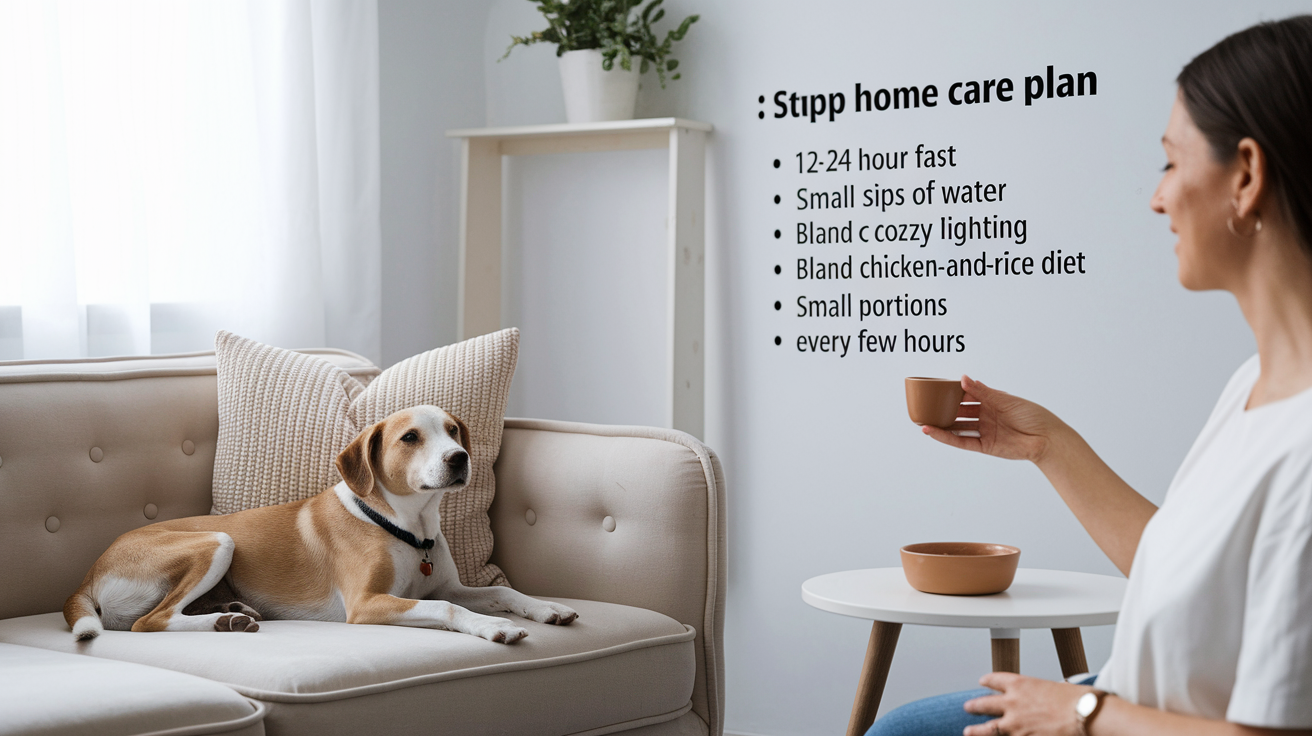
If your dog vomits a couple of times but seems otherwise okay, you can try supportive care at home for a short period. This approach only works if your dog is alert, responsive, not in pain, and able to keep down small sips of water.
Withhold all food for 12 to 24 hours to let the stomach rest. Don’t fast puppies for more than a few hours. Contact your vet for puppy-specific guidance. Keep fresh water available, but control how much your dog drinks at once. Offer a teaspoon to a tablespoon of water every 10 to 15 minutes instead of letting your dog gulp a full bowl.
After 12 to 24 hours with no vomiting, start refeeding a bland diet. Use plain, boneless, skinless boiled chicken and plain white rice. Feed small portions, about one-quarter to one-third of a normal meal, every four to six hours. If your dog tolerates that for 24 to 72 hours without vomiting, you can gradually transition back to regular food over three to seven days by mixing increasing amounts of regular food with the bland diet.
Follow these steps:
- Withhold food for 12 to 24 hours (adults only, consult vet for puppies)
- Offer water in small, frequent amounts every 10 to 15 minutes
- After 12 to 24 hours with no vomiting, start a bland diet of boiled chicken and white rice
- Feed small portions (1/4 to 1/3 normal meal size) every 4 to 6 hours
- Continue bland diet for 24 to 72 hours if no vomiting occurs
- Gradually transition back to normal food over 3 to 7 days
Do not give your dog any over-the-counter human medications, anti-nausea drugs, or anti-diarrhea medications without your vet’s approval. Many human drugs are toxic to dogs.
If your dog vomits again during the bland diet, refuses water, becomes more lethargic, or shows any new symptoms like diarrhea or abdominal pain, stop home care and contact your veterinarian. Home treatment should show clear improvement within 24 hours. If it doesn’t, your dog needs professional evaluation.
When a Dog Keeps Vomiting: How to Know It’s an Emergency

Some vomiting situations are life-threatening and require immediate emergency care. These aren’t cases where you wait a few hours or try home remedies first. Recognizing these red flags can save your dog’s life.
Unproductive retching with a swollen, tight belly is the hallmark of bloat or GDV. The stomach twists, trapping gas and fluid. Your dog will try to vomit but nothing comes up. The abdomen looks distended and feels hard. Your dog may pace, drool, or collapse. This is a surgical emergency. Minutes matter. Bright red blood or dark, coffee-ground material in vomit signals internal bleeding. Ulcers, tumors, clotting disorders, and toxins can all cause bleeding. Any blood in vomit means call the emergency vet immediately.
Pale, white, or gray gums, or gums that take more than two seconds to return to pink after you press them (capillary refill time), indicate shock or severe dehydration. If your dog is weak, collapses, has difficulty breathing, or shows signs of extreme distress, don’t wait. Continuous vomiting, where your dog can’t stop or vomits every time they try to drink, leads to dangerous dehydration and electrolyte imbalance within hours. If your adult dog can’t keep any water down for more than 12 hours, or a puppy for more than two to four hours, that’s an emergency threshold.
Emergency red flags include:
- Unproductive retching with a distended, hard abdomen
- Vomit containing bright red blood or coffee-ground material
- Pale, white, gray, or blue gums, capillary refill time over 2 seconds
- Collapse, extreme weakness, seizures, or difficulty breathing
- High fever (rectal temperature 103°F or higher) or very low temperature
- Continuous vomiting despite withholding food and water
- Inability to keep water down for more than 12 hours in adults or 2 to 4 hours in puppies
- Severe abdominal pain or rigidity when you touch the belly
These signs indicate conditions that can progress to organ failure, shock, or death without immediate intervention. Don’t try to treat these at home. Get to an emergency veterinary hospital right away.
Veterinary Diagnostics for a Dog That Keeps Vomiting

When you bring your dog to the vet for vomiting, the first step is a thorough physical exam. Your vet will check hydration by assessing gum moisture, skin elasticity, and capillary refill time. They’ll palpate the abdomen to feel for pain, swelling, masses, or foreign objects. They’ll listen to the heart and lungs, take your dog’s temperature, and ask detailed questions about when the vomiting started, what it looks like, and whether your dog has eaten anything unusual.
Blood tests are often the next step. A complete blood count (CBC) checks for infection, anemia, and inflammation. A serum chemistry panel evaluates kidney function, liver function, blood sugar, and electrolyte levels. These tests help identify organ disease, dehydration severity, and metabolic problems. A urinalysis can reveal kidney issues or signs of systemic illness. If your vet suspects parasites, they’ll run a fecal test.
Imaging helps visualize what’s happening inside. Abdominal x-rays can show foreign objects, intestinal blockages, gas patterns, or organ enlargement. Ultrasound provides more detailed views of organ structure, masses, fluid accumulation, and bowel wall thickness. In puppies, a parvovirus antigen test is common. If bleeding or clotting problems are suspected, your vet may run a coagulation profile. For persistent or unexplained vomiting, endoscopy allows direct visualization of the esophagus, stomach, and upper intestine, and enables biopsy collection.
| Diagnostic Test | Purpose | What It Can Reveal |
|---|---|---|
| Blood tests (CBC, chemistry panel) | Evaluate organ function, infection, dehydration | Kidney or liver disease, electrolyte imbalance, anemia, infection markers |
| Abdominal x-ray | Visualize bones, foreign bodies, gas patterns | Intestinal obstruction, foreign objects, organ size abnormalities |
| Abdominal ultrasound | Detailed imaging of soft tissues and organs | Masses, fluid, organ structure, bowel wall thickening, pancreatitis |
| Fecal test | Check for parasites | Roundworms, hookworms, whipworms, giardia |
| Endoscopy | Direct visualization and biopsy | Ulcers, tumors, foreign bodies, inflammatory bowel disease |
If you saved a sample of the vomit or can describe what it looked like in detail, bring that information to the appointment. A photo on your phone works, too. The more your vet knows about the vomit’s color, consistency, timing, and frequency, the faster they can narrow down the cause and choose the right tests.
Treatments a Vet May Use When Your Dog Keeps Vomiting
Once your vet identifies the cause, treatment targets both the symptom (vomiting) and the underlying problem. Fluid therapy is almost always part of the plan. Vomiting causes dehydration and electrolyte imbalances quickly. Depending on severity, your vet may give subcutaneous fluids under the skin for mild dehydration or intravenous fluids through a catheter for moderate to severe cases. IV fluids work faster and allow precise control of electrolyte replacement.
Antiemetic medications stop nausea and vomiting. Maropitant, sold as Cerenia, is the most commonly used antiemetic in veterinary medicine. It blocks vomiting signals in the brain and is available as an injection or tablet. Ondansetron is another option, often used in cases where Cerenia isn’t enough or for certain types of nausea. Metoclopramide helps both nausea and gut motility, so it’s useful when vomiting is linked to slow stomach emptying. These are prescription medications. Never give your dog human anti-nausea drugs without explicit veterinary instruction.
If the cause is bacterial infection, your vet may prescribe antibiotics. Pain control is important, especially in cases of pancreatitis or gastritis. Deworming medication treats parasite-related vomiting. If imaging or endoscopy reveals a foreign body or intestinal obstruction, surgery is necessary to remove the blockage and repair any damage. For chronic conditions like inflammatory bowel disease or food allergies, long-term dietary management and sometimes immunosuppressive medications are part of the treatment plan.
Common veterinary interventions include:
- Fluid therapy to correct dehydration and restore electrolyte balance
- Antiemetic injections or tablets to stop vomiting and control nausea
- Pain management for inflammation or abdominal discomfort
- Antibiotics only when bacterial infection is confirmed or strongly suspected
- Surgery for foreign-body removal, obstruction repair, or treatment of GDV
Your vet will tailor the treatment plan to your dog’s specific diagnosis, age, overall health, and how severe the vomiting is. Some dogs go home the same day with oral medications. Others need hospitalization for a day or more to receive IV fluids, injectable medications, and close monitoring. Follow all discharge instructions carefully, including medication schedules, diet recommendations, and when to return for recheck exams.
Preventing Future Vomiting Episodes in Dogs
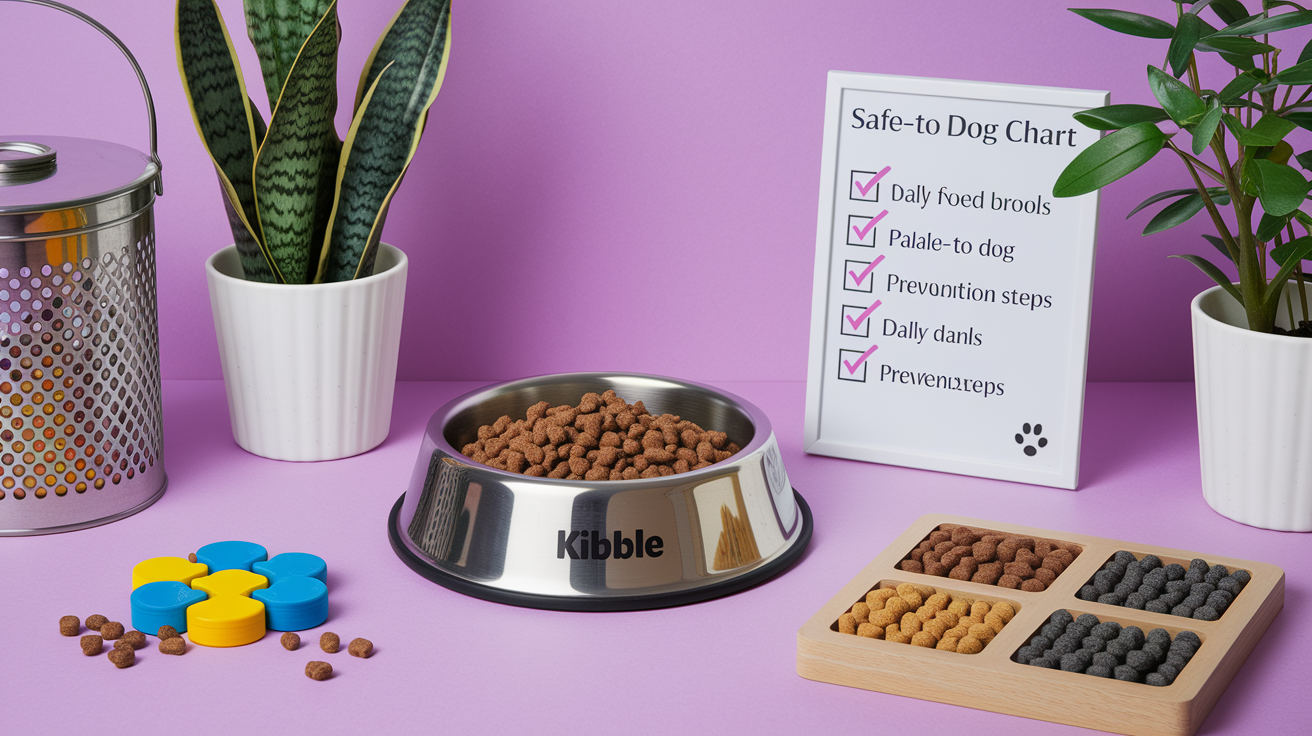
Many vomiting episodes are preventable with a few daily habits and safety measures. Start with how you feed your dog. If your dog gulps food in seconds, slow them down with a slow-feeder bowl, a puzzle feeder, or by spreading kibble on a flat surface like a baking sheet. Fast eating increases the risk of vomiting and bloat.
When you change your dog’s food, do it gradually over seven to ten days. Start by mixing 25 percent new food with 75 percent old food for a few days, then shift to half and half, then 75 percent new, and finally 100 percent new food. Abrupt changes upset the stomach and trigger vomiting or diarrhea.
Toxin prevention is critical. Keep chocolate, xylitol-containing products (gum, candy, peanut butter), grapes, raisins, onions, garlic, and all human medications out of reach. Store trash in a secure bin your dog can’t open. If you use rodent bait or slug pellets in your yard, make sure they’re in tamper-proof containers or areas your dog can’t access. Supervise your dog around houseplants. Many common plants are toxic.
Routine parasite control prevents worm-related vomiting. Follow your vet’s deworming schedule, usually every three to six months depending on your dog’s lifestyle and risk. Annual fecal testing catches parasites early. Vaccinate puppies on schedule, starting around six to eight weeks and repeating every three to four weeks until about 16 to 20 weeks, to protect against parvovirus and other serious infections.
Daily prevention steps include:
- Use slow-feeder bowls or puzzle feeders for dogs who eat too fast
- Transition any new food gradually over 7 to 10 days
- Secure trash, compost, and any food or non-food items your dog might scavenge
- Keep all human medications, toxic foods, and chemicals out of reach
- Supervise outdoor time to prevent eating sticks, rocks, or unknown items
- Maintain routine parasite prevention and annual fecal testing
For senior dogs or dogs on long-term medications, schedule regular veterinary check-ups every six to twelve months to monitor kidney and liver function. Catching early changes can prevent serious illness and reduce the risk of vomiting caused by organ disease.
Special Cases: Puppies, Senior Dogs, and Chronic Vomiting Conditions

Puppies need faster action. Their smaller size and faster metabolism mean dehydration progresses quickly. A puppy who vomits more than once or twice, especially if combined with lethargy or diarrhea, should see a vet the same day. Parvovirus is a major concern in puppies between six and twenty weeks old who aren’t fully vaccinated. It causes severe, bloody vomiting and diarrhea and can be fatal without aggressive treatment. Never fast a puppy for more than four to six hours. Their blood sugar drops too fast, leading to weakness and seizures.
Senior dogs are more vulnerable to serious underlying causes. A single vomiting episode in an older dog can signal kidney disease, liver disease, or cancer. Senior dogs often have reduced organ reserve, meaning they can’t bounce back from dehydration or illness as quickly as younger dogs. If your senior dog vomits, contact your vet sooner rather than later, even if the vomiting seems mild. Regular bloodwork every six to twelve months helps catch problems early in older pets.
Chronic vomiting, vomiting that happens regularly over weeks or months, points to long-term conditions that need ongoing management. Inflammatory bowel disease (IBD) causes recurring vomiting, diarrhea, and weight loss due to chronic gut inflammation. Pancreatitis can become a recurring problem, especially in dogs who’ve had it before. Endocrine disorders like Addison’s disease or hyperthyroidism can cause vomiting as one of many symptoms. Uterine infections in unspayed females, chronic kidney or liver disease, and certain cancers all lead to persistent vomiting that won’t resolve with simple home care. These dogs need thorough diagnostics, including bloodwork, imaging, and sometimes biopsies, to identify the root cause and build a long-term treatment plan. Dietary trials, prescription medications, and regular vet monitoring become part of daily life for dogs with chronic conditions.
Final Words
Act fast: stabilize your dog right away by withholding food for 12–24 hours in adults, offering tiny water sips every 10–15 minutes, and noting how often vomiting happens. Go to the vet immediately for blood in vomit, unproductive retching, abdominal swelling, or severe weakness.
Keep a log of timing, appearance, and recent exposures, and save a sample if you can.
If your dog keeps vomiting past 24 hours, can’t hold water, or you feel uneasy, call your vet. Most dogs improve with quick care and simple steps—you’re on the right track.
FAQ
Q: What can I give my dog that keeps vomiting?
A: If your dog keeps vomiting, give tiny water sips every 10–15 minutes and withhold adult food 12–24 hours. Reintroduce bland small meals once vomiting stops. Call a vet for blood, toxins, or repeated vomiting.
Q: How many times should a dog throw up before going to vet?
A: A dog should see a vet after vomiting more than 2–3 times in 24 hours, or sooner if there’s blood, pale gums, severe lethargy, or inability to keep water down; puppies and seniors need earlier care.
Q: What would cause a dog to vomit repeatedly?
A: Repeated vomiting can come from eating garbage or a sudden diet change, toxins (chocolate, xylitol), infections like parvo, intestinal blockage, pancreatitis, or chronic organ disease. Have a vet evaluate ongoing vomiting.