

Think you can tell a fever by feeling your dog’s nose? That’s not reliable and can lead to risky guesswork.
When you need to know for sure, a rectal digital thermometer gives the most accurate read of what’s going on inside your dog’s body.
In under two minutes, with the right supplies and calm handling, you can get a real number to decide whether to watch at home or call the vet.
This post walks you step-by-step through the safest rectal technique, what readings mean, clear red flags, and alternatives if rectal isn’t possible.
How to Take Your Dog’s Temperature at Home (Step-by-Step)
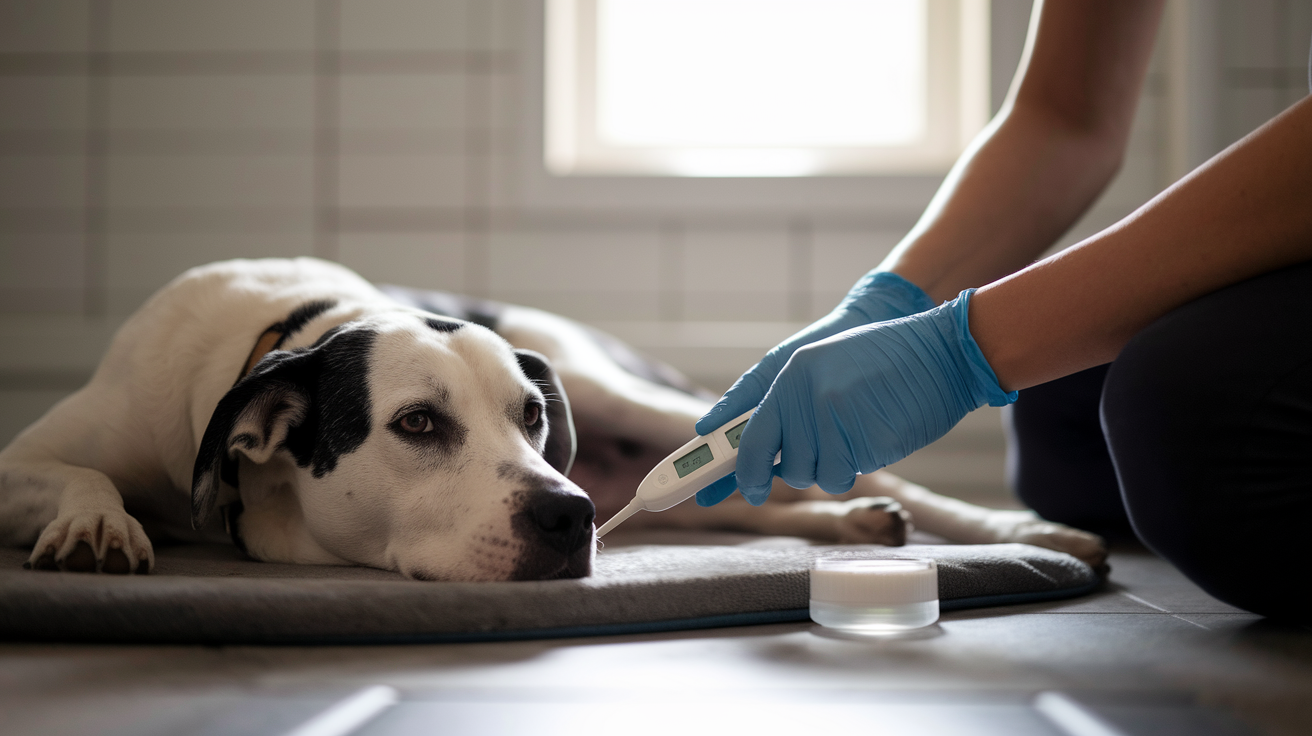
The rectal digital thermometer method gives you the most accurate read on what’s actually happening inside your dog’s body. It’s the standard for good reason. When you’re trying to figure out whether you need to rush to the vet or just keep an eye on things, you want real information, not guesswork.
The whole thing takes under two minutes once you’ve got your supplies lined up. Most dogs handle it fine if you stay calm and don’t rush.
Here’s the process:
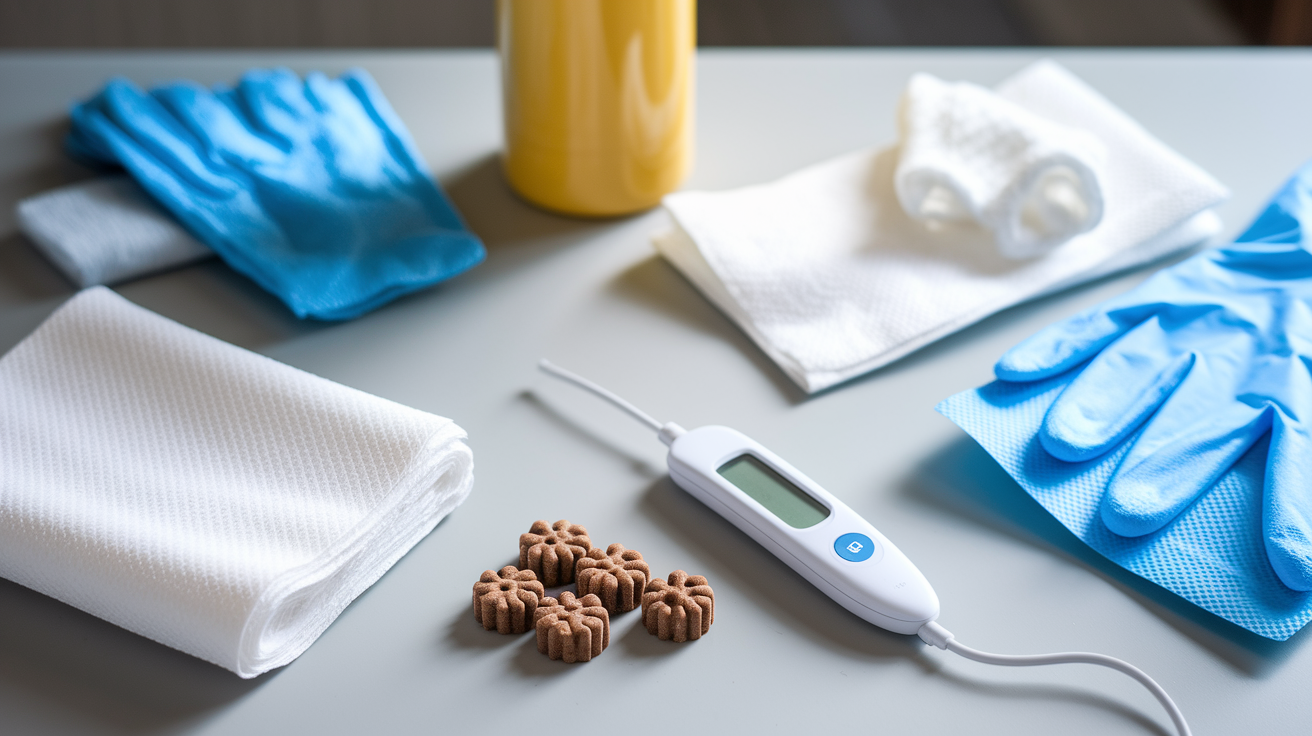
Grab what you need. Digital rectal thermometer (the pet-specific label doesn’t matter much, any digital works), water-based lube or petroleum jelly, paper towels, gloves if that makes you feel better, and a treat.
Turn the thermometer on. Check that it’s working. If there’s an old reading stuck on the screen, reset it.
Use plenty of lubricant. Really coat that tip. This isn’t the time to be stingy. It makes everything easier and safer.
Get your dog in position. Small dogs can sit in your lap or stand on a table. Big dogs should stand on the floor. Keep things quiet.
Get help if you can. One person holds the head and chest steady, the other lifts the tail and handles the thermometer. Solo? Stand behind your dog and tuck an arm under their belly just in front of the back legs.
Lift the tail gently. Up and slightly to the side. Don’t yank.
Insert slowly. About an inch for small dogs. Two to three inches for bigger ones. Angle it slightly toward the body instead of straight in. If you hit resistance, stop and adjust.
Hold it still. Most digital models beep somewhere between 10 and 60 seconds. The fast ones finish in under 10.
Pull it out carefully and check the number. Withdraw slowly, read the display, write it down.
Clean up and reward. Wipe the thermometer with disinfectant or soap. Give your dog praise or a treat. Keep paper towels handy because some dogs have a bowel movement right after.
Once you’ve done this a couple times, it gets easier. The main thing is staying calm, using enough lube, and not forcing anything. If your dog starts panicking or tries to bite, stop. Call your vet instead.
Supplies You Need to Take a Dog’s Temperature
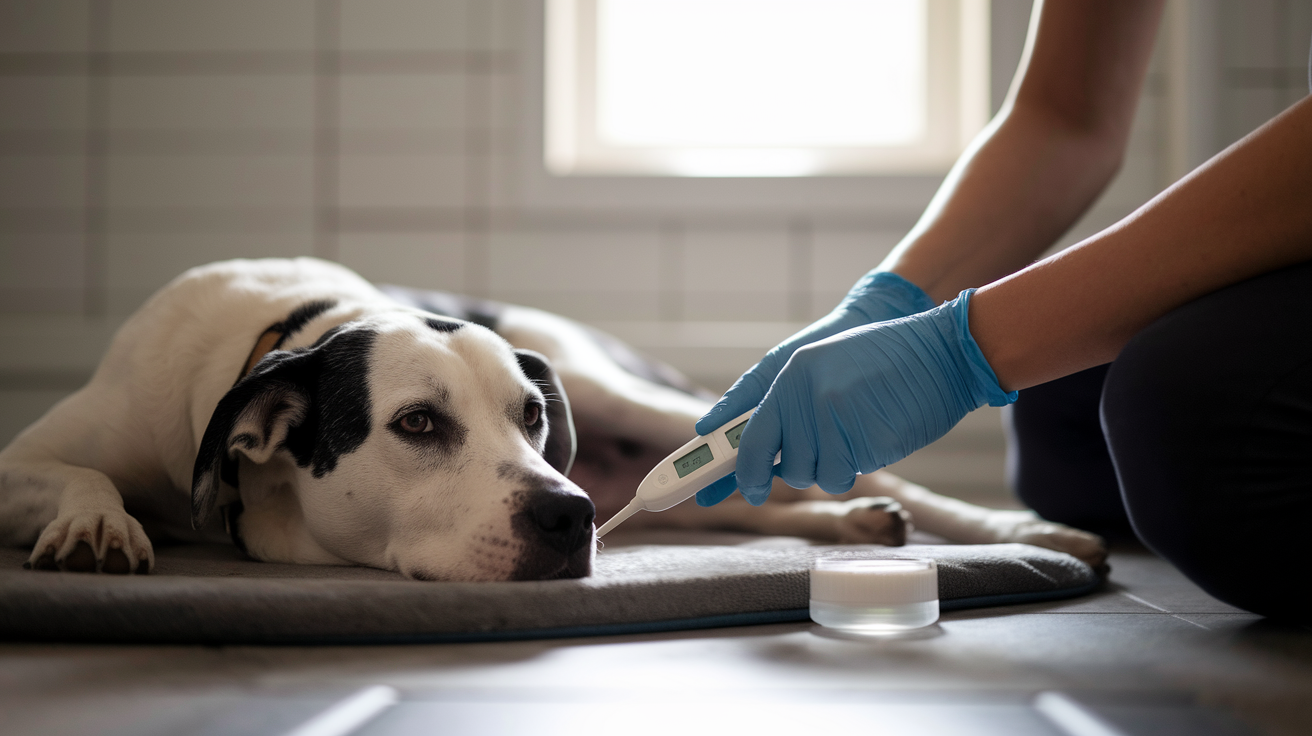
Get everything ready before you start. When you’re hunting around for lubricant or realizing the thermometer battery’s dead, your dog picks up on the stress and gets harder to handle. Set it all up on a clean surface first.
What you need:
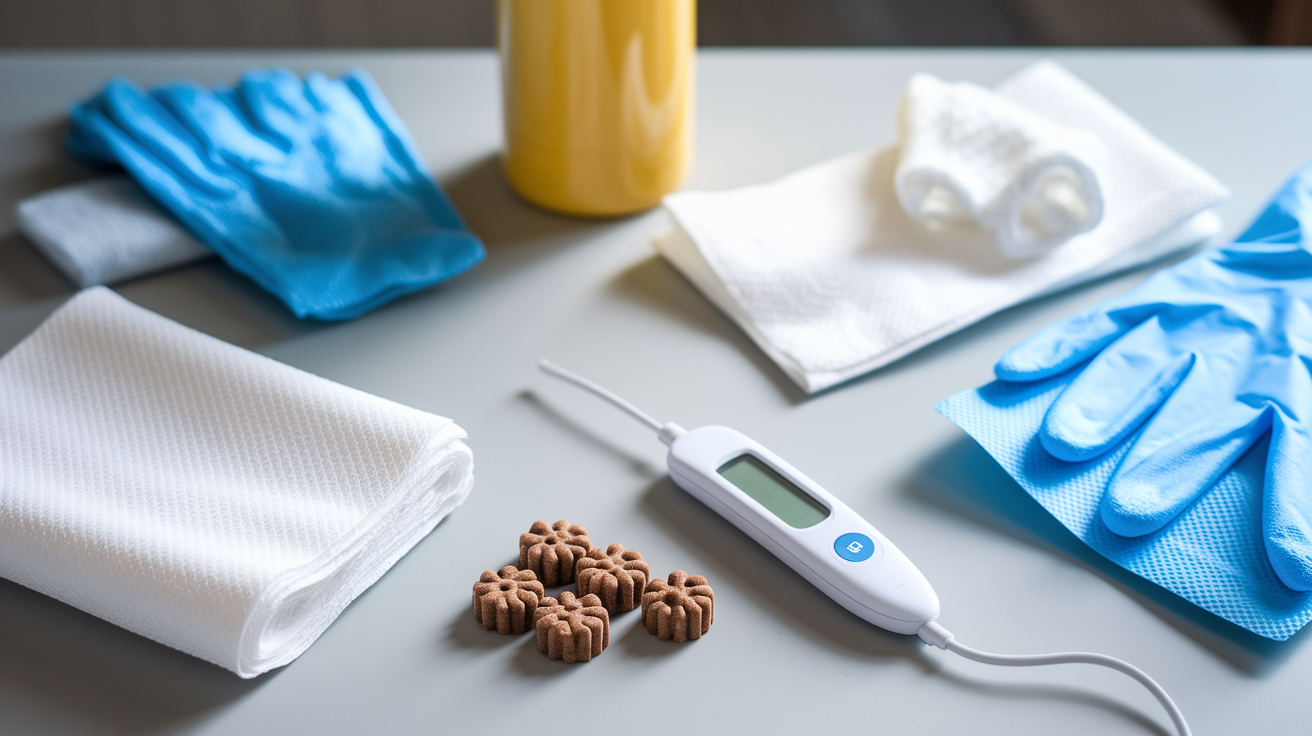
Digital rectal thermometer. Pet-specific models are fine, but a regular digital oral thermometer works too. Digital is safer and faster than the old glass kind. Just label it so nobody uses it on people later.
Water-based lubricant or petroleum jelly. This makes the thermometer slide in without discomfort. Water-based cleans up easier, but petroleum jelly or coconut oil work if that’s what you’ve got.
Paper towels. Keep a stack nearby. Some dogs poop during or right after.
Gloves if you want them. Optional, but helpful if you’d rather not handle the thermometer directly.
Small treats. Reward cooperation. It helps create a better association for next time.
Disinfectant wipes or rubbing alcohol. Clean the tip before and after every single use.
Look for a thermometer with a flexible tip, a display that’s easy to read, and a fast reading time. Baby thermometers often beep in under 10 seconds, which keeps the whole thing quick and low-stress.
Understanding Normal and Abnormal Dog Temperature Ranges
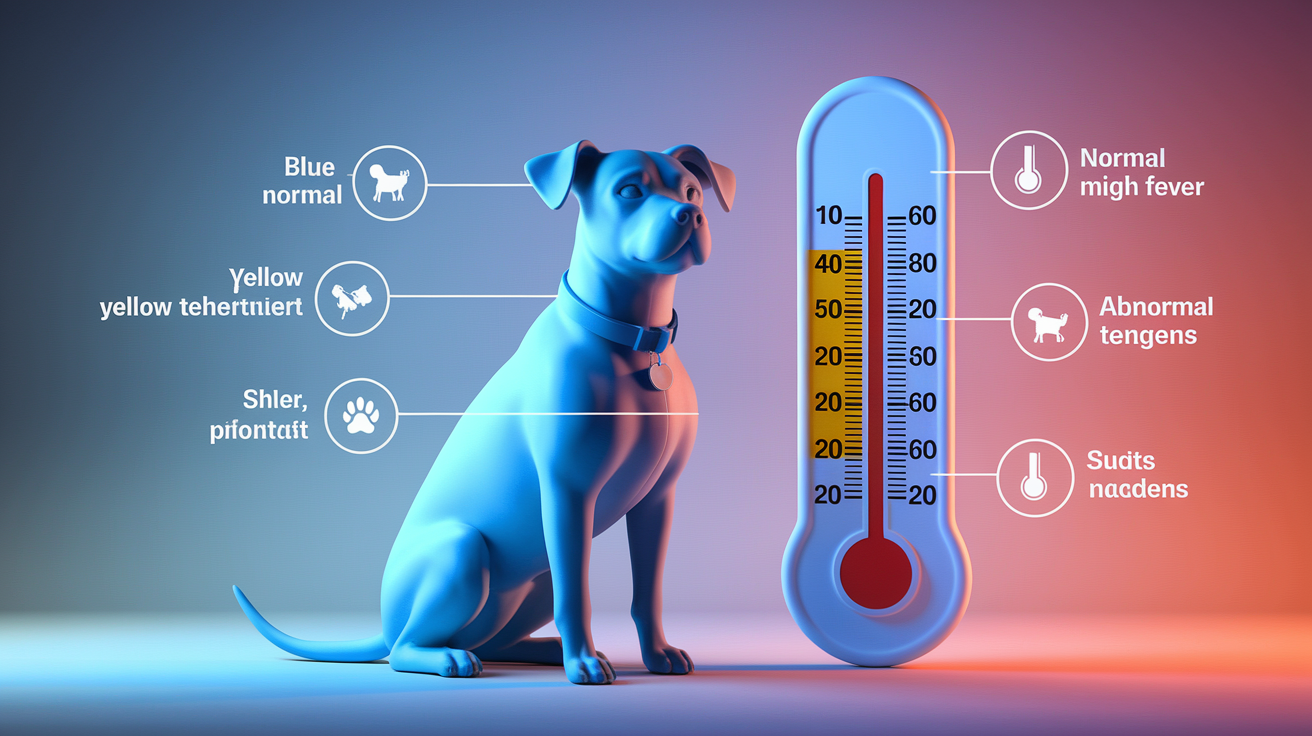
Dogs run hotter than we do. What feels warm to your hand might be totally normal for them. A healthy dog’s internal temp sits between 101.0°F and 102.5°F. After playing hard, getting excited, or spending time in warm weather, they can temporarily hit around 103°F for 10 to 20 minutes. That’s why context matters when you’re reading the number.
Anything above 103°F that doesn’t come down fast suggests fever or overheating. Above 106°F? That can cause serious organ damage and needs emergency care now. On the low end, readings under 99°F point to hypothermia or, in a sick dog, maybe sepsis. Both are urgent.
| Temperature Range | Meaning |
|---|---|
| 100–102.5°F | Normal for most dogs |
| 103–104°F | Mild fever or recent exertion; monitor closely |
| Above 106°F | Medical emergency; seek veterinary care immediately |
| Below 99°F | Hypothermia or serious illness; call your vet right away |
If your dog’s temp is above 102.5°F but they’re acting normal, give them a chance to cool down or settle. Retake it in 10 minutes. Still high or showing any signs of illness? Contact your vet.
Safe Handling and Restraint Tips
Most dogs aren’t thrilled about having their temperature taken, but gentle, confident handling makes a big difference. Restraint isn’t about forcing them to stay still. It’s about supporting them so they feel secure and can’t twist or back away suddenly.
A calm environment helps. Turn off the TV, close doors to cut down on distractions, use a quiet voice. If your dog’s already anxious, give them a few minutes to settle first.
Safe restraint techniques:
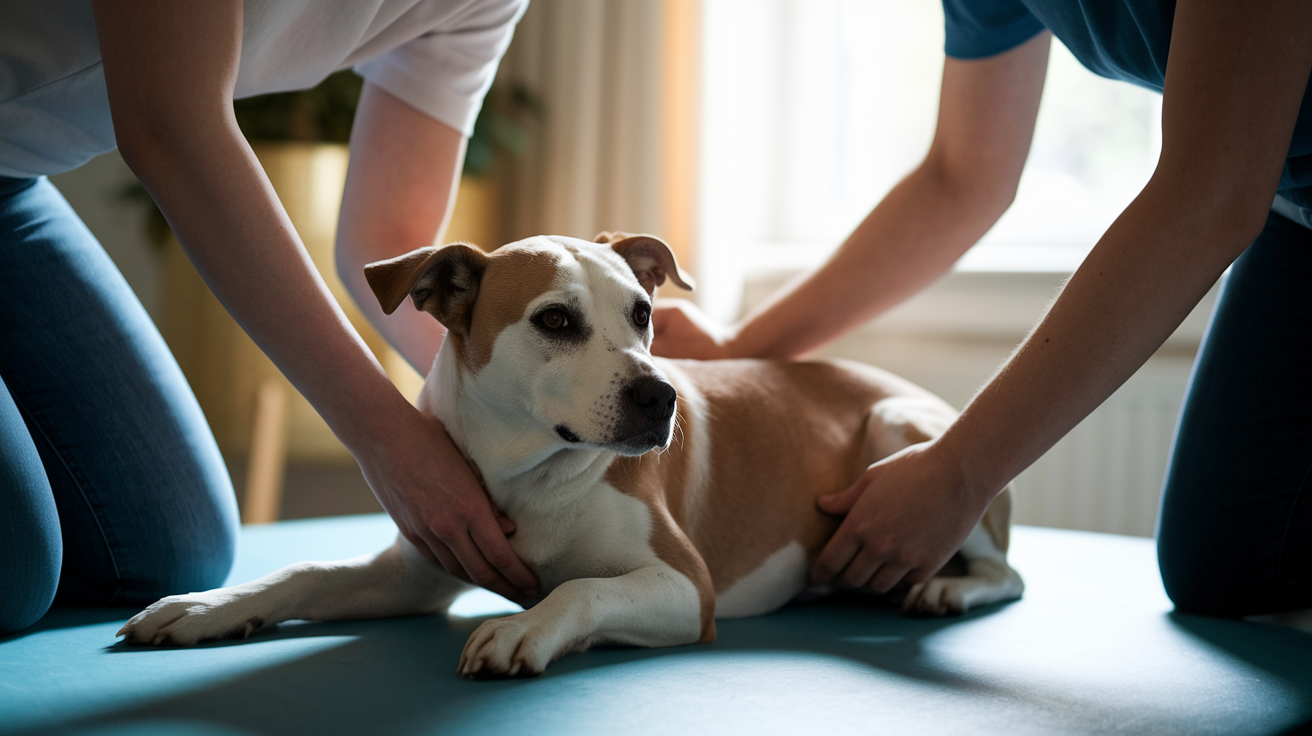
Use a helper whenever you can. One person holds the dog’s head and chest close to their body, tucking the dog between their arm and torso. The other lifts the tail and handles the thermometer.
For solo handling of a large dog, stand behind them. Tuck one arm under the belly just in front of the back legs so they can’t sit. Use your free hand to lift the tail and insert the thermometer.
For small dogs, restrain on your lap or a table. Keep one arm gently around the chest and shoulders, supporting them against your body.
Lift the tail gently, don’t pull hard. Hold it up and slightly to one side, but respect any resistance.
Move slowly and speak softly. Sudden movements or loud voices increase stress.
If your dog starts panting hard, whining, growling, or trying to bite, stop. Those are signs of serious distress. You can try again in a few minutes with more calming, or contact your vet for help or an office visit.
When to Call a Veterinarian
Temperature readings give you hard data, but they’re only part of what you need to know. How your dog’s acting, eating, and moving all matter when you’re deciding what to do next. Some temperature changes need immediate vet care. Others you can watch at home for a short window.
Call or visit your vet if you see:
Temperature above 103°F that doesn’t drop after 10 to 20 minutes of rest and cooling.
Temperature above 104°F, especially with lethargy, vomiting, shaking, or refusing food.
Temperature above 106°F. Life-threatening emergency. Go to the nearest vet hospital right now.
Temperature below 99°F in a dog who’s sick, weak, or unresponsive.
Fever plus other symptoms. Vomiting, diarrhea, trouble breathing, collapse, seizures, or blood in urine or stool all need immediate attention.
Fever lasting more than 24 hours, even if your dog seems okay otherwise.
Quick vet care matters because high fevers can damage organs fast, and low temps in a sick dog can signal a life-threatening infection or shock. If you’re not sure whether a reading is urgent, call your vet’s office. They can help you decide whether to monitor at home or come in.
Alternative Methods if a Rectal Thermometer Cannot Be Used
If your dog won’t tolerate rectal insertion, or you’re just not comfortable with the technique, there are other options. None are as accurate as a rectal reading, but they can give you a rough sense of whether something’s wrong and whether you need to get veterinary help.
Alternatives include:
Ear (aural) thermometers. These measure temperature inside the ear canal. They’re faster and less invasive than rectal thermometers, but they need correct angling deep into the horizontal ear canal. Readings can vary, and ear infections, wax buildup, or inflammation make them unreliable.
Infrared forehead or temporal thermometers. These don’t work well on dogs. Hair, skin thickness, and variable surface temp make readings inaccurate. You can try one on a low-hair area like the inner ear or groin, but treat any result as a rough estimate only.
Behavioral and physical signs. Hot ears, a warm belly, panting at rest, glassy eyes, or lethargy can suggest fever, but they’re not reliable on their own. Use them as clues to pursue a real temperature measurement.
If you try an ear thermometer, lift the ear flap and insert the probe at a 90-degree angle to the head. Don’t force it. Wait for the beep, then remove and read. If the ear looks red, has a yeasty smell, or your dog pulls away in pain, skip the ear method and call your vet. If you get an abnormal ear reading and your dog seems sick, verify it with a rectal measurement or contact your vet for guidance.
Final Words
When you’re taking your dog’s temperature at home, have your digital rectal thermometer, lubricant, treats, and a helper ready. Use gentle restraint and follow the step-by-step insert, wait, and clean routine for the most accurate reading.
Remember normal is about 101.0 to 102.5 F. Above 103 F is a fever and above 106 F needs urgent care. If readings are odd or your dog seems unwell, call your vet.
If you need a quick refresher on how to take dog temperature, keep this guide handy and you’ll feel calmer and more prepared.
FAQ
Q: Can you take a dog’s temperature with a human thermometer?
A: You can use a human digital thermometer on a dog, but a dog-specific rectal digital thermometer is safer and more accurate; lubricate, restrain gently, and call the vet for abnormal readings.
Q: How do you tell if a dog has a fever without a thermometer?
A: You can tell a dog may have a fever without a thermometer by warm ears or nose, shivering, lethargy, reduced appetite, or fast breathing; check temperature and contact a vet if signs worsen.
Q: How do I say “I love you” in a dog?
A: You say “I love you” to a dog by giving calm touch, consistent care, short training sessions, predictable routines, playtime, and safe space, which build trust that dogs understand.
Q: What is the 90 10 rule for dogs?
A: The 90 10 rule for dogs usually means spend about 90% of training on rewarding good behavior and 10% on correction, focusing on consistency, short sessions, and positive reinforcement.