

What if your cat’s constant scratching isn’t “just a phase” but an ongoing reaction to pollen, mold, or dust mites?
Environmental allergies in cats often get worse unless you change both home care and medical support.
This post gives proven relief strategies, easy cleaning and bathing routines, smart household changes, and the vet-supported treatments that often cut itching and lower infection risk.
I’ll also point out what to watch, how long to try home steps, and exactly when to call the vet.
If you want simple, effective actions today, keep reading.
Core Strategies for Managing Environmental Allergies in Cats

Environmental allergies in cats don’t just go away. They’re chronic, they get worse over time, and they’re triggered by stuff like pollen, mold, dust mites, and other airborne particles that soak right through the skin. Your cat isn’t “just itchy sometimes.” This is their immune system reacting to things it shouldn’t, and it’ll keep happening without the right combo of home care, medical treatment, and changes to their environment. The good news? Most cats can live pretty comfortably when symptoms are kept under control.
What you’ll usually see: relentless scratching, constant licking (paws, belly, and face are favorites), ear infections that keep coming back, patchy fur loss, and open sores from all that self-inflicted trauma. You might also spot waxy ears, chin acne, or little crusty spots on the skin. Some cats even get digestive issues like vomiting or diarrhea, though skin stuff is way more common. Catching it early matters because unmanaged itching turns into broken skin, bacterial infections, and a cycle where everything just keeps getting worse.
Managing allergies at home starts with cutting down on allergen exposure and keeping your cat’s skin barrier in decent shape. Weekly baths with anti-itch shampoo and moisturizer, daily wipe-downs of their fur and paws, dust-free litter, washing bedding weekly in hot water, vacuuming high-traffic spots 2 to 4 times a week, and running a HEPA air filter can all make a real difference. For quick relief, steroids work fast but they’re meant for short-term use because of side effects. Antihistamines and non-steroidal anti-itch meds might help some cats, though results can be hit or miss.
Key steps for managing environmental allergies in cats:
- Bathe weekly (if your cat will tolerate it) using a vet-recommended anti-itch shampoo, then follow up with a moisturizing conditioner to protect their skin barrier.
- Wipe paws and coat daily with a damp cloth or hypoallergenic pet wipes to get rid of pollen and dust after your cat grooms or wanders around the house.
- Vacuum 2 to 4 times per week and change or clean the vacuum bag often so you’re not just spreading allergens around again.
- Wash all bedding weekly in hot water (at least 60°C/140°F) to kill dust mites and get rid of trapped pollen.
- Switch to dust-free litter and keep the box in a well-ventilated spot to cut down on respiratory irritation.
- Use a True HEPA air purifier in whatever room your cat hangs out in most, and replace filters every 6 to 12 months like the manufacturer says.
Recognizing Cat Allergy Symptoms and Differentiating Them From Other Conditions

Spotting allergy symptoms in cats starts with watching for patterns. Environmental allergies often show up as head and neck scratching, chewing at the base of the tail, belly licking, and ear problems that won’t quit. You might notice bald patches, tiny scabs (especially along the back or neck), red skin, or a greasy feel to their coat. Chronic ear infections with waxy brown discharge are pretty common. Some cats over-groom until they’ve got raw patches or develop raised, crusty bumps.
Here’s where it gets tricky. Flea allergy dermatitis, food allergies, mites, ringworm, and even reactions to new meds can all look nearly the same. A single flea bite can set off weeks of intense itching in a flea-allergic cat, even if you never actually see the flea. Food allergies tend to cause similar skin issues plus possible stomach upset, and they don’t follow a seasonal pattern like pollen allergies might. Mites and ringworm need specific tests to rule out.
Common conditions that look like environmental allergies:
- Flea allergy dermatitis – one flea bite can cause severe, widespread itching and hair loss, especially at the tail base and back legs.
- Food allergy or intolerance – usually shows up as year-round itching, ear infections, and sometimes vomiting or diarrhea. No seasonal pattern.
- Cheyletiella mites (walking dandruff) – causes flaky skin and itching. Needs a skin scraping or tape test to diagnose.
- Ringworm (dermatophytosis) – fungal infection that can cause patchy hair loss and crusting. Confirmed by culture or lamp test.
- Adverse drug reactions – new medications can trigger sudden itching or rash. Timeline matches up with recent prescription changes.
When to call your vet right away: if your cat’s breathing hard or wheezing, if lesions are spreading fast across big areas of their body, if there’s serious swelling around the face or throat, or if your cat stops eating and gets lethargic on top of the skin symptoms. These can point to a severe allergic reaction or secondary infection that needs urgent medical attention. Vomiting that won’t stop, diarrhea, or ear infections that don’t get better with initial treatment also need a same-day call.
Diagnostic Pathways for Confirming Environmental Allergies in Cats

There’s no single test that says “yes, your cat has environmental allergies.” The diagnosis happens by ruling out every other possible cause of itching, skin lesions, and ear infections. That’s why your vet will probably start with a thorough physical exam, skin cytology to check for bacteria or yeast, flea combing, and a detailed history of your cat’s diet, environment, and when symptoms happen.
The exclusion process usually includes treating for fleas (even if you don’t see them), running a strict 8 to 12 week food elimination trial to rule out food allergies, checking for mites with skin scrapings or tape tests, and treating any secondary infections with antibiotics or antifungals. Only after those steps come back negative or symptoms keep going despite treatment does environmental allergy become the main diagnosis. It’s careful detective work, not a fast answer.
When Allergy Testing Is Appropriate
Allergy testing (either intradermal skin testing or serum blood testing) is only recommended when you and your vet are planning allergen-specific immunotherapy. These tests don’t diagnose environmental allergies on their own because healthy cats with no symptoms can still react to allergens on a test. The goal is to figure out which specific pollens, molds, or dust mites are triggering your cat’s immune system so a custom desensitization formula can be made. Intradermal testing is generally more accurate and is often done by a veterinary dermatologist under light sedation. Serum testing is less invasive but may be slightly less precise. Results guide immunotherapy formulation, which can take 6 to 12 months to show noticeable improvement and might need ongoing adjustments over the first year.
| Test Type | What It Identifies | When It’s Used | Limitations |
|---|---|---|---|
| Intradermal skin testing | Specific environmental allergens (pollens, molds, dust mites) causing immune reactions | Only when immunotherapy is planned. Requires sedation and specialist visit | Can’t confirm allergy on its own. Healthy cats may react. More invasive |
| Serum (blood) allergen testing | Same allergens as skin testing, measured via antibody levels in blood | Alternative when skin testing isn’t doable. Less invasive | Slightly less accurate. Still can’t diagnose environmental allergies alone |
| Skin cytology | Bacteria, yeast, or inflammatory cells on skin surface | First test to identify secondary infections and guide treatment | Doesn’t identify underlying allergy cause |
| Food elimination trial | Food allergy or intolerance | Required to rule out food as a trigger before diagnosing environmental allergy | Requires strict 8 to 12 weeks with no treats or table food. Hard to stick with |
Medical Treatments That Support Allergy Management in Cats

Antihistamines like chlorpheniramine (usually dosed at 2 mg twice daily in cats) can reduce itching for some cats, especially when combined with fatty acid supplements. They tend to work better for mild cases and might cause drowsiness or drooling because of the bitter taste. Always check with your vet before giving any antihistamine, since dosing varies and some formulations have unsafe additives. Corticosteroids (steroids) provide fast, powerful itch relief and are often used for short courses during flare-ups, but they come with risks like increased thirst, appetite changes, and potential long-term effects on the liver and immune system, so they’re saved for situations where other options aren’t cutting it.
Cyclosporine (brand example: Atopica) is an immunosuppressant that reduces allergic inflammation and itching in some cats. It can take a few weeks to show full effect. Common side effects include vomiting and diarrhea, which might get better if you start at a lower dose or switch to a liquid form. Cyclosporine can also reactivate latent toxoplasmosis, so your vet may test for that before starting treatment. Non-steroidal anti-itch medications are available as alternatives to steroids and may offer symptom control with fewer system-wide side effects, though individual cats respond differently. All medications need vet oversight, dose adjustments, and monitoring for bad reactions.
Topical and Hygiene Therapies
Weekly bathing with a medicated anti-itch shampoo removes pollen, dust, and mold from your cat’s coat and skin. Follow the shampoo with a moisturizing conditioner, because dry skin increases allergen absorption and makes itching worse. If your cat won’t tolerate full baths, daily wipe-downs with a damp cloth or hypoallergenic pet wipes can still cut down on allergen load quite a bit. Focus on paws, belly, and face (the areas most exposed to household dust and outdoor pollen tracked inside).
Practical grooming steps to cut down on allergen exposure:
- Bathe once per week using a vet-recommended anti-itch or hypoallergenic shampoo. Let it sit for 5 to 10 minutes before rinsing to get the most soothing effect.
- Apply a moisturizing conditioner after every shampoo to restore the skin barrier and reduce dryness.
- Wipe paws, belly, and face daily with a damp microfiber cloth or fragrance-free pet wipe, especially after your cat’s been on windowsills or near open doors.
- Brush gently 2 to 3 times per week to remove loose fur and trapped dust. Use a soft-bristle brush to avoid irritating inflamed skin.
- Trim nails regularly to reduce skin damage from scratching and lower the risk of bacterial infections from broken skin.
Long-Term Environmental Allergy Management and Home Modifications
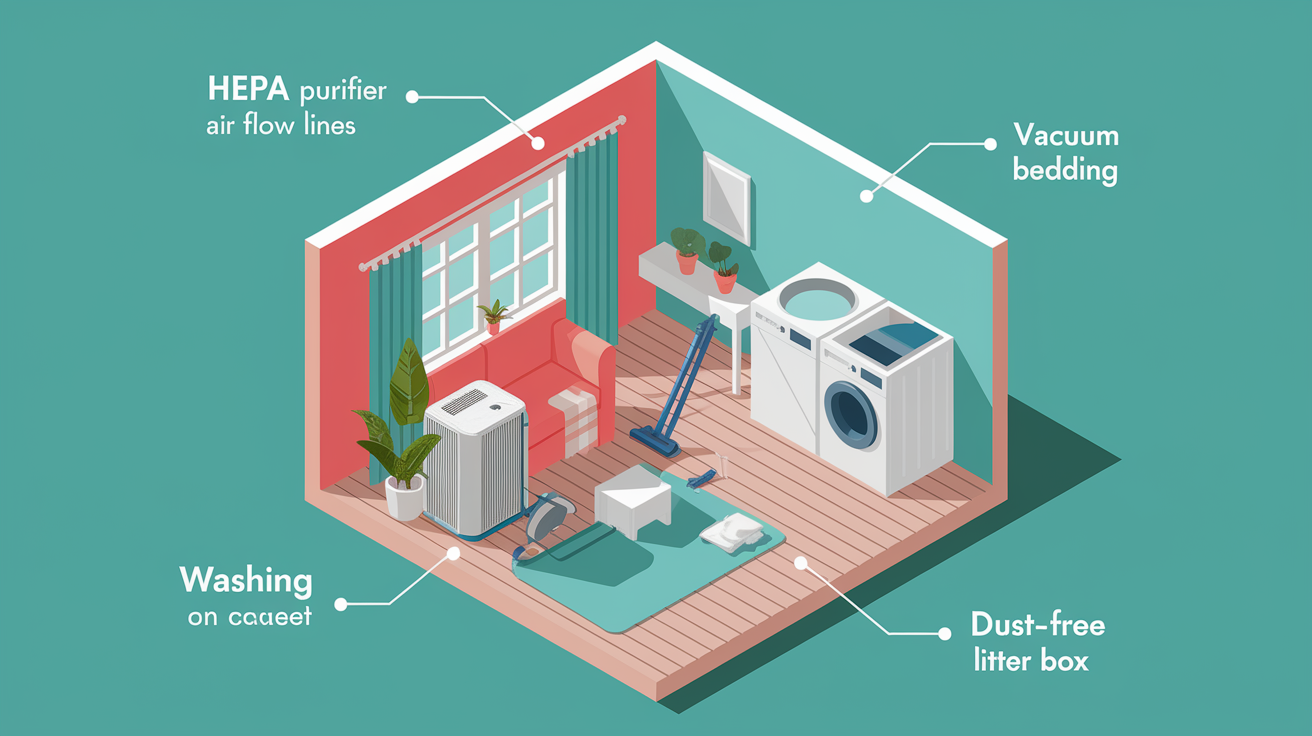
Indoor allergy triggers for cats include dust mites, mold spores, pollen tracked in on shoes and clothing, and particles from scented cleaning products or air fresheners. Even cats who never go outside get exposed because allergens float through open windows, cling to human clothing, and settle into carpets, furniture, and bedding. The goal isn’t to create a sterile environment (impossible and not necessary), but to reduce the total allergen load enough that your cat’s immune system can calm down and symptoms become manageable.
Consistent cleaning routines make a real difference. Vacuuming high-traffic areas and your cat’s favorite sleeping spots 2 to 4 times per week keeps pollen and dust from building up in carpet fibers and furniture. Change or clean your vacuum bag a lot so you’re not just spreading allergens around. Wash all cat bedding, blankets, and any fabric your cat regularly touches in hot water (at least 60°C/140°F) once a week to kill dust mites and remove trapped particles. Switch to unscented, dust-free cat litter and avoid clay-based products that create respiratory irritation. A True HEPA air purifier running in the main living area can capture airborne pollen, mold, and dust mite particles. Replace filters every 6 to 12 months per the manufacturer’s schedule to keep it working right. Fatty acid supplements (omega-3 and omega-6, often from fish oil) support skin health and have anti-inflammatory effects, but they take 1 to 3 months of daily use before you’ll notice improvement.
Environmental control strategies to reduce allergen exposure:
- Vacuum carpets, rugs, and upholstered furniture 2 to 4 times per week, focusing on areas where your cat sleeps or hangs out most.
- Wash all bedding weekly in hot water (60°C/140°F or higher) and dry on a hot cycle to get rid of dust mites and pollen.
- Use a True HEPA air purifier in the room where your cat spends most of the day. Run it continuously and replace filters every 6 to 12 months.
- Switch to dust-free, unscented cat litter and scoop daily to cut down on respiratory and skin irritation.
- Keep windows closed during high-pollen seasons (spring and fall in most areas) and limit your cat’s access to outdoor patios or balconies on high-pollen days.
- Avoid scented cleaning products, air fresheners, and perfumes in your home. Choose fragrance-free, pet-safe cleaners and skip fabric softeners that can irritate sensitive skin.
Allergen-Specific Immunotherapy and Long-Range Treatment Planning

Allergen-specific immunotherapy is the only treatment that works to retrain your cat’s immune system rather than just managing symptoms. It’s sometimes called desensitization, hyposensitization, or “allergy shots.” After allergy testing identifies your cat’s specific triggers (like certain tree pollens, grass pollens, mold species, or dust mites), a custom formula gets prepared and given either by injection under the skin or as liquid drops under the tongue (sublingual). The idea is to expose the immune system to tiny, gradually increasing amounts of the allergen so it stops overreacting.
About 60% of cats show meaningful improvement with immunotherapy, but it’s a slow process. Noticeable benefits may take many months, and fine-tuning the formula to find the right balance can take around a year. You’ll need to commit to a consistent dosing schedule. Injections are usually given at home after initial training from your vet, starting frequent (sometimes weekly) and then tapering to maintenance doses every few weeks. Sublingual therapy is given daily. The big advantage is long-term symptom control with fewer medications and side effects. The downside is the time commitment, the need for ongoing monitoring and dose adjustments, and the reality that not every cat responds.
| Form | How It’s Given | Typical Timeline | Pros | Cons |
|---|---|---|---|---|
| Injection (subcutaneous) | Small needle under the skin, usually at home after training. Starts frequent (weekly or twice weekly), tapers to maintenance every 2 to 4 weeks | 6 to 12 months before noticeable improvement. 1 year to optimize formulation | Can provide long-term symptom control. Reduces need for steroids and other medications. Addresses root immune response | Requires consistent home administration. Not all cats respond. Takes many months. Ongoing cost |
| Sublingual (under-the-tongue liquid) | Liquid dropped or sprayed under the tongue daily | Similar to injections: 6 to 12 months for noticeable benefit. Formulation adjustments may take 1 year | Non-invasive. Easier for cats who are needle-shy. Same long-term immune benefits as injections | Daily dosing required. May be less effective in some cats. Still a long timeline. Ongoing cost |
Preventing Worsening Symptoms and Managing Secondary Infections
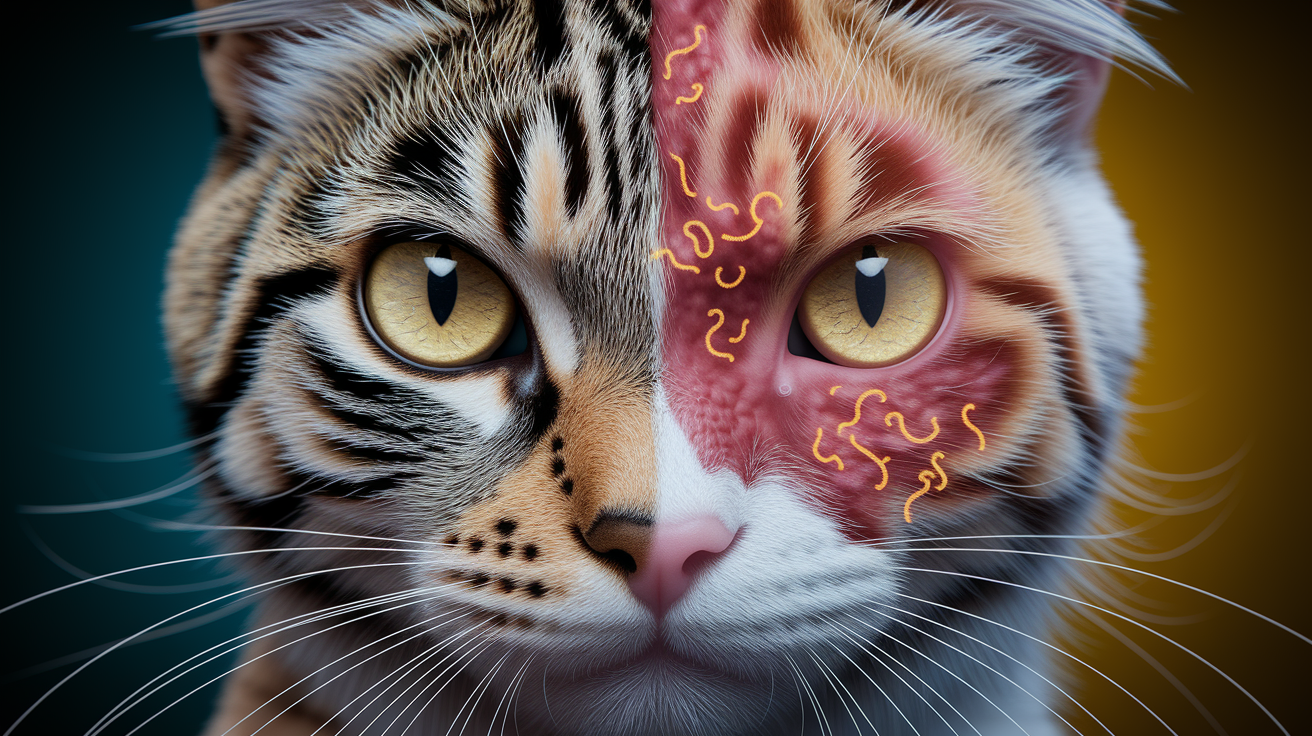
Excessive scratching, licking, and chewing break the skin barrier. Once the skin is damaged, bacteria (often Staphylococcus) and yeast (commonly Malassezia) move in and create secondary infections called pyoderma or yeast dermatitis. These infections make the itching worse, which leads to more scratching, which deepens the infection. It’s a cycle that’s hard to break without both treating the infection and controlling the underlying allergy.
Signs of secondary infection include a strong, musty or yeasty odor, greasy or sticky patches of skin, crusty or oozing sores, thickened or discolored skin (often darkening to brown or black), and increased heat or redness around affected areas. Infected ears may have dark, waxy discharge and smell bad. These infections usually need topical or oral antibiotics, antifungal medications, or medicated shampoos prescribed by your vet. Keeping your cat’s skin moisturized, reducing their total allergen exposure through home modifications, and managing itch with appropriate medications all reduce the chance of secondary infections developing in the first place.
Signs that secondary infection may be present:
- Strong, musty, or yeasty odor from the skin or ears, especially noticeable after your cat grooms.
- Greasy, sticky, or crusty patches of skin, often with yellow, brown, or dark discharge.
- Thickened, darkened, or discolored skin in areas your cat scratches or licks over and over.
- Oozing sores or open wounds that don’t heal, often with scabbing and hair loss around the edges.
Tracking Allergy Progress and Monitoring Treatment Effectiveness

Tracking symptoms and environmental changes helps you and your vet see what’s working and what needs tweaking. Allergies are complex and treatments take time to show results, so documenting improvement (or lack of it) over weeks and months gives you real data instead of relying on memory. Keep a simple log of itch severity on a scale of 1 to 10, note how often your cat scratches or licks in a day, and record any new lesions, ear infections, or skin changes. Take photos of affected areas every week or two so you can compare progress visually.
Also track your environmental control efforts: when you washed bedding, how often you vacuumed, when you replaced the HEPA filter, and any changes to litter, cleaning products, or your cat’s diet. Note when you started new medications or supplements and the dates of any flare-ups. Fatty acids need 1 to 3 months of daily use before you’ll see improvement, and immunotherapy can take 6 to 12 months, so short-term tracking won’t tell the full story. Bring your notes and photos to follow-up appointments. This documentation helps your vet fine-tune medications, adjust immunotherapy formulas, or spot patterns you might have missed.
Steps to monitor your cat’s allergy treatment:
- Rate itch severity daily on a simple 1 to 10 scale and note how many times per hour your cat scratches, licks, or chews during waking hours.
- Take clear, dated photos of lesions, bald patches, or reddened skin every 7 to 14 days to track healing or worsening over time.
- Record all environmental changes including bedding washes, vacuuming frequency, HEPA filter replacements, and any new cleaning products or litter brands.
- Log medication and supplement start dates and note any side effects, missed doses, or changes in your cat’s behavior or appetite.
- Track flare-up timing and triggers such as seasonal pollen peaks, weather changes, or indoor events like deep cleaning or home renovations.
When Veterinary Care Is Urgent for Cats With Environmental Allergies

Most environmental allergy management happens at home with regular vet check-ins, but certain symptoms need same-day or emergency care. Respiratory distress (open-mouth breathing, wheezing, rapid or labored breathing) is an urgent red flag, since it may point to severe allergic reaction, asthma triggered by allergens, or secondary pneumonia. Rapidly spreading lesions, especially with swelling, oozing, or a foul odor, suggest aggressive secondary infection that needs immediate antibiotics or antifungals. Repeated ear infections that don’t respond to treatment, vomiting or diarrhea lasting more than 24 hours, or worsening itch despite treatment also need prompt vet evaluation and possibly a referral to a dermatology specialist.
If your cat stops eating, gets lethargic, or shows signs of pain (hiding, aggression when touched, reluctance to move), contact your vet right away. These can be signs of systemic infection, medication side effects, or severe discomfort. Some cats need a board-certified veterinary dermatologist to develop a more advanced treatment plan, especially when initial therapies fail or symptoms are severe and affecting quality of life.
Urgent signs that need immediate veterinary care:
- Respiratory distress including open-mouth breathing, wheezing, rapid breathing, or blue-tinged gums or tongue.
- Rapidly spreading or worsening skin lesions with significant swelling, oozing, crusting, or foul smell pointing to severe secondary infection.
- Repeated or persistent ear infections that don’t improve with standard treatment, especially if your cat’s shaking their head, losing balance, or has discharge.
- Vomiting or diarrhea that won’t stop lasting more than 24 hours, loss of appetite, or sudden lethargy alongside skin symptoms, which may signal medication reactions or system-wide complications.
Final Words
If your cat is scratching, licking, or getting sore spots, this guide gave quick steps and longer plans.
You learned to spot common signs, rule out fleas and food, reduce indoor triggers with bedding washes, HEPA filters, and dust-free litter, and when to try meds or testing.
Careful environmental allergy management in cats often means steady home cleaning, short-term symptom control, and a vet-driven plan such as immunotherapy. With small daily steps, many cats get noticeably more comfortable.
FAQ
Q: What are common signs of environmental allergies in cats?
A: Common signs of environmental allergies in cats include persistent itching, scratching, excessive licking, hair loss, ear problems, skin sores, and sometimes GI upset; these often lead to secondary infections if untreated.
Q: What indoor triggers commonly cause cat allergies?
A: Common indoor triggers that cause cat allergies are pollen carried indoors, mold spores, dust mites, and household dust; scented cleaners and cigarette smoke can also worsen symptoms.
Q: How can I tell if my cat’s itching is from fleas, food, or environmental allergies?
A: You can tell by pattern: flea allergy often causes intense local bites, food allergy commonly affects the face and causes GI signs, while environmental allergies cause widespread, seasonal or year-round itching; a vet helps confirm.
Q: What simple home steps reduce allergens for cats today?
A: Simple home steps to reduce allergens today include weekly bedding washes, vacuuming 2–4 times a week, using HEPA filters, weekly baths or daily fur wipes, and switching to low-dust litter.
Q: What fast-relief options help an itchy cat right away?
A: Fast-relief options that help an itchy cat right away are short-term steroids prescribed by a vet, antihistamines that help some cats, cool compresses, and topical shampoos to soothe skin.
Q: When should I see a veterinarian for my cat’s allergies?
A: You should see a veterinarian for your cat’s allergies if your cat has breathing trouble, rapid worsening, repeated vomiting, blood in stool, open skin wounds, persistent ear infections, or symptoms lasting beyond 48 hours.
Q: How do vets diagnose environmental allergies in cats?
A: Veterinarians diagnose environmental allergies in cats by excluding fleas, food reactions, mites, and infections first, and use skin or blood tests mainly when planning immunotherapy.
Q: What is allergen immunotherapy and does it work for cats?
A: Allergen immunotherapy for cats is allergy shots or drops that retrain the immune system; about 60% of cats improve, but benefits can take many months to appear.
Q: Can grooming and baths really help a cat with environmental allergies?
A: Grooming and baths help cats with environmental allergies by removing pollen and dust from fur; weekly baths or daily wipes, plus moisturizers, lower itch and overall allergen load.
Q: How can I prevent secondary skin infections from my cat scratching?
A: You can prevent secondary skin infections from your cat scratching by keeping skin moisturized, reducing itch triggers, using gentle wound cleaning, and seeking vet care for open sores or signs of infection.
Q: What’s the best way to track allergy progress and treatment effectiveness?
A: The best way to track allergy progress is to keep a log of itch scores, photos of lesions, bedding-clean dates, medication changes, and note improvement timelines like 1–3 months for fatty acids.