

Could your cat’s constant licking and sudden bald spots actually be allergies hiding behind a grooming habit?
When allergies are the cause, grooming becomes focused and almost obsessive, licking or chewing the same spot until the fur thins, the skin gets red, or infection moves in, and spotting the pattern early stops a small itch from turning into a painful wound.
In this post you’ll learn the common allergy types that trigger overgrooming, how vets narrow down the cause, and simple, safe steps you can try at home while knowing when to call your veterinarian.
Understanding Excessive Grooming Linked to Allergies in Cats

Cats groom a lot. About 30 to 40% of their day, actually. So figuring out when it crosses into problem territory isn’t always obvious.
But when allergies are involved, the grooming changes. It’s not just maintenance anymore. It becomes focused, almost obsessive licking, chewing, or scratching of specific spots. The itch under the skin drives them to keep going back to that same area, over and over. Eventually, that repetitive attention breaks the hair off at the root, thins the coat, or creates raw, inflamed patches.
And it feeds on itself. Licking breaks down the skin barrier, which lets bacteria or yeast move in. Those infections make the itch worse, which drives more licking, more damage, deeper infection. Catching it early stops the spiral before a small irritation turns into a painful wound.
Watch for these red flags:
- Patchy hair loss, especially belly, inner thighs, flanks, or base of the tail
- Bald spots where the fur looks “mowed” or trimmed short
- Reddened, inflamed, or scabbed skin under the coat
- Skin that feels greasy, smells off, or develops crusts
- Persistent licking, chewing, or scratching of one or two specific spots, even when the cat seems calm otherwise
Allergy Types Most Likely to Trigger Feline Overgrooming
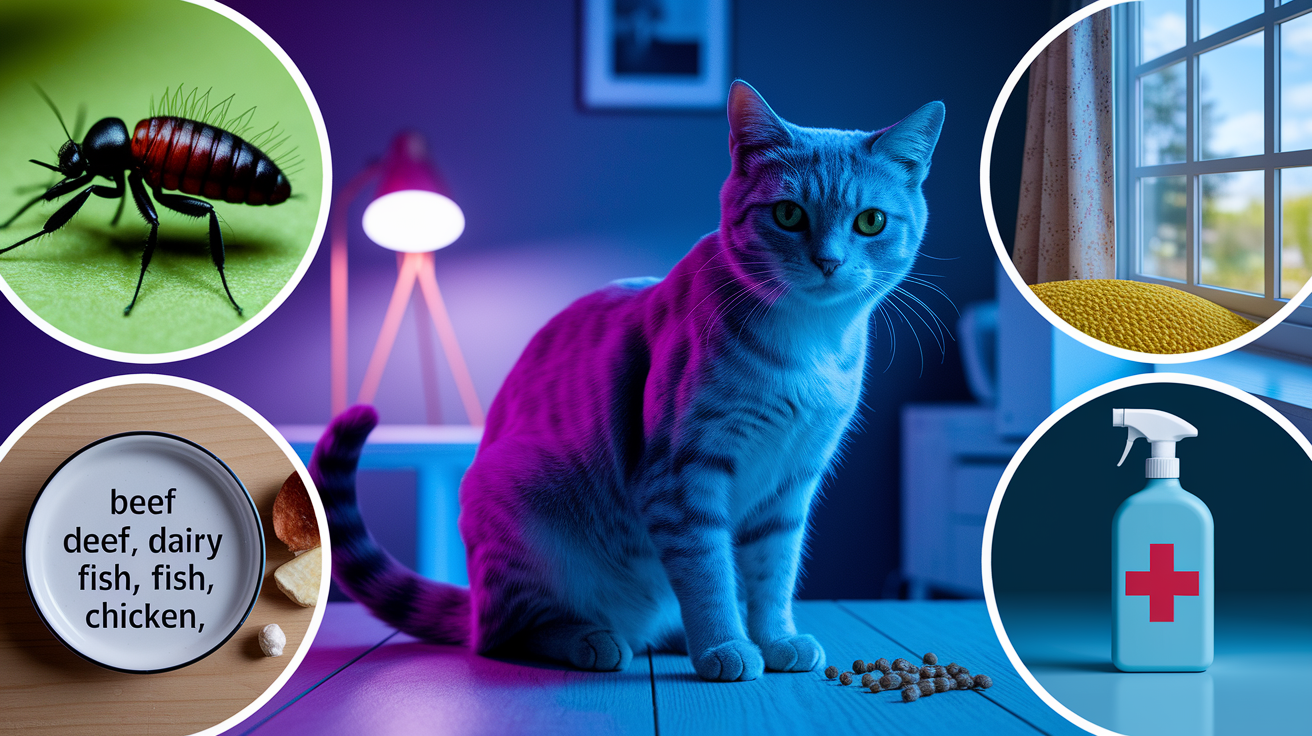
Flea allergy dermatitis tops the list. One flea bite injects saliva under the skin, and in allergic cats that single bite sets off an intense immune reaction. The itch concentrates at the base of the tail, lower back, and hind legs. Good news is once you eliminate fleas and start veterinary flea control, many cats improve within 48 to 72 hours.
Food allergies happen when the immune system reacts to a protein or ingredient in the diet. Often beef, dairy, fish, or chicken. The itching usually shows up on the belly, face, ears, and paws. Grooming gets focused on those zones, and the cat may develop ear infections alongside the overgrooming. Confirming a food allergy requires a strict elimination diet trial, usually 8 to 12 weeks with no treats, flavored medications, or table scraps.
Environmental allergies behave more like seasonal or year round atopic dermatitis. Pollen, dust mites, mold spores. Cats with environmental allergies often scratch and groom the face, neck, ears, and sometimes the feet. Symptoms may worsen during specific seasons or stay steady if the allergen is indoors. Diagnosis often involves intradermal allergy testing or serum IgE testing through a veterinary dermatologist.
Contact allergies are less common but do occur. New litter, scented cleaners, fabric softeners, or certain bedding materials can irritate the skin where the cat’s body touches the surface. Grooming intensifies at those contact points (paws, belly, chin), and switching to unscented, hypoallergenic products usually resolves the problem.
| Allergy Type | Common Grooming Patterns |
|---|---|
| Flea allergy dermatitis | Base of tail, lower back, hind legs; rapid improvement with flea control |
| Food allergy | Belly, face, ears, paws; often paired with ear infections or gastrointestinal signs |
| Environmental (pollen, dust, mold) | Face, neck, ears, feet; may be seasonal or year round |
| Contact allergy | Paws, belly, chin wherever skin touches the irritant; resolves when trigger is removed |
Visible Skin and Coat Patterns Suggesting Allergy Driven Grooming
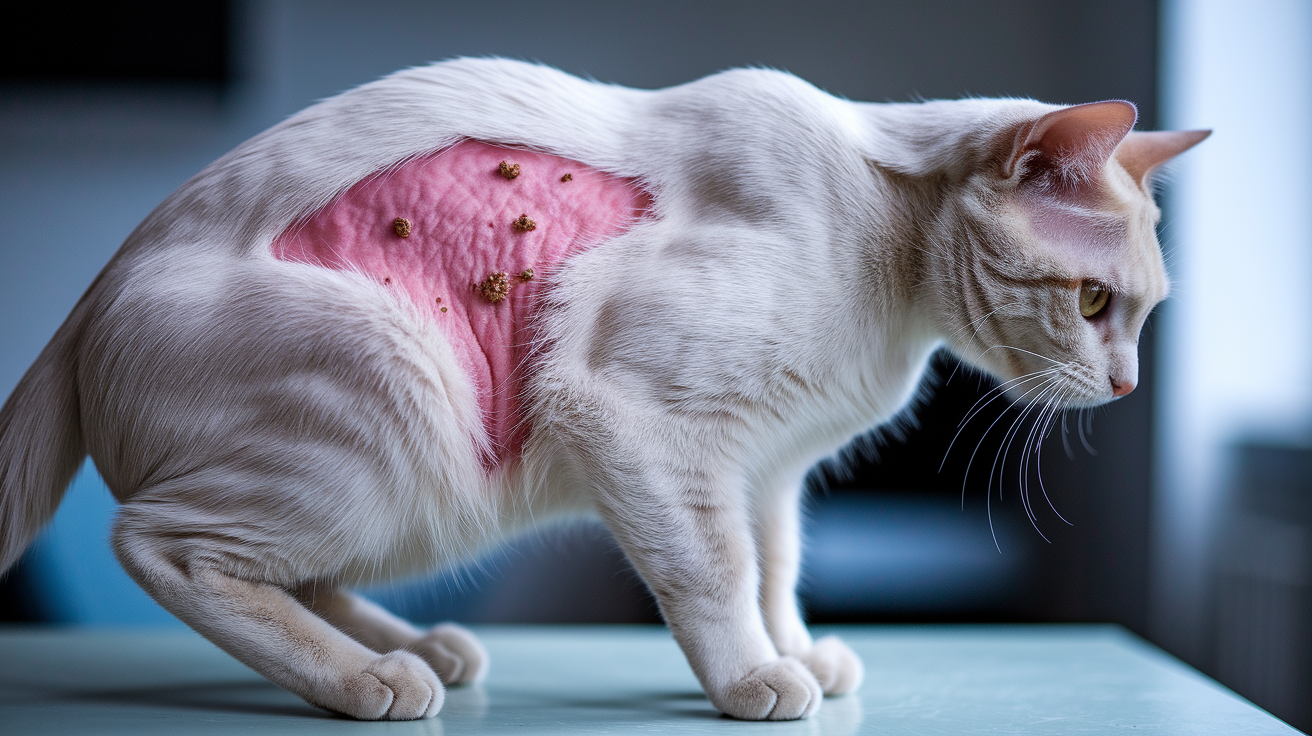
Allergy driven overgrooming leaves visible clues on the coat and skin. The most obvious sign is patchy hair loss, especially when it concentrates on the belly, inner thighs, flanks, or the area right above the tail. The fur in those spots often looks shorter and blunt, as if someone trimmed it with clippers. That’s called “barbering” or “fur mowing,” and it happens because the cat’s rough tongue breaks the hair shafts off at skin level.
Underneath that thinning coat, the skin may look pink, red, or inflamed. You might see small crusts, scabs, or raised bumps. In more advanced cases, the skin becomes broken, oozes clear or yellow fluid, or develops a greasy, foul smelling texture. Those are signs that bacteria or yeast have moved in, creating a secondary infection on top of the original allergy problem.
Localized versus widespread patterns matter. A cat licking only the base of the tail likely has flea allergy. A cat grooming the belly, face, and paws at the same time suggests food or environmental allergy. Symmetrical hair loss on both flanks or both hind legs is a classic allergy signature.
Common skin changes to look for:
- Bald patches with smooth, broken off hairs at the surface
- Pink or red inflamed skin, especially in areas the cat can easily reach
- Small scabs, crusts, or pimple like bumps scattered across groomed areas
- Greasy or flaky skin texture, sometimes with an odor
- Swollen, warm “hot spots” where the cat has licked or chewed intensely
- Open sores, oozing lesions, or bleeding where the skin barrier has broken
- Thickened, leathery skin in chronic cases
- Hair that pulls out easily when you gently tug near a bald spot
Step by Step Diagnosis Path for Allergy Related Overgrooming
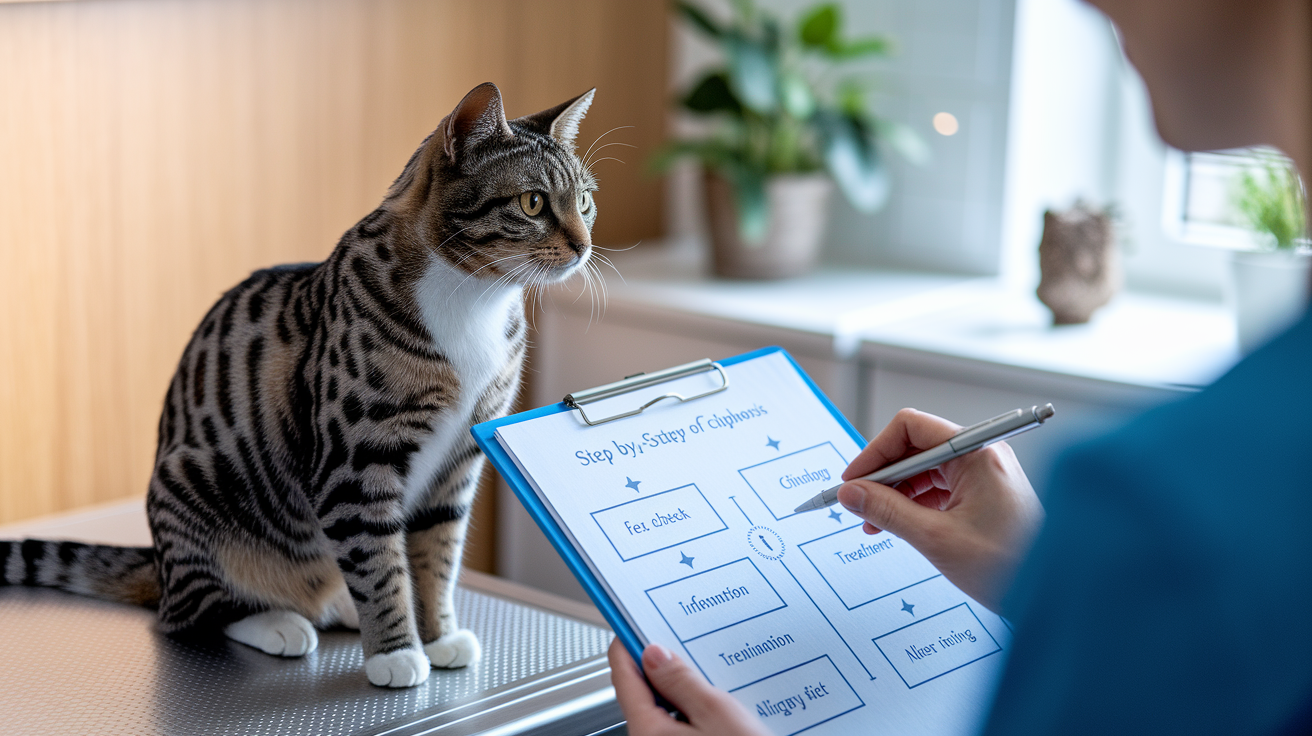
Diagnosing the root cause of allergy driven overgrooming follows a logical, stepwise process. The first priority is ruling out parasites, because fleas are treatable within days and ignoring them wastes weeks of effort.
Start with a fine toothed flea comb. Run it slowly through the coat, especially over the lower back and base of the tail. Look for live fleas or tiny black specks (flea dirt) that turn red brown when you place them on a damp paper towel. Even if you don’t see fleas, your vet will likely recommend starting a prescription flea preventive immediately and assessing the cat’s response over the next one to three weeks. If grooming improves within 48 to 72 hours and continues to settle over that window, flea allergy was the likely driver.
If flea control doesn’t solve the problem, the next step is checking for skin infections and other parasites. Your vet will perform skin cytology, pressing clear tape against the skin or swabbing a lesion to check for bacteria and yeast under a microscope. Results come back within minutes to a few days. A fungal culture or skin scrape for mites may also be done at this visit. Those results typically arrive within days.
Once parasites and infection are addressed, a food allergy trial becomes the focus if the history and pattern suggest diet involvement. This requires feeding a strict novel protein or hydrolyzed prescription diet for a full 8 to 12 weeks, with absolutely no treats, flavored medications, or table scraps. After the trial period, you reintroduce the old diet to see if symptoms return. That challenge confirms whether food was the trigger.
If the elimination diet doesn’t resolve the overgrooming and flea control has been consistent, environmental allergies move to the top of the list. Your vet may refer you to a veterinary dermatologist for intradermal allergy testing (small injections under the skin) or serum IgE testing (a blood test). Scheduling and results typically take two to three weeks. Those tests identify specific environmental allergens (pollen, mold, dust mites) and guide immunotherapy if needed.
Psychogenic alopecia, or stress related overgrooming, is always a diagnosis of exclusion. It’s only considered after parasites, infections, and allergies have been thoroughly ruled out.
Diagnostic timeline in order:
- Flea comb check and start veterinary flea control. Assess response over 1 to 3 weeks.
- Skin cytology, fungal culture, skin scrape. Results within days.
- Treat any identified infections with antibiotics or antifungals. 7 to 21 days depending on severity.
- Begin 8 to 12 week elimination diet trial if food allergy is suspected.
- Schedule intradermal or serum allergy testing if environmental allergy is likely. Results in about 2 to 3 weeks.
- Consider behavioral assessment and environmental enrichment only after medical causes are excluded.
Medical Treatments That Reduce Allergy Driven Grooming

Medical treatment targets both the underlying allergy and the secondary damage it causes. The faster you break the itch scratch infection cycle, the faster your cat heals.
Anti itch medications provide rapid relief. Some prescription options, including certain corticosteroids, work within 24 to 48 hours. Others may take a few days to a couple of weeks to show full effect. Your vet will choose the medication based on severity, your cat’s overall health, and how long treatment is expected to last. Short term use under veterinary supervision is common for acute flare ups.
When a secondary bacterial or yeast infection is present, antibiotics or antifungal medications are essential. Oral or topical treatments typically run 7 to 21 days, and visible improvement often begins within three to seven days. Stopping treatment too early allows the infection to return and restarts the itch cycle.
Flea control is both a treatment and a prevention step. Monthly topical or oral flea preventives run roughly $15 to $30 per month. Longer acting topical products that last 12 weeks cost around $30 to $70 per dose. Consistent, year round use is critical for cats with flea allergy dermatitis, because even a single flea bite can trigger weeks of itching.
| Treatment Category | Typical Timeline | Typical Cost Range |
|---|---|---|
| Anti itch medications (short term) | Relief within 24 to 48 hours to 2 weeks | Varies; prescribed per case |
| Antibiotics or antifungals for infection | 7 to 21 day course; improvement in 3 to 7 days | Varies by medication |
| Monthly flea preventives | Ongoing monthly | $15 to $30/month |
| 12 week flea preventives | Every 12 weeks | $30 to $70/dose |
| Allergen immunotherapy (ASIT) | 6 to 12 months to evaluate benefit | $20 to $100/month; initial testing about $200 to $400 |
Medicated shampoos and topical sprays, often containing chlorhexidine or other antiseptics, help clean affected skin and reduce bacterial load. Use them one to two times per week for one to four weeks, depending on your vet’s instructions. A bottle typically costs $10 to $25.
For cats with confirmed environmental allergies, allergen specific immunotherapy (also called hyposensitization or allergy shots) offers long term control. Immunotherapy is customized based on your cat’s allergy test results and delivered as injections or sublingual drops. It takes six to twelve months to determine whether it’s effective, and monthly costs run roughly $20 to $100 after an initial testing investment of around $200 to $400.
At Home Measures to Reduce Itching and Overgrooming
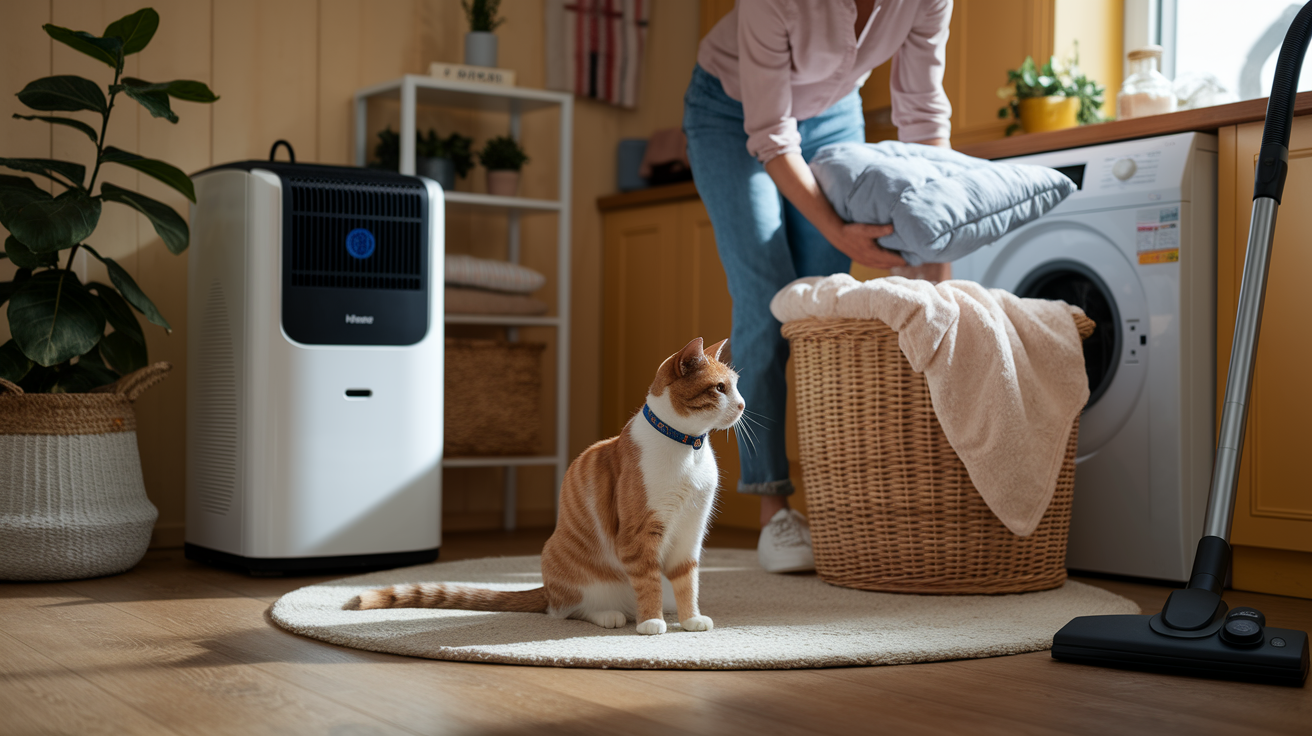
Home care complements veterinary treatment and helps break the itch cycle faster. Simple environmental changes and protective measures can make a measurable difference.
An Elizabethan collar or soft cone prevents your cat from licking and chewing while the skin heals. Collars cost between $5 and $30, and even a few days of protection can allow inflamed skin to settle and topical treatments to work. If your cat won’t tolerate a full cone, try a soft donut style collar or a lightweight recovery suit.
Cleaning routines reduce allergen load in your home. Wash all bedding weekly in hot water (at least 60°C or 140°F) or run it through a high heat dryer cycle to kill fleas, flea eggs, and dust mites. Vacuum high traffic areas, your cat’s favorite sleeping spots, and upholstered furniture daily for the first one to two weeks of treatment, then maintain a schedule of two to three times per week. Use a vacuum with a HEPA filter to trap fine particles like pollen and dander.
Medicated sprays and gentle antiseptic rinses soothe irritated skin and reduce bacterial counts. Follow your vet’s guidance on frequency, typically one to two times per week for one to four weeks. Let the skin air dry or gently blot with a clean towel. Avoid human products unless your vet specifically recommends them, because many contain ingredients that are toxic to cats.
Practical at home steps:
- Use an e collar or soft cone to stop self trauma while skin heals.
- Wash bedding weekly in hot water or high heat dryer cycle to eliminate fleas, eggs, and allergens.
- Vacuum daily for 1 to 2 weeks, then 2 to 3 times per week. Focus on sleeping areas and upholstery.
- Apply medicated sprays or rinses 1 to 2 times weekly as directed. Cost typically $10 to $25 per bottle.
- Run a HEPA air purifier in rooms where your cat spends the most time to reduce airborne pollen, dust, and mold.
- Keep humidity between 30 to 50% to discourage dust mites and mold growth.
Omega 3 fatty acid supplements support skin health and may reduce inflammation over time. Expect to spend $10 to $30 per month, and follow your vet’s dosing instructions. Improvements from supplements are gradual, usually becoming noticeable after several weeks of consistent use.
Hypoallergenic Diet Strategies for Cats with Allergy Related Grooming
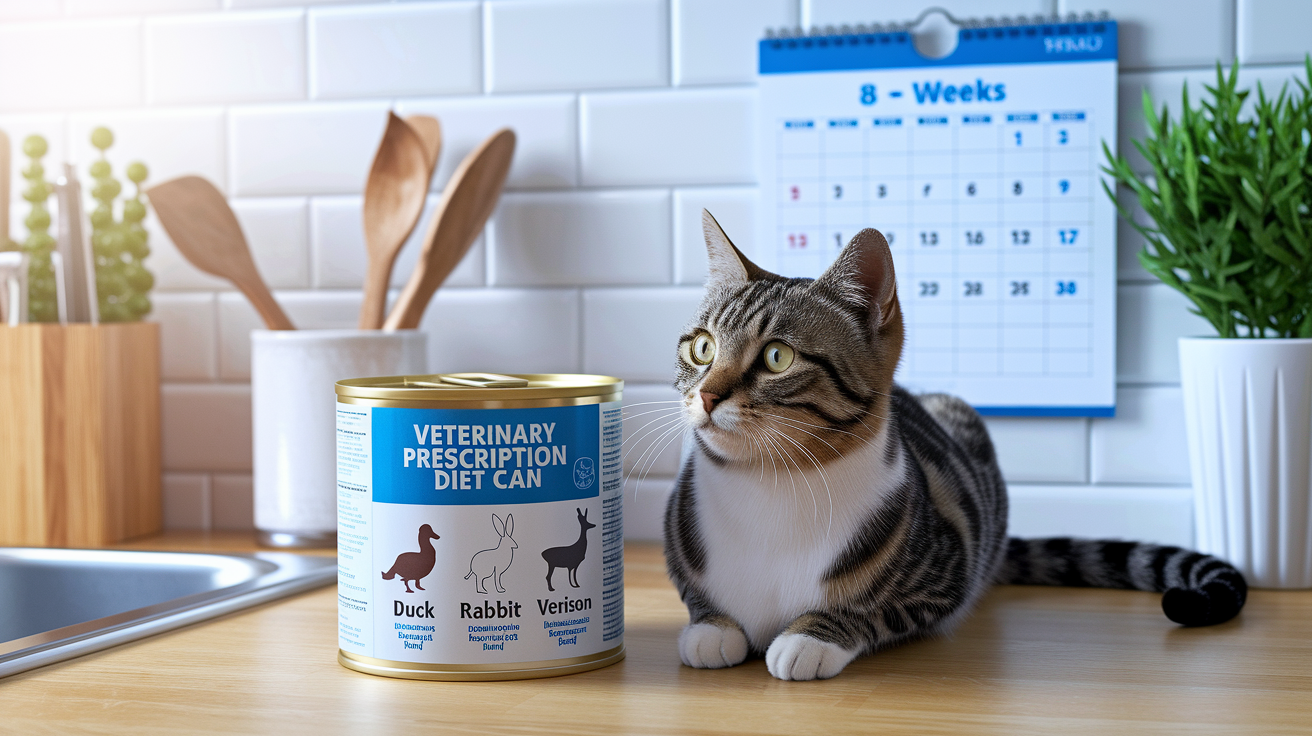
A food allergy trial is the gold standard for diagnosing and managing food triggered overgrooming. The trial must be strict and long enough to allow the immune system to settle, typically 8 to 12 weeks.
You’ll choose either a novel protein diet (a single protein your cat has never eaten before, such as duck, rabbit, or venison) or a hydrolyzed protein diet (proteins broken down into fragments too small to trigger an immune response). Both types are available as veterinary prescription diets. Expect to pay roughly $60 to $150 per month, depending on brand, formulation, and your cat’s size.
During the trial, your cat can eat nothing except the prescription diet and plain water. No treats, no flavored medications, no table scraps, no catnip toys with edible coatings. Even a single bite of the old food can restart the allergic reaction and invalidate weeks of effort. If your cat needs medication, ask your vet for unflavored versions or have the pharmacy compound them.
Step by step elimination diet protocol:
- Choose a veterinary novel protein or hydrolyzed diet recommended by your vet.
- Feed only that diet and plain water for a full 8 to 12 weeks. No exceptions.
- Keep a daily log of grooming behavior, skin condition, and any flare ups.
- After 8 to 12 weeks, assess improvement. If grooming has reduced significantly and skin has healed, proceed to step 5.
- Reintroduce the old diet (food challenge). If symptoms return within days to two weeks, the food allergy is confirmed. If symptoms don’t return, food was not the cause.
If the trial succeeds, you’ll either continue the hypoallergenic diet long term or work with your vet to test individual ingredients one at a time, identifying which specific proteins or additives cause problems. Some cats do well on high quality limited ingredient diets once triggers are known.
Omega 3 supplements can be added during and after the trial to support skin barrier function. They won’t treat the allergy itself, but they help reduce inflammation and improve coat quality over time.
Behavioural Overgrooming vs Allergy Driven Grooming

Psychogenic alopecia, stress related overgrooming, does occur in cats, but it’s far less common than allergy driven grooming. It should only be diagnosed after parasites, infections, and allergies have been thoroughly ruled out through veterinary testing.
Cats with psychogenic alopecia typically groom excessively in response to anxiety, boredom, or environmental stress. The grooming often focuses on easy to reach areas like the belly, inner thighs, or forelegs, and the skin underneath usually looks healthy. No redness, no crusts, no infection. The pattern tends to worsen during stressful events (new pet, moving house, schedule changes) and may improve when the stressor is removed or the environment is enriched.
Environmental enrichment and routine adjustments can make a real difference for behaviorally driven grooming. Adding vertical space, hiding spots, puzzle feeders, and daily interactive play gives your cat mental stimulation and an outlet for energy. Maintaining a consistent schedule for feeding, play, and quiet time reduces unpredictability and anxiety.
Stress reducing strategies to try:
- Provide extra hiding places. Boxes, cat trees, covered beds so your cat has safe retreat options.
- Rotate toys and introduce puzzle feeders to keep mealtime engaging and mentally stimulating.
- Set a consistent daily routine for feeding, play, and interaction. Predictability lowers anxiety.
- Use synthetic feline facial pheromone diffusers in rooms where your cat spends the most time. They mimic calming scent signals.
- Play calming background music or white noise, especially during known stressors like visitors or construction.
Pheromone diffusers release synthetic versions of the calming scent cats leave when they rub their faces on surfaces. They won’t solve an allergy problem, but they can help reduce background anxiety that might worsen grooming behaviors.
In severe cases where environmental changes and enrichment don’t help, your vet may prescribe anti anxiety medication. These medications are used alongside behavior modification, not as a replacement for it, and require monitoring.
Prevention and Long Term Management for Allergic Cats
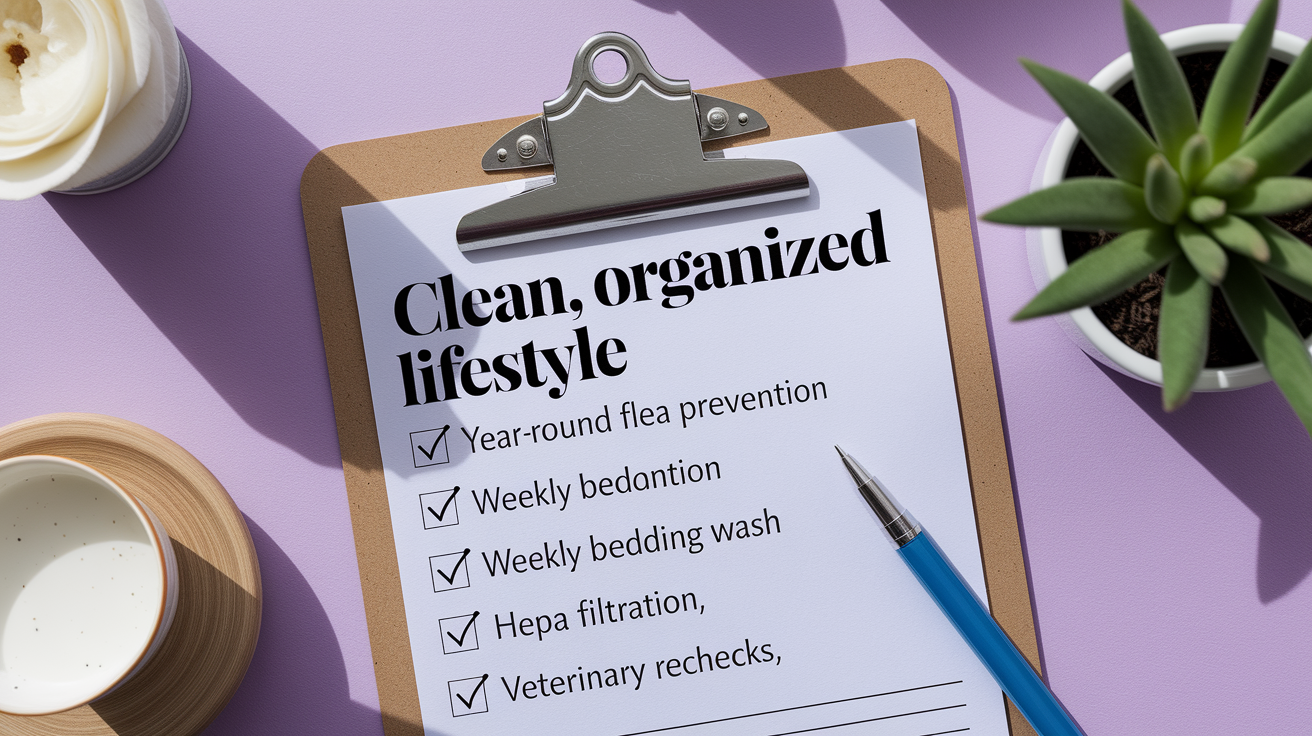
Once you’ve identified and treated the underlying allergy, long term prevention keeps your cat comfortable and reduces the chance of flare ups. Consistency is more important than perfection.
Year round flea prevention is non negotiable for any cat with flea allergy dermatitis, even if your cat lives indoors. Fleas hitch rides on clothing, other pets, and visitors, and a single bite can restart the cycle. Follow your vet’s recommended schedule (monthly or every 8 to 12 weeks depending on the product) and treat all pets in the household.
Environmental allergen control starts with simple cleaning habits. Wash bedding weekly, vacuum frequently with a HEPA filter, and run an air purifier in the rooms your cat uses most. Reducing humidity to 30 to 50% discourages dust mites and mold. Avoid scented cleaners, air fresheners, essential oils, and fabric softeners, all of which can irritate sensitive cats.
Routine veterinary rechecks help catch problems early. During initial treatment, expect to return every two to four weeks so your vet can monitor skin healing, adjust medications, and confirm that the plan is working. Once your cat is stable, a recheck every few months is often enough to stay on top of seasonal flare ups or subtle changes.
| Preventive Measure | Frequency | Expected Benefit |
|---|---|---|
| Year round flea prevention | Monthly or every 8 to 12 weeks | Prevents flea allergy dermatitis flare ups |
| Weekly bedding wash (hot water or high heat) | Weekly | Reduces fleas, dust mites, pollen, and dander |
| HEPA filtration and regular vacuuming | 2 to 3 times per week | Lowers airborne allergen load |
| Veterinary rechecks during treatment | Every 2 to 4 weeks initially | Monitors healing, adjusts treatment, catches early problems |
If your cat is on immunotherapy, continue the injections or sublingual drops on the prescribed schedule even when symptoms improve. Immunotherapy works by gradually retraining the immune system, and stopping too early loses the benefit.
Diet consistency matters for cats with food allergies. Once you’ve identified a safe food, stick with it. Avoid introducing new treats, flavored supplements, or over the counter foods without consulting your vet first.
When Overgrooming Requires Immediate Veterinary Attention
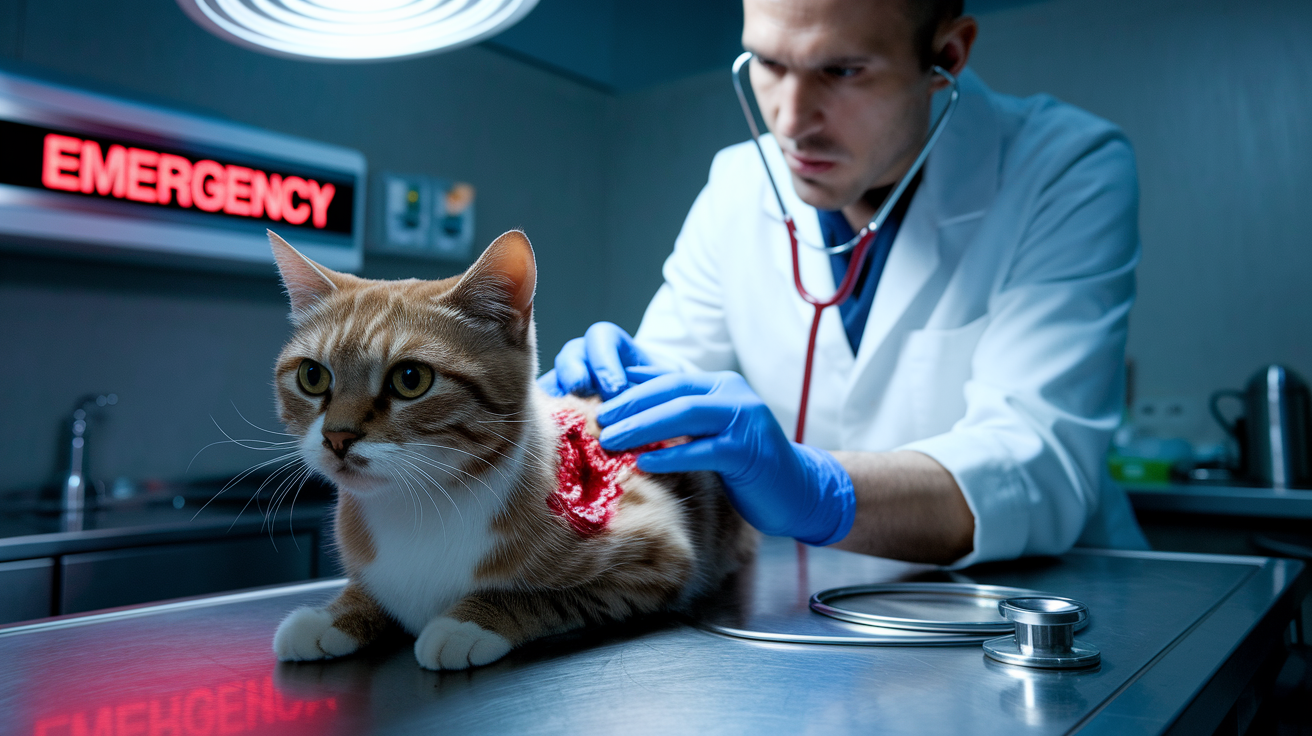
Most allergy driven overgrooming can be managed on a routine timeline, but certain signs mean your cat needs veterinary care right away.
Urgent situations include open, bleeding wounds, severe self trauma where the cat is constantly licking or chewing despite distraction, visible swelling or hot, painful areas, any sign of fever (lethargy, loss of appetite, hiding), or a sudden behavior change such as aggression or extreme withdrawal. These signs suggest infection, pain, or a rapidly worsening condition that won’t wait for a regular appointment.
Prompt care (within three to seven days) is needed for persistent overgrooming that doesn’t improve with basic home measures, new or spreading bald patches, crusted or oozing skin, foul odor from the coat, or any grooming that interferes with eating, drinking, or using the litter box.
Red flags requiring immediate veterinary attention:
- Open, bleeding wounds or raw, exposed skin
- Severe, constant self trauma. Licking or chewing that won’t stop
- Swollen, hot, or visibly painful areas on the body
- Signs of fever: lethargy, loss of appetite, hiding, reluctance to move
- Sudden behavior changes: aggression, extreme withdrawal, or vocalization when touched
- Foul smelling discharge or greasy, crusted skin that worsens quickly
If your cat’s overgrooming began suddenly and is focused on a single spot (especially a limb or paw), check for injury, a foreign object like a splinter, or localized pain. Overgrooming a painful area is a common stress response, and the underlying injury needs treatment.
Final Words
Noticing raw skin, bald patches, or a cat licking nonstop? That’s the moment to act.
This article walked through why allergies drive excessive grooming, which types (fleas, food, environmental) commonly trigger it, a clear diagnostic path, treatment options, and practical home and diet steps to try.
With steady steps, start with flea control, follow a vet-guided elimination diet, and use simple home care to reduce cat overgrooming due to allergies and help your cat feel more comfortable. Small, consistent moves add up.
FAQ
Q: How do you treat overgrooming allergies in cats?
A: Treating overgrooming allergies in cats begins with a vet exam to rule out fleas or infection. Treatment often uses flea control, anti-itch meds, topical care, e-collar, or an elimination diet. Call your vet for open wounds or rapid decline.
Q: What is a natural antihistamine for cat allergies?
A: A natural antihistamine for cat allergies is quercetin, and omega-3 fatty acids can also help skin and itch. Always check with your vet before starting supplements and stop if your cat worsens.
Q: Can food allergies cause overgrooming in cats?
A: Food allergies can cause overgrooming in cats by making them itchy, often focused on the belly and flanks; diagnosis needs an 8 to 12 week elimination diet supervised by your vet.
Q: What food reduces cat allergies?
A: No single food cures cat allergies; hypoallergenic options, novel-protein or hydrolyzed formulas, can reduce reactions when used strictly for an 8 to 12 week elimination trial under vet guidance.