

Think cats are immune to seasonal allergies?
Cats can get them, called atopic dermatitis (a skin allergy), and it can make them scratch, lose fur, get ear infections, or sneeze more around pollen season.
Symptoms often come and go with the seasons, not just a one-off.
In this post you’ll learn which signs to watch for, how to handle mild flare-ups at home, what to monitor, and the clear red flags that mean it’s time to call your veterinarian.
Understanding Whether Cats Can Develop Seasonal Allergies

Yes, cats absolutely get seasonal allergies. It’s called atopic dermatitis (or just atopy), and it’s not some rare thing. This isn’t like when people sniffle a bit in spring and move on. For cats, it’s a full immune system overreaction that makes them genuinely miserable. Most start showing symptoms between 1 and 3 years old, and it usually gets worse as time goes on. What starts as a little springtime scratching can snowball into constant irritation if you don’t catch it.
Here’s what’s happening: your cat’s immune system freaks out over harmless stuff in the environment. Tree pollen, grass, mold spores, dust mites. These allergens get in through breathing, eating, or just touching the skin. A lot of cats have a genetic weakness in their skin barrier, so allergens slip through easier. Once they’re in, the immune system goes into overdrive.
Early on, you might see your cat scratching more around the neck or ears. Some sneeze or get watery eyes, though that’s less common than the skin stuff. Hair loss in patches, little scabs where they’ve been grooming too hard. These signs often line up with pollen spikes in spring and summer. They come back the same time every year. That seasonal timing is one of the clearest tells.
Common Environmental Allergy Triggers That Affect Cats Seasonally

The allergens bothering your cat are probably the same ones floating around outside and sneaking into your house. Trees like pine, oak, and ash dump pollen in spring. Grasses (Bermuda, Bahia, orchard grass) do their thing late spring through summer. Weeds, especially ragweed and cocklebur, pile on in late summer and fall. Mold spores love damp, humid conditions and trigger reactions indoors and out. Dust mites and storage mites live in carpets, bedding, and furniture year-round, but they can make seasonal flare-ups worse when your cat spends more time inside during allergy season.
Indoor cats aren’t immune. Pollen sticks to your clothes, shoes, and hair when you walk in the door. It drifts through open windows and vents. Household products (perfumes, cigarette smoke, cleaning chemicals) can irritate a sensitive cat’s skin and airways on top of seasonal triggers. Flea saliva is another big one, especially warmer months when fleas are more active.
Major allergen categories that hit cats seasonally:
- Tree pollen (pine, oak, ash, palm)
- Grass pollen (orchard, Bermuda, Bahia)
- Weed pollen (ragweed, cocklebur, sorrel)
- Mold and fungi spores
- Dust mites and storage mites
- Flea saliva (peaks spring through fall)
Recognizing Seasonal Allergy Symptoms in Cats
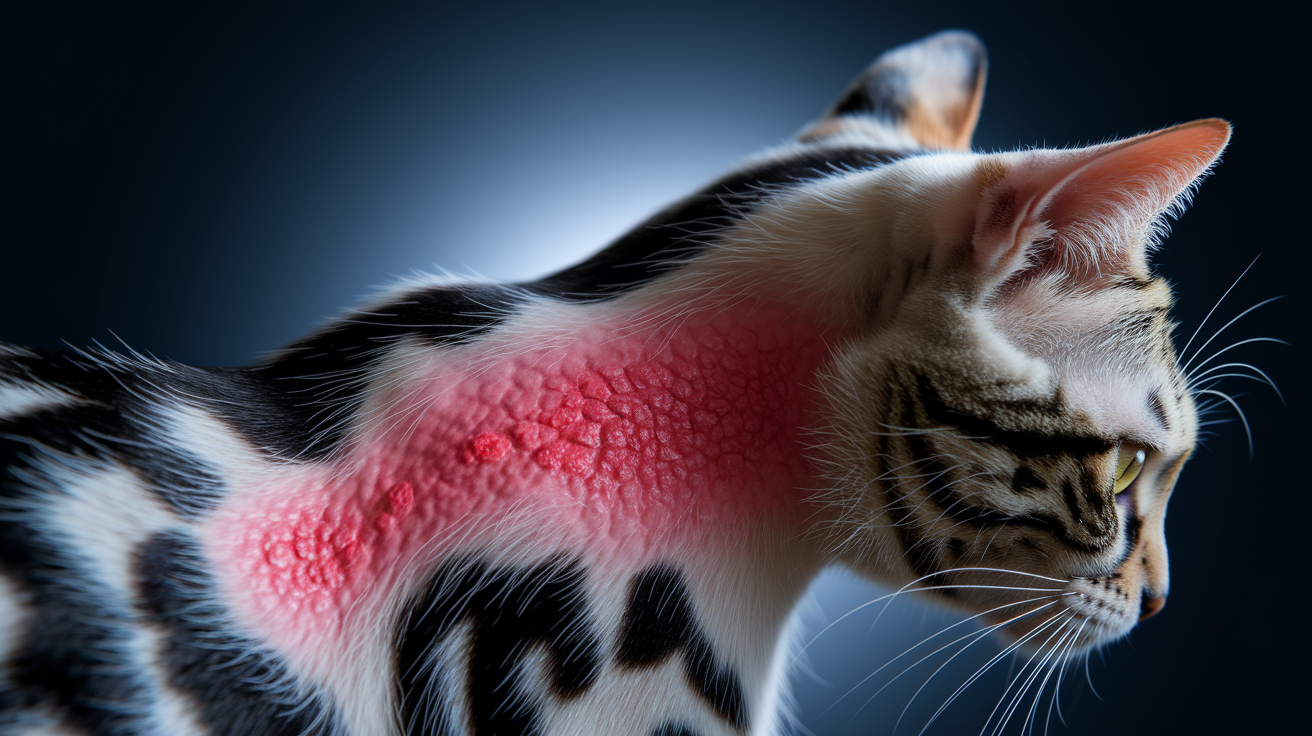
Skin problems are the biggest giveaway. Cats don’t usually get runny noses or puffy eyes when allergies hit. They itch. And that itching drives intense scratching and overgrooming. You’ll see hair loss, often in matching patches along the back, around the base of the ears, on the neck, at the base of the tail, or in the groin. The skin underneath might look red, dry, or crusty. Small scabs and sores form where the cat’s been working the same spot over and over. Some cats develop eosinophilic plaques (flat, reddish-yellow, ulcerated patches on the belly or inner thighs). Others get indolent ulcers (small disc-shaped sores on the lips or skin) or eosinophilic granulomas (raised yellowish-pink streaks, usually on the hind legs).
Respiratory signs can happen, but they’re less common. A cat with seasonal allergies might sneeze more than usual, especially after hanging out near an open window. You might notice watery eyes or a bit of clear nasal discharge. Some wheeze or cough, though that’s rarer and can point to other problems like asthma. Paw licking and chewing is another frequent sign. The paws can look red, swollen, or wet from constant attention.
Ear infections show up a lot with seasonal allergies. The ears get inflamed, thickened, and itchy. You might see dark waxy buildup or smell yeast. Cats with chronic allergies often end up with secondary bacterial or yeast infections on the skin or in the ears because all that scratching damages the skin’s protective barrier and lets germs move in.
| Symptom Category | What It Looks Like in Cats |
|---|---|
| Skin irritation | Scratching, redness, scabs, crusty patches, matching hair loss |
| Overgrooming | Bald spots, thinning fur on belly/legs/neck, excessive licking |
| Lesions | Eosinophilic plaques, granulomas, indolent ulcers on lips or skin |
| Ears | Ear infections, head shaking, waxy discharge, swollen ear flaps |
| Respiratory | Sneezing, watery eyes, clear nasal discharge, occasional wheezing |
How Veterinarians Diagnose Seasonal Allergies in Cats

There’s no single test that says “yes, your cat has seasonal allergies” with 100% certainty. Vets use a diagnosis-of-exclusion approach. They rule out every other possible cause of itching first. That means checking for fleas, food allergies, mites, ringworm, bacterial infections, and yeast overgrowth. If those are all negative and the symptoms fit a seasonal pattern, allergies move to the top of the list. Your vet will do a full physical exam, looking at the skin, ears, and overall condition. They’ll ask when the symptoms started, whether they come and go with the seasons, and what you’ve already tried at home.
A strict food trial is often part of the workup. Your cat eats a prescription diet with a single novel protein and carbohydrate source for 8 to 12 weeks to see if food’s the culprit. At the same time, every pet in the household goes on strict flea control, because even one flea bite can cause intense itching in a flea-allergic cat. If itching persists after ruling out food and fleas, the vet may do skin scrapings to check for mites, fungal cultures to rule out ringworm, or a skin biopsy if the lesions look unusual or severe.
Once other causes are off the table, allergy testing can help pinpoint exactly what your cat’s reacting to. That information is especially useful if you’re considering immunotherapy (also called allergy shots).
Types of Allergy Tests for Cats
Intradermal skin testing is considered the gold standard. The vet injects tiny amounts of common allergens just under the skin, usually on a shaved patch on the side of the chest. If your cat’s allergic to one of those substances, a small hive or red bump forms at that injection site within about 15 minutes. The test is quick, and it gives a detailed map of what your cat reacts to.
Serum allergy testing is the other option. The vet draws a blood sample and sends it to a lab, where technicians measure antibody levels against different allergens. It’s less invasive than skin testing and doesn’t require sedation, but some vets consider it slightly less accurate. Both tests are mainly used to guide immunotherapy. They help create a customized vaccine tailored to your cat’s specific triggers.
Distinguishing Seasonal Allergies From Other Similar Conditions
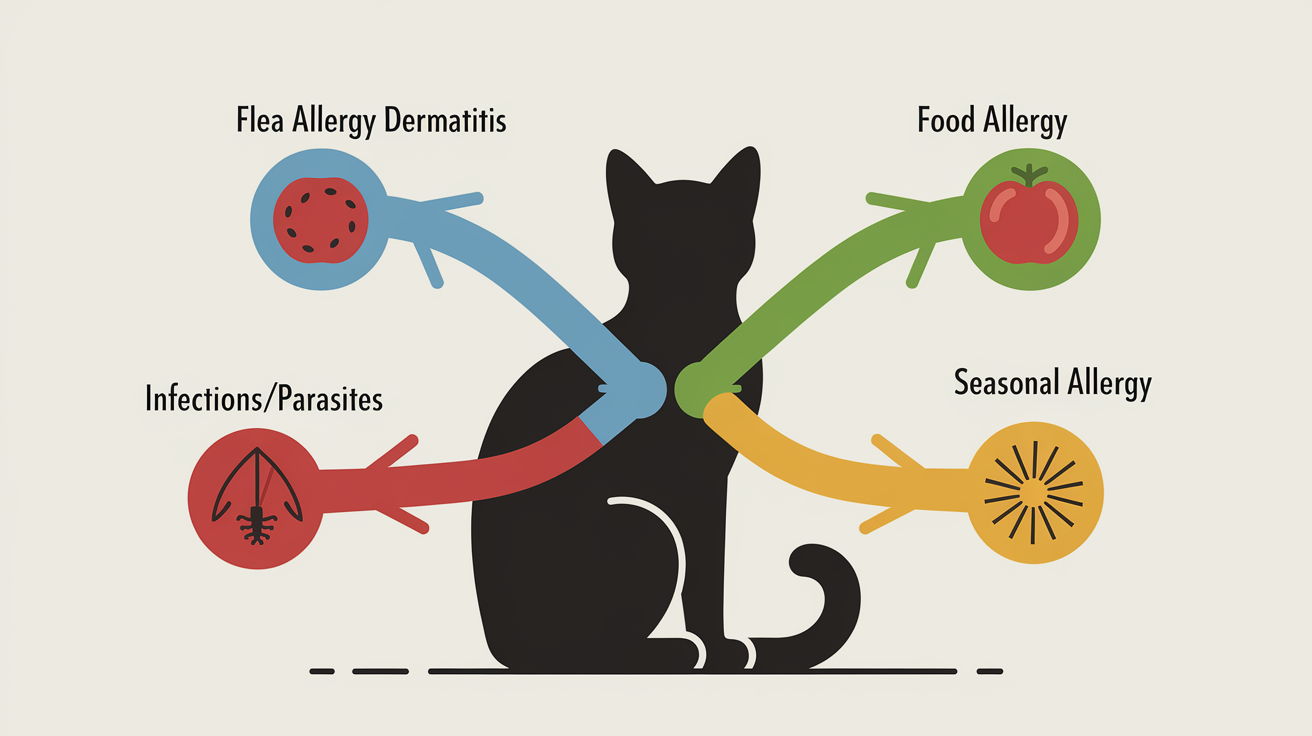
Not all itching is allergic. And not all allergic itching is seasonal. Flea allergy dermatitis looks similar but tends to focus around the base of the tail and lower back, right where fleas like to hang out. One flea bite can set off days of scratching in a flea-allergic cat, even if you never see a single flea on them. Food allergies often cause itching too, but they don’t follow a seasonal pattern. They frequently come with vomiting or diarrhea. Skin infections from bacteria or yeast produce a lot of redness, odor, and greasy or crusty buildup. They need antibiotics or antifungal medication, not allergy treatment.
Parasitic conditions like ear mites, mange mites, or ringworm (which is actually a fungus, not a worm) can all mimic allergy symptoms. Ear mites cause intense ear itching and dark, crumbly debris. Ringworm leaves circular patches of hair loss with a scaly rim. Mange mites burrow into the skin and cause severe itching, crusting, and hair loss, especially on the head and ears. Respiratory infections or feline asthma can cause sneezing, nasal discharge, and wheezing that might look like respiratory allergy symptoms, but the discharge is usually thicker and cloudier. The cat often feels unwell overall.
Key differences to watch for:
- Flea allergy: itching focused on tail base and lower back. May see flea dirt (tiny black specks) in the fur
- Food allergy: year-round itching plus gastrointestinal symptoms like vomiting or diarrhea. No seasonal pattern
- Seasonal allergy: itching that starts and stops the same months each year, often matching pollen counts
- Infections/parasites: strong odor, visible parasites or debris, circular lesions, or systemic signs like fever or lethargy
Treatment Options for Cats With Seasonal Allergies

Treatment almost always starts with clearing up any secondary infections. Bacteria and yeast love to move into damaged, inflamed skin. They’ll keep the itching going even if you address the allergen. Your vet may prescribe oral antibiotics or antifungal medication, plus medicated shampoos to clean the skin and reduce the microbial load. Frequent bathing with a gentle, vet-approved shampoo can soothe irritated skin and wash away surface allergens. Leave-on conditioners help repair the skin barrier and keep moisture in.
For itch relief, steroids like prednisolone or methylprednisolone work fast and well. But they come with risks if used long term: increased thirst, increased urination, weight gain, and a higher chance of infections or diabetes. Some cats do fine on low-dose steroids during flare-ups, but your vet will want to use the lowest effective dose for the shortest time. Antihistamines (diphenhydramine or chlorpheniramine) are sometimes used preventively, especially if your cat’s symptoms are mild. They don’t work for every cat. You must get dosing and safety approval from your vet before giving any over-the-counter medication.
Cyclosporine, sold as Atopica for cats, is an immune-modulating drug that can provide long-term allergy control without the side effects of steroids. It takes a few weeks to start working, and it requires periodic bloodwork to monitor for liver or kidney changes. Fatty acid supplements, especially omega-3s from fish oil, can improve the skin barrier and reduce inflammation over time. Year-round, strict flea control is non-negotiable, even if fleas aren’t the main trigger. Any flea exposure can complicate allergic skin disease. Products like Revolution Plus or Comfortis are commonly recommended.
Basic framework for implementing a vet-approved treatment plan:
- Start flea prevention immediately for every pet in the household, even if you haven’t seen fleas.
- Treat any secondary infections with antibiotics, antifungals, or medicated shampoos as prescribed.
- Use itch-relief medication short term (steroids, antihistamines, or cyclosporine) based on your vet’s recommendation.
- Bathe regularly with vet-approved shampoo to remove allergens and soothe skin. Follow up with leave-on conditioner.
- Schedule follow-up exams and bloodwork to monitor medication effectiveness and watch for side effects, especially if treatment will be long term.
Immunotherapy for Long-Term Seasonal Allergy Control in Cats

Allergen-specific immunotherapy (often called allergy shots or ASIT) is considered the most effective long-term treatment for cats with seasonal allergies. It doesn’t just mask symptoms. It actually retrains the immune system to tolerate the allergens that trigger reactions. The process starts with intradermal or serum allergy testing to identify exactly which substances your cat’s sensitive to. A lab then creates a customized “vaccine” containing tiny, gradually increasing doses of those specific allergens.
You’ll give the injections at home, usually starting with a small dose every few days, then tapering to once or twice a month as your cat’s tolerance builds. It takes time. Most vets say to allow 9 to 12 months before you can fairly judge whether it’s working. If it does work (and it’s effective in about 60 to 80% of cases), your cat’s symptoms should lessen. You’ll be able to reduce or eliminate steroids and other medications. Immunotherapy is often a lifelong commitment, but many owners find the payoff in quality of life is worth it.
Key points about immunotherapy:
- Requires allergy testing first to create a customized formula
- Effective in roughly 60 to 80% of cats, but response varies
- Takes 9 to 12 months to evaluate success. Patience required
- Often becomes a lifelong regimen if it works, with maintenance injections every few weeks
Daily Home Management for Cats With Seasonal Allergies
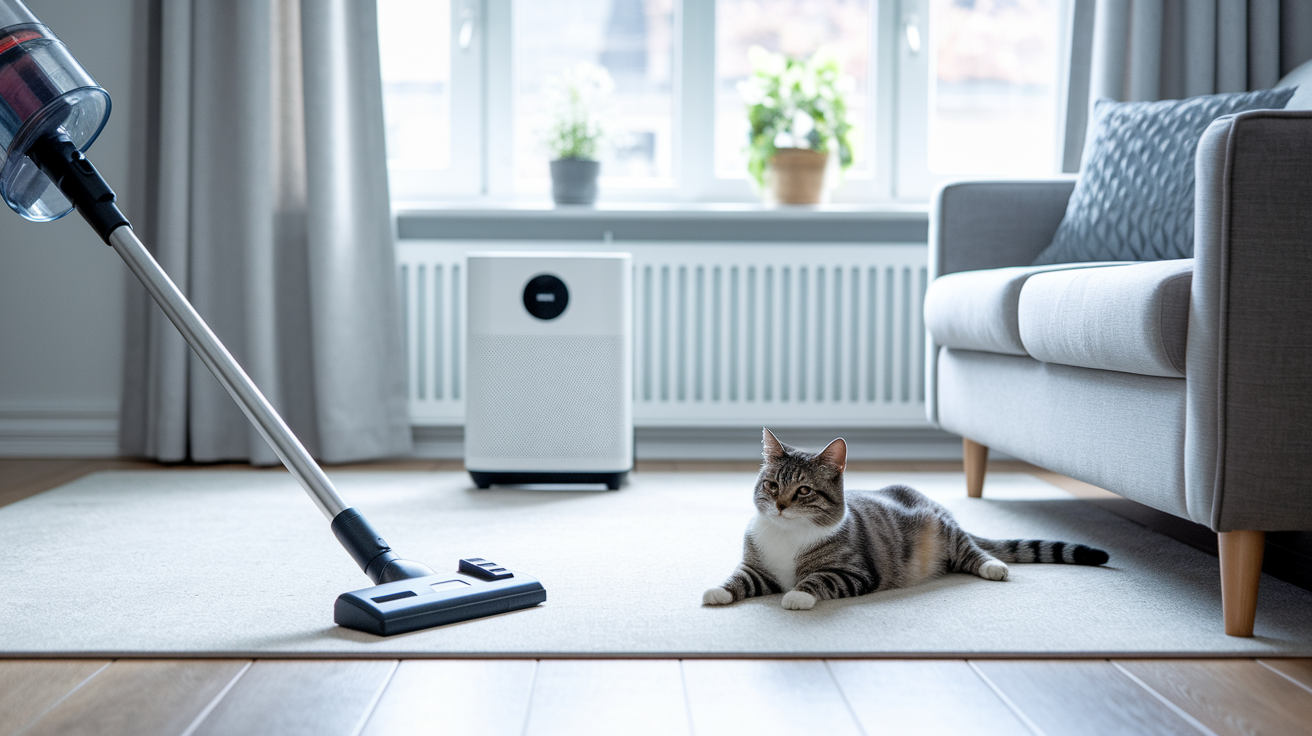
You can’t eliminate every allergen, but you can reduce your cat’s total exposure load. That often makes a real difference. Start by managing airflow and filtration. Keep windows closed during high pollen days and run an air cleaner with a HEPA filter in the rooms your cat spends the most time in. Check local pollen counts online or through a weather app so you know when to be extra cautious. Wipe your shoes and change clothes when you come in from outside to avoid tracking pollen through the house.
Frequent cleaning helps a lot. Vacuum carpets, rugs, and upholstered furniture at least twice a week using a vacuum with a HEPA filter. Wash your cat’s bedding, blankets, and any fabric toys in hot water weekly. If your cat’s allergies are severe, consider removing wall-to-wall carpeting and replacing it with hard flooring. Carpets are dust-mite magnets and pollen traps. Dust and mop regularly, and use fragrance-free, pet-safe cleaning products to avoid adding chemical irritants to the mix.
Bathing your cat can rinse away pollen and other allergens that settle on the fur and skin. Use a gentle oatmeal-based pet shampoo, and ask your vet first if your cat’s on a topical flea or tick treatment. Some products wash off with frequent bathing. After the bath, a leave-on conditioner can help soothe irritated skin and strengthen the skin barrier. Regular brushing also removes loose fur and surface allergens before your cat grooms them off and swallows them. If your cat’s scratching or licking obsessively, a soft T-shirt or a recovery cone can provide a physical barrier and give the skin a chance to heal.
Home Allergen-Reduction Checklist
- Install and run a HEPA air filter in main living areas. Change filters on schedule
- Keep windows closed during high pollen counts. Monitor local pollen forecasts
- Vacuum carpets and furniture at least twice weekly with a HEPA-filter vacuum
- Wash bedding, blankets, and fabric toys in hot water once a week
- Wipe down shoes and outerwear before entering the house to reduce tracked-in pollen
- Bathe your cat with vet-approved shampoo as recommended, and use leave-on conditioner to support the skin barrier
When to Seek Veterinary Care for Seasonal Allergy Symptoms
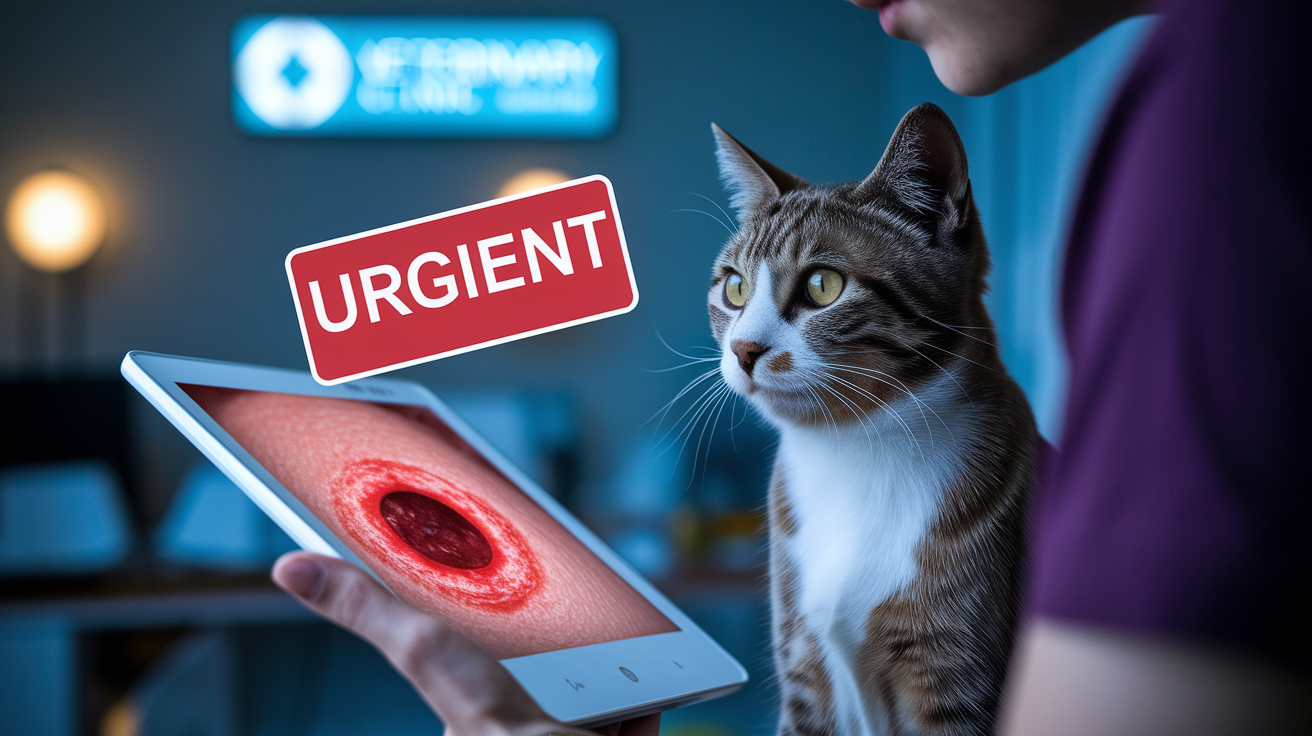
If your cat’s scratching hard enough to create open sores, losing patches of fur, or developing scabs and crusts, it’s time to call the vet. Those signs mean the skin barrier is damaged, and secondary bacterial or yeast infections have likely moved in. Recurrent ear infections, head shaking, or a strong yeasty smell from the ears also need professional attention. Ear infections won’t clear up on their own and can cause permanent damage if left untreated.
Watch for any respiratory signs that go beyond mild sneezing. Wheezing, coughing, labored breathing, or open-mouth breathing are red flags that could point to asthma, an infection, or another serious condition (not just seasonal allergies). Gastrointestinal symptoms like vomiting or diarrhea that show up alongside itching might indicate a food allergy or a more complex problem. If your cat’s symptoms don’t improve with home care within a week or two, or if they come back every time you stop treatment, a vet visit is the next step.
Keeping a simple log of flare-ups can help your vet spot patterns and adjust treatment. Note the date symptoms start, what they look like, what triggers you noticed (new pollen season, opened windows, skipped flea prevention), and how your cat responds to treatment. That record makes it easier to fine-tune medications and catch problems early.
Urgent signs that need same-day or next-day veterinary evaluation:
- Open sores, bleeding, or oozing skin from intense scratching or overgrooming
- Recurrent or persistent ear infections with discharge, odor, or swelling
- Difficulty breathing, wheezing, or coughing that doesn’t resolve quickly
- Vomiting, diarrhea, or loss of appetite occurring alongside skin or respiratory symptoms
Final Words
Seeing your cat scratch, sneeze, or have watery eyes when pollen is high is often the first clue that something seasonal might be going on.
This article confirmed that cats can develop seasonal allergies, outlined common triggers and hallmark signs, described how vets rule out other causes, and covered treatment choices plus home steps to reduce exposure.
If you’re wondering can cats have seasonal allergies, the answer is yes, and with careful monitoring and a vet’s plan most cats do well. Take notes, try simple home measures, and contact your vet if symptoms worsen.
FAQ
Q: Can an indoor cat have seasonal allergies?
A: An indoor cat can have seasonal allergies. Pollen, mold, dust or flea saliva can enter via windows, clothes, or people, so indoor-only status doesn’t rule them out. Symptoms often start at 1–3 years.
Q: How can I tell if my cat has allergies?
A: You can tell if your cat has allergies by noticing itching, constant scratching or overgrooming, sneezing, watery eyes, runny nose, ear inflammation, hair loss, or recurring skin infections. See a vet for persistent or severe signs.
Q: Can Benadryl help a cat with allergies?
A: Benadryl can help a cat with allergies in some cases, but effectiveness varies and proper dosing should be confirmed by a vet. Do not give it for breathing trouble, severe swelling, or collapse. Seek emergency care.
Q: What time of year do cats get seasonal allergies?
A: Cats get seasonal allergies when local pollen and mold counts rise, often in spring and summer and sometimes in fall. Patterns can change with location and may become year-round over time.