

Controversial: you don’t always need long-term steroids to manage a cat’s atopic dermatitis (allergic skin disease).
But this condition is a long game, with flares, hotspots, and repeat infections that can make your cat miserable and leave you confused.
This post lays out how vets rule out other causes, safe steps to get fast relief during a flare, and practical long-term plans—medication options, allergen testing, home changes, and clear when-to-call-the-clinic signals.
Read on for step-by-step, low-risk strategies to keep your cat comfortable while cutting down medication side effects.
Diagnostic Criteria and Evaluation Methods for Feline Atopic Dermatitis

Diagnosing feline atopic dermatitis means ruling out everything else first. There’s no single test that confirms it. You’re basically working through a checklist, crossing off parasites, food reactions, infections, and other itchy skin causes until atopy is what’s left. It takes time, but it’s the only way to know you’re treating the right problem.
Start with a full physical exam and detailed history. When did the itching start? Which body parts are affected? Does it get worse certain times of year? What medications have you tried? Look closely at the skin for signs your cat’s been going at it, hair loss, redness, scabs, thickened patches. Common spots are the face, ears, feet, armpits, belly. Run a trichogram (looking at plucked hairs under a microscope) to see if hair shafts are fractured from licking or chewing. Do skin cytology on any open or crusty areas to check for bacteria or eosinophils, which can point toward allergic inflammation or secondary infection.
Next, systematically exclude other causes. Do skin scrapings and flea combing to rule out mites, lice, and fleas. If flea control’s been inconsistent, treat aggressively and reassess in four to six weeks. Run a strict food trial for six to eight weeks using a novel protein or hydrolyzed diet, because food allergies look identical to environmental atopy. If there are secondary infections (bacterial pyoderma or yeast), treat those first and see how much itching remains once the infection clears. Only after all these steps, if the itching persists, do you move toward confirming atopic dermatitis with intradermal or serum IgE allergy testing.
Key diagnostic steps:
- Complete history and physical exam, focusing on where and when the itching happens
- Trichogram and cytology to check for self-trauma and eosinophilic inflammation
- Skin scrapings and flea control trial to exclude parasites
- Six to eight week elimination diet trial to rule out food allergy
- Intradermal or serum IgE testing once other causes are excluded
Important Differentials in Pruritic Cats
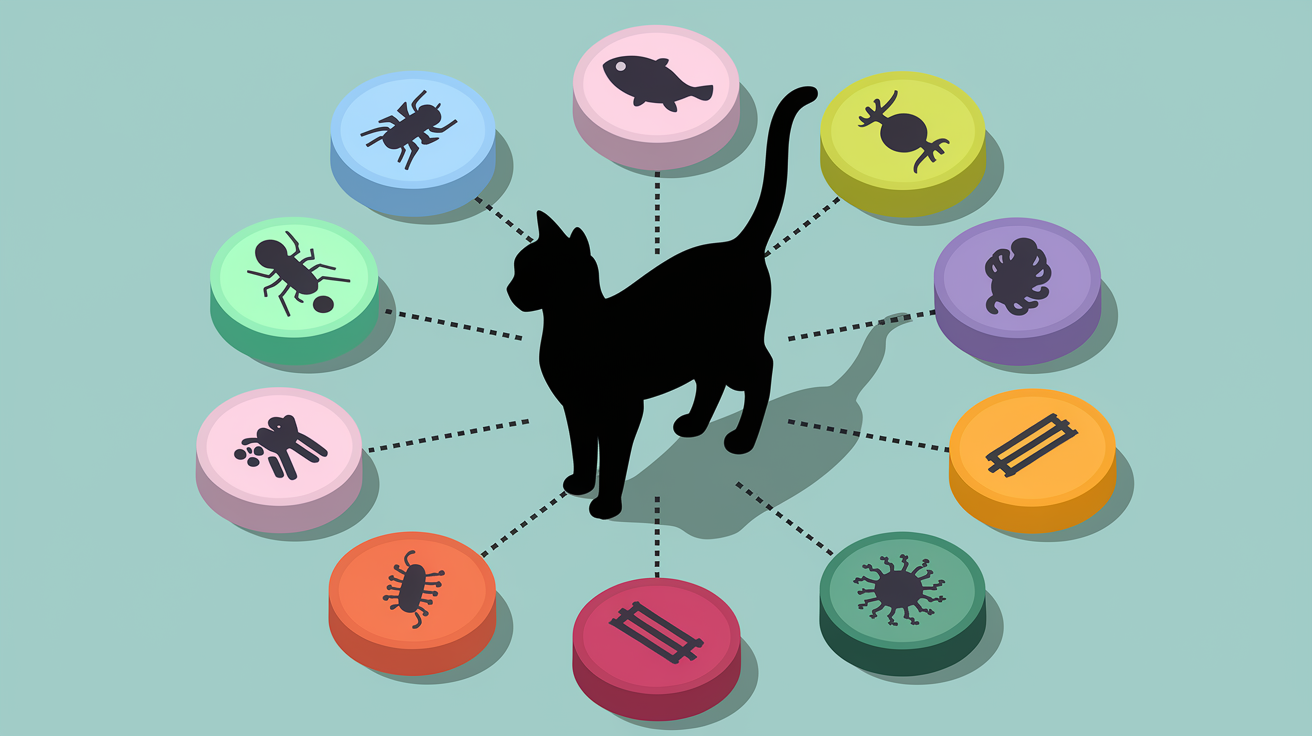
Before settling on atopic dermatitis, you need to consider the other common reasons a cat might itch and scratch itself raw. Flea allergy dermatitis sits at the top. Even a single flea bite can trigger intense itching in a sensitized cat, and you won’t always see fleas on the coat. Look for flea dirt (tiny black specks that turn red on a wet paper towel) and keep flea prevention going on all pets in the household, year round.
Food allergies are another major mimic. Cats with food hypersensitivity often show the same head and neck scratching, ear inflammation, and self-induced hair loss you see with environmental allergies. The only way to tell them apart is a strict elimination diet trial lasting at least six to eight weeks, followed by challenge feeding to confirm the reaction. Parasites like Notoedres mites (feline scabies), Cheyletiella (walking dandruff), and Demodex can all cause itching and skin lesions. Skin scrapings and careful coat inspection help rule these out. Secondary bacterial or yeast infections often complicate allergic skin disease and can worsen itching on their own, so cytology and culture are essential.
Top differentials to rule out:
- Flea allergy dermatitis (even with minimal flea burden)
- Food hypersensitivity (needs elimination diet trial)
- Parasites: Notoedres, Cheyletiella, Demodex
- Secondary bacterial pyoderma or Malassezia yeast infections
Acute Flares: Immediate Treatment Protocols
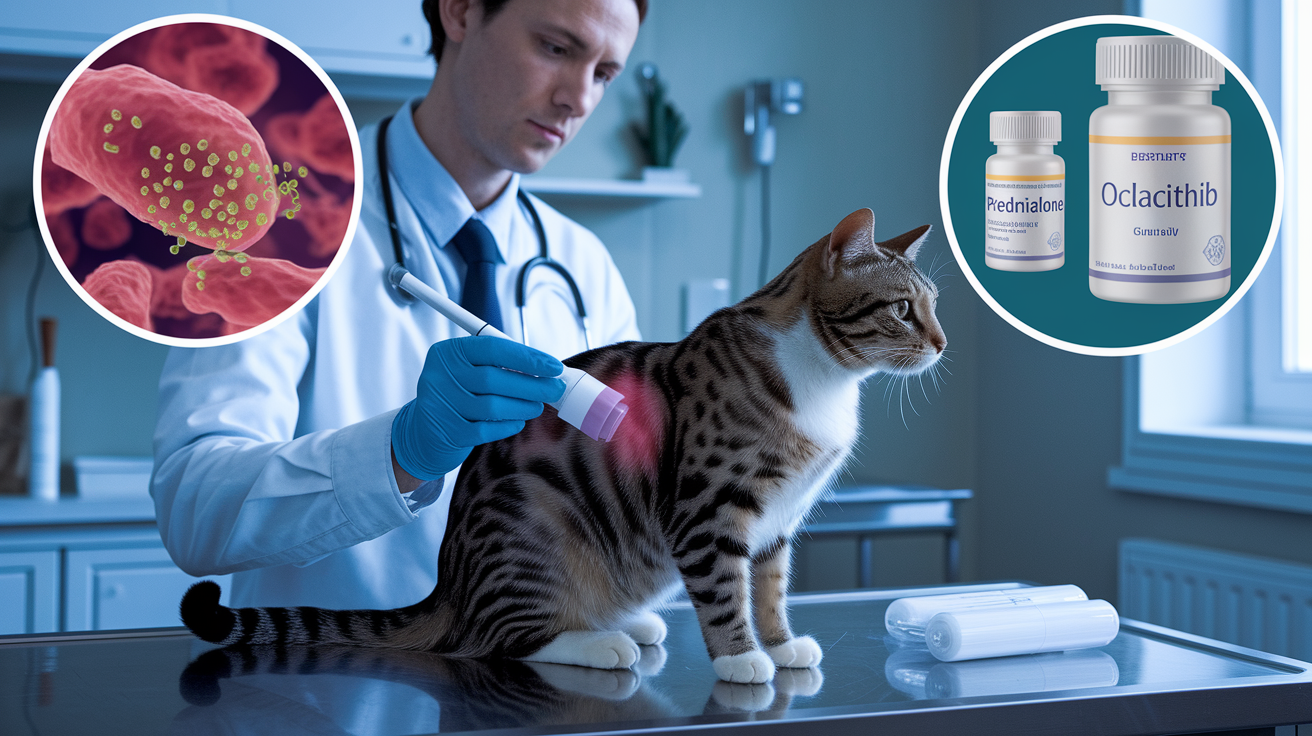
When a cat’s in the middle of an acute flare, intense itching, open sores, sometimes secondary infection, your first job is to bring down the inflammation and give the cat (and owner) some relief. Fast acting medications and supportive care can stabilize things while you figure out the long term plan.
Start by checking if a secondary infection is present. Run cytology on any crusted or weeping lesions. If you see bacteria or yeast, treat with appropriate antimicrobials (topical chlorhexidine wipes or shampoos for localized areas, systemic antibiotics like cephalexin for widespread bacterial infection, antifungal shampoos or oral itraconazole for Malassezia overgrowth). Once infection’s controlled, address the itching directly. Short courses of oral prednisolone (1 to 2 mg/kg once daily, tapered over one to two weeks) can provide rapid relief, but keep steroid use short to avoid long term side effects like diabetes or immunosuppression. If the cat’s been on steroids repeatedly or has other health issues, consider oclacitinib (Apoquel) at 0.5 to 1 mg/kg twice daily for quick itch control, though this is extra label in cats and needs baseline FIV/FeLV screening. Topical therapy like medicated mousses, sprays, or cool water rinses can soothe inflamed skin and reduce the need for higher systemic doses.
Acute flare algorithm:
- Do cytology to identify secondary bacterial or yeast infection
- Treat infection with appropriate antimicrobials (topical or systemic)
- Start short course oral prednisolone (1 to 2 mg/kg daily, taper over 1 to 2 weeks) or oclacitinib (0.5 to 1 mg/kg twice daily, extra label)
- Add topical therapy (medicated shampoos, sprays, rinses) to reduce systemic medication needs
- Recheck in 7 to 14 days to see how things are responding and adjust therapy
Long‑Term Management Strategies
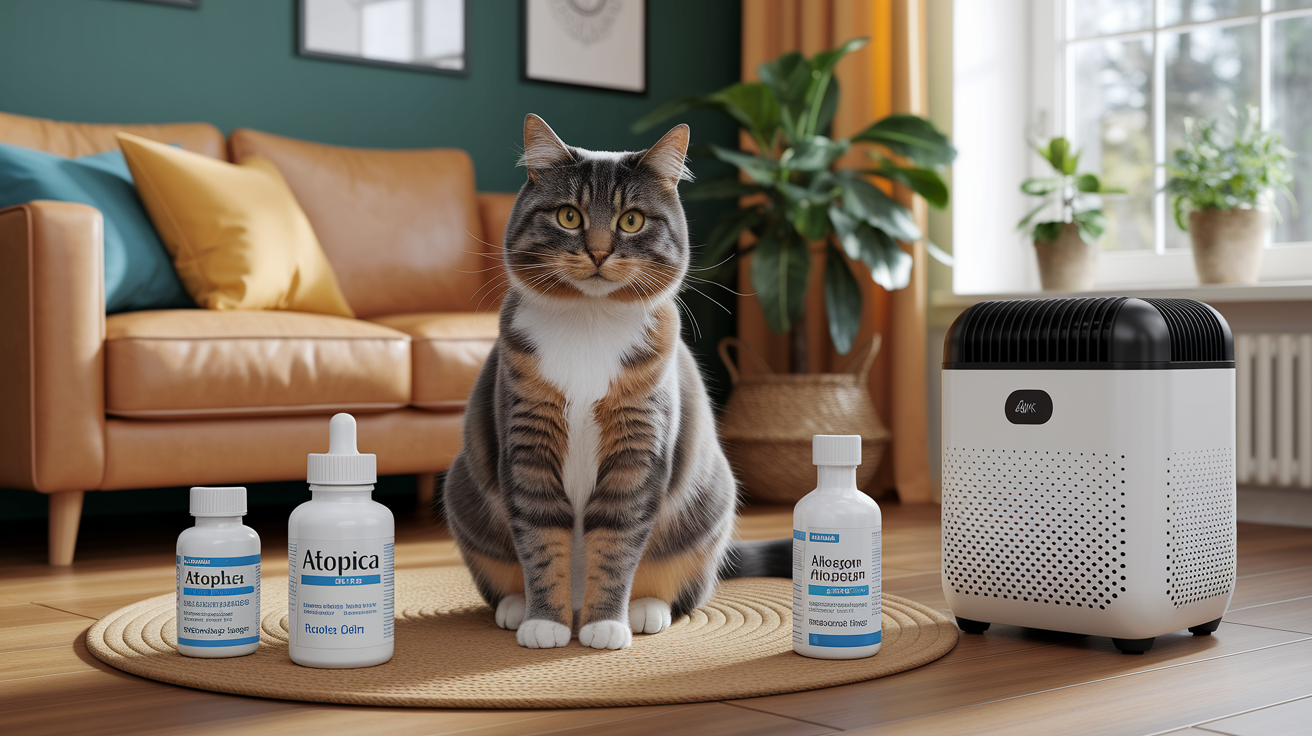
Feline atopic dermatitis is a lifelong condition. You’re not trying to cure it. You’re trying to keep your cat comfortable, minimize flares, and avoid the side effects that come with aggressive or prolonged medication use. Long term control works best when you combine several strategies at once.
Maintenance medications form the backbone of chronic management. Once you’ve stabilized an acute flare, transition to the lowest effective dose of an immunomodulatory drug. Modified cyclosporine (Atopica) at around 7 mg/kg daily is a common choice. It takes four to six weeks to reach full effect, but once steady, you can often taper to every other day or twice weekly dosing. Monitor with physical exams and serum chemistry at six weeks, then every six to eight months. Antihistamines like chlorpheniramine (2 mg per cat twice daily) or cetirizine (5 mg per cat twice daily) are safe, low cost add-ons that can reduce the need for stronger drugs. Some cats respond well to allergen specific immunotherapy (allergy shots or sublingual drops), which gradually builds tolerance to environmental triggers. Immunotherapy takes months to show benefit but can reduce medication dependence over time.
Environmental control and routine monitoring are just as important as medication. Keep your cat indoors during high pollen seasons, use air filtration, vacuum frequently, wash bedding in hot water to reduce dust mites. Maintain strict year round flea prevention, because even occasional flea exposure can trigger flares that undo months of progress. Schedule rechecks every three to six months, or sooner if symptoms worsen. At each visit, reassess itch levels (aim for mild, 2 out of 10, rather than zero), check for new infections or medication side effects, and adjust the treatment plan as needed. Cats on long term steroids need closer monitoring for diabetes, weight gain, urinary infections. Cats on cyclosporine or oclacitinib should avoid raw diets and unsupervised outdoor activity to reduce infection risk while their immune system’s suppressed.
Multi-modal care means combining medications, environmental changes, topical therapies, sometimes dietary adjustments all at once. No single thing works alone for most cats. The more pieces you put in place, the better your chance of keeping symptoms controlled without relying on high dose steroids indefinitely.
Allergen Identification and Testing Approaches
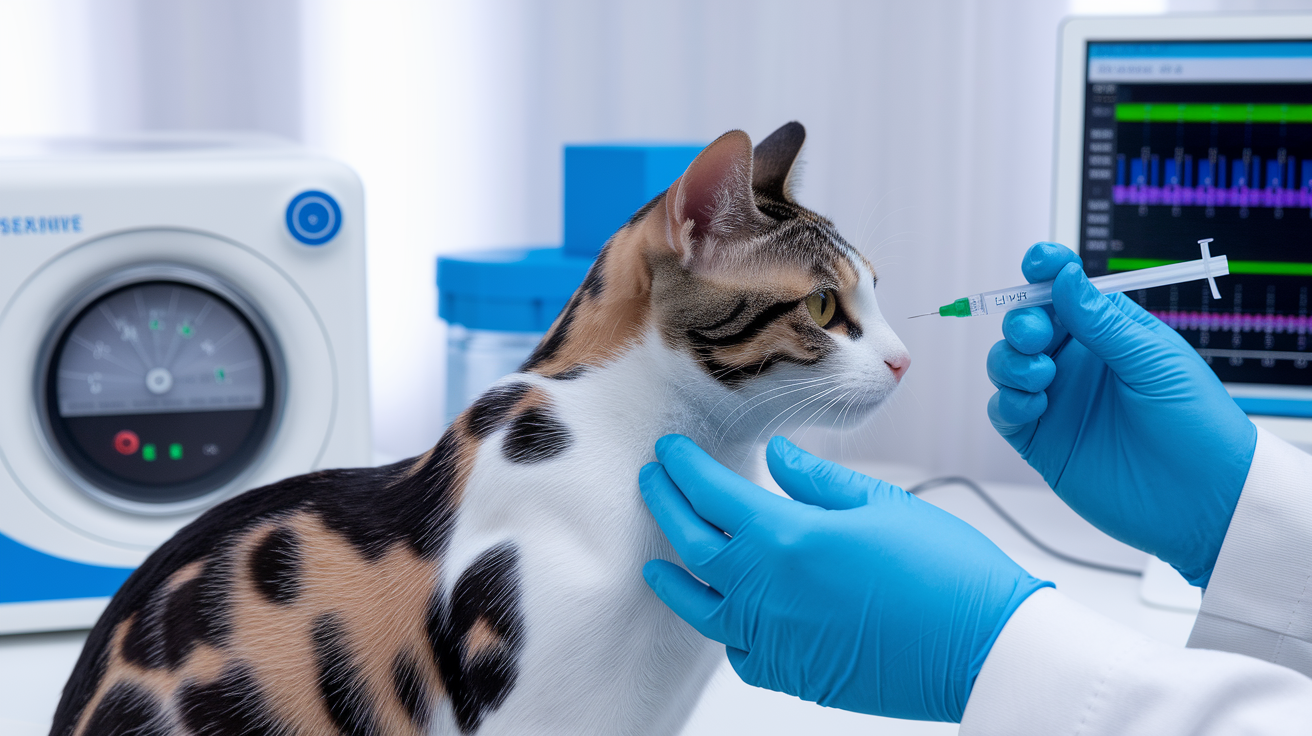
Once you’ve ruled out other causes and confirmed that environmental allergens are driving the skin disease, allergy testing helps you figure out exactly what your cat’s reacting to. That information guides decisions about allergen avoidance and whether to pursue allergen specific immunotherapy.
Intradermal allergy testing (IDT) is the gold standard. The cat’s sedated, a patch of skin is shaved (usually on the side of the chest), and tiny amounts of common environmental allergens (pollens, molds, dust mites, insect proteins) are injected just under the skin. You watch for raised, red reactions at around 20 minutes and again at two hours. Positive reactions suggest sensitization to those specific allergens. IDT in cats can be harder to read than in dogs, so some vets use intravenous fluorescein dye to make the wheals easier to see. Serum IgE testing is an alternative that only needs a blood sample. It’s more convenient and less stressful for the cat, but results can be less reliable. Serum tests often show fewer positives in cats, especially for seasonal allergens, and correlation with actual clinical signs can be poor. Use serum testing when IDT isn’t available or practical, but always interpret results alongside the cat’s history and symptom pattern.
| Test Type | Use Case | Limitations |
|---|---|---|
| Intradermal testing (IDT) | Gold standard for identifying specific environmental allergens to formulate immunotherapy | Needs sedation, skilled interpretation; reactions can be subtle in cats |
| Serum IgE (ELISA) | Convenient blood test when IDT not available; less stressful for the cat | Variable clinical validity; often fewer positives and poor correlation with symptoms in cats |
| History and seasonality review | Correlate positive test results with real world exposure and symptom timing | Subjective; relies on owner observation and accurate recall |
Always correlate test results with the cat’s clinical signs and the timing of flares. A positive reaction to ragweed means more if your cat itches every fall. A positive test for an allergen the cat never encounters isn’t useful for treatment planning.
Pharmacologic Options for Long‑Term Control
Several medication classes are available for long term management of feline atopic dermatitis. Each has its own benefits, risks, and practical considerations. The best choice depends on the cat’s overall health, the owner’s ability to medicate, and how well the cat tolerates the drug.
Glucocorticoids like prednisolone, methylprednisolone, or dexamethasone provide fast, reliable itch relief. They’re often the first line choice, especially in cats, because they work quickly and most cats tolerate them well in the short term. But long term steroid use comes with serious risks: diabetes, increased infections (skin, respiratory, urinary), muscle wasting, poor wound healing, skin fragility. Use the mildest effective steroid at the lowest possible dose. Accept a low level of itch (around 2 to 3 out of 10) rather than trying to reach zero, because that usually means higher doses and more side effects. Taper to every other day or twice weekly dosing whenever possible, and monitor bloodwork (glucose, liver enzymes, kidney values) every few months.
Modified cyclosporine (Atopica for Cats) is an immunosuppressant that can take the place of steroids for long term control. Typical dosing is around 7 mg/kg once daily, though it may take up to six weeks to see the full effect. Once the cat’s stable, you can often taper to every other day or twice weekly. Cyclosporine’s safer for cats with diabetes or heart disease than long term steroids, but it has its own downsides. Many cats hate the bitter taste and will drool, vomit, or stop eating. The oral solution degrades after opening (17 ml bottles are good for 11 weeks, 5 ml bottles for 8 weeks), so track expiration dates when you’re using small tapered doses. Avoid raw food diets and unsupervised outdoor hunting while on cyclosporine, because the drug suppresses immune defenses against infections.
Oclacitinib (Apoquel) is a JAK kinase inhibitor used extra label in cats. Published dosing ranges from 0.4 mg/kg up to 1 mg/kg orally, given once or twice daily. Higher doses (around 1 mg/kg twice daily) appear to work better for skin itch, though some cats respond at lower doses. Oclacitinib works quickly, often within hours to days, and most cats tolerate it well. Weight loss is the most common reported side effect. Because it suppresses part of the immune system, baseline screening for FIV and FeLV is recommended, and long term use needs periodic monitoring of kidney values and symmetric dimethylarginine (sDMA). Like cyclosporine, cats on oclacitinib should avoid raw diets and outdoor hunting. There are no long term safety studies in cats, so weigh the benefits (reduced itch, fewer steroids) against the unknowns (infection risk, potential cancer risk) when planning lifelong therapy.
Antihistamines are safe, inexpensive, and useful as add-ons to other therapies. They rarely control severe atopy on their own, but they can lower the dose of steroids or immunosuppressants you need. Chlorpheniramine (2 mg per cat twice daily) and cetirizine (5 mg per cat twice daily) are commonly used. First generation antihistamines like chlorpheniramine may cause mild, short lived sedation. Second generation agents like cetirizine are less sedating and may be better at stabilizing eosinophils and blocking histamine receptors in the skin.
Medication classes for chronic control:
- Glucocorticoids: fast, effective, but high long term risk (diabetes, infections, skin changes)
- Cyclosporine (Atopica): steroid alternative; takes weeks to work; GI side effects and bottle stability issues
- Oclacitinib (Apoquel): extra label, rapid itch relief; monitor for weight loss and infections
- Antihistamines: safe add-ons; low cost; best used in combination with other therapies
Environmental and Dietary Modification Strategies
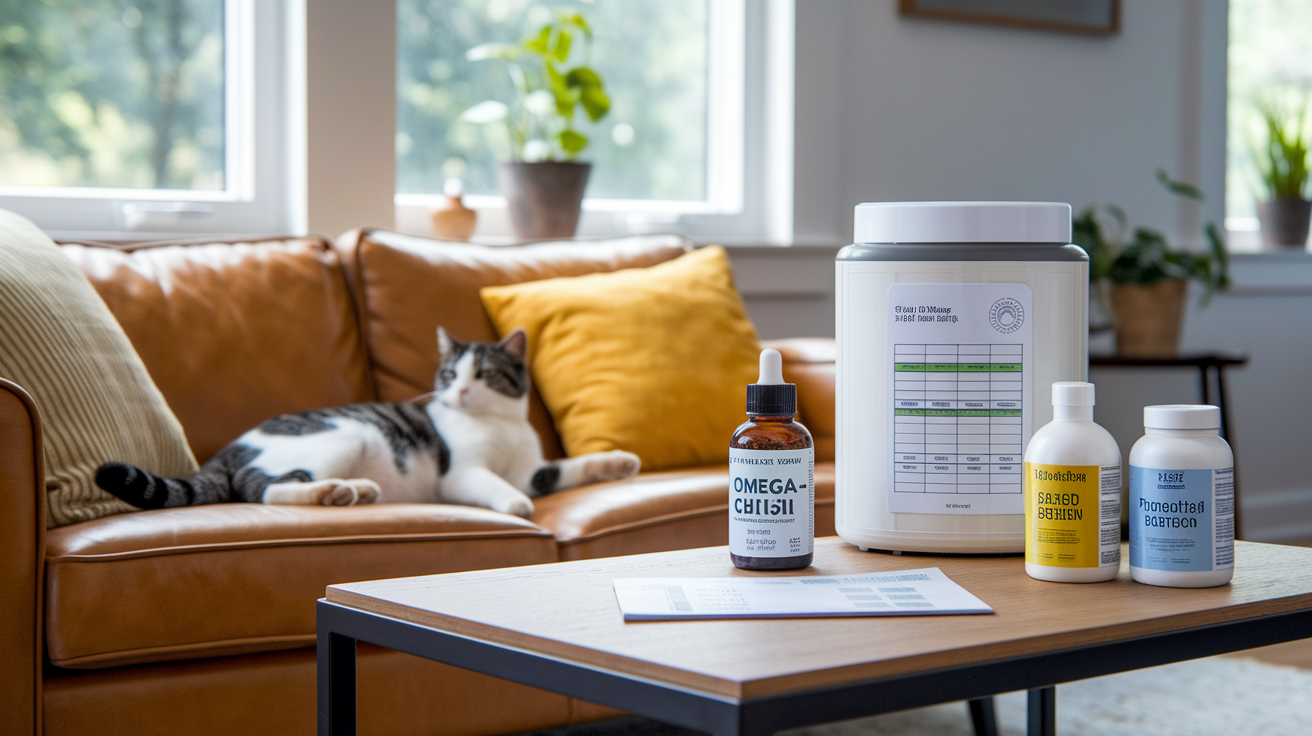
Medication alone won’t control atopic dermatitis if your cat’s constantly re-exposed to the allergens driving the reaction. Environmental and dietary changes work alongside medication to reduce symptom frequency and severity.
Start with the basics. Keep your cat indoors during peak pollen seasons (spring and fall in most regions). Close windows, run air conditioning or HEPA air filters, vacuum frequently with a HEPA filtered vacuum to reduce indoor dust and pollen. Wash your cat’s bedding weekly in hot water to kill dust mites. If dust mites are a confirmed allergen, consider allergen proof mattress and pillow covers in rooms where the cat spends time. Avoid smoking indoors, limit use of strong scented cleaning products, switch to unscented, low dust cat litter if fragrance or dust seems to worsen symptoms. Year round flea prevention is non-negotiable, even for indoor only cats, because a single flea bite can trigger a flare that undoes weeks of progress.
Dietary modification plays two roles: ruling out food allergy and supporting skin health. If you haven’t already completed a strict elimination diet trial (six to eight weeks with a novel protein or hydrolyzed diet, no treats or flavored medications), do that first to confirm food isn’t part of the problem. Once food allergy’s ruled out, consider adding omega 3 fatty acid supplements (fish oil) to the daily routine. Essential fatty acids have mild anti-inflammatory effects and can improve skin barrier function over time. Avoid raw food diets if your cat’s on cyclosporine or oclacitinib, because immunosuppression increases the risk of bacterial or parasitic infections from uncooked meat.
Five practical environmental interventions:
- Keep windows closed and use HEPA air filtration during pollen seasons
- Vacuum frequently with a HEPA filtered vacuum to reduce indoor allergens
- Wash bedding weekly in hot water to control dust mites
- Maintain strict year round flea prevention for all household pets
- Switch to unscented, low dust cat litter and avoid indoor smoking or strong cleaning chemicals
Prognosis and Long‑Term Expectations
Feline atopic dermatitis is a chronic, relapsing disease. It doesn’t go away, but it can be managed well enough that most cats live comfortable, normal lives. The key is setting realistic expectations early. You’re not trying to eliminate every trace of itching. You’re trying to keep your cat comfortable, prevent infections, avoid medication side effects that cause more harm than the disease itself.
Prognosis depends on several factors: how well you can control the cat’s environment, how consistently you give medications, how the cat tolerates long term therapy. Cats that respond to allergen specific immunotherapy or low dose maintenance medications tend to do best. Cats that need high dose steroids year round face a higher risk of complications like diabetes, infections, poor quality of life. Multimodal therapy, combining medications, environmental control, topical care, dietary adjustments, gives you the best odds of long term success. Most cats will have occasional flares, especially during peak allergy seasons or after accidental allergen exposure, but those flares should become shorter and less severe over time as you fine tune the treatment plan.
Client Communication and Monitoring Guidelines

Clear communication with cat owners makes the difference between a treatment plan that works and one that falls apart in the first month. Owners need to understand that atopic dermatitis is lifelong, that no single medication will fix everything, and that their daily actions (flea control, diet, medication timing) directly affect how well their cat does.
Start by explaining the diagnosis in plain terms. “Your cat’s immune system is overreacting to things in the environment like pollen, dust, or mold. That’s causing the itching and skin problems. We can’t cure it, but we can control it with a combination of medications, environmental changes, and routine check-ins.” Walk through the treatment plan step by step. Make sure the owner knows what each medication does, how to give it, what side effects to watch for. Give written instructions and a monitoring checklist. Ask owners to track itching on a simple 0 to 10 scale (0 = no itching, 10 = constant scratching and self-injury) and record it weekly. That gives you objective data to adjust therapy at rechecks.
Schedule follow up visits every four to six weeks during the first few months while you’re dialing in the treatment plan, then every three to six months once the cat’s stable. At each visit, review the itch score, check for new infections or medication side effects, adjust doses or add therapies as needed. Reinforce the importance of flea prevention, environmental control, medication compliance at every visit. Most treatment failures happen because owners stop giving medications once the cat looks better, or because flea control lapses during winter months.
Three essential owner instructions:
- Track your cat’s itch level weekly on a 0 to 10 scale and bring that log to every recheck
- Give all medications exactly as prescribed, even when symptoms improve, because stopping early often triggers a flare
- Maintain strict year round flea prevention and follow environmental control steps daily, not just during flare-ups
Final Words
Start with a stepwise diagnostic plan: rule out parasites, run a strict 6-8 week food trial, use skin scrapings and cytology, and consider intradermal or serum testing to pinpoint allergens.
Stabilize acute flares with short steroid courses and treat infections promptly. For long-term care, combine meds, immunotherapy when appropriate, and environmental or dietary changes with regular rechecks.
Track pruritus, note any worsening, and call your vet for severe or rapid changes. With steady care, atopic dermatitis management in cats often keeps them comfortable and happy.
FAQ
Q: What are the diagnostic criteria and essential tests for feline atopic dermatitis?
A: The diagnostic criteria for feline atopic dermatitis require excluding parasites, completing a 6–8 week food trial, and checking for secondary infections. Essential tests include skin scrapings, cytology, and intradermal or serum IgE testing.
Q: How do vets rule out other causes like fleas, mites, and food allergy?
A: Vets rule out other causes by checking for fleas, performing skin scrapings for mites, running a strict 6–8 week elimination diet for food allergy, and treating or sampling any secondary infections found.
Q: How long should an elimination (hypoallergenic) diet trial last?
A: An elimination diet trial should last 6–8 weeks with only the test food, no treats or flavored meds, and careful recording of symptoms to judge improvement or need for further testing.
Q: What should I do right away during an acute itchy flare?
A: During an acute flare, stabilize with vet‑approved short steroid courses or fast antipruritic meds, treat confirmed infections with antimicrobials, optimize flea control, and contact your vet if symptoms worsen quickly.
Q: When should I call the vet about my cat’s skin problem?
A: You should call the vet for breathing trouble, severe pain, collapse, repeated vomiting, fever, open wounds, rapid worsening, or if your cat stops eating or drinking — these are urgent signs.
Q: What does long‑term management of feline atopic dermatitis involve?
A: Long‑term management involves multimodal care: allergen reduction, maintenance medications or immunotherapy, regular rechecks (often every 3–6 months), and vigilance to prevent or treat secondary infections.
Q: How does allergen testing help and what are its limits?
A: Allergen testing (intradermal or serum IgE) helps identify environmental triggers to guide immunotherapy, but it can give false positives and is not reliable for diagnosing food allergy alone.
Q: What medication options exist and what safety checks are needed?
A: Medication options include steroids, cyclosporine, antihistamines, and monoclonal antibody therapy; each needs vet dosing and monitoring for side effects, especially with long‑term steroid or immunosuppressive use.
Q: Which environmental changes can reduce allergy flares at home?
A: Environmental changes that help include using HEPA filters, washing bedding often, vacuuming and dusting regularly, reducing carpeted areas, and minimizing outdoor exposure to pollen when possible.
Q: What should I monitor at home and how often?
A: Monitor pruritus (scratching) frequency, skin redness or lesions, grooming changes, appetite, and water intake. Check twice weekly and contact your vet if signs worsen or infection appears.
Q: How should I prepare for a vet visit about suspected atopic dermatitis?
A: Bring a symptom timeline, photos, full diet and treat history, recent medications and flea products, notes on response to treatments, and any previous test results to speed diagnosis and planning.
Q: What is the long‑term outlook for cats with atopic dermatitis?
A: The long‑term outlook is that atopic dermatitis is usually lifelong but often manageable with consistent, multimodal care; response varies, and regular follow‑up improves outcomes.