

Some limps are emergencies — others can wait.
If your dog starts limping, it helps to know which signs mean you should call the vet right now and which you can safely watch at home.
This guide walks you through a ten-minute at-home check (watching the walk, checking paws and joints, feeling for heat or swelling), explains simple lameness grades, and lists clear red flags like not putting weight on a leg, visible bone, heavy bleeding, or dragging a limb.
Read this so you know what to do right now and what to tell your vet.
Immediate At‑Home Assessment Steps for a Limping Dog
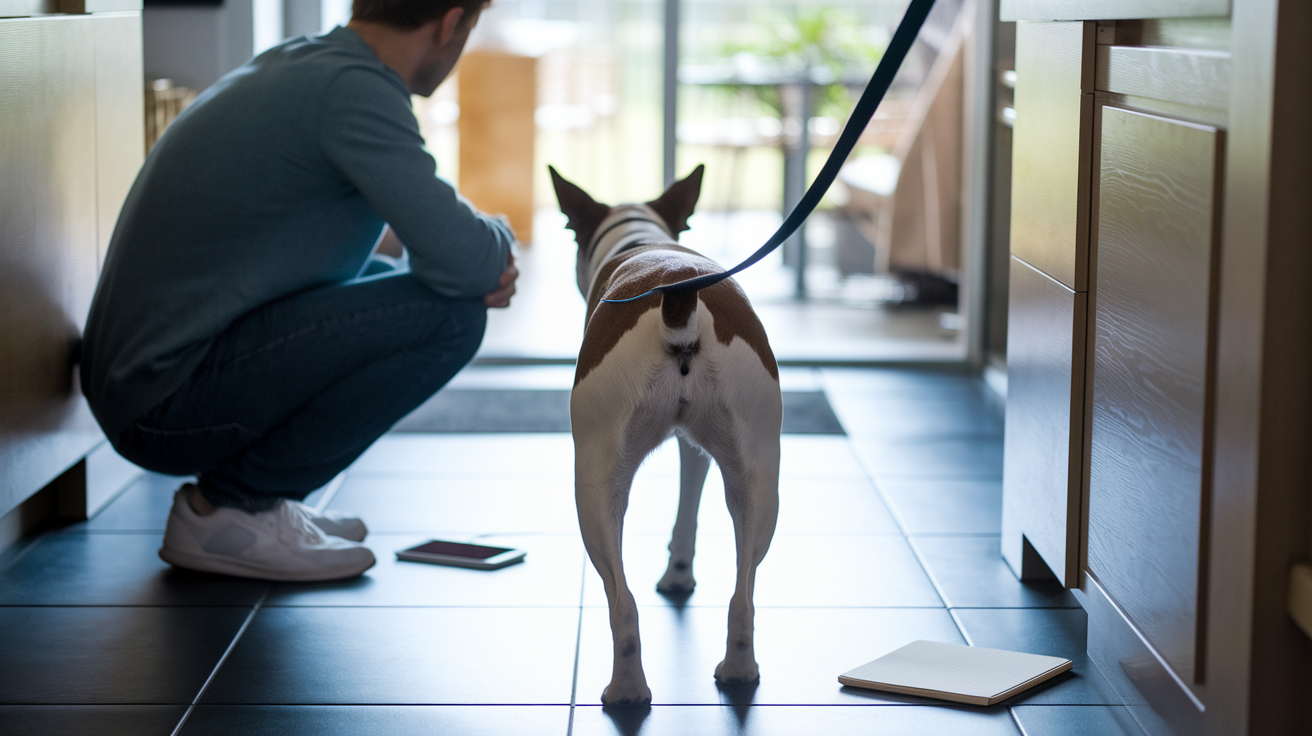
Before you call the vet or load up the car, spend ten minutes watching your dog move. What you catch now can speed up diagnosis later.
Walk your dog slowly on a leash across a hard surface. Tile, concrete, hardwood. Go 10 to 20 feet. Watch from the side, then from behind. Do it again on carpet or grass. Hard floors don’t hide uneven steps the way soft surfaces do.
While your dog walks, look for six things:
- Symmetry – Does each leg move the same distance forward, or is one stride shorter?
- Head bob – Does your dog’s head lift or drop with each step? A head that rises when a front leg hits the ground usually means that leg hurts.
- Hip hike – Does one hip lift higher than the other during rear-leg steps?
- Toe drag or scuffing – Is your dog scraping the top of a paw along the ground instead of lifting it?
- Toe knuckling – Does a paw fold over so the knuckles touch the ground? This is a neurologic warning.
- Weight distribution – Is your dog shifting weight away from one leg, holding a paw up between steps, or refusing to put it down at all?
If you can, record a short video from the side and from behind while your dog walks and trots. Limps sometimes disappear at the vet clinic because of stress or excitement, so home footage becomes your most reliable evidence.
If your dog refuses to walk, can’t stand, shows an obviously twisted or shortened limb, has uncontrolled bleeding, drags a leg without feeling it, or has a body temperature at or above 104°F, skip the assessment. Go straight to emergency care.
Hands‑On Dog Limping Evaluation Guide: Palpation and Paw Check
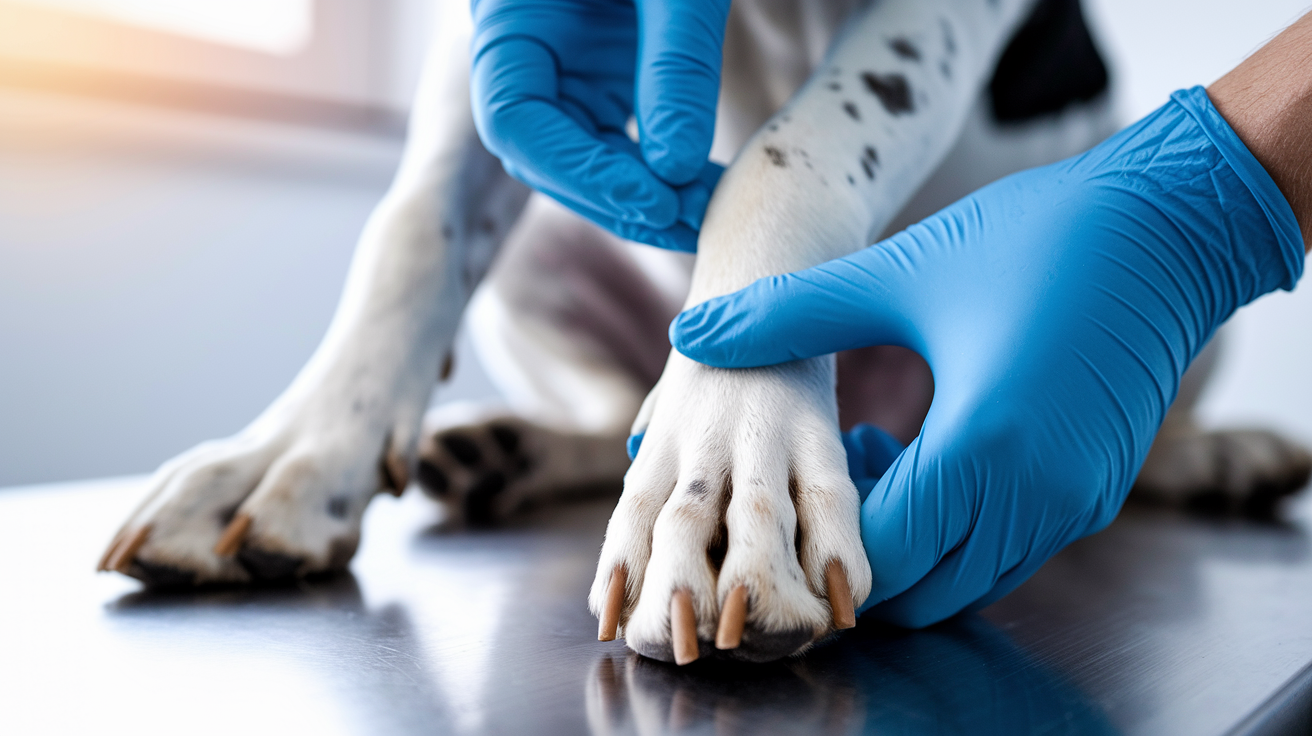
Once you’ve watched your dog move, a gentle hands-on check can help you pinpoint where the problem is. Work slowly, stay calm, and stop right away if your dog growls, snaps, or tries to pull away. Pain can make even the gentlest dog defensive.
Start by comparing the sore leg to the opposite leg. Look for visible differences in size, shape, or posture before you touch anything. Then move through each area step by step, from the top of the limb down to the toes.
Safe Palpation Sequence
- Compare both limbs visually – Check for swelling, bruising, cuts, or a limb held at an odd angle.
- Palpate from shoulder or hip downward – Use your whole hand to feel along the bone and muscle. Compare temperature by resting your palm on each limb for a few seconds. One leg noticeably warmer than the other suggests inflammation or infection.
- Inspect each paw pad and toe web – Spread the toes gently and look between them for thorns, glass, seeds, cuts, or cracked pads. Spend 10 to 15 seconds on each paw.
- Check toenails – Look for breaks, splits, or nails torn below the quick. A damaged nail can cause serious limping.
- Flex and extend each joint slowly – Move the shoulder, elbow, wrist, hip, knee, and ankle through their normal range. Watch your dog’s face for wincing, and feel for grinding, popping, or resistance.
- Apply gentle, steady pressure – Press along bones and across joints with moderate pressure for 3 to 5 seconds. If your dog flinches, yelps, or pulls away, you’ve found a painful spot.
- Note instability – Does a joint feel loose or wobbly compared to the other side? Laxity in the knee area can signal a torn cruciate ligament.
Write down what you find. Swelling location, which joint hurts during flexion, whether heat is present. You’ll want those details when you talk to your vet.
Understanding Dog Lameness Levels and What Each Limp Grade Means
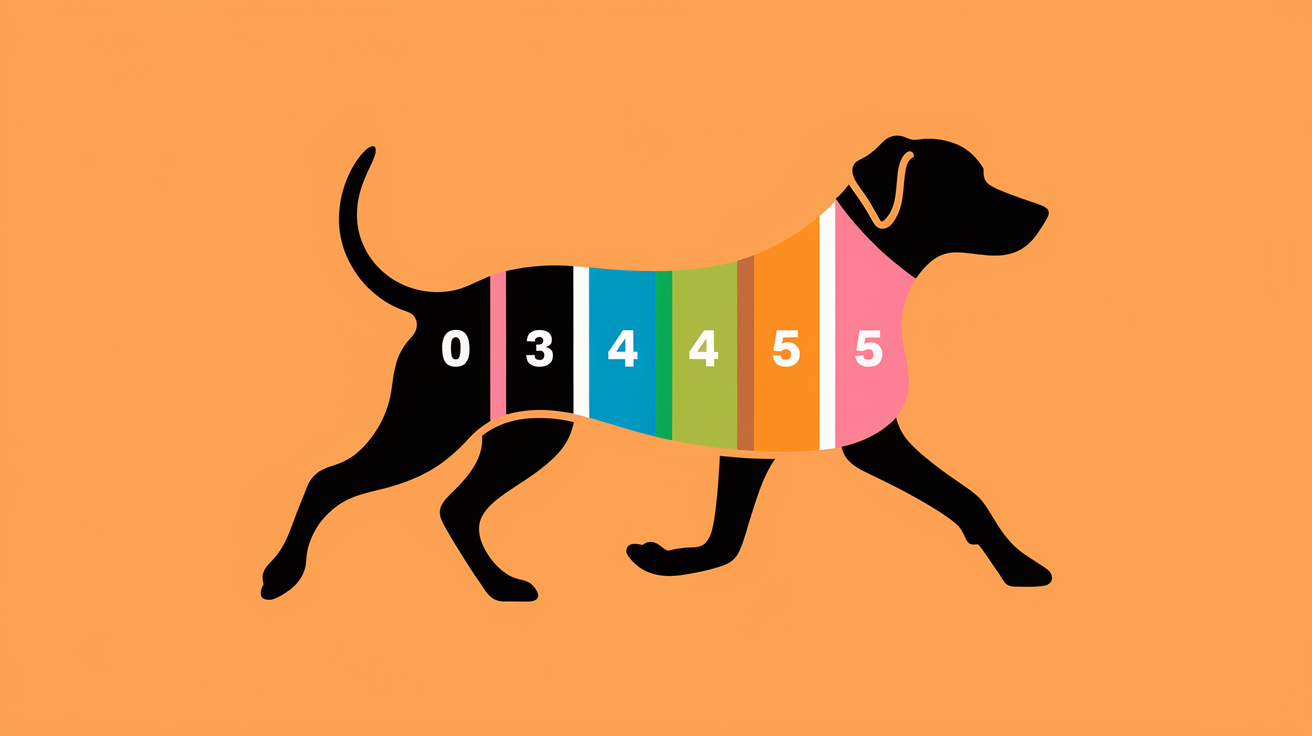
Veterinarians use a 0-to-5 grading scale to describe how severe a limp is. Knowing these grades helps you communicate clearly and decide how quickly your dog needs care.
The lameness grade combines two things: how much your dog uses the leg, and how long the limp has lasted. A mild limp that appeared ten minutes ago is very different from the same mild limp that’s been going on for three days.
| Grade | Description | Typical Owner Observations |
|---|---|---|
| 0 | Normal gait | No limp visible at walk or trot; equal weight on all legs. |
| 1 | Mild, subtle lameness | Slight hitch or shorter stride; you might miss it unless you’re looking closely. |
| 2 | Obvious lameness, still weight-bearing | Clear limp at walk or trot; dog uses the leg but favors it; may hesitate on stairs. |
| 3 | Marked lameness with decreased weight-bearing | Dog touches toes to ground briefly but carries most weight on other three legs. |
| 4 | Non-weight-bearing lameness | Leg held up completely while walking; dog hops on three legs. |
| 5 | Non-ambulatory or unable to use limb | Dog cannot walk or stand; limb may be paralyzed or severely injured. |
Use the grade plus the timeline to guide your next step. A grade-1 limp that showed up after a long hike and improves with a few hours of rest is much less urgent than a grade-4 limp that appeared suddenly with no clear cause.
Common Canine Limp Causes and Clues to Identify Them
Limping can come from dozens of different problems, but most fall into a few categories. Traumatic injuries, orthopedic disease, soft-tissue damage, infections, neurologic conditions.
Traumatic injuries like broken bones, torn ligaments, dislocated joints usually start suddenly. Your dog might yelp, refuse to use the leg right away, and show visible swelling or deformity within hours. Foreign bodies like thorns or glass in a paw cause localized limping and obsessive licking of one spot. Pad burns or deep cuts longer than 1 cm, or any cut that bleeds for more than 5 to 10 minutes, need veterinary wound care to prevent infection.
Orthopedic problems often develop more gradually or come and go. A torn cranial cruciate ligament (common in medium and large dogs) causes sudden hindlimb lameness, toe-touching, and a “pop” some owners hear. Over days, you might notice swelling on the inside of the knee. Luxating patellas, more common in small breeds, cause an intermittent skipping gait where the dog holds up a back leg for a few steps, then uses it normally again. Hip dysplasia and osteoarthritis usually show up as stiffness after rest that improves with gentle movement, and limping that worsens after heavy exercise. Senior dogs over seven years old are the most common candidates, and both hips or knees can be involved at once.
Here’s what to watch for:
- Acute trauma (fall, hit by car) → sudden severe limp, visible swelling or deformity, yelping, non-weight-bearing.
- Paw foreign body (thorn, splinter, seed) → licking one paw constantly, holding paw up, limping starts right after a walk.
- Pad injury or burn → visible wound, bleeding, reluctance to walk on hot pavement or rough surfaces.
- Cranial cruciate ligament (CCL) tear → sudden hindlimb lameness, toe-touching, instability when vet examines the knee, swelling on inner knee.
- Luxating patella → intermittent skipping or hopping on a back leg, often in small breeds under 20 pounds, young dogs.
- Osteoarthritis → gradual onset, stiffness after lying down, worse after exercise, older dogs, may affect multiple joints.
- Infection or immune disease (septic arthritis, Lyme disease) → fever, hot swollen joint, lethargy, loss of appetite, sometimes multiple limbs affected.
- Neurologic disease (disc injury, nerve damage) → dragging paw, knuckling toes, weakness in more than one limb, loss of coordination.
Matching your dog’s specific signs to these patterns gives you a head start before the vet visit.
Red Flags in Dog Limping That Require Immediate Veterinary Attention
Some limps are true emergencies. If you see any of the following signs, contact an emergency vet or head to the clinic right away. Don’t wait to see if it improves overnight.
Non-weight-bearing lameness where your dog won’t put any weight on a leg can mean a fracture, a completely torn ligament, or a dislocated joint. Visible bone, tendon, or deep tissue through an open wound requires emergency wound care and often surgery. Heavy bleeding that won’t stop with 5 minutes of direct pressure, or blood that spurts or pools, means a damaged blood vessel. Severe deformity (a limb bent at an unnatural angle, twisted, or visibly shortened compared to the other side) suggests a fracture or dislocation that needs immediate attention.
Neurologic warning signs include dragging a leg without feeling it, knuckling the toes under, sudden paralysis, or loss of coordination in multiple limbs. These can point to a spinal injury, slipped disc, or nerve damage that can worsen quickly without treatment. Systemic signs like collapse, severe vomiting or diarrhea, difficulty breathing, pale gums, or a body temperature at or above 104°F mean the limp is part of a larger, life-threatening problem such as infection, poisoning, or internal injury.
The five most critical emergency symptoms:
- Complete inability to use the limb or refusal to stand
- Exposed bone, tendon, or deep tissue
- Uncontrolled bleeding lasting more than 5 to 10 minutes
- Obvious deformity, twisting, or shortening of the limb
- Dragging, knuckling, or paralysis in one or more legs
When in doubt, call. Emergency vets and many general practices offer phone triage to help you decide whether your dog needs to be seen immediately or can wait until morning. More information: First Aid for Limping Dogs.
Dog Limp Evaluation Guide for Puppies, Seniors, and High‑Risk Breeds

Age and breed change the list of likely causes. A limp in a 10-week-old puppy, a 10-year-old Labrador, and a young German Shepherd each points you in a different direction.
Puppies under six months can develop growth-plate injuries from jumping off furniture or rough play. Panosteitis (shifting leg pain that moves from limb to limb over weeks) hits large-breed puppies between 5 and 18 months old, especially German Shepherds. Puppies also explore with their mouths and paws, so foreign bodies and minor cuts are common.
Senior dogs over seven years old face arthritis, degenerative joint disease, and sometimes bone cancer. Osteoarthritis is the top cause of chronic limping in older dogs. Osteosarcoma (a bone tumor) typically shows up as sudden, severe lameness in large or giant breeds over age seven, often in a front leg just above the wrist or in a rear leg near the knee. Weight loss, loss of appetite, and a firm swelling on the bone are red flags.
Certain breeds carry higher risks for specific problems. German Shepherds tend toward panosteitis and a condition called gracilis muscle contracture that causes a stiff, swinging gait. Labrador Retrievers and Boxers tear their cranial cruciate ligaments more often than Greyhounds. Small breeds like Chihuahuas, Pomeranians, and Yorkshire Terriers frequently have luxating patellas. Knowing your dog’s breed and age helps you and your vet focus the exam and choose the right tests quickly.
What Veterinarians Do During a Limping Exam
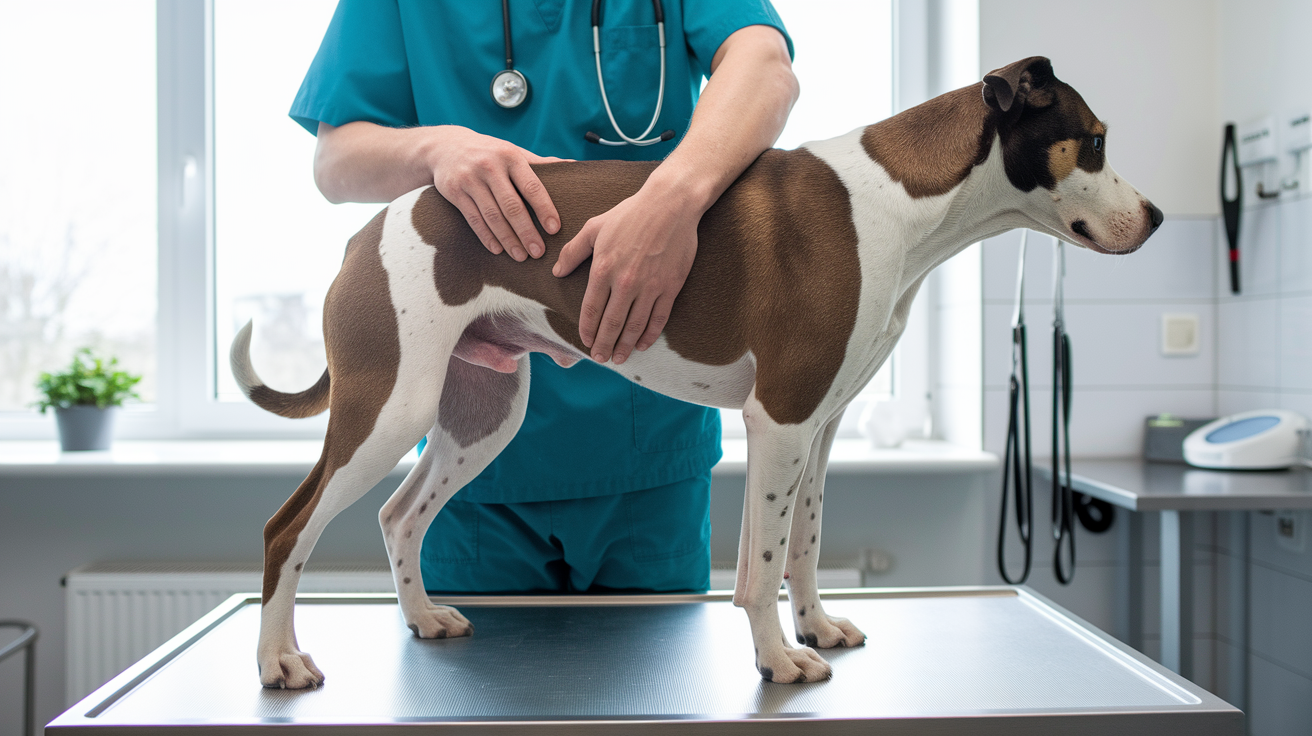
When you bring your dog in, the vet starts with the same gait observation you did at home, then moves to a detailed hands-on orthopedic and neurologic exam. Expect the appointment to take 20 to 40 minutes if diagnostics are needed.
The exam usually begins with the good leg. The vet palpates from toes to hip or shoulder, comparing temperature, muscle mass, joint range of motion, and pain response. For rear-leg lameness, common tests include the cranial drawer test (checking for cruciate ligament tears by sliding the shin bone forward) and feeling for a meniscal click when the knee is flexed and extended. For hip pain, the vet might perform an Ortolani test under sedation to assess hip laxity. Front-leg exams check shoulder range, elbow stability, and wrist hyperextension pain. The vet will also test your dog’s proprioception (how well each paw knows where it is in space) by flipping the paw over and watching how quickly your dog corrects it.
What Tests Are Commonly Performed
If the physical exam doesn’t give a clear answer, imaging is the next step. Radiographs (X-rays) are the most common first test. For accurate views, your dog will often need sedation so the vet can position the limb precisely and take stress views if a ligament injury is suspected. In puppies, the vet might X-ray the opposite limb for comparison, since growth plates can look unusual and are easy to misread. Some injuries like early bone infections or small stress fractures don’t show up on the first X-ray and need repeat films after two to four weeks.
Joint taps (where a needle draws fluid from a swollen joint) help diagnose infections or immune-mediated arthritis. Bloodwork checks for tick-borne diseases like Lyme, signs of infection, or metabolic problems. Advanced imaging such as CT or MRI is reserved for complex cases. Suspected spinal injuries, torn ligaments that need surgical planning, or when X-rays and exams don’t match the severity of the limp.
Home Treatment for a Limping Dog While Awaiting Veterinary Care
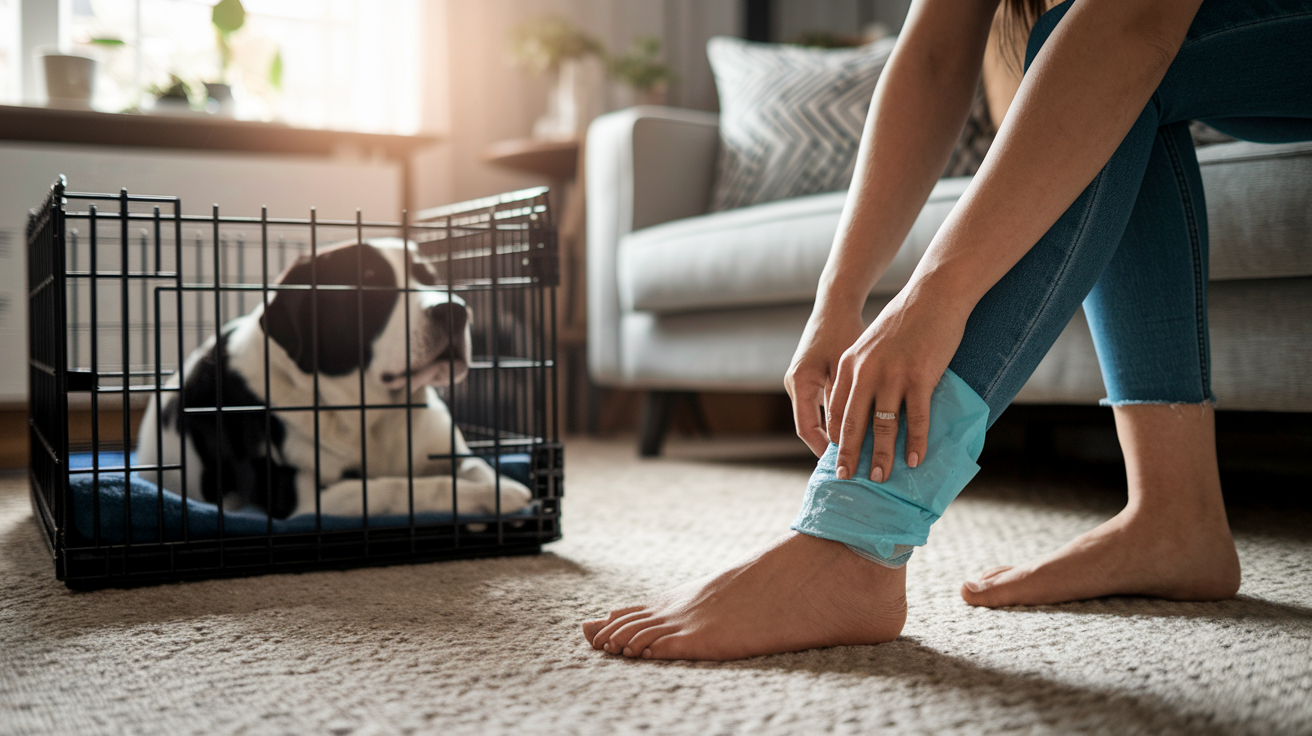
If your dog has a mild to moderate limp and you’ve scheduled a vet appointment within the next 24 to 72 hours, safe home care can keep your dog comfortable and prevent the injury from getting worse.
Strict rest is the single most important step. Crate your dog or confine them to a small, quiet room for 24 to 48 hours. No running, jumping, or stairs. Take your dog outside on a leash only for bathroom breaks (5 to 10 minutes maximum) and keep the pace slow.
Step-by-step home care:
- Cold compress or ice pack – Wrap ice or a frozen gel pack in a thin towel and hold it gently against the sore area for 10 to 15 minutes. Repeat every 2 to 3 hours for the first 48 hours to reduce swelling and pain.
- Warm compress after 48 to 72 hours – Once swelling has decreased, switch to a warm (not hot) compress for 10 to 15 minutes, 2 to 3 times daily, to improve circulation.
- No human pain medications – Never give ibuprofen, aspirin, or acetaminophen. These drugs are toxic to dogs. Only use pain relief prescribed by your veterinarian.
- Light protective bandaging – If there’s a small cut or scrape on a paw pad, you can apply a clean, non-stick pad and wrap it loosely with self-adhesive bandage tape. Change the bandage daily and check the toes every 1 to 2 hours to make sure they stay warm and pink. If toes turn cold, blue, or swollen, the wrap is too tight. Remove it immediately.
- Monitor appetite and behavior – Keep track of whether your dog is eating, drinking, and urinating normally. Loss of appetite or lethargy can signal the problem is more serious.
- Write down what you observe – Note which leg is affected, when the limp started, whether it’s better or worse after rest, and any other symptoms. Bring this list to your vet appointment.
Don’t try to splint or wrap a leg that looks broken or deformed. Improper splinting can cause more damage. For suspected fractures, support the dog’s body carefully and transport them to the vet as quickly and gently as possible.
Monitoring a Dog’s Limp: Improvement Signs, Worsening Signs, and When to Reassess
Once you’ve started home care or veterinary treatment, regular check-ins help you catch problems early and know when it’s safe to gradually return to normal activity.
Set specific times to reassess. At 24 hours, 48 hours, and 72 hours. At each checkpoint, walk your dog slowly on a leash and compare the limp to what you saw earlier. Ask yourself: Is my dog using the leg more or less? Is the swelling bigger or smaller? Is my dog more or less willing to move around?
| Time Frame | What to Check | Action Needed |
|---|---|---|
| 0–24 hours | Limp severity, appetite, willingness to stand, swelling size, pain level | Continue rest and cold compresses; call vet if limp worsens or new symptoms appear. |
| 24–48 hours | Same checks; compare to baseline; note if dog can bear more weight | If improving, continue care and monitor. If no change or worse, schedule vet visit within 24 hours. |
| 48–72 hours | Limp grade, swelling reduction, return of normal behavior | If still limping at same level or worse, seek veterinary exam and likely imaging. |
| 7–14 days | Full resolution or persistent low-grade limp; activity tolerance | For chronic or recurring limp, discuss long-term management plan with vet (weight control, supplements, physical therapy). |
Signs of improvement include better weight-bearing, less swelling, normal appetite, and your dog moving around more freely without prompting. Worsening signs (increased pain, spreading swelling, refusal to eat or drink, fever, or new limping in other legs) mean you need to escalate care immediately. For chronic cases that improve but don’t fully resolve, work with your vet on a long-term plan. That might include controlled weight loss (a 5 to 10 percent reduction can significantly ease joint stress), structured low-impact exercise like swimming or short leash walks, joint supplements, and pain medication as needed.
Preventing Future Limping Episodes in Dogs
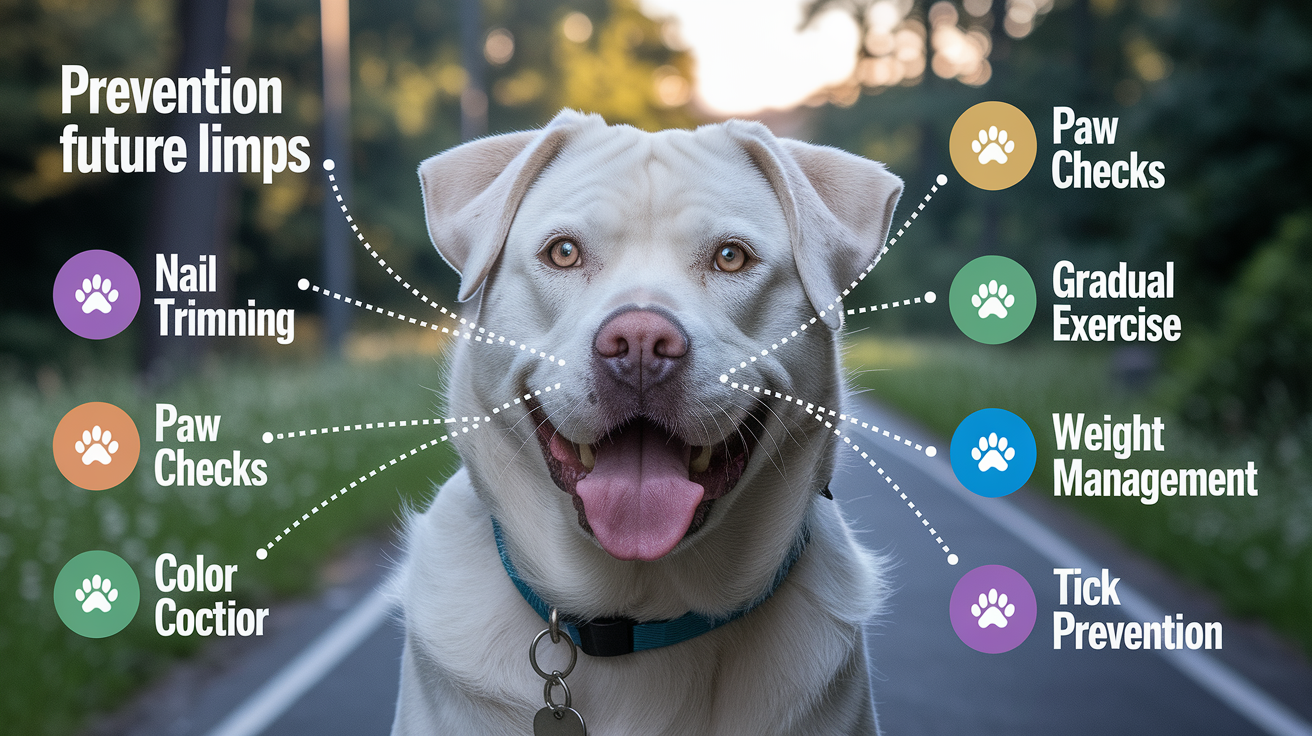
Many limping episodes are preventable with a few simple routines built into your weekly care schedule.
Trim your dog’s nails every 3 to 4 weeks, cutting to about 2 to 3 millimeters from the quick. Long nails force toes into unnatural positions and increase the risk of breaks and tears. After every walk (especially on rough trails, gravel, or hot pavement) check paw pads for cuts, cracks, burns, or embedded debris. In winter, rinse paws after walks on salted sidewalks to prevent chemical burns.
Avoid sudden, intense exercise if your dog has been mostly inactive. Weekend-warrior syndrome (where a dog goes from couch potato to marathon hiker in one day) causes muscle strains, ligament sprains, and flare-ups of underlying joint disease. Build fitness gradually over weeks.
Weight management is one of the most powerful prevention tools. Excess weight puts extra stress on joints, ligaments, and bones. Keep your dog at a healthy body condition score. You should be able to feel ribs easily without pressing hard, and see a visible waist when looking from above. Even a 10 percent weight reduction can cut arthritis pain significantly.
Stay current on tick and flea prevention, because tick-borne diseases like Lyme can cause sudden, shifting leg pain and joint swelling. Use vet-recommended preventives year-round in areas where ticks are common.
Quick prevention checklist:
- Trim nails regularly to prevent breaks and postural strain.
- Check paw pads after walks for cuts, burns, or foreign objects.
- Increase exercise gradually to avoid strains and overuse injuries.
- Maintain a healthy weight to reduce joint stress.
- Use tick prevention to lower the risk of infectious causes of lameness.
For dogs with a history of joint problems, ask your vet about low-impact exercise options like controlled swimming, and consider joint supplements containing glucosamine and chondroitin. Physical therapy and controlled rehabilitation exercises can also strengthen supporting muscles and improve long-term joint health. More guidance: Your Dog Is Limping? Here’s What You Need to Do.
Final Words
Use the quick home checks first: watch your dog walk 10–20 ft on hard and soft surfaces, record a short video, compare stride and head bob, then do the gentle palpation and paw check.
Follow the clear decision rules: if your dog won’t bear weight, shows deformity, has heavy bleeding, a fever, or gets worse over 24–48 hours, contact your vet. For mild cases, rest, cold compresses, leash-only bathroom walks, and reassess at 24 and 48 hours.
This dog limping evaluation guide ties observable signs, safe home care, and vet triggers together so you can act calmly and confidently.
FAQ
Q: How do I do an immediate at-home assessment when my dog limps?
A: An immediate at-home assessment for a limping dog starts with a calm visual check and short 10–20 ft walks on hard and soft surfaces, noting symmetry, stride, head bob, toe drag, and filming the gait for your vet.
Q: What step-by-step gait test should I do during the evaluation?
A: A step-by-step gait test for a limping dog is to walk 10–20 ft, hard then soft ground, watch stride length, head bob, hip hike and toe drag, compare both sides, and record video for review.
Q: How can I safely palpate my dog’s leg and paw at home?
A: Safely palpating your dog’s leg and paw means comparing both limbs visually, feeling from hip or shoulder down, checking toe webs 10–15 seconds, flexing joints gently, applying steady 3–5 second pressure, and noting warmth or swelling.
Q: What are red flags that mean I should get emergency vet care?
A: Red flags requiring immediate vet care include non‑weight‑bearing, exposed bone or tendon, heavy bleeding or clear deformity, limb shortening, dragging or knuckling, temperature ≥104°F, collapse, or breathing difficulty.
Q: How do lameness grades translate to what I see at home?
A: Lameness grades 0–5 translate at home as: 0 normal; 1 subtle; 2 obvious but weight‑bearing; 3 marked with less weight‑bearing; 4 non‑weight‑bearing; 5 non‑ambulatory—grade plus duration informs urgency.
Q: What common causes match specific limp clues?
A: Common cause clues: sudden trauma → severe limp; foreign body → focused licking; pad wound or burn → visible wound/bleeding; CCL tear → toe‑touching/instability; luxating patella → intermittent skipping; arthritis → stiffness after rest.
Q: What should I do at home for first aid while waiting for the vet?
A: Home first aid while waiting for the vet is rest for 24–48 hours, leash‑only short bathroom walks, cold compress 10–15 minutes every 2–3 hours for first 48 hours, warm later, avoid human pain meds, light bandage, and check circulation often.
Q: How should I monitor my dog’s limp and when to reassess or call the vet?
A: Monitor your dog’s limp at 24 and 48 hours, track pain, weight‑bearing, and activity; if not better by 48–72 hours, if it worsens, or any red flags appear, contact your vet and share photos or video.
Q: Are puppies, seniors, or certain breeds more likely to limp and why?
A: Puppies commonly limp from growth plate injuries or panosteitis; seniors from arthritis or chronic disease; some breeds (German Shepherds, Labs, Boxers) have higher risk for ligament or bone problems—watch age and breed patterns.
Q: What will the vet likely do during a limping exam?
A: During a limping exam the vet will perform a toe‑to‑hip orthopedic and neurologic check, run special tests like the cranial drawer, take x‑rays or advanced imaging, and sometimes do joint taps or bloodwork.
Q: How can I prevent future limping episodes in my dog?
A: Prevent future limps by keeping a healthy weight, trimming nails and checking pads after walks, avoiding abrupt intense exercise, using low‑impact activity, keeping parasite protection current, and discussing joint support with your vet.