

What if your symptom checklist comes back full of plagiarism checkers instead of pet vomiting?
Keyword tools often fill gaps with whatever matches surface words, so a search meant for symptoms can spit out technical, off-topic terms.
This post shows why noisy keyword data goes off the rails and how to fix it: start with trusted pet-health sources, use concrete owner-language seed terms, run comparisons across tools, and manually filter out software-focused noise.
You’ll get a clear plan to rebuild a symptom-focused keyword list that actually helps worried pet parents decide what to do next.
Challenges in Creating a Symptom Checklist From Noisy Keyword Data

Keyword research tools follow patterns in search behavior, existing content, and how words connect to each other. When you feed them vague, incomplete, or off-topic input, they fill the gaps with whatever matches the surface words. A query that’s supposed to pull health symptoms can return plagiarism checkers, citation generators, or grammar tools if the dataset doesn’t have medical content or if the tool misreads what you’re actually asking for. You end up with a list of technical terms meant for a totally different audience.
This happens most when your seed keyword or data source doesn’t give enough health signals. Tools scan for words that show up together, related searches, and clusters of similar sites. If those clusters are full of writing tools, education platforms, or SEO software, the algorithm assumes that’s what you want. The result is a keyword list that doesn’t answer any real question a worried pet owner would type in. Instead of “lethargy,” “vomiting,” or “limping,” you get “plagiarism percentage,” “citation format,” and “grammar accuracy.”
Why keyword tools spit out non-medical or non-symptom terms:
- Not enough health content in your seed list or scraped data
- Ambiguous phrases that match both health and technical topics
- Tools prefer high-volume commercial keywords over niche symptom terms
- No domain filtering, so unrelated categories take over the output
- Too much broad match logic pulling loosely related words
- Not enough manual cleanup at the start, letting noise slip through
Causes Behind Irrelevant or Technical Keyword Outputs

Keyword algorithms group terms based on how often they appear together and shared context. When a dataset includes scattered mentions of “checkers,” “tools,” or “accuracy,” the system might cluster those with plagiarism detection, grammar validation, or citation management, especially if those topics dominate the source material. The algorithm doesn’t know you’re after pet health symptoms. It just sees patterns. If the patterns lean technical, that’s where the output goes.
Search volume matters a lot. Health symptoms tied to pets or rare conditions often get low monthly searches. Keyword tools push high-volume terms to maximize visibility. That bias puts general software tools and popular education topics at the top, while specific symptom phrases drop off or never show up at all. The tool assumes you want what most people search for, not what a small, worried group actually needs.
Misclassification happens when your query uses words that live in multiple spaces. “Checker” can mean a symptom screening tool or a plagiarism scanner. “Accuracy” applies to medical tests and to software performance. Without explicit domain tags or controlled vocabulary, the tool guesses. When the guess is wrong, you get a list built for the wrong people.
How to Correct Course When Keyword Research Fails
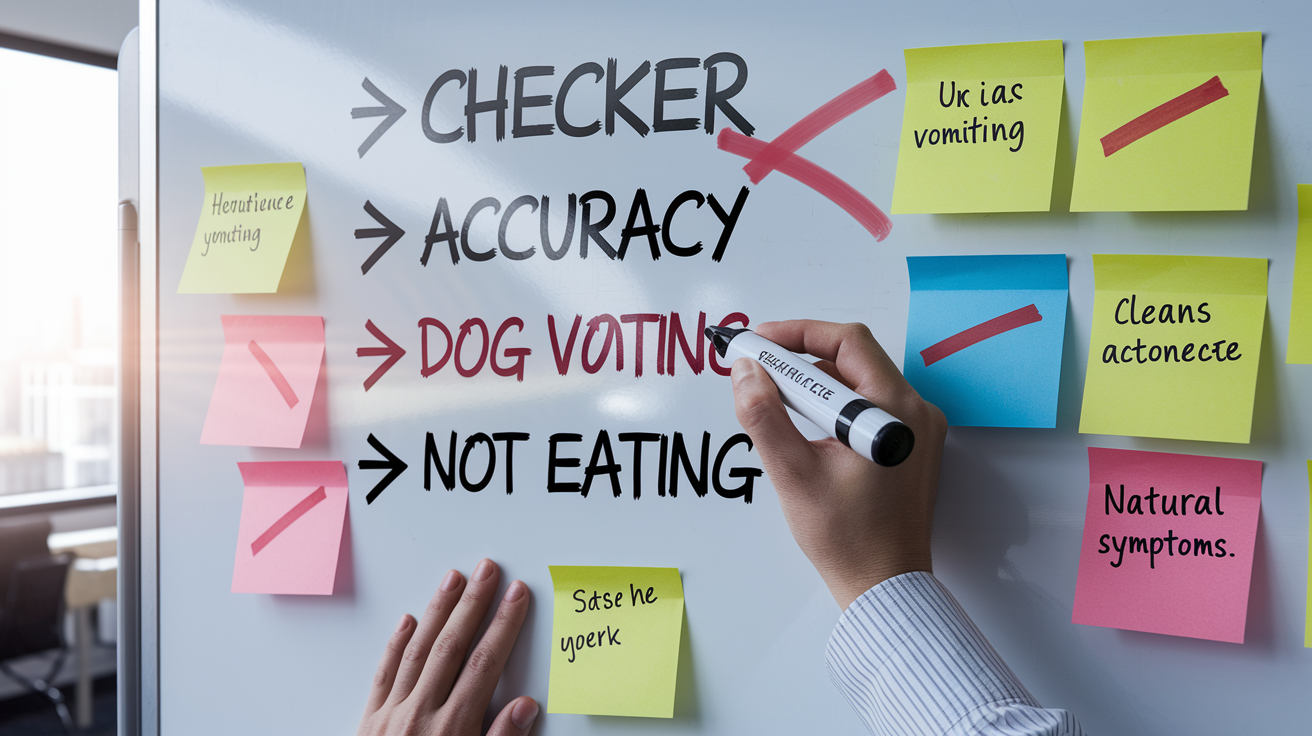
Start by cutting ambiguous terms from your seed list. Replace vague words like “checker,” “tool,” or “accuracy” with specific phrases. Use “dog vomiting,” “cat limping,” “pet lethargy,” or “puppy diarrhea” instead of generic process words. The more explicit your input, the harder it is for the algorithm to drift into unrelated categories. Reframe every seed keyword as a real question or observation a pet owner would type into a search bar when they’re worried.
Secondary tools and manual filtering help you verify and clean the output. Run the same query through multiple platforms. Cross-check results against trusted health content, veterinary glossaries, and symptom databases. Filter out any term that doesn’t describe a physical sign, behavior change, or health concern. If the keyword feels like it belongs on a software review site or an academic writing guide, remove it. Manual review takes time, but it’s the only way to catch algorithmic drift before it messes up your content plan.
How to clean, refine, and re-query keyword data:
- Review the initial output and flag anything unrelated to health, symptoms, or pet behavior.
- Rebuild your seed list using only concrete health terms, avoiding process or tool language.
- Run the new seed list through at least two different keyword platforms to compare results.
- Cross-reference suggested keywords against veterinary symptom databases or trusted pet health sites.
- Create a whitelist of approved symptom terms and use it to filter all future keyword pulls.
Rebuilding a Symptom-Focused Keyword List Using Reliable Inputs

Controlled sources give you the foundation keyword tools can’t provide on their own. Start with veterinary symptom glossaries, pet poison hotlines, breed-specific health guides, and trusted animal hospital resources. These sources use standardized language that matches what owners search for when they’re worried. Pull terms directly from those lists, then validate them with light keyword volume checks. This flips the usual process: you begin with known-good terms and confirm demand, rather than hoping a tool will guess correctly.
Combine manual term collection with structured intent tagging. Group symptoms by urgency, body system, or observable behavior. Tag each keyword with metadata: species, severity level, and search intent. That structure keeps your list focused and stops unrelated terms from slipping back in. When you feed this curated list into a keyword tool for expansion, the algorithm has clean signals to work from and fewer chances to wander into irrelevant territory.
| Source Type | Reliability Level | Example Use Case |
|---|---|---|
| Veterinary symptom database | High | Building a comprehensive checklist of observable signs across species and systems |
| Pet poison control hotline records | High | Identifying urgent symptom keywords tied to toxin exposure |
| Breed-specific health guides | Medium-high | Targeting keywords for hereditary conditions and common breed issues |
| General keyword tool output (unfiltered) | Low-medium | Broad exploration only; requires heavy manual filtering and validation |
Practical Examples of Meaningful Symptom Checklist Structures

A well-structured symptom checklist groups items by what you can actually see and how urgent it is. Start with immediate red flags at the top: trouble breathing, collapse, seizures, uncontrolled bleeding. Follow with moderate concerns that need same-day vet contact: repeated vomiting, refusal to eat, severe limping. End with monitor-at-home symptoms: mild scratching, single soft stool, reduced appetite for one meal. Each item should be concrete enough that an owner can answer yes or no without guessing.
Prioritize symptoms by risk and time sensitivity. Use plain language. Instead of “anorexia,” write “not eating.” Instead of “dyspnea,” write “trouble breathing or gasping.” Each entry should include a brief context note when it helps. “Vomiting more than twice in 24 hours” is clearer than just “vomiting.” Clear thresholds help owners decide whether to monitor or act.
Group related symptoms under body system or behavior headings to reduce overwhelm. Digestive issues, skin changes, respiratory signs, and mobility problems each get their own section. Within each section, list symptoms from most to least urgent. This mirrors how a worried owner thinks: “Something’s wrong with her belly” or “He’s limping” rather than scanning an alphabetical list of disconnected terms.
What makes a symptom checklist actually work:
- Observable, specific symptom descriptions using everyday pet parent language
- Clear urgency tags or color codes to signal “call now” versus “monitor today”
- Threshold details, such as frequency, duration, or intensity, to guide decision making
- Logical grouping by body system, behavior type, or concern category
- Short context notes or examples to help owners recognize ambiguous signs
Final Words
In the action of building a useful symptom checklist, this piece walked through why keyword tools sometimes spit out noisy, technical terms instead of health-focused words, what causes those mismatches, and how to fix course with reframed queries and cleaner inputs.
Next, it showed ways to rebuild a reliable keyword list and gave clear checklist formats you can copy.
With a few simple steps—reframe queries, use trusted sources, and prioritize urgency—you can turn messy data into a practical symptom checklist that helps you act with confidence.
FAQ
Q: How to enable plagiarism check in Grammarly?
A: To enable plagiarism check in Grammarly, open your document in the Grammarly Editor, click the Plagiarism option in the sidebar, and subscribe to Grammarly Premium or Business if you don’t see it.
Q: Is Grammarly’s plagiarism checker better than Turnitin?
A: Grammarly’s plagiarism checker is great for quick web checks and citation tips, while Turnitin specializes in academic matching against student papers and journals; choose based on classroom needs and institutional databases.
Q: What is the tool for plagiarism check?
A: A tool for plagiarism check is any service like Turnitin, Grammarly, Copyscape, Unicheck or PlagScan; pick one based on its database size, file types, integration, cost, and reporting detail.
Q: How to avoid plagiarism on Turnitin?
A: To avoid plagiarism on Turnitin, paraphrase in your own words, cite all sources properly, use quotation marks for direct quotes, run a draft through a checker, and check with your instructor if unsure.