

What if your dog’s back legs start to wobble or give out—should you panic or watch and wait?
Rear leg weakness can mean worn joints, a spinal injury, or a problem affecting the whole body, and how fast you act can change the outcome.
Some issues creep in over months, others hit in hours and need emergency care.
This post breaks down common causes, points out clear red flags that mean call the vet now, and gives simple, safe steps to take at home while you watch.
Key Reasons Your Dog May Develop Rear Leg Weakness
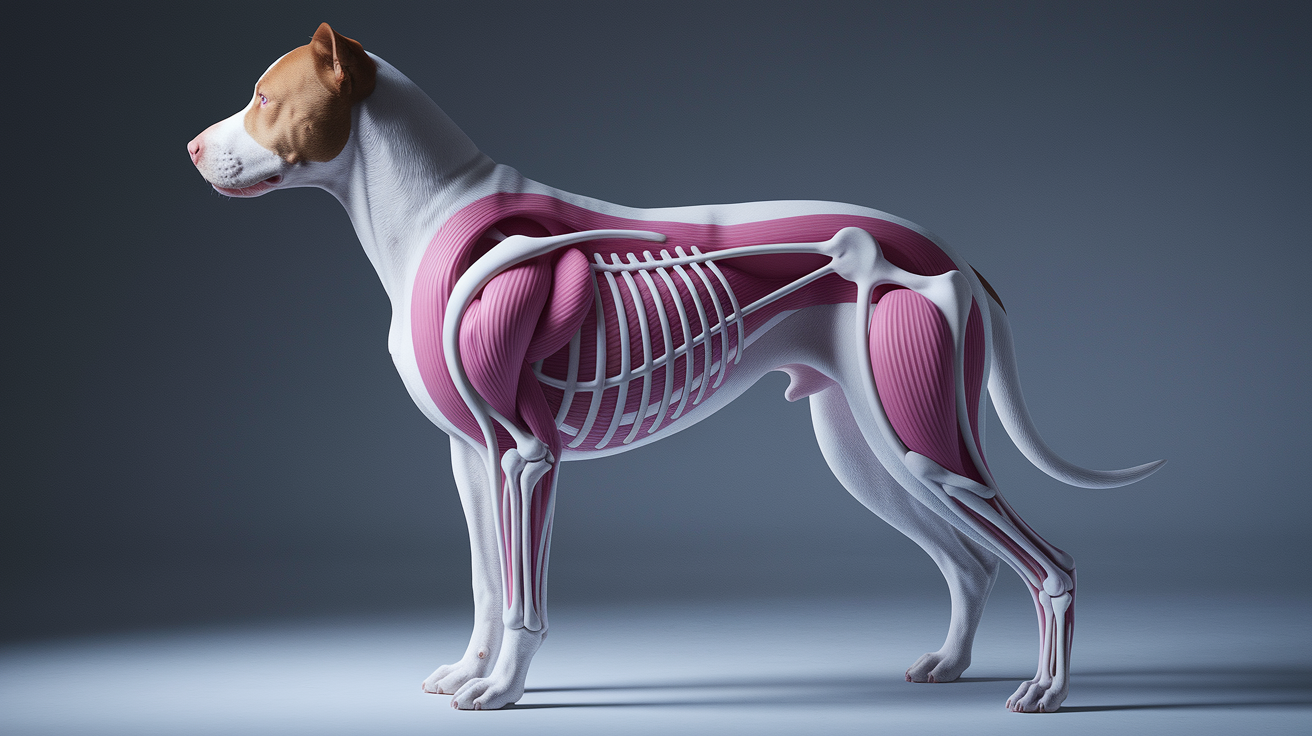
Rear leg weakness happens when something goes wrong with the muscles, joints, nerves, or bones that keep your dog’s hind end working. Could be worn joints in an older dog. Could be a sudden spinal injury that needs emergency care right now. Some weakness creeps in over weeks or months. Other times it shows up in hours, and your dog can’t stand.
Figuring out whether you’re dealing with an orthopedic problem (bones and joints), a neurologic issue (nerves and spinal cord), or something systemic (infection, hormones, nutrition) tells you how fast you need to move. Orthopedic trouble usually looks like limping, stiffness, favoring one leg. Neurologic problems show up as dragging toes, wobbly balance, or both hind legs collapsing at once. Systemic causes? You’ll often see other stuff too. Lethargy, fever, weight changes.
Some symptoms mean “call the vet today.” Others mean “go right now.” If your dog suddenly can’t move their back legs, can’t get up, loses bladder or bowel control, screams when you touch their back or tail, or gets weaker by the hour, that’s an emergency. Getting care fast can mean the difference between full recovery and permanent disability, especially when the spine’s involved.
Critical symptoms indicating rear-leg function decline:
- Uncoordinated, wobbly movements in the hind end
- Loss of balance or frequent stumbling
- Partial or complete paralysis of one or both hind legs
- Hind-leg trembling or shaking when standing
- Knuckling over of the hind toes (dragging the top of the paw)
Common Symptoms That Indicate Rear Leg Weakness in Dogs
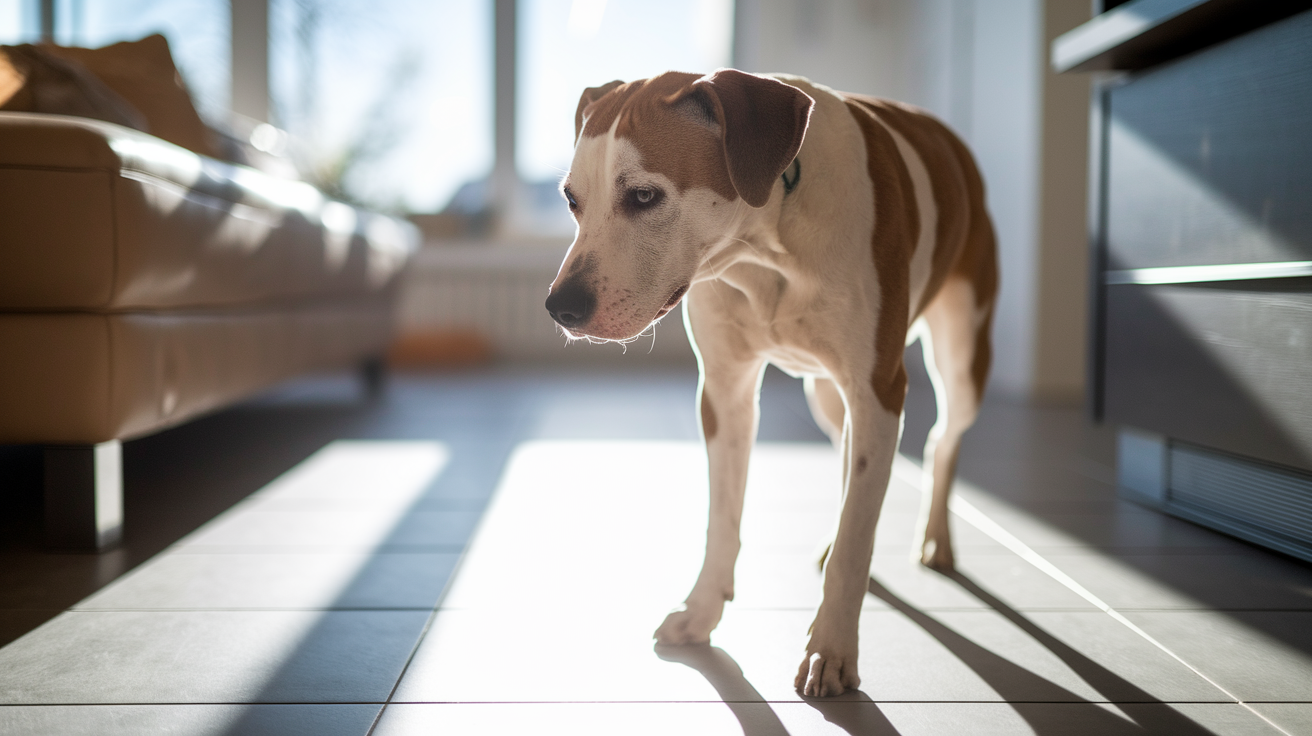
Before your dog loses all strength in the back legs, you’ll usually notice smaller changes in how they move and stand. These early signs are your window to step in before things get worse. Some dogs hide discomfort pretty well, so watch closely during everyday stuff. Getting up from a nap, climbing into the car, walking across a smooth floor.
Hind-leg weakness doesn’t always look the same. Recognizing the pattern helps you explain what’s going on when you call the vet. The more specific you can be, the faster they can narrow down what’s wrong and start treatment.
Ten specific symptoms to watch for:
- Falling with hind legs splayed out to the sides
- Taking smaller, shuffling steps with the back legs
- Visible muscle loss or thinning in the thighs, hips, or rear end
- Difficulty rising from a lying or sitting position
- Reluctance to jump onto furniture or into the car
- Slower, cautious stair climbing or refusing stairs altogether
- Hind end slipping out on slick floors (tile, hardwood, linoleum)
- Toes spreading apart or splaying when walking
- Tremors or shaking in the hind limbs when bearing weight
- Reduced stamina on walks, tiring more quickly than before
Major Orthopedic Causes of Rear Leg Weakness in Dogs
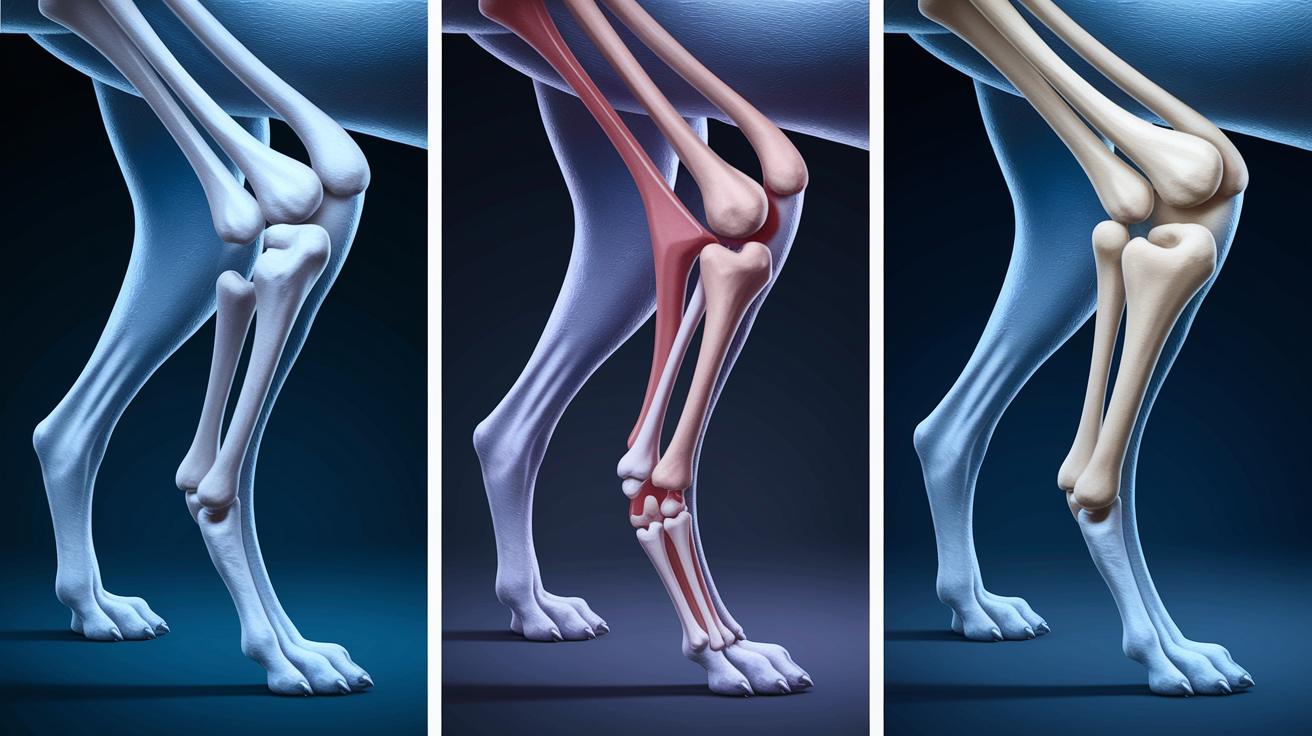
Orthopedic problems mess with bones, joints, ligaments, and cartilage that make up the hind-leg structure. These conditions hurt, and dogs respond by limping, favoring one leg, or avoiding putting full weight on the side that’s bothering them. Large-breed dogs tend to develop joint wear earlier in life. Sudden injuries like torn ligaments? That can happen to any active dog at any age.
Osteoarthritis
Osteoarthritis is cartilage breaking down inside joints over time. Hips, knees, lower spine. As cartilage wears thin, bone grinds on bone. That causes pain, swelling, stiffness. You’ll see your dog limping after they rest, moving slowly in the morning, hesitating before they stand up. Over time, muscles around weak joints shrink because the dog just uses those legs less.
Large breeds like German Shepherds, Labradors, Golden Retrievers often show signs of hip or knee arthritis by middle age. Sometimes earlier if they had hip dysplasia as puppies. Smaller dogs get arthritis too, especially in the knees.
Cranial Cruciate Ligament Rupture
The cranial cruciate ligament (CCL) keeps the knee stable. When it tears, your dog usually stops putting weight on that leg immediately. You might hear a yelp during play or exercise, then see them holding the hind leg up. Painful injury. Feels like a sudden pop inside the knee.
CCL tears need urgent vet evaluation. If you leave it untreated, the unstable joint develops bad arthritis within weeks. Surgery’s the most common fix, and recovery takes months of controlled activity and rehab.
Patellar Luxation
Patellar luxation means the kneecap slips in and out of where it’s supposed to sit. When it pops out of place, your dog might hold the leg up for a few steps, then kick it back into position and keep walking. You’ll often see a skipping, “bunny hop” gait. Especially common in small breeds like Chihuahuas, Yorkshire Terriers, Pomeranians.
Mild luxation might not bother your dog much, but repeated episodes wear down cartilage and lead to arthritis. Severe cases cause ongoing lameness and sometimes need surgery to realign the knee.
Six orthopedic red flags that require vet evaluation:
- Sudden refusal to bear weight on one hind leg
- Visible swelling, heat, or deformity around a joint
- Persistent limping lasting more than 48 hours
- Yelping or flinching when you gently press on a leg or hip
- A leg that appears shorter, twisted, or held at an odd angle
- Grinding, clicking, or popping sounds from the hip or knee during movement
Neurological and Spinal Conditions Leading to Rear Leg Weakness
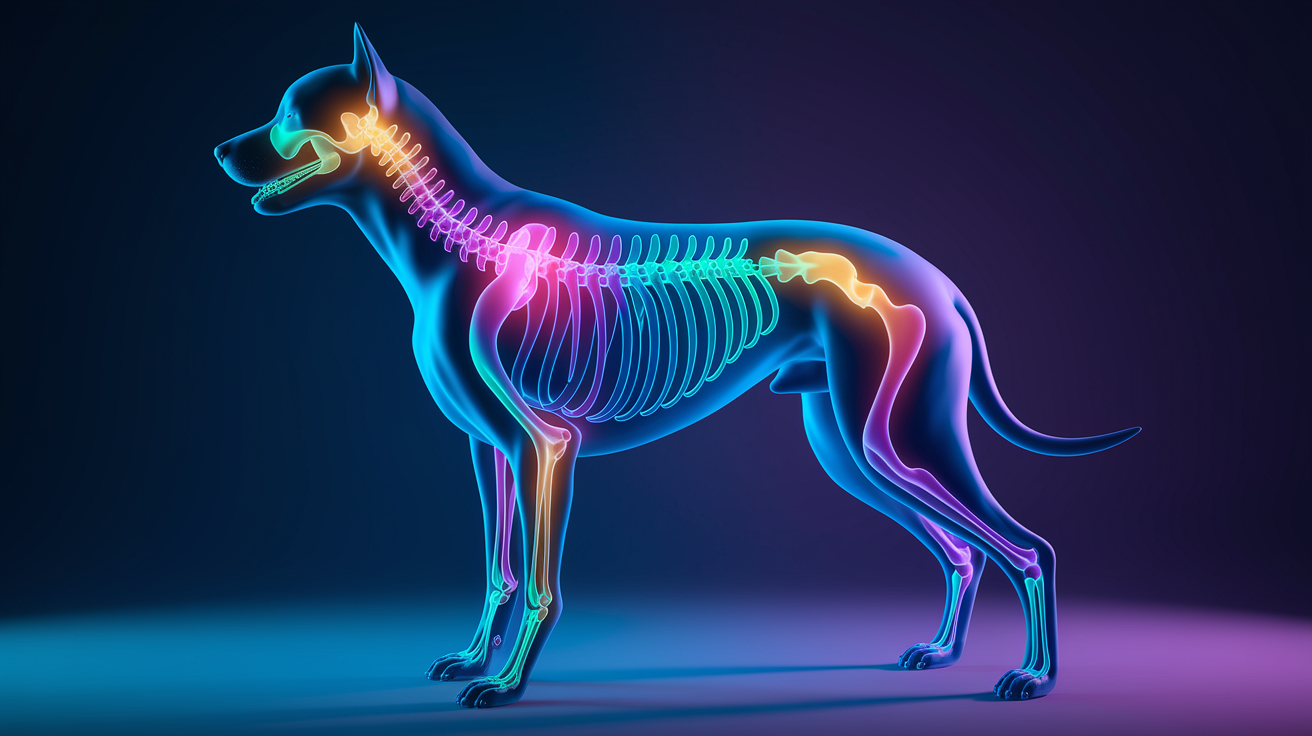
Neurologic causes involve damage or disease in the spinal cord, nerve roots, or brain. These problems mess with the signals that tell the legs how to move. Result? Wobbling, dragging, paralysis, or loss of coordination. Some neurologic conditions happen suddenly and require emergency surgery. Others creep along slowly and need long-term supportive care.
Intervertebral Disc Disease (IVDD)
IVDD happens when the cushioning discs between vertebrae rupture or bulge, pressing on the spinal cord. Pressure can range from mild irritation to total nerve blockage. Dogs with IVDD often show sudden back pain, don’t want to move, and develop weakness or paralysis in the hind legs. Dachshunds, Beagles, Shih Tzus, Bichon Frises are at highest risk because of their long backs and short legs.
Severe IVDD is a spinal emergency. If your dog can’t stand or has lost deep pain sensation in the hind legs, surgery within the first 24 to 48 hours gives the best shot at recovery. Milder cases might improve with strict rest, anti-inflammatory meds, pain control, but close vet monitoring is absolutely necessary.
Degenerative Myelopathy
Degenerative myelopathy (DM) is a progressive, incurable disease that destroys the white matter of the spinal cord over time. Most common in German Shepherds, Pembroke and Cardigan Welsh Corgis, Standard Poodles. Usually starts after age eight. First sign is subtle hind-end wobbling or scuffing of the hind toes. Over months, weakness spreads until the dog can’t walk anymore.
DM doesn’t hurt, which sets it apart from IVDD or arthritis. There’s no treatment to stop it. Physical therapy, back braces for spinal support, and mobility aids like wheelchairs can help keep quality of life going for as long as possible.
Lumbosacral Stenosis
Lumbosacral stenosis is narrowing of the spinal canal in the lower back, just in front of the pelvis, where nerve roots exit to control the hind legs, tail, and bladder. Compression can come from bulging discs, arthritis, tumors, fractures. Dogs develop a slow, wobbling gait, trouble rising, and serious nerve pain when you touch the tail or lower back. Some lose bladder or bowel control. Tail might hang limp.
Large breeds like German Shepherds are prone to this. Treatment ranges from pain management and anti-inflammatory drugs to surgical decompression in bad cases.
Fibrocartilaginous Embolism (FCE)
An FCE, sometimes called a “spinal stroke,” happens when a piece of disc material breaks off and blocks a blood vessel inside the spinal cord. Loss of blood flow damages nerves suddenly, usually during or right after exercise. Most dogs show sudden weakness or paralysis in one or both hind legs, but unlike IVDD, there’s little to no pain.
FCE is more common in larger breeds like Labradors and German Shepherds. One hind leg might be weaker than the other. There’s no surgery for FCE. Treatment focuses on rest, anti-inflammatory support, intensive rehab. Many dogs get back partial to good function over weeks to months.
| Condition | Typical Onset | Pain Level | Hallmark Symptom |
|---|---|---|---|
| IVDD | Sudden (hours) | Severe | Sudden paralysis, won’t move |
| Degenerative Myelopathy | Gradual (months) | None | Progressive toe dragging, wobbling |
| Lumbosacral Stenosis | Slow to moderate | Moderate to severe | Pain on tail touch, incontinence |
| FCE | Sudden (during activity) | Minimal | Asymmetric weakness, no back pain |
Metabolic, Infectious, and Systemic Causes of Weak Back Legs
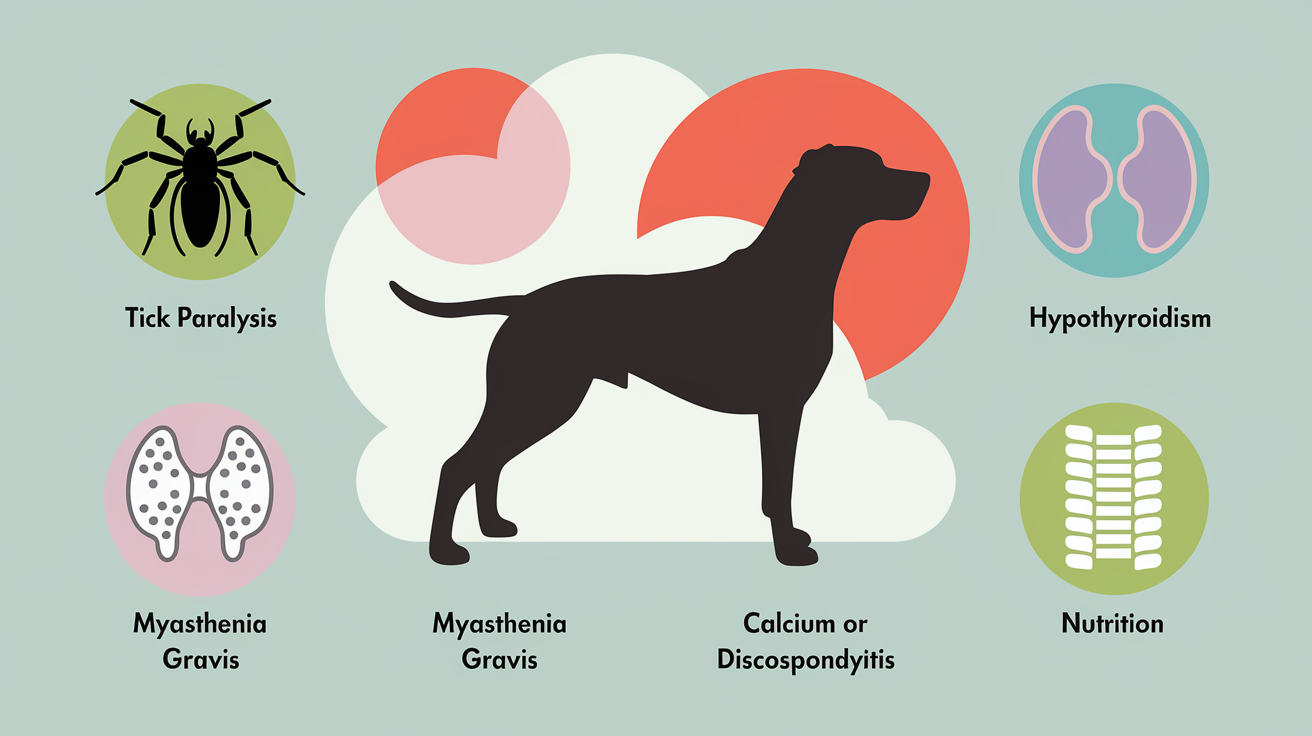
Not all hind-leg weakness starts in joints or nerves. Sometimes the whole body’s affected by infection, hormone imbalance, or nutritional deficiency, and the hind legs show strain first. These causes are less common than arthritis or spinal disease, but they matter, especially in younger dogs or cases that don’t fit the usual patterns.
Tick paralysis can cause progressive hind-limb weakness that spreads forward if you don’t find and remove the tick. Dogs with hypothyroidism (low thyroid hormone) might develop muscle weakness, lethargy, weight gain. Bacterial infections that reach the spine or nerve roots can create sudden or worsening weakness. Nutritional problems, like low calcium or vitamin D, are rare in dogs eating complete commercial diets. But they can happen with homemade or unbalanced raw diets, especially in growing puppies.
Five systemic conditions that can cause weakness:
- Tick paralysis from neurotoxins released by attached ticks
- Hypothyroidism leading to generalized muscle weakness and sluggishness
- Myasthenia gravis, an autoimmune disease affecting nerve-muscle communication
- Bacterial or fungal spinal infections (discospondylitis)
- Severe nutritional imbalances (calcium, vitamin D, or protein deficiency)
Emergency Signs Requiring Immediate Veterinary Care for Rear-Leg Weakness
Some rear-leg problems can wait for a regular appointment. Others demand immediate attention. Delaying care in a true emergency cuts the chance of recovery and can lead to permanent paralysis, chronic pain, or life-threatening complications. If you see any of the following signs, contact your vet or an emergency clinic right away. For spinal emergencies like IVDD, every hour counts.
Seven urgent symptoms that mean “go to the vet now”:
- Sudden complete paralysis or collapse of one or both hind legs
- Inability to stand or bear any weight on the back legs
- Extreme pain when you gently touch the lower back, hips, or tail
- Loss of bladder control (urine leaking or inability to urinate)
- Loss of bowel control (fecal incontinence or straining without results)
- Rapidly progressing weakness (normal yesterday, dragging today, paralyzed tonight)
- Severe vocalizing, panting, or shaking that suggests intense pain
How Veterinarians Diagnose Rear Leg Weakness in Dogs
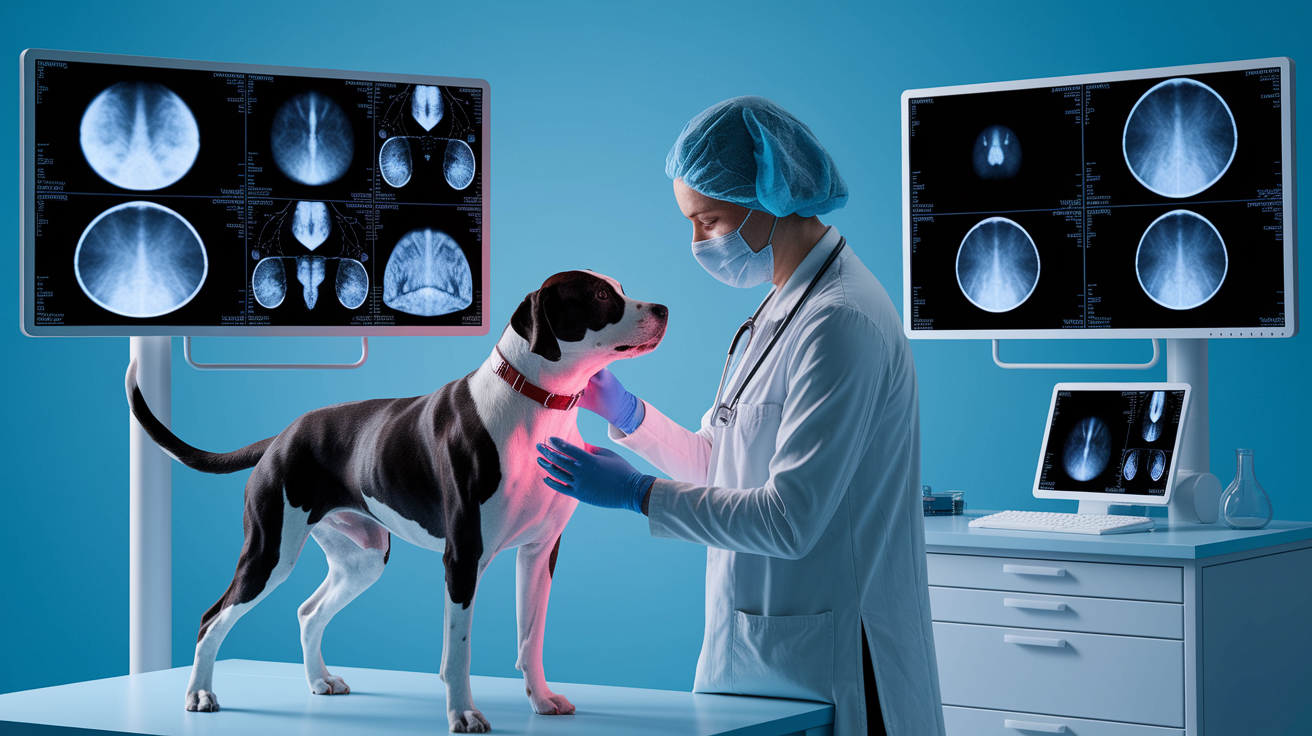
Figuring out why a dog’s hind legs are weak starts with a hands-on exam. Your vet will ask about timeline (sudden or gradual), activities before the weakness started, and any other symptoms like vomiting, appetite changes, behavior shifts. Physical exam checks posture, gait, muscle mass, joint stability, pain response.
Next comes the neurologic exam. Vet tests reflexes in each limb, checks if your dog can feel sensations in the toes (called proprioception), watches how your dog walks, turns, stands. Pain localization, by gently pressing along the spine and limbs, helps narrow whether the problem’s in the neck, mid-back, lower back, hips, or knees. Depending on findings, your vet might recommend imaging (X-rays, MRI, or CT), bloodwork to screen for infection or metabolic disease, or advanced tests like myelography (X-ray with contrast dye) to visualize the spinal cord.
| Diagnostic Test | What It Evaluates |
|---|---|
| Physical and neurologic exam | Gait, reflexes, pain location, muscle tone |
| X-rays (radiographs) | Bone fractures, joint changes, disc space narrowing |
| MRI or CT scan | Spinal cord compression, disc herniations, tumors |
| Bloodwork and urinalysis | Infection, inflammation, organ function, metabolic disease |
Treatment Options for Dogs With Rear Leg Weakness
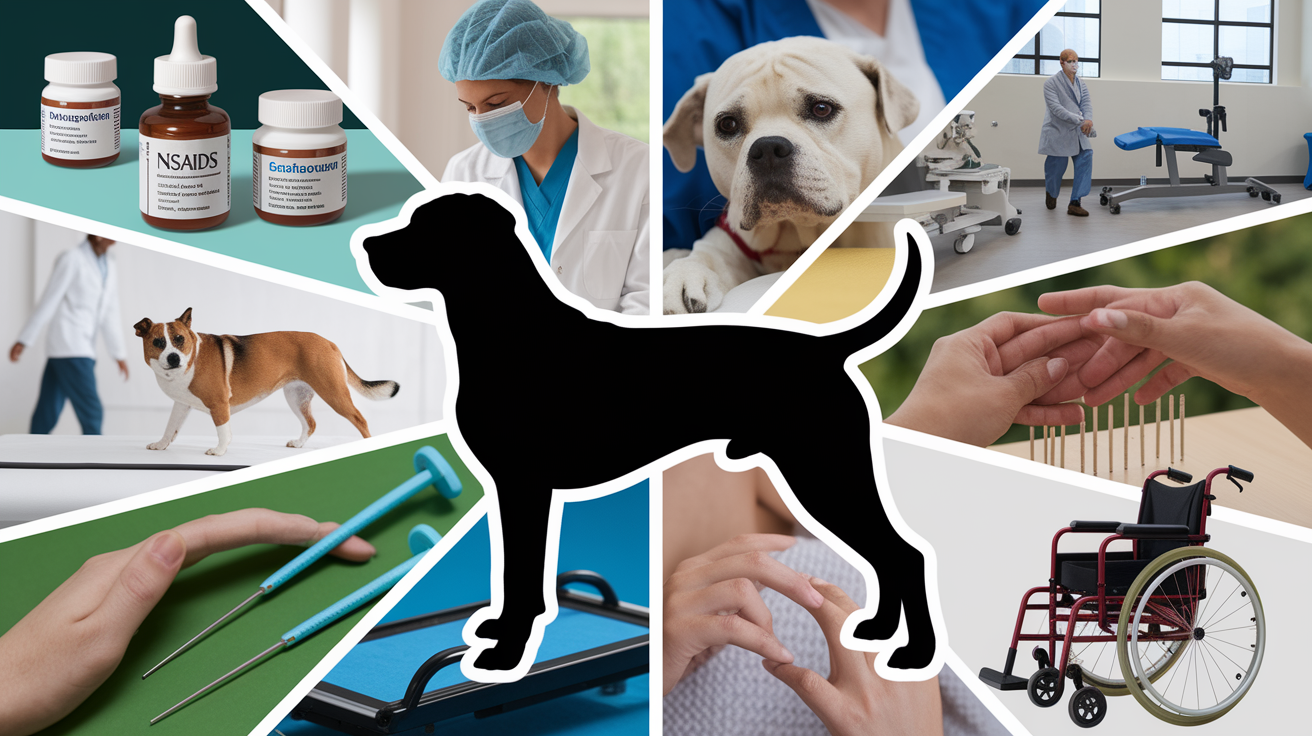
Treatment depends on the underlying cause, how bad it is, and how fast the problem developed. Spinal emergencies like severe IVDD or traumatic fractures might need surgery within hours. Chronic conditions like arthritis or degenerative myelopathy rely on long-term medical management, rehab, supportive care. Your vet will build a plan around your dog’s diagnosis, age, overall health, and what you can handle at home.
Medical options include pain control with nonsteroidal anti-inflammatory drugs (NSAIDs), gabapentin for nerve pain, and corticosteroids in specific cases (like some spinal injuries or immune conditions). Emergency surgery decompresses the spinal cord in IVDD, lumbosacral stenosis, or tumors. Orthopedic surgery stabilizes torn ligaments or fractures. Rehab therapies, hydrotherapy, underwater treadmill, acupuncture, physical therapy all help rebuild strength, coordination, confidence.
Eight common treatments covering medical, surgical, and rehabilitative approaches:
- NSAIDs or other pain medications to reduce inflammation and discomfort
- Gabapentin or pregabalin for neuropathic (nerve) pain
- Emergency spinal decompression surgery for IVDD or severe stenosis
- Orthopedic surgery to repair torn ligaments or stabilize fractures
- Physiotherapy and controlled exercise to rebuild muscle and coordination
- Hydrotherapy or underwater treadmill to support low-impact movement
- Acupuncture to manage pain and improve nerve function
- Mobility aids like harnesses, slings, and wheelchairs for daily support
Home Care, Support, and Mobility Aids for Dogs With Weak Hind Legs
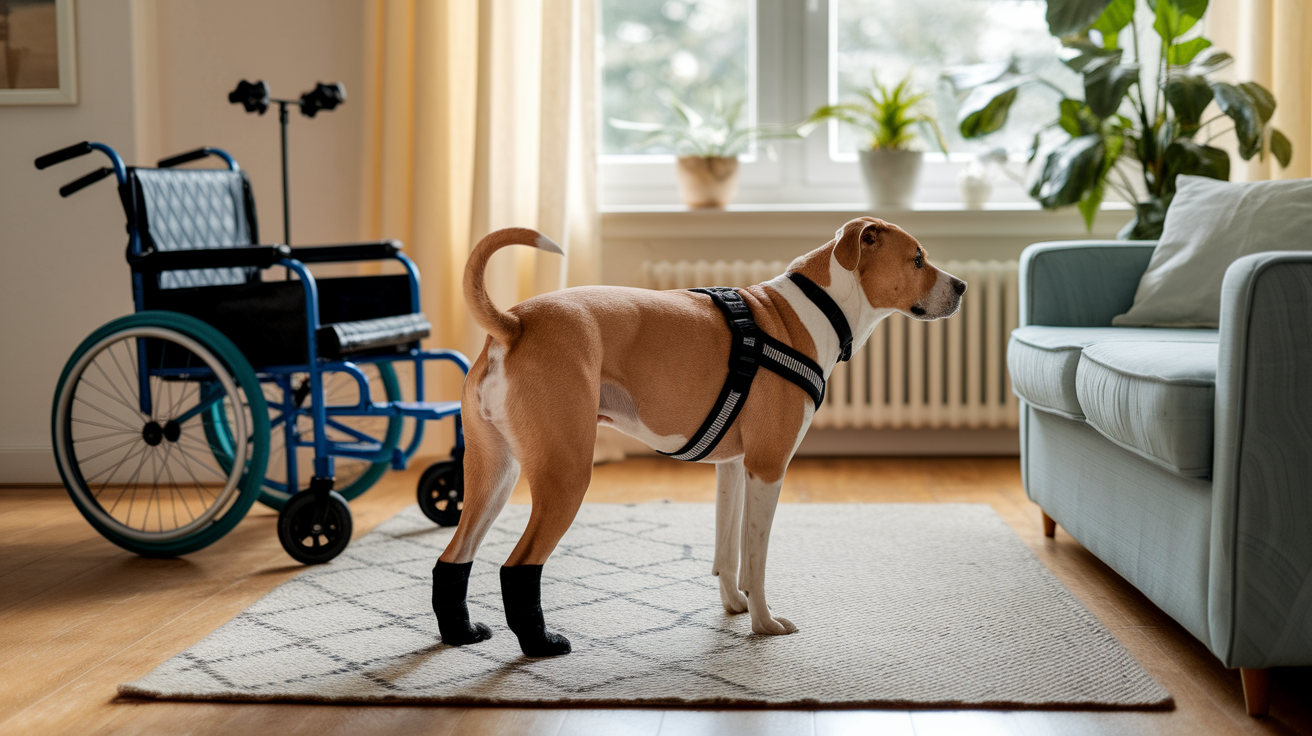
Once you’ve got a diagnosis and treatment plan, home care becomes just as important as vet treatment. Small changes around the house can make a big difference in your dog’s safety, comfort, and ability to move. Goal? Reduce falls, prevent injuries, help your dog stay as active and independent as possible while their body heals or adjusts to long-term weakness.
Traction is everything. Add area rugs or yoga mats to slippery floors. Keep nails trimmed short so they don’t slip on smooth surfaces. Toe grips, rubber booties, or grip socks (like the product “Naked Socks by Otis” reported effective by some owners) can help dogs gain traction without slipping. For dogs who struggle to stand, a rear-support harness or sling lets you lift the hind end and guide them outside for bathroom breaks. In advanced cases, dog wheelchairs or carts support the rear legs entirely, letting dogs with little to no hind-limb function run and play again.
Six supportive tools and tips:
- Area rugs, yoga mats, or non-slip runners over tile and hardwood
- Regular nail trims to improve grip and reduce splaying
- Rear-support harnesses or slings to assist standing and walking
- Orthotic back braces to stabilize the spine in degenerative myelopathy
- Dog wheelchairs or carts for dogs who can’t support their hind end
- Monitoring for skin sores, especially if your dog drags toes or sits for long periods
Strengthening and Rehabilitation Exercises to Improve Rear Leg Function
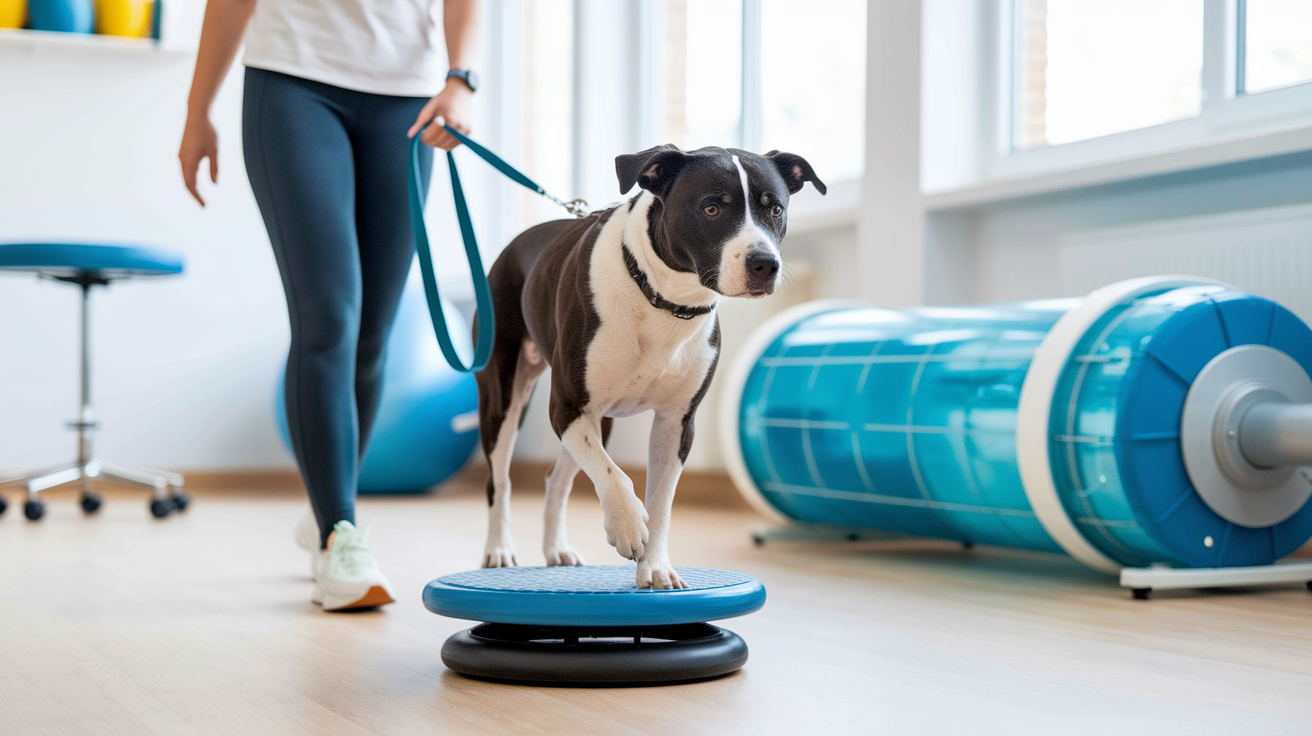
Rehab helps dogs recover faster, maintain muscle mass, improve coordination even when full recovery isn’t possible. A vet trained in rehabilitation or canine physical therapy can design a program tailored to your dog’s condition, fitness level, limitations. Safest approach combines controlled activity, strengthening exercises, supportive therapies.
Controlled Walking and Leash Work
Short, slow, on-leash walks are the foundation of hind-leg rehab. Walking on flat, even surfaces encourages your dog to bear weight on weak legs without the risk of running, jumping, or sudden stops. Aim for several short sessions (5 to 15 minutes) each day rather than one long walk. Gradually increase distance as strength improves, but stop if your dog stumbles, drags toes, or shows pain.
Hydrotherapy and Underwater Treadmill
Swimming and underwater treadmill therapy let dogs move their legs with less stress on joints and spines. Water buoyancy supports body weight, making it easier for weak dogs to practice walking and build muscle. Keep swim sessions short (5 to 10 minutes at first) and avoid cold water, which can cause muscle stiffness or hypothermia. Always supervise closely. Consider a canine life jacket for safety.
Range of Motion and Stretching
Passive range-of-motion exercises help maintain flexibility in joints and prevent stiffness. While your dog’s lying down and relaxed, gently move each hind leg through its natural range, flexing and extending the hip, knee, ankle. Hold each stretch for 10 to 15 seconds, repeat 3 to 5 times per leg, once or twice a day. Never force a joint past resistance or pain. The book The Healthy Way to Stretch Your Dogs by Sasha Foster has detailed stretching routines.
Balance and Core Strength Activities
Balance exercises improve proprioception (awareness of where the legs are in space) and engage core muscles that support the spine and hips. Simple activities include standing on a wobble cushion, slow figure-eight walking, sit-to-stand repetitions. These should be short, supervised, adjusted based on your dog’s stability and confidence.
Four precautions for safe exercise:
- Always warm up with a few minutes of slow walking before stretching or strengthening
- Stop immediately if your dog shows pain, excessive panting, or increased weakness
- Avoid slippery surfaces, stairs, or uneven terrain until strength improves
- Check with your vet before starting any new exercise, especially after surgery or injury
Prognosis, Recovery Expectations, and Long-Term Management of Rear Leg Weakness
Prognosis depends on the cause, how quickly treatment starts, and your dog’s overall health. Orthopedic injuries like CCL tears or fractures can heal well with surgery and rehab, though full recovery might take months. Neurologic emergencies like IVDD have variable outcomes. Rapid surgical intervention offers the best shot for dogs who’ve lost the ability to walk, but those who’ve lost deep pain sensation face a tougher road. Dogs with FCE often improve steadily with rehab, though some residual weakness might remain.
Progressive conditions like degenerative myelopathy or advanced arthritis have no cure. Focus shifts to keeping quality of life going for as long as possible through weight management, pain control, physical therapy, mobility aids. Consistent, long-term management slows decline and helps dogs stay comfortable and engaged even as their mobility decreases.
| Condition | Typical Outlook | Key Management Focus |
|---|---|---|
| IVDD with early surgery | Good to excellent if treated within 24–48 hours | Strict rest, pain control, rehabilitation |
| FCE | Partial to good recovery with rehab | Physical therapy, supportive care |
| Degenerative myelopathy | Progressive decline, poor long-term | Mobility aids, quality-of-life monitoring |
Final Words
You learned the most likely causes, such as arthritis, ligament tears, spinal disease, and systemic problems, and the key warning signs like sudden paralysis, severe pain, or incontinence.
We covered symptoms, how vets diagnose the issue, treatment choices, home care and rehab, and what to watch day to day. If weakness appears suddenly, gets worse quickly, or your dog can’t stand, contact your veterinarian right away.
With prompt care and steady rehab, many dogs with dog rear leg weakness regain function or adapt well. Keep tracking changes and stay hopeful.
FAQ
Q: Why is my dog suddenly weak in his back legs or suddenly lame in the hind leg?
A: Sudden weakness or lameness in your dog’s back legs is often caused by spinal issues (IVDD, FCE), nerve injury, torn ligaments, or acute pain; call a vet immediately for paralysis, severe pain, or incontinence.
Q: What are signs your dog is going to pass away?
A: Signs your dog may be nearing end of life include inability to stand, not eating or drinking, severe breathing trouble, unresponsiveness, uncontrolled bleeding, or repeated seizures; contact your vet right away for guidance and comfort care.
Q: How do you treat hind leg weakness in dogs?
A: Treating hind-leg weakness depends on the cause: rest and pain control, anti-inflammatories, surgery for tears or IVDD, plus rehab like hydrotherapy or physiotherapy; see your vet for diagnosis and urgent care if symptoms worsen.